There is an interesting balancing act happening with the Vancouver Canucks. The team is trying to remain competitive while ensuring their next wave of young players develops the right way. Those two things don’t always go together. Fans want to see the prospects immediately because that’s the exciting part of any rebuild or retool, but sometimes the smartest move is giving those players the time and environment they need to succeed.
This offseason, two stories really highlight that approach. The first is Braeden Cootes and whether the Canucks should resist the temptation to rush him into the NHL. The second is the team’s defence corps and why adding veterans like Jamie Oleksiak and Luke Schenn may have been less about filling holes and more about creating the right development structure around their young blueliners.
Why Braeden Cootes’ Next Step Should Be Abbotsford
One of the hardest things for any NHL team is to show patience with young talent. Fans see a first-round pick, a strong development camp, and a player who looks like he belongs, and the natural reaction is simple: “Why isn’t he in the NHL yet?” But hockey development rarely follows a straight line. Sometimes an organization should slow things down.
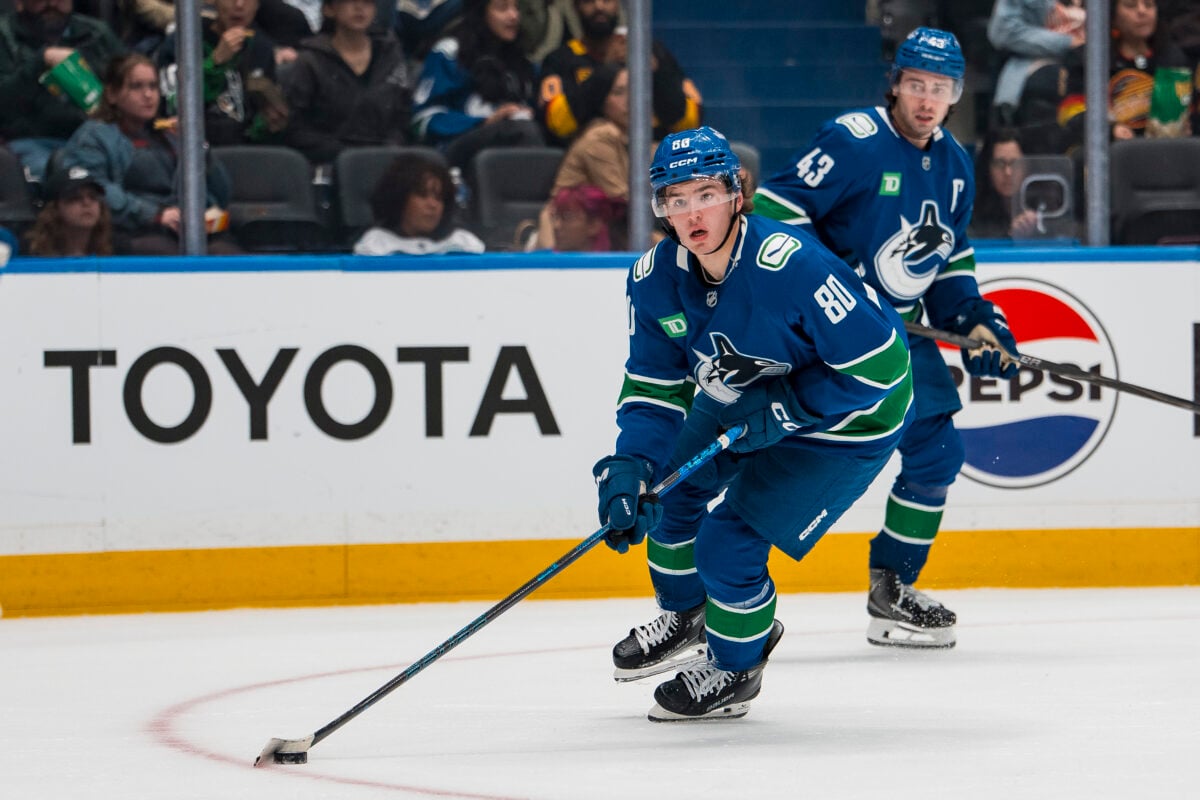
Braeden Cootes is a perfect example. He was one of the most impressive players during the Canucks’ recent development camp scrimmages, and that should not surprise anyone. He is a former first-round selection, entering his second NHL summer camp, and already has some NHL experience after making the opening-night roster last season. He earned that opportunity because of his strong preseason performance.
But his three-game NHL audition also showed that while the talent is there, there is still work to do. The NHL is a tough league, and young players need time to adjust to the speed, physicality, and daily demands of professional hockey. The goal should not be getting Cootes to Vancouver as quickly as possible. The goal should be making sure that when he arrives, he is ready to stay.
The new NHL/CHL agreement allowing 19-year-olds to play in the American Hockey League gives Vancouver an option that didn’t exist before. Abbotsford could provide Cootes with big minutes, chances to play in all situations, and the opportunity to learn the professional game without being thrown into a tough NHL situation every night.
The Canucks need Cootes to become the player they believe he can be. A season of growth in Abbotsford could be one of the best investments they make for their future.
A New-Look Blue Line Built Around Balance and Development
When Ryan Johnson talked about the additions of Jamie Oleksiak and Luke Schenn this summer, there was an important message hidden behind those signings. The Canucks weren’t simply adding veteran defencemen because they needed more experience. They were building a structure where young players could develop with the right support.
That is usually how good organizations handle young defencemen. You don’t just throw them into the NHL and hope they figure everything out. You pair them with players who can help them learn the little details of the position. The early expectation is that Vancouver could have a veteran presence on each defensive pairing.

Zeev Buium could once again find himself alongside Filip Hronek, giving the young left-handed defenceman a steady partner who can help him navigate the NHL game. Tom Willander, another important piece of the future, could be paired with Oleksiak, who brings size, experience, and the kind of defensive reliability that allows a young player to grow. Elias Pettersson could potentially line up with Schenn, giving another young defender a veteran to play alongside.
The interesting part will be the competition at training camp. Victor Mancini will have an opportunity to push for a regular role, and Kirill Kudryavtsev could also enter the conversation with a strong showing. Schenn’s signing makes sense because Vancouver knows what he brings: leadership, toughness, and familiarity with the organization. But at 36, turning 37 in November, he will still have to prove he can handle the demands of an everyday NHL role. His value may come as much from the lessons he can provide younger defencemen as what he does on the ice.
What’s Next for the Canucks?
When you put these two stories together, a clear theme emerging from the Canucks’ offseason is that development matters. The organization appears focused on building players the right way. Good teams understand that patience and preparation often separate success from failure.
The Canucks need young players to arrive when they are ready and become long-term contributors. If the organization can get that part right, the decisions made this summer could pay off for seasons to come.
Free Newsletter
Get Vancouver Canucks coverage delivered to your inbox
In-depth analysis, breaking news, and insider takes - free.
Subscribe Free →