The 2026 NHL Trade Deadline has come and gone, and for a Vancouver Canucks organization that entered the week with a “scorched earth” mandate, the results feel decidedly lukewarm. When you are anchored to the bottom of the league standings by a significant margin, the deadline isn’t about the playoffs; it’s your version of the postseason. It is the one time of year where hope is traded in the form of draft picks and prospects.
Related: Blue Jackets Acquire Conor Garland From Canucks For Draft Picks
However, as the clock struck the deadline hour, the Canucks found themselves in the “Murky Middle.” While they successfully offloaded a few heavy contracts, the inability to monetize key assets has left many wondering if this rebuild is already hitting an unnecessary speed bump.
Canucks Fail to Move Evander Kane & Teddy Blueger
The most glaring indictment of the Canucks’ deadline performance was the total lack of movement regarding their pending unrestricted free agents (UFAs). In a seller’s market, functional depth is usually the easiest thing to flip for mid-round draft capital. Players like Evander Kane and Teddy Blueger were widely expected to be wearing new colours by Friday afternoon.
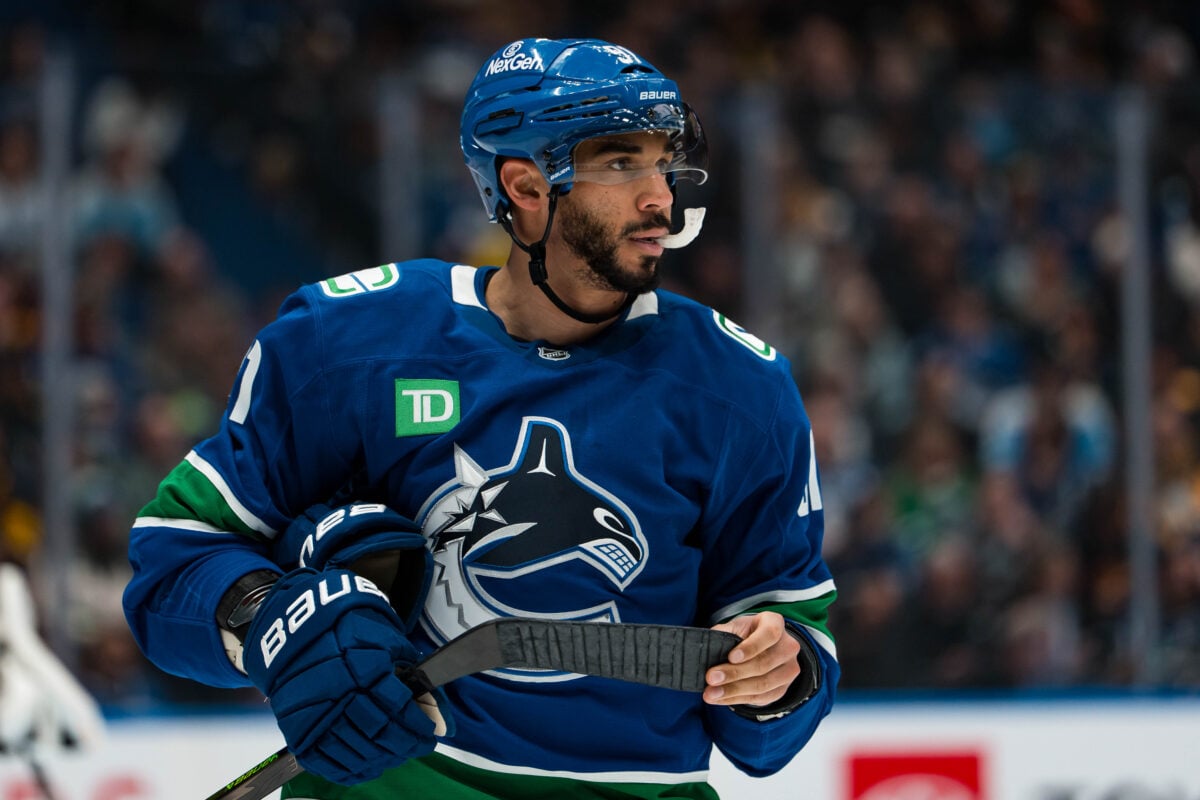
Instead, both remain in Vancouver. General manager (GM) Patrik Allvin confirmed the sobering reality following the deadline: the phone simply didn’t ring with concrete offers for either player. For a team desperate to stockpile picks and clear roster spots for the youth movement in Abbotsford, holding onto veteran rentals past the deadline is a significant missed opportunity. It’s a failure to convert expiring assets into future value, leaving the Canucks with a roster that is still too veteran-heavy for a team in last place.
Scouts’ View: How Poor Performance Tanked Trade Value
Timing is everything in the NHL, and the Canucks’ timing was disastrous. In the final three-game stretch leading up to the deadline — the ultimate “showcase” window — the team went 0-2-1. More concerning than the record was the lack of competitiveness. Being outscored 11-2 in blowout losses to the Seattle Kraken and Dallas Stars happened right in front of a gallery of pro scouts from across the league.
When a team looks that disjointed, it becomes nearly impossible to convince a contending GM that your depth players can help them win a Cup. The “stink” of a losing environment attached itself to the trade bait. Instead of showcasing a gritty veteran like Kane or a defensive specialist like Blueger as the “missing piece,” the Canucks inadvertently signaled that their supporting cast wasn’t ready for high-leverage hockey.
The Conor Garland Trade: A Necessary Escape Act
The one major piece of business the Canucks did conclude was shipping winger Conor Garland to the Columbus Blue Jackets. The return — a 2028 second-round pick and a 2026 third-round pick — has been met with mixed reviews from the Vancouver faithful. On the surface, it feels like a “cents on the dollar” return for a player with Garland’s motor and skill set.
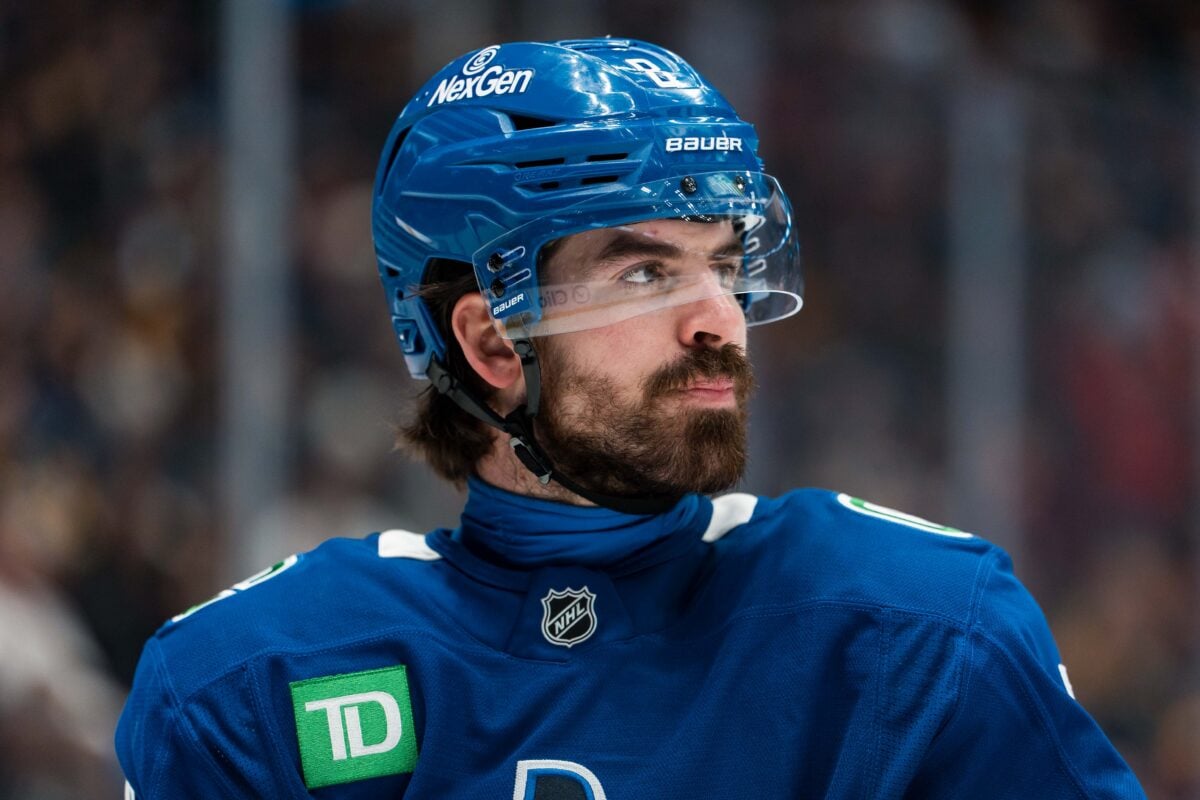
However, looking at the contract floor, this was a “safe play” the Canucks had to make. Garland was set to begin a new extension on July 1 with a $6 million annual cap hit and, crucially, a full no-movement clause (NMC). Given that Garland is currently weathering his worst statistical season, the Canucks were staring down the barrel of an immovable contract. By moving him now, they avoided a scenario where they were stuck with a high-priced veteran they couldn’t trade for the next several years. It wasn’t a “win” in terms of value, but it was a necessary administrative exit.
Rounding Out the Roster: Minor Moves and Veteran Departures
While the big UFA deals fell through, Allvin did manage to trim some fat from the blue line and the bottom-six.
- Tyler Myers: The veteran blueliner was sent to the Dallas Stars for a 2027 second-round pick and a 2029 fourth-rounder. While Vancouver had to retain 50% of his salary, securing a second-round pick for a 36-year-old defenseman is respectable business.
- David Kämpf & Lukas Reichel: Both were moved for late-round lottery tickets (sixth-round picks) to the Washington Capitals and Boston Bruins, respectively. These were change-of-scenery moves that cleared a small amount of space and roster flexibility.
- Kiefer Sherwood: Moved earlier in the winter to the San Jose Sharks for two second-round picks and Cole Clayton, this remains arguably the best piece of business the front office conducted all season.
The Verdict: A Rebuild Stuck in Neutral
Ultimately, the 2026 Deadline will be remembered for what didn’t happen. The uncertainty surrounding Elias Pettersson’s future continues to cast a shadow over the franchise, and the inability to flip Kane and Blueger means the Canucks will finish the season with a roster that doesn’t quite look like a rebuild and certainly doesn’t look like a contender.
The Canucks managed to shed the impending contractual headache of Garland and moved Myers, but they failed to truly capitalize on the desperation of the market. For a team ten points behind the next-worst club, breaking even at the deadline simply isn’t good enough.
AI tools were used to support the creation or distribution of this content, however, it has been carefully edited and fact-checked by a member of The Hockey Writers editorial team. For more information on our use of AI, please visit our Editorial Standards page.
