The Vancouver Canucks are at a crossroads, and it’s a familiar, chilly one. After a season that can only be described as a freefall to the bottom of the NHL standings, the organization is officially staring down a rebuild. But as general manager (GM) Patrik Allvin sifts through the wreckage of a campaign that saw the team eliminated from playoff contention earlier than anyone expected, a massive, $13-million problem is staring back at him from the blue paint.
Related: Canucks News & Rumours: Boeser, Hronek, Cootes & Any Sign of Life
With the 2026 offseason approaching, the Canucks find themselves in a self-inflicted bind. They have two veteran goaltenders, Thatcher Demko and Kevin Lankinen, locked into expensive long-term extensions. Meanwhile, 6-foot-6 prospect Nikita Tolopilo is banging on the door, and more importantly, he’s about to lose his waiver-exempt status.
If this feels like déjà vu, it’s because it is. Just last summer, the Canucks chose to prioritize veteran stability, eventually trading away Arturs Silovs to the Pittsburgh Penguins. Now, with Tolopilo in the exact same position, the Canucks cannot afford to make the same mistake twice.
Canucks Goaltending Depth: A Luxury They Can’t Afford
On paper, having Demko and Lankinen as your tandem is an embarrassment of riches. In reality, it’s a cap-management nightmare for a team that will finish 32nd in the league.
Demko, when healthy, is an elite talent. However, the “when healthy” qualifier has become a massive asterisk. After undergoing major hip surgery this season, Demko is slated to return for the 2026-27 season — the same year his new three-year, $25.5-million extension kicks in. His $8.5-million cap hit is a hefty price tag for a rebuilding club, especially one that needs every dollar to accumulate draft capital and young assets.
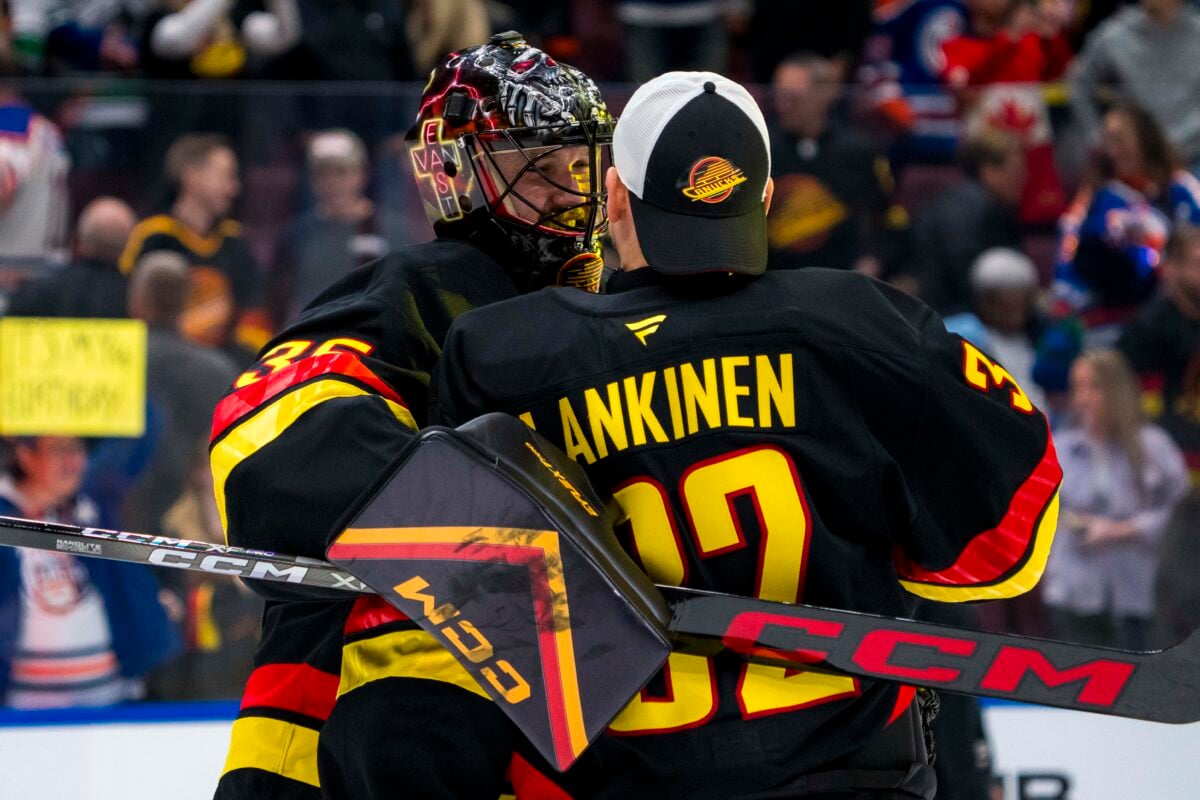
Then there’s Lankinen. After a stellar run in 2024-25 that earned him a five-year, $22.5-million extension, the Finn’s numbers cratered this season behind a porous Vancouver defence. At a $4.5-million average annual value (AAV) through 2030, Lankinen is paid like a high-end 1B starter.
“Eventually, Canucks management must decide whether it makes sense to rebuild with a pair of 30-year-old goalies whose combined cap hit is $13 million,” noted Sportsnet’s Iain MacIntyre in a March 2026 column. For a team that recently traded away franchise cornerstone Quinn Hughes to kickstart a youth movement, holding onto two expensive veteran netminders is an ideological contradiction.
The Arturs Silovs Trade: A Cautionary Tale in Pittsburgh
The primary reason fans are so anxious about Tolopilo is the looming shadow of the Silovs trade. Last July, the Canucks shipped the Latvian hero to the Penguins in exchange for prospect Chase Stillman and a 2027 fourth-round pick. At the time, Allvin defended the move, stating, “We wanted to give him an opportunity elsewhere as we feel we are very well positioned in goal at the NHL, AHL and developmental level.”
Since landing in Pittsburgh, Silovs has done exactly what Canucks fans feared: he’s proved he belongs. While splitting time with Stuart Skinner, Silovs has been a revelation for a Penguins team fighting for a playoff spot. He even earned the NHL’s Second Star of the Week honours in early March after a dominant stretch where he essentially carried the Pens.
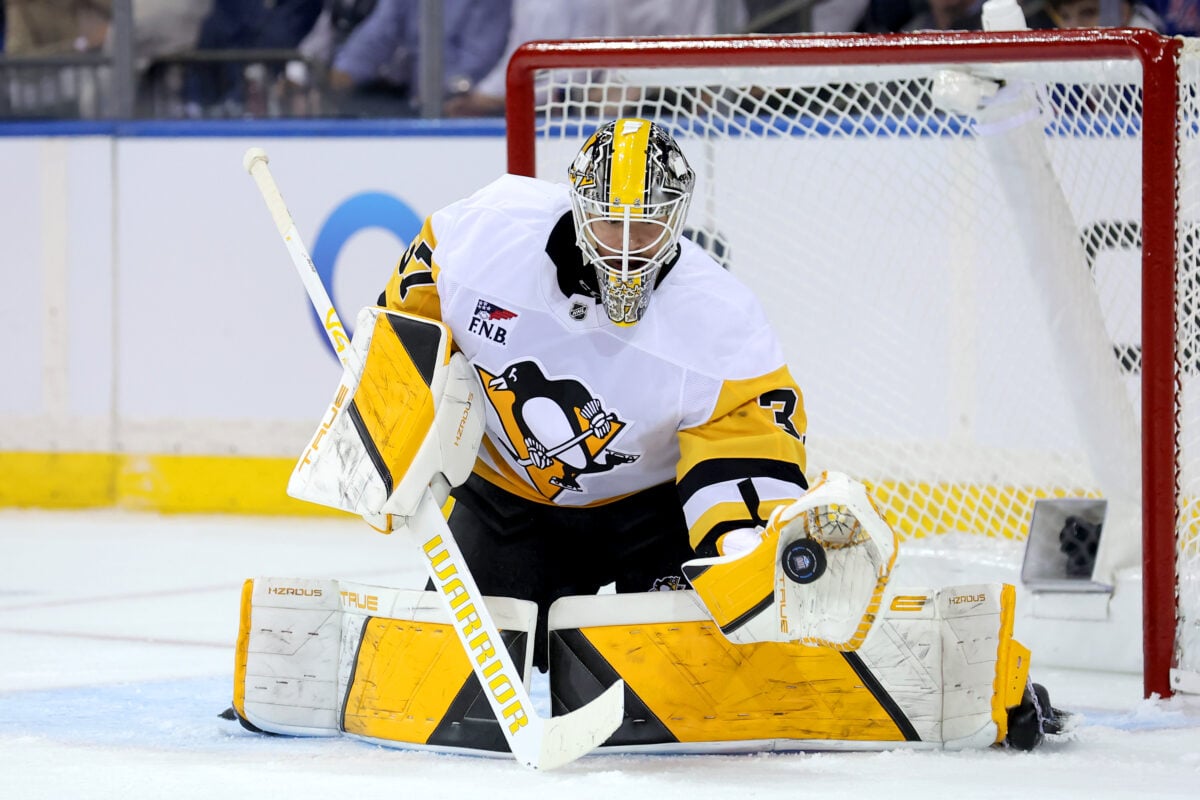
In Pittsburgh, Silovs has found the consistency that eluded him during his final, turbulent months in Vancouver. He has recorded multiple shutouts and currently has a winning record of 16-10-8. More importantly, he’s doing it on a cap hit of just $850,000. Watching a 25-year-old Calder Cup MVP flourish elsewhere while Vancouver pays 15 times that amount for their own crease is a bitter pill for the local market to swallow.
The No-Movement Clock Is Ticking
To fix this logjam, the Canucks need to move a veteran, but management has coached themselves into a corner with restrictive no-movement clauses (NMC).
Demko’s extension comes with a full NMC, but it doesn’t start until July 1, 2026. This means the Canucks have a tiny, high-stakes window this summer to move him without the player dictating the destination. If they miss that date, they are locked into an $8.5-million commitment to a goalie with a significant injury history.
The situation with Lankinen is even more restrictive. His five-year extension included a full NMC for the first two years (2025-26 and 2026-27). Effectively, the Canucks cannot trade, waive, or demote Lankinen without his explicit permission until 2027. If management wants to clear a spot for Tolopilo, they must now convince a veteran player to waive his protection — a difficult task for a GM who just gave that player a long-term commitment.
The Nikita Tolopilo Dilemma
The real urgency stems from Tolopilo. Much like Silovs before him, the Belarusian giant has shown immense poise during his NHL call-ups. But here is the kicker: next season, Tolopilo will no longer be waiver-exempt.
This means if the Canucks try to send him down to the minors at the end of training camp, they have to offer him to every other team in the league for free. In an NHL where quality goaltending is the scarcest resource, a 26-year-old, 6-foot-6 goalie with NHL experience and a league-minimum salary would be claimed before Allvin could even finish hitting “send” on the transaction.
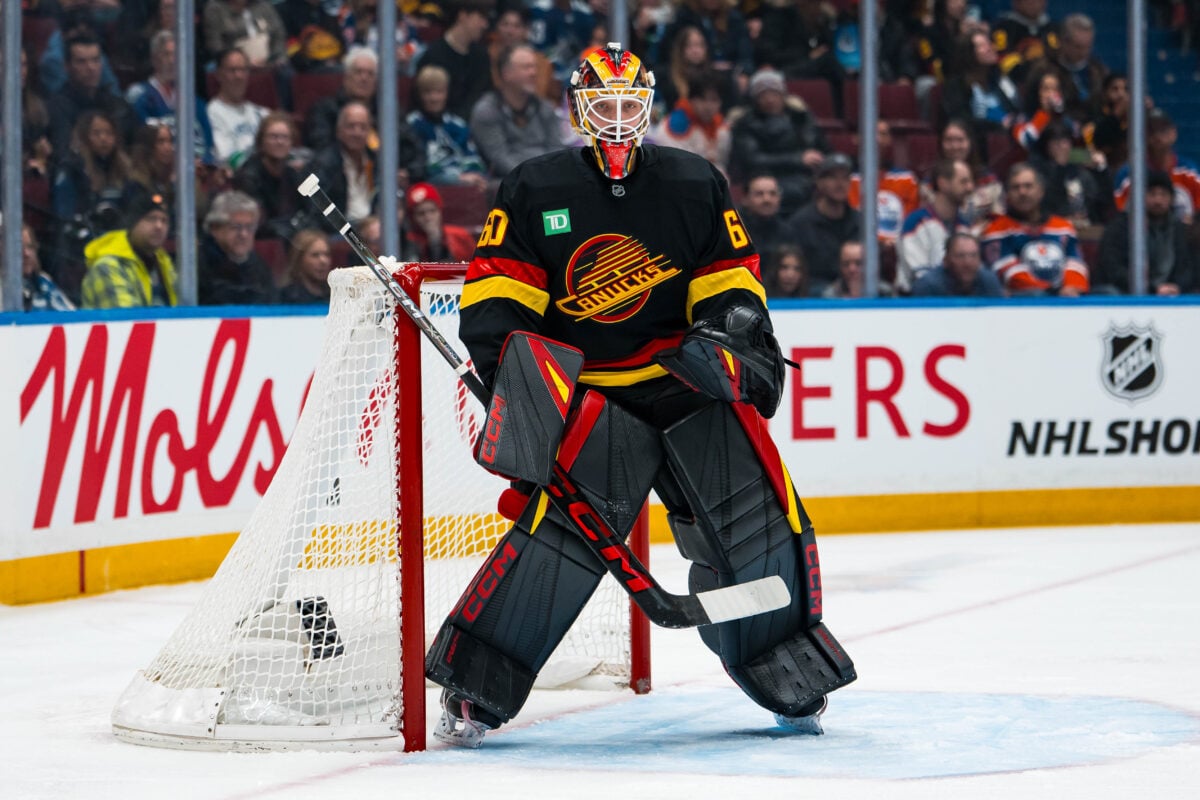
We saw this play out with Silovs — the Canucks felt they couldn’t fit him, moved him for a low return, and now he’s a starting-caliber asset for another team. If they do the same with Tolopilo, they aren’t just losing a player; they are throwing away a cost-controlled asset that fits the timeline of their rebuild perfectly.
Learning From Past Blunders
The ghost of Silovs should haunt the hallways of Rogers Arena this summer. Selling high on a young goalie is one thing; selling because you over-leveraged yourself on veteran contracts is poor asset management.
As NHL insider Chris Johnston recently noted on TSN OverDrive, the market for goaltenders remains tight.
“Goaltending trades don’t tend to bring back a lot in return… but there are almost no free agents at the goaltending position. We’ll probably see more trades because there are no easy solutions in free agency.”
The Canucks are currently projected to have the best odds at the first overall pick in the 2026 Draft. The focus should be entirely on the future. Tolopilo represents that future. He is cheap, he is young, and he has the physical tools that goalie coaches drool over.
If the team is going to struggle through the growing pains of a rebuild, it’s better to let a young player like Tolopilo take those lumps and grow, rather than watching a veteran’s confidence (and trade value) erode behind a developing roster. The Canucks cannot afford another summer of “staying the course” in the crease. They have the talent in the pipeline, but they need the courage to clear the path.
AI tools were used to support the creation or distribution of this content, however, it has been carefully edited and fact-checked by a member of The Hockey Writers editorial team. For more information on our use of AI, please visit our Editorial Standards page.
