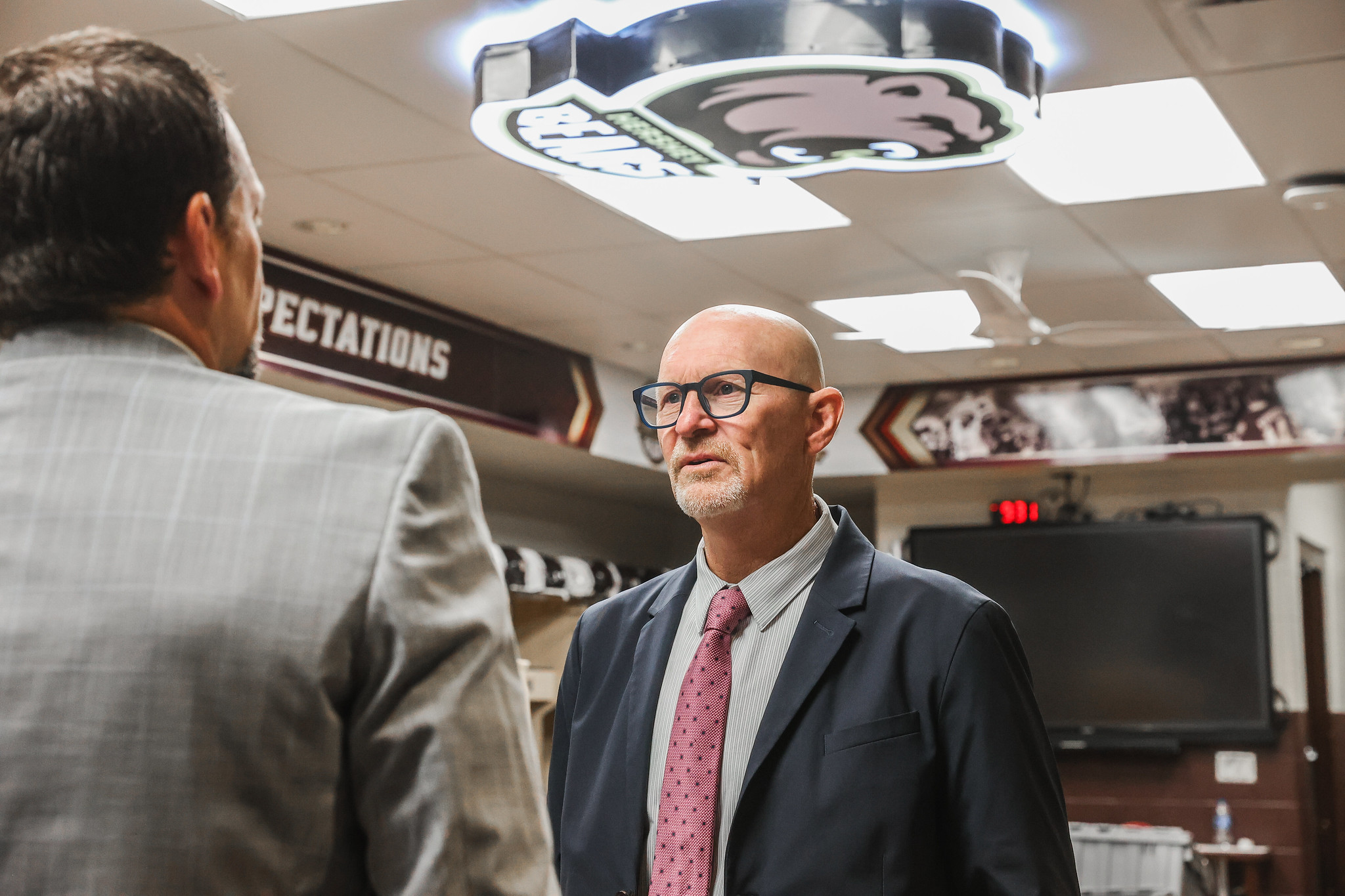
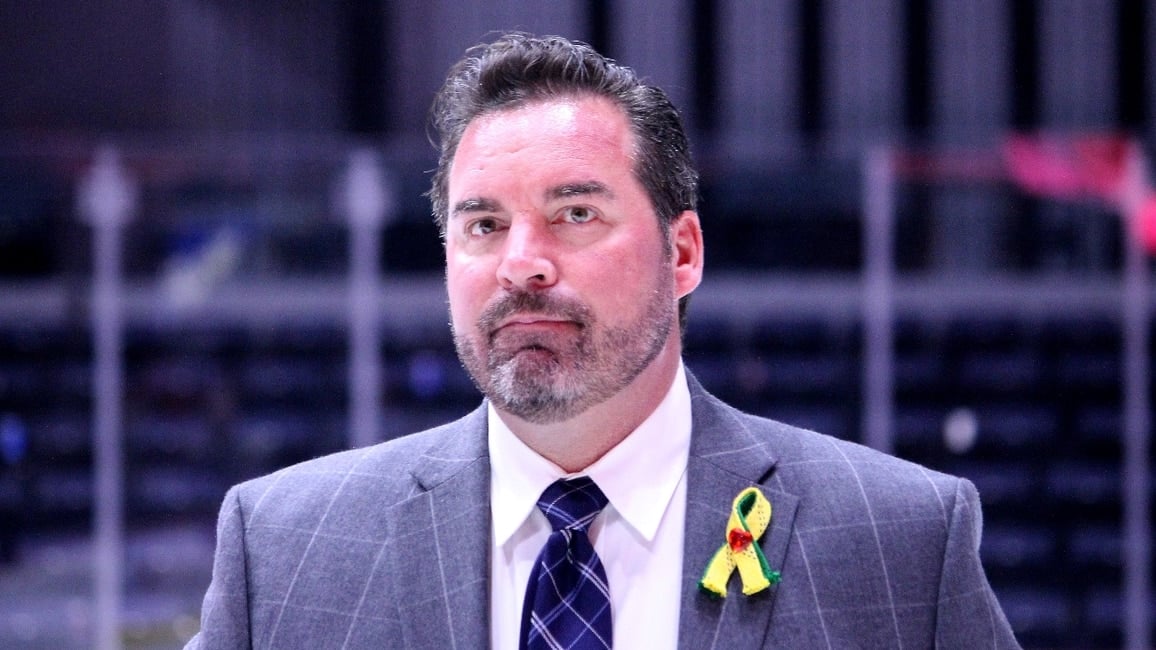
It’s that time of year. The Stanley Cup Playoffs are in full swing, so are the Calder Cup Playoffs, and the head coaching carousel is spinning. It’s why this is the time of year when many fans and followers of the American Hockey League (AHL) ask why Todd Nelson doesn’t have a job in the NHL. He’s coached the Hershey Bears to the Calder Cup title in back-to-back seasons and has just about done it all at the AHL level.
Related: Hershey Bears’ 3-Peat Pursuit Is Alive & Well After Series Comeback vs. Lehigh Valley Phantoms
What more does Nelson need to prove? What about a three-peat? Well, that’s what he’s out to do. The Bears faced many challenges this season and weren’t expected to be the best team in the Atlantic Division. Yet, Nelson led them to the best record in the division and is leading them in the playoffs. He’ll pull all the right strings in a series to allow the Bears to win, which is what happened against the Lehigh Valley Phantoms and is expected to happen again as the Bears face the Charlotte Checkers in a five-game series.
Nelson’s Management of Goaltending
One of the fascinations with coaching these days is the task of managing the goaltending position. There aren’t the workhorses in the net anymore, and great coaches must know when to give their primary starter a night off or how to split the starts between their two goaltenders. Oddly, hockey coaches are starting to look a lot like baseball managers who must understand when to start or pull their starting pitchers.
Nelson started Hunter Shepard for the first three games of the series against the Phantoms. After a shutout in Game 1, the Bears’ starter struggled in Games 2 and 3, prompting a change in the net for Game 4, where Clay Stevenson filled in and won them the game. With the series on the line, Nelson had the hot hand, but also the reliable one based on the past.
For the winner-take-all game, Nelson went back to Shepard. It’s that confidence to go back to a goaltender who allowed seven goals on 41 shots in the previous two games that won the Bears the series. “Clay got the job done in Game 4, but over the past few years with Shepard in a Game 5, an elimination game, we knew he was comfortable, and he played well for us tonight,” Nelson noted after Game 5’s win, one where Shepard stopped 19 of the 21 shots.
The Bears don’t have great goaltending, yet Nelson has a strong grasp of the position. “We’re going to need both guys, I feel comfortable with both guys,” he mentioned when asked how he’ll manage the position moving forward. This will be the third Calder Cup run for the Bears, and they’ll need to split starts between Shepard and Stevenson to win it all this time around, and Nelson will know when to turn to the right one in a big spot.
The Lines & Matchups
The Bears started the series with the traditional 12 forwards and six defensemen lineup. They ended it with 11 forwards and seven defensemen, inserting Brad Hunt as the extra blueliner. By Game 4, it became clear that a change was needed, and someone had to add a spark to the otherwise hapless power play. Hunt was brought in for that role and helped the Bears score one of their two goals on the man advantage in a 6-4 win.
The game plan heading into Game 5 was to take out the Phantoms’ best line, which consisted of Zayde Wisdom, Olle Lychsell, and Jacob Gaucher. That trio entered the game with eight goals and eight assists. They were blanked by Matthew Strome and Riley Sutter, two forechecking forwards who Nelson lined up against the Phantoms’ top skaters in the series.
“Their job tonight was to keep this line off the scoresheet, and they take that role seriously,” Nelson noted after the game. Strome and Sutter are the fourth liners who had to rotate with another forward throughout the game to keep the Phantoms in check. Typically, that messes with the chemistry of the offensive end of the ice. It didn’t faze the two veterans as they connected for the second goal of the game, while Sutter found the back of the net twice in the 4-2 win.
Nelson looks for the best matchups to win playoff games and exploits them. Against the Phantoms, it was taking out their best skaters with the best defensive forwards on the Bears. Against the Checkers, it will be about finding the skaters who can find open ice against their defense and getting them open looks on the net. Nelson had five days off to prepare from Game 3 to Game 4, and it was a reminder that if you give him time to prepare, he’ll have the team ready to win a series.
Nelson’s Bears Are Playing Disciplined Hockey
The Bears don’t take penalties, and it’s one of the many signs that they are a well-coached team. They were the least penalized team in the Atlantic Division during the regular season, and they were the far more disciplined team in the series against the Phantoms.
The playoffs are when one mistake can cost a team a game, and in the long run, the one with fewer mistakes will win the series. The Bears will play physical hockey and will play with emotion, but they won’t let it come back to hurt them. “Sometimes it’s tough to turn the other cheek,” Nelson noted after Game 1, a game that set the tone for the rest of the series. “If you don’t play with emotion in the playoffs, something’s wrong,” he continued, and it’s how the Bears played. They played a hard-hitting series and dropped the gloves when the Phantoms did, but with the understanding that the referees were going to start calling penalties if the games got out of control (and the games later on in the series did).
The Bears didn’t take advantage of the Phantoms’ mistakes, scoring only four power-play goals on 29 opportunities. If they want to control the series against the Checkers, they must take advantage of the man advantage. That said, they won’t give the Checkers many chances to take over the series with a power play as they’ll stay out of the box. The Bears have made these playoff runs before and know what will be called and what won’t. With Nelson behind the bench, he’ll have the team prepared to play the right way against a good Checkers team.
Situational Hockey Is Making the Difference
Since Nelson arrived, the Bears have been one of the best teams at moving the puck out of the defensive zone and into the offensive zone. That starts with the ability to clean up pucks near the net. They will allow the initial shot where Shepard or Stevenson must make the save, but then they’ll move it out of the high-danger areas and out of the defensive zone entirely.
At the other end of the ice, the Bears have always focused on the high-danger areas as well. They skate to the slot and try to deflect pucks into the net. They’ll collect rebounds and net them home, something Perrick Dube did twice in the Bears’ 6-4 Game 4 win. It’s something they practice, and it reflects Nelson’s vision of both the arts and sciences of hockey.
Then there’s the ability to close out games, which is a necessary quality of any championship team, and the Bears are no exception. They’ll have a lead in the third period, with 15 minutes or five minutes to go, and every skater on the ice will know their assignment to wind the clock down to a victory. It’s how the Bears, despite allowing a goal with six minutes left in Game 5, still shut the door on the Phantoms to secure the series.
The quest for a third Calder Cup continues for the Bears, and they are still the team to beat in the AHL until proven otherwise. Their success starts behind the bench, and it’s why fans of the league still wonder why Nelson, who continues to get the most out of his rosters, wouldn’t do the same at the next level.

Free Newsletter
Get Hershey Bears coverage delivered to your inbox
In-depth analysis, breaking news, and insider takes - free.
Subscribe Free →