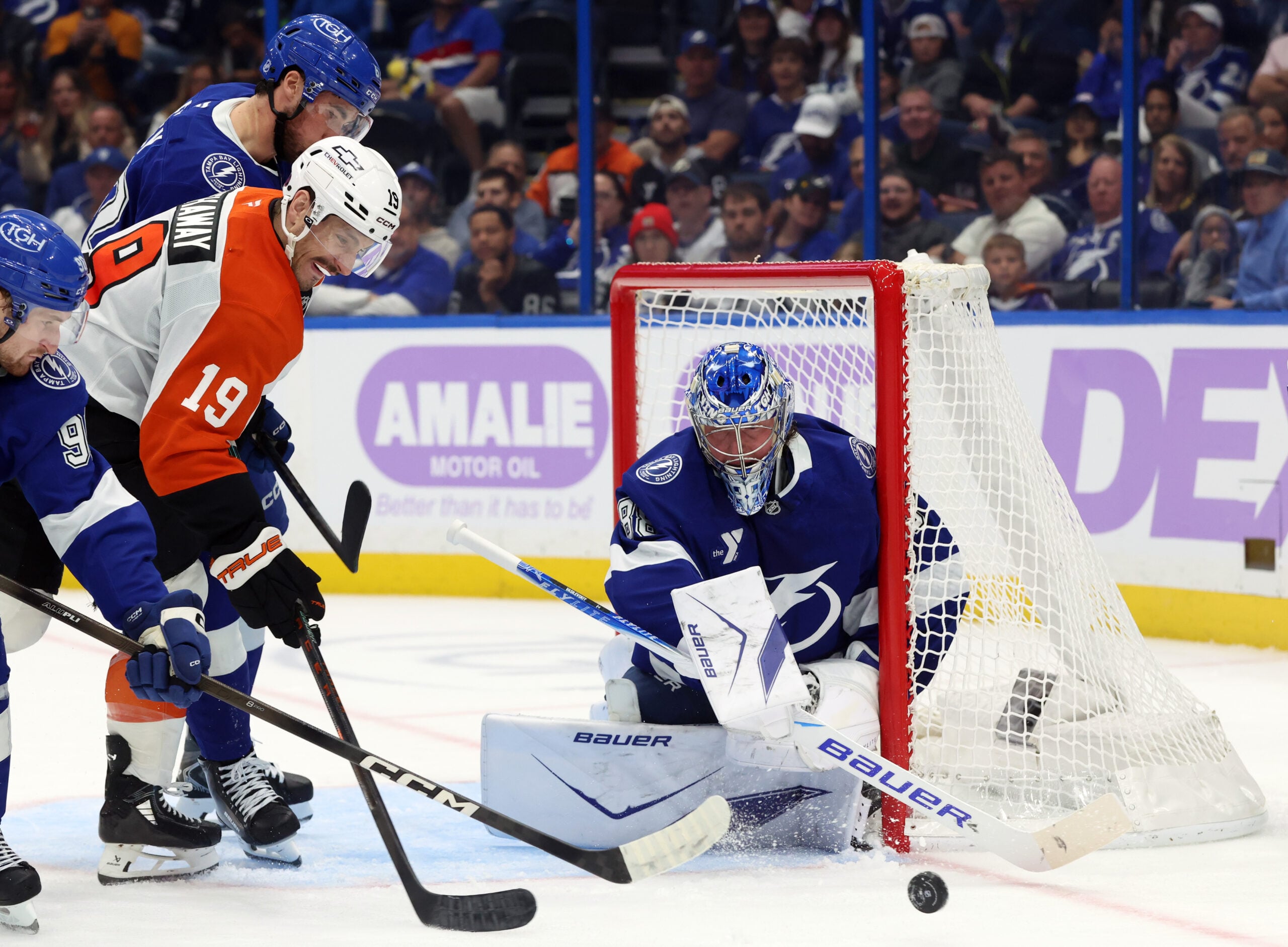
For the better part of a decade, the New York Islanders’ identity was practically synonymous with their fourth line. The trio of Casey Cizikas, Matt Martin, and Cal Clutterbuck wasn’t just a checking unit; they were the “Identity Line,” often cited as the best fourth line in hockey. They set the tone, wore down opponents, and provided a safety blanket for the coaching staff.
Time moves on, rosters churn, and the era of that specific trio has passed. However, in recent weeks, something familiar has begun to brew on Long Island. A revitalized fourth unit featuring the mainstay Cizikas, flanked by wingers Marc Gatcomb and Kyle MacLean, has emerged as a dominant force. They aren’t just eating minutes; they are tilting the ice, driving possession, and providing the kind of depth production that turns a good team into a dangerous one.
The Art of the Simple Game
The success of the MacLean-Cizikas-Gatcomb combination isn’t built on flash. It is built on an adherence to the fundamentals of hard-nosed hockey: heavy forechecking, getting pucks deep, and winning battles along the wall. While that sounds like the standard cliché every coach repeats in a post-game scrum, this line is executing it with lethal efficiency.
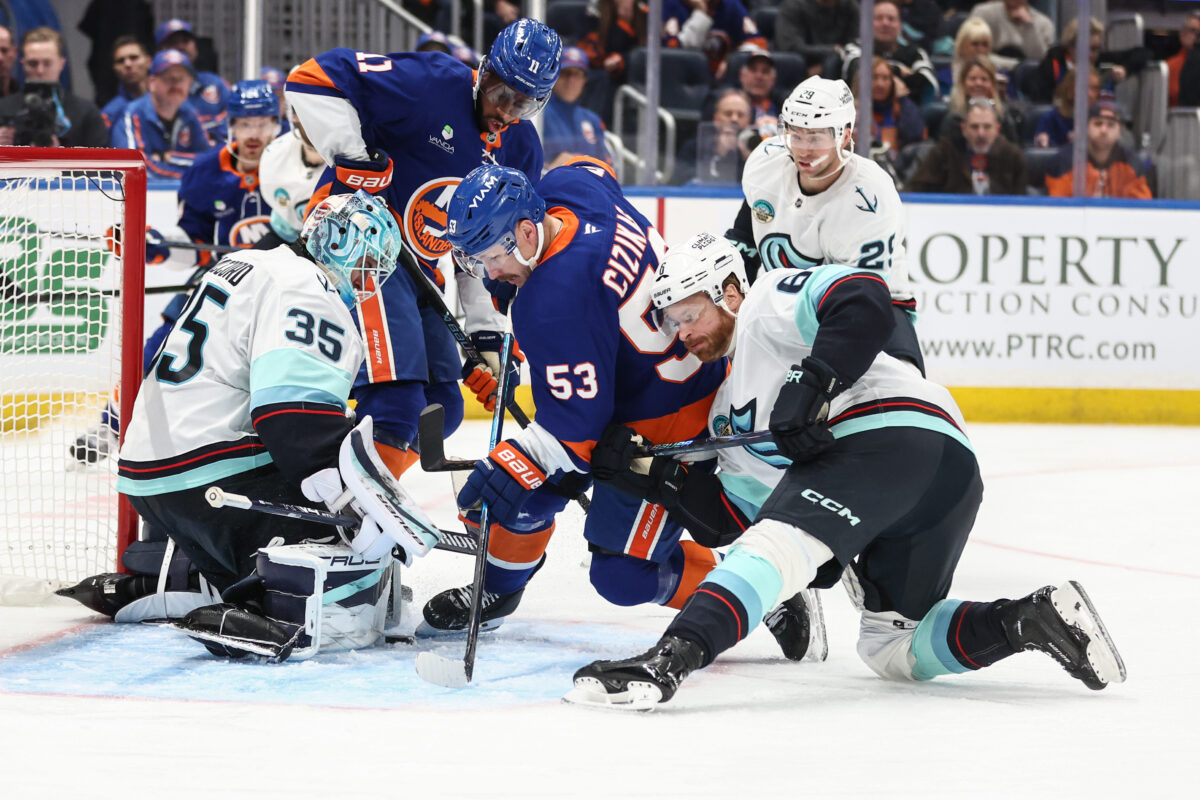
The results were most evident during the Islanders’ recent 6-3 victory over the Colorado Avalanche — a win that snapped Colorado’s impressive 17-game point streak. In a game against a roster loaded with speed and skill, the Islanders’ fourth line didn’t just survive; they thrived. They operated with a “north-south” mentality that forced the Avalanche defenders to turn and retrieve pucks constantly, disrupting Colorado’s rhythm before they could break out.
Related – Islanders Sweep Season Series with 5-4 Shootout Victory Over Golden Knights
Kyle MacLean noted recently that the line’s effectiveness hinges on simplicity. By forcing turnovers and starting the cycle game, they wear down the opposition. This isn’t about looking pretty; it’s about territory. And right now, they are owning the territory battle.
Dominating the Metrics
For the analytically inclined fan, the “eye test” of their physical play is backed up by robust underlying numbers. Among the 16 different line combinations the Islanders have deployed for at least 30 minutes this season, this trio ranks near the very top.

When we look at expected goals percentage (xG%) — a metric that essentially measures the quality and quantity of scoring chances a team generates versus what they give up while specific players are on the ic — this line sits at a staggering 67.7%. To put that in layman’s terms: when Cizikas, Gatcomb, and MacLean are on the ice, the Islanders are controlling roughly two-thirds of the game’s meaningful action.
They rank third on the team in that category and fourth in expected goals per 60 minutes. Perhaps most impressively, they are one of only three trios on the roster to maintain an “expected goals against” rating of one or fewer. They aren’t just generating chances; they are effectively suppressing the opposition, a hallmark of reliable depth hockey.
Physicality as a Weapon
While the metrics are kind, the physical toll this line exerts is arguably their most tangible asset. Gatcomb, in particular, has been a revelation in this regard.
Gatcomb has brought a palpable spark to the lineup since his insertion, filling a gap left by Jonathan Drouin. In the victory against Colorado, Gatcomb played the fewest minutes of any Islander (9:32 TOI) yet led the team with four hits. Against the Vegas Golden Knights, he turned the intensity up even further, recording nine hits in just over nine minutes of ice time.

This isn’t reckless aggression; it’s calculated disruption. Head coach Patrick Roy has praised the line’s work ethic, specifically noting Gatcomb’s physical play during game breaks. Roy admitted that while he doesn’t always stare at the stat sheet, the impact of seven or nine hits is felt on the bench. It creates space and hesitation in the opponent.
This physical edge has had roster implications as well. Gatcomb’s performance has been strong enough to keep Maxim Tsyplakov, a high-profile offseason signing, out of the lineup — a testament to the value the coaching staff places on this specific brand of grit.
Cizikas at the Helm
Centering this resurgence is Cizikas. Long the engine of the Islanders’ bottom six, he has found a new gear with his new linemates. He is driving the play up the middle and showcasing offensive instincts that often get overlooked due to his defensive reputation.
Related – NHL’s Metropolitan Division Is Tight as Can Be, But Is It Actually Good?
A prime example occurred against Vegas, where Cizikas regained possession, navigated around the net with patience, and delivered a perfect feed — described by Gatcomb as being “on a platter” — for the tying goal.

After a slow start statistically (four points in his first 27 games), Cizikas has recorded three points in his last four contests. He was even trusted with late-game minutes against Colorado to secure the empty-net goal, a reward for his 200-foot excellence.
The Bigger Picture
Why does this matter? In the modern NHL, top-heavy teams often struggle down the stretch. You cannot ride players like Bo Horvat for 25 minutes a night and expect fresh legs in April.
The emergence of a trustworthy, high-energy fourth line changes the deployment dynamic for Patrick Roy. When a fourth line can outshoot a team like Colorado 5-2 in their limited minutes (as they did recently), it allows the top lines to rest without fear of conceding a goal. It keeps the momentum in New York’s favor.
MacLean, Gatcomb, and Cizikas are proving that the Islanders don’t need to look to the past to find their identity. They are forging a new one right now, shift by shift, hit by hit.
AI tools were used to support the creation or distribution of this content, however, it has been carefully edited and fact-checked by a member of The Hockey Writers editorial team. For more information on our use of AI, please visit our Editorial Standards page.

Free Newsletter
Get New York Islanders coverage delivered to your inbox
In-depth analysis, breaking news, and insider takes - free.
Subscribe Free →