The Winnipeg Jets are running out of runway — and so is Kevin Cheveldayoff. As the Jets’ executive vice president and general manager since 2011, Cheveldayoff has overseen nearly a decade and a half of Jets hockey built on patience, internal development, and belief in long-term continuity. But with Winnipeg sitting 30th in the NHL, just one loss away from dead last, patience has evaporated. The standings are unforgiving, the market is restless, and the team’s direction is once again under intense scrutiny.
This is no longer about a bad stretch or a disappointing season. This is about organizational fatigue, about a core that has cycled through multiple coaches, identities, and competitive windows — and about whether the same voice can still credibly chart a new path forward.
Cheveldayoff’s Tenure Defined by Stability — and Stagnation
Cheveldayoff was hired in 2011 when the Jets returned to Winnipeg, tasked with building a franchise from the ground up in one of the league’s smallest markets. To his credit, the Jets became a consistent playoff team for a stretch, most notably peaking during the 2017–18 run to the Western Conference Final.
That run validated much of Cheveldayoff’s long-term vision: draft well, develop internally, avoid reckless spending, and trust the system. The Jets were tough, big, and nobody enjoyed playing them. For a bit, they seemed like a team that others should copy. Unfortunately, that’s no longer the case.
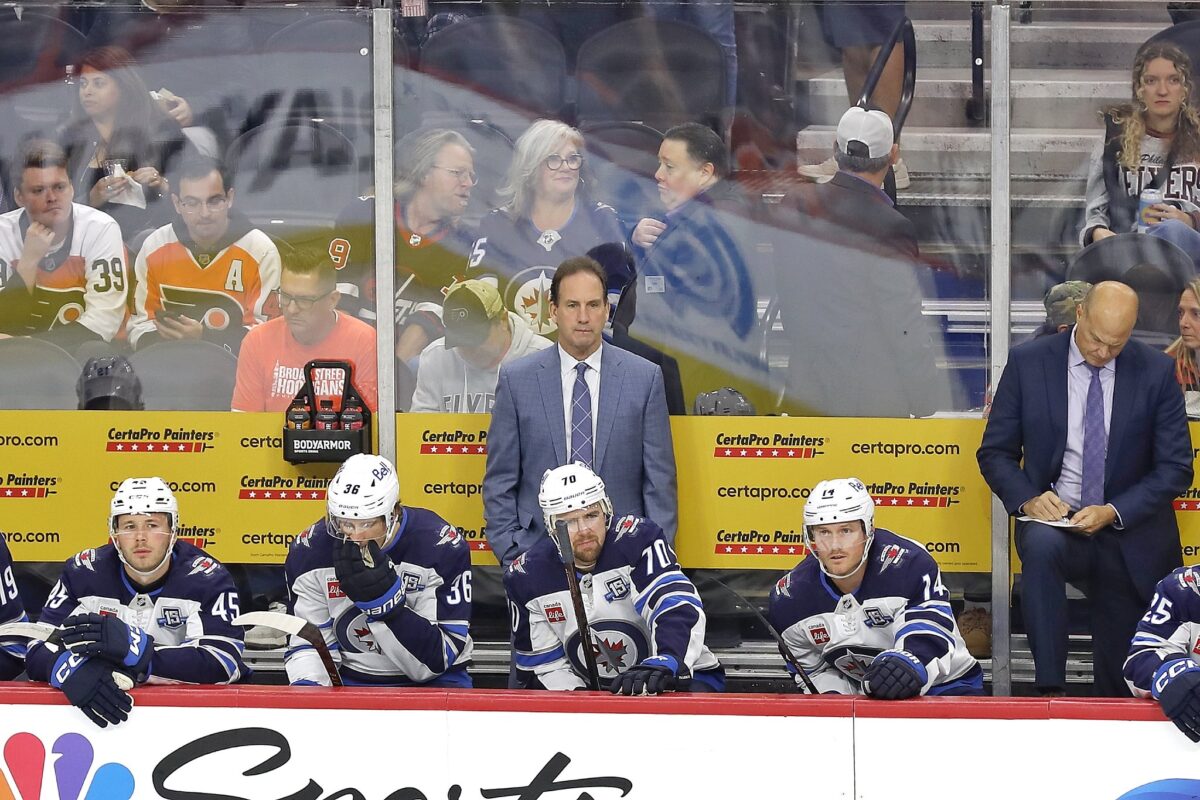
Important players have left. Their defence is weaker. The team got old in the wrong places, and the biggest worry is that the team hasn’t changed with the times, as the league has grown faster at moving the puck up from defence to offence.
Now, after fifteen years, the question is not if Cheveldayoff can build a good team, but if he can do it again, in a league that has transformed.
Jets Sinking Fast
Being 30th in the NHL is not just a fluke. It’s a statement. The team wasn’t built to be near the bottom. Even with injuries and some players not playing as well as they should, they should still be competitive, not out of the running by December. But Winnipeg has struggled at both ends of the ice, and the team is out of sync, slow, and lacking confidence.
Related: Jets Miss Out on Mason Marchment: What Comes Next for Winnipeg’s Forward Hunt?
This isn’t just about losses piling up. It’s about how they’re losing. The Jets seem to be reacting to what other teams are doing instead of taking charge themselves. They adjust too late, and any fixes don’t last long. When things get tough, they can’t seem to respond. When a team is this far down the standings, people start pointing fingers higher up. The coaches can only carry so much blame. Eventually, the people who built the team must be held accountable.
Cost of Cheveldayoff Standing Still
Cheveldayoff is known as one of the NHL’s most patient executives. Sometimes that patience has paid off. Other times, it has bordered on passivity. Over the years, Winnipeg has been slow to pivot. Slow to supplement its core. Slow to modernize its roster composition and slow to decisively address weaknesses until they became chronic problems.
In a league defined by constant evolution, standing still is often indistinguishable from moving backward. The Jets have cycled through different identities — heavy forecheckers, defensive grinders, speed-focused attackers — without ever fully committing to one. That lack of clarity has trickled down through the organization, from roster construction to player deployment. At 30th overall, the results are now impossible to rationalize away.
Jets Running Out of Runway
Cheveldayoff has faced criticism before. There have been disappointing exits, missed opportunities, and roster questions in the past. But this moment feels different for one simple reason: there is no clear runway left.
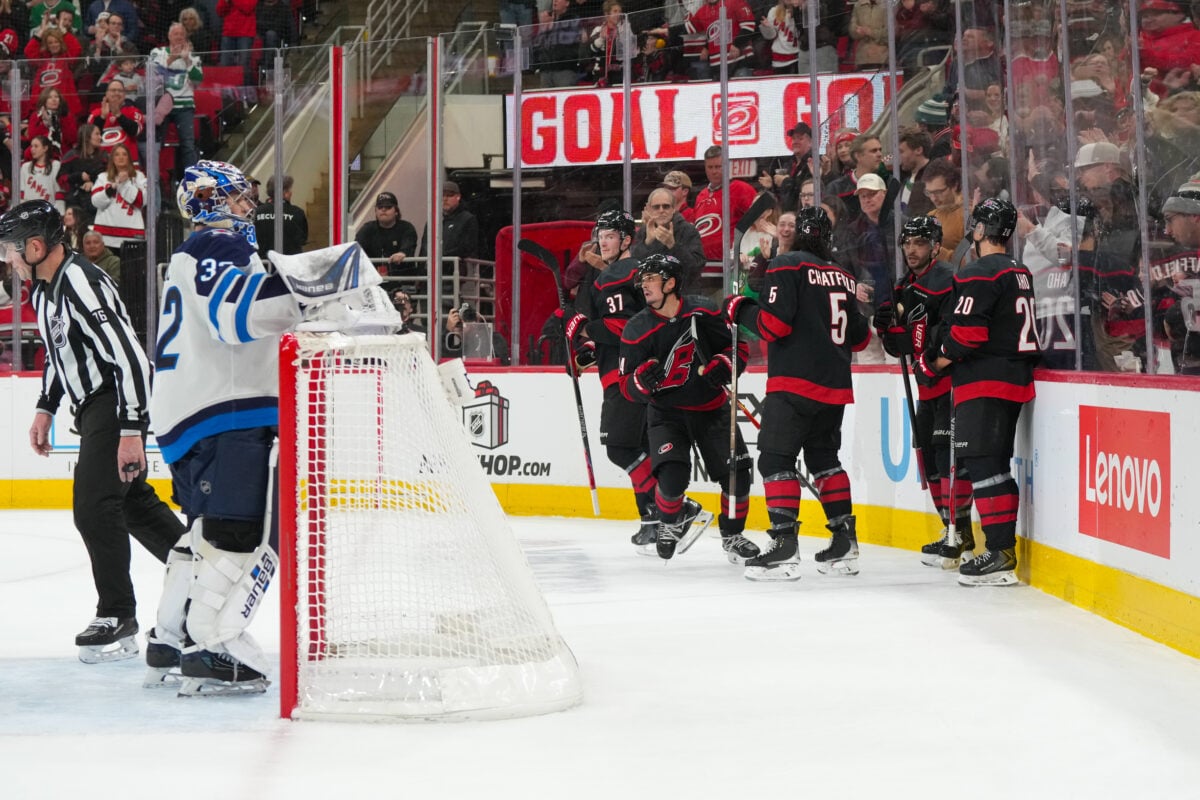
He has been part of this organization since day one. Every major philosophical decision, every core piece, every long-term bet has his fingerprints on it. When a franchise reaches this point after more than a decade under the same leadership, there is no margin for explanation. Ownership may still value stability, but stability without progress becomes inertia – and inertia, in professional sports, is a fast track to irrelevance.
Potential Replacements for Cheveldayoff
According to reports, Winnipeg would not lack options if they chose to move on. Veteran executive Doug Wilson has quietly re-emerged in an advisory role with the Pittsburgh Penguins after stepping away from the San Jose Sharks in 2022 due to health concerns. Now reportedly in good health, Wilson brings instant credibility, experience, and the gravitas to command a reset in a market that demands respectability and direction.
Then there’s the next wave. Mathieu Darche, long viewed as a future NHL general manager, has been heavily involved in the Tampa Bay Lightning’s championship-caliber front office. His background spans cap management, analytics, player evaluation, and organizational strategy — precisely the modern skill set the Jets should be seeking.
Evan Gold, the Boston Bruins’ assistant GM, is another name gaining traction. His work across salary cap management, contract negotiation, and American Hockey League oversight has earned him a strong reputation, even amid the Bruins’ recent turbulence.
Ryan Martin, currently with the New York Rangers, offers rare versatility — experience in scouting, cap strategy, player development, and even international team management. Few candidates can match the breadth of his résumé, while Kevin McDonald, fresh off a long and successful run with the St. Louis Blues before joining the Colorado Avalanche, represents a blend of traditional scouting instincts and championship pedigree — a talent evaluator trusted at the highest levels.
The common thread among these names? Fresh perspective. Modern processes. Clear vision.
The Question Jets Must Answer
This decision is no longer about loyalty or history. It’s about timing. Does ownership believe Cheveldayoff still has another competitive arc left to design — or has the franchise reached the natural end of his vision? Is the current collapse an anomaly, or the inevitable conclusion of a philosophy that has run its course?
Every team gets to the point where they need to make a tough choice. The Jets are there now. Being near the bottom of the NHL standings isn’t just a bad season; it means it’s time to look at the organization’s makeup. When that happens, everyone looks at the man in charge.
Jets at a Defining Moment
Cheveldayoff’s legacy in Winnipeg is secure. He helped establish stability, legitimacy, and respectability in a market that needed all three. But legacies don’t prevent endings — they define them.
The Jets are struggling, and the pressure is on. It’s not just about this season; it feels like an era is coming to a close. The team’s next big decision, whether to stick with things as they are or shake things up, will be way more important than any trade. This is make-or-break time for the Jets. They need to decide what they want to be, and if Cheveldayoff is the right person to get them there.
