In the chaotic, fast-paced world of the National Hockey League, the box score rarely tells the whole story. A 5-1 victory for the Nashville Predators over the Calgary Flames looks, on paper, like a standard regulation win—two points in the standings, a solid night for the special teams, and a job well done. But for those watching closely during the second period, the game offered a moment that transcended the typical rhythms of professional hockey.
When Ozzy Wiesblatt tapped the puck past the goal line at 15:32 of the middle frame, the celebration wasn’t the typical exuberant shout or glass jump we see from rookies netting their first. Instead, Wiesblatt immediately looked up and pointed to the sky. It was a gesture of relief, certainly, but more than that, it was a message.
This wasn’t just a first NHL goal. It was a promise kept, and a tribute delivered.
A Silent Salute to Orca
To understand the weight of that goal, you have to look back to September. The Wiesblatt family was struck by an unthinkable tragedy when Ozzy’s brother, Orca, passed away in a car accident on Sept. 14. Orca was more than just a sibling; he was a fellow combatant in the trenches of hockey, having recently signed with the Allen Americans of the ECHL.
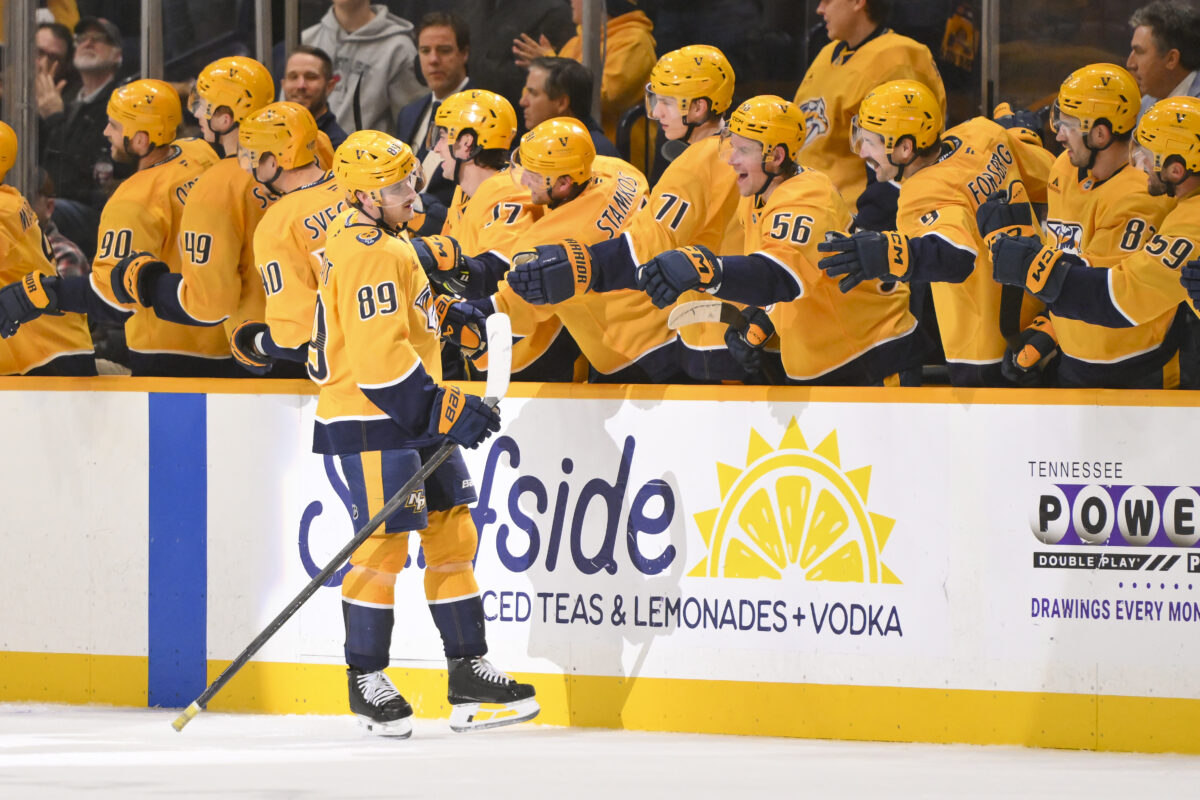
Hockey is often a family business, built on early mornings, long car rides, and a shared language of the game. Losing that connection so suddenly leaves a void that no amount of ice time can fill. When Ozzy pointed skyward, he turned the Bridgestone Arena ice into a quiet sanctuary.
Related – Predators Use Dominant 3-Goal Second Period to Win 5-1 vs. Flames
The Predators organization, to their credit, understood the gravity of the moment immediately. The social media caption was simple: “For Orca.” Wiesblatt was rightfully named the First Star of the Game, not just for the goal, but for the fortitude required to perform at an elite level while carrying such a heavy emotional load.
Former coaches have spoken about Orca’s “infectious smile” and physical style of play—traits that Ozzy carried with him onto the ice against Calgary. In that split second of celebration, the goal transformed from a personal statistic into a shared act of remembrance.
The “Calgary Kid” Comes Full Circle
There is a certain narrative symmetry that the hockey gods seem to enjoy, and this game was no exception. For Wiesblatt, scoring his first goal against the Flames added a layer of poetic justice.
Wiesblatt is a Calgary native. Growing up in Western Canada, the Flames are the ubiquitous presence, the benchmark of hockey reality. To score your first career goal against your hometown team is the stuff of driveway dreams.
However, in his post-game availability, Wiesblatt displayed the professional maturity that coaches love to see. He downplayed the specific opponent, noting that he is “buzzing” to play against any NHL team and is simply grateful to be in the league. He admitted it was a “hard goal” to come by, but he refused to make the night about a vendetta or a homecoming narrative. He kept the focus on the game, even if the subtext was obvious to everyone else in the building. It was a “Calgary Kid” moment, executed with veteran poise.
The Grind of the First Rounder
From a purely hockey perspective, this goal was a long time coming. Selected in the first round of the 2020 NHL Draft, Wiesblatt has had to grind his way into the lineup. The trajectory of a first-round pick is often scrutinized heavily; fans and analysts expect immediate impact.
Wiesblatt had played 27 NHL games prior to this one—and 22 in the current 2025-26 season—without finding the back of the net. He had recorded assists, he had generated chances, and he had played the physical, agitated style he is known for, but the goal column remained a zero.
For a player trying to cement a spot in the bottom six, that zero can start to feel like an anchor. Wiesblatt described the primary emotion as “relief.” He noted that he had been generating chances and knew that if he stuck to the process—playing the right way, finishing checks, going to the net—”something good would happen.”
It finally did. The goal itself was a product of excellent fourth-line chemistry. It was a tap-in setup by Michael Bunting, capping off a shift where the unit, which also featured Tyson Jost, dominated possession. We often talk about “line identity” in this league. For a fourth line to be described as “phenomenal” and for both wingers (Bunting and Wiesblatt) to score, that is the definition of depth scoring. It validates the coaching staff’s trust in Wiesblatt to handle regular minutes.
A Night of the Future and the Past
Interestingly, Wiesblatt wasn’t the only Predator checking a massive box that evening. The game served as a microcosm of the franchise’s current state: a blend of high-end veteran talent and an emerging youth movement.

Earlier in the first period, teammate Reid Schaefer also recorded his first career NHL goal. It is a rarity to see two players notch their firsts in the same sixty minutes. It speaks to the organizational depth and the infusion of youth into the lineup.
Related – Oilers Won’t Make Lateral Move, Stamkos Destinations & More NHL Rumours
On the other end of the spectrum, Steven Stamkos, a player whose resume needs no introduction, recorded his 1,200th career point in the same game. You had the start of two journeys and the continuation of a legendary one happening simultaneously. For a hockey fan, it was a perfect cross-section of the NHL lifecycle.
The Flag on the Mountain
Scoring your first NHL goal is often compared to planting a flag on a mountain peak. It is the culmination of years of early practices, junior bus rides, and the uncertainty of the draft. It is a validation of the work.
But for Wiesblatt, the context changes the metaphor. He climbed the mountain, certainly. But when he got to the top, he didn’t just plant the flag for himself. He pointed it toward the sky. He turned a personal victory into a memorial.
The Predators took the two points, but Wiesblatt took a step forward in his career and his healing process. It was a reminder that while we analyze the forechecks, the power plays, and the save percentages, the human element remains the most compelling part of the game.
AI tools were used to support the creation or distribution of this content, however, it has been carefully edited and fact-checked by a member of The Hockey Writers editorial team. For more information on our use of AI, please visit our Editorial Standards page.
