The Pittsburgh Penguins are heading into a pivotal offseason with several key decisions to make, especially regarding their goaltending. Stuart Skinner is in the final season of this three-year contract before he becomes an unrestricted free agent, and the question is whether the Penguins should commit to him long-term or explore other options.
Skinner brings a unique blend of playoff experience, upside, and abilities as a starting goaltender, but he is also inconsistent, which could make any long-term deal risky. The free-agent goalie market is expected to be relatively thin this offseason, so his value could become inflated, making this a critical decision for Pittsburgh’s front office.
Why Penguins Should Re-Sign Skinner
Skinner has proven he can handle a starter’s workload at the NHL level, can carry a team for stretches and step up in high-pressure situations.
One of Skinner’s biggest selling points is his postseason experience. Unlike many goaltenders who hit free agency, he has played meaningful playoff games and was part of deep runs with the Edmonton Oilers before he was traded to the Penguins in December. For a Penguins team trying to remain competitive while retooling on the fly, that kind of experience is invaluable.

At his best, Skinner is a legitimate No. 1 goalie. He has the size, positioning, and composure to dominate games, and when he gets into a rhythm, he can string together impressive performances. The Penguins don’t necessarily want to rebuild with Sidney Crosby and Evgeni Malkin still on the roster, so having a goalie like Skinner who can steal games is crucial to their success.
If Pittsburgh lets Skinner walk in free agency, they may find themselves scrambling for alternatives that carry just as much risk, if not more. Re-signing him ensures stability at a position that has been anything but stable for the team in recent years.
Why Penguins Shouldn’t Re-Sign Skinner
The concerns surrounding Skinner are hard to ignore. The biggest knock against him is his inconsistency. He can look like a top-tier goalie one night and struggle the next, and that unpredictability can be costly for a team trying to stay in the playoff mix.
Related: 2 Penguins Players Who Have Been Stepping Up Lately
The Penguins are second in the Metropolitan Division with 12 games remaining and will be fighting through tight games and for positioning. Inconsistent goaltending could be the difference between making the playoffs and dropping out.
Also, with a weak free-agent goalie class, Skinner is in a position to cash in and easily sign a deal worth $5–$6 million annually on a long-term contract. Committing that kind of money to a goalie who hasn’t consistently proven himself as a top-tier starter is a big gamble. If he fails to meet expectations, that contract could quickly become a burden, especially since the team only has nine forwards, five defensemen and no goalies signed for next season.
The Penguins also have internal options worth considering, most notably Sergei Murashov. While still unproven at the NHL level, he represents a younger, cheaper option with upside. Pairing Murashov with Arturs Silovs could give Pittsburgh a more flexible and cost-effective tandem. It would also allow the team to evaluate its future in net without being locked into a long-term deal. Re-signing Skinner could block that development path and delay the transition to a younger core.
Penguins Should Explore External Options
If the Penguins decide not to bring Skinner back, they’ll need to explore other options, either via trade or free agency.
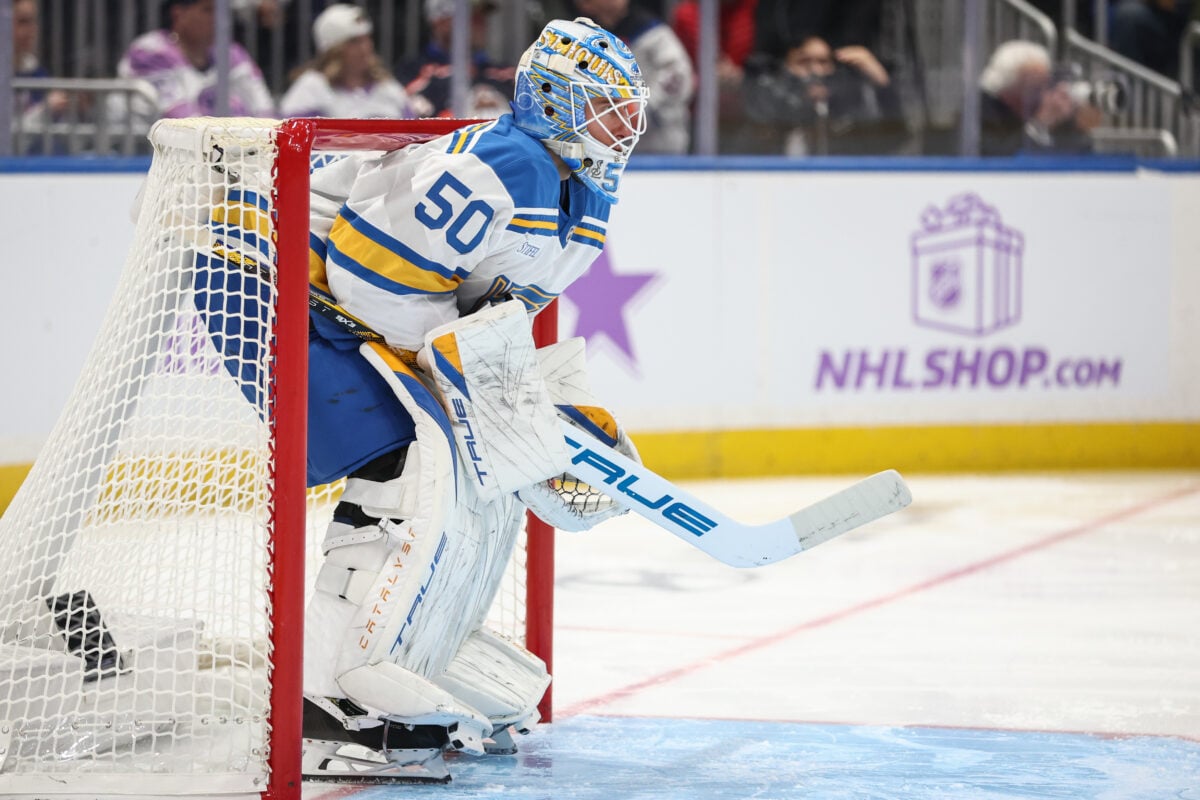
Two names that could become available on the trade market are Jordan Binnington and Jesper Wallstedt.
- Binnington brings a Stanley Cup pedigree and a competitive edge that can elevate a team in big moments, and he has experience carrying a team through the postseason. However, similar to Skinner, inconsistency remains a concern, and his contract carries a significant $6 million cap hit for next season. He’s more of a short-to-mid-term solution rather than a long-term answer.
- Wallstedt, on the other hand, represents the opposite end of the spectrum. The Minnesota Wild’s top goaltending prospect is viewed as a future No. 1 goalie with elite upside. At 23 years old, he fits the timeline to retool and could anchor the position for years. The downside? He won’t come cheap. Acquiring Wallstedt would likely require a significant package of assets, as Minnesota considers him part of its future.
If the Penguins prefer to avoid giving up assets, the free-agent market could be highlighted by Sergei Bobrovsky. Bobrovsky offers elite experience, proven playoff success, and the ability to get hot at the right time. However, at this stage of his career, age and durability are factors to consider. While he may not be a long-term solution, he could provide stability in the short term if Pittsburgh is aiming to remain competitive.
What Should the Penguins Do?
This decision ultimately comes down to risk tolerance. If the Penguins believe Skinner can find consistency and solidify himself as a true No. 1 goalie, re-signing him makes sense—especially given the lack of better options on the market.
However, if they see him as too unpredictable, committing long-term money could be a mistake that limits their flexibility moving forward. In that case, a middle-ground approach is ideal. Instead of a long-term deal at a high cap hit, the Penguins could look to sign Skinner to a shorter-term contract, something in the 2–3 year range. This would allow them to maintain stability in net while keeping their options open.
What Is Skinner Worth?
Re-signing Stuart Skinner is a high-risk, high-reward scenario. If the Penguins can secure Skinner on a reasonable, short-term deal, it would be worth it. But if his asking price is high, say in the $5–$6 million territory and long-term, they would be better off exploring other options—whether that’s through trades, free agency, or internal options. In a tight cap era, committing big money to an inconsistent goaltender is a gamble Pittsburgh can’t afford to lose.
