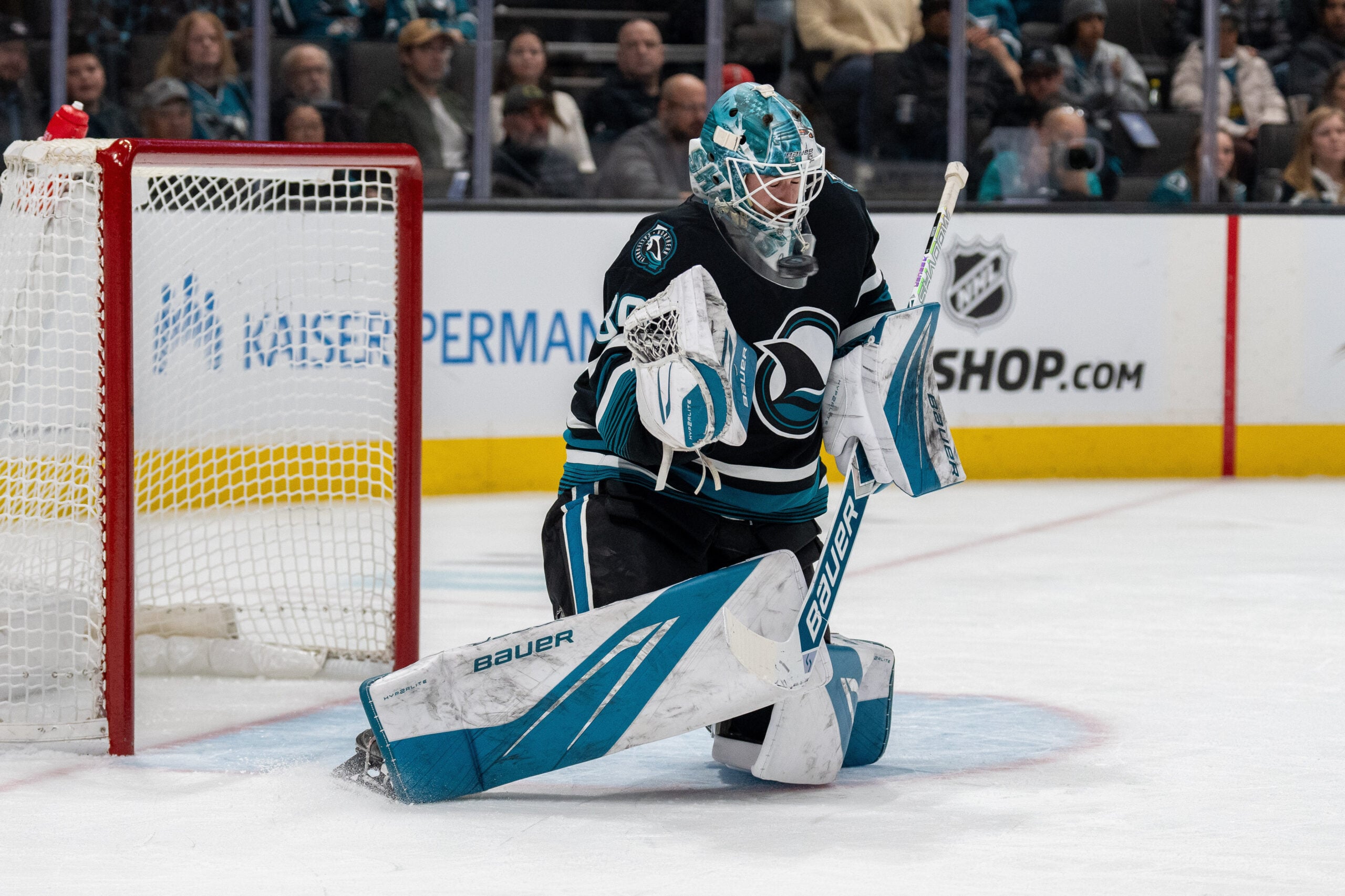
The San Jose Sharks moved quickly on Wednesday. Within hours of the offseason opening, general manager Mike Grier sent the No. 20 overall pick to the Buffalo Sabres in exchange for defenseman Michael Kesselring and the No. 27 pick. It was a sensible move. A low-cost bet on a 26-year-old right-shot blueliner with demonstrated upside.
What it was not was a solution to San Jose’s defensive problem. Grier knows that. Even with Kesselring added, the Sharks have just four defensemen under contract heading into next season, including Dmitry Orlov, Sam Dickinson, Mattias Havelid, and Luca Cagnoni. Meanwhile, another five more are set to hit free agency.
The blue line remains the most urgent area of need on the roster, and one reclamation project does not change that. There is still room and a genuine reason to pursue Rasmus Ristolainen. Grier also understands that, in the end, Kesselring is a project. He missed the first nine games of last season with a knee injury before suffering a high ankle sprain that he later re-injured.
He was eventually pushed out of the Buffalo lineup entirely by the arrival of Logan Stanley and Luke Schenn before the trade deadline. He finished with just two points in 34 games and 25 hits, a steep drop from the player who set career highs in goals, assists, points, and ice time with the Utah Mammoth in 2024-25, posting seven goals and 29 points across all 82 games. The talent is real. The bounce-back potential is real.
What Kesselring Is and Is Not
But despite his talents, Kesselring is not a player San Jose can count on for top-four minutes right now, and that is precisely what this roster needs. To be fair to Grier, the Kesselring trade was never meant to be the centerpiece of San Jose’s defensive rebuild. “Michael has a big frame with solid two-way ability,” Grier said in the official press release.
The Sharks’ GM continued, “He is a responsible player in the defensive zone with a well-rounded offensive game, and will be a good upgrade for us patrolling the blueline.” That framing is telling. Grier is describing a complementary piece, a player who gets his opportunity and grows into a role. He is not describing a top-pair anchor.
That is the gap Ristolainen fills. The 31-year-old Finn brings exactly what Kesselring cannot yet offer, and that’s proven top-pairing experience, physical presence, and the playoff credibility that rubs off on younger teammates. He finished the 2025-26 regular season with one goal and 13 assists, 63 blocked shots, and 48 hits across 44 games, doing all of that after missing the first 31 games of the season due to triceps surgery.
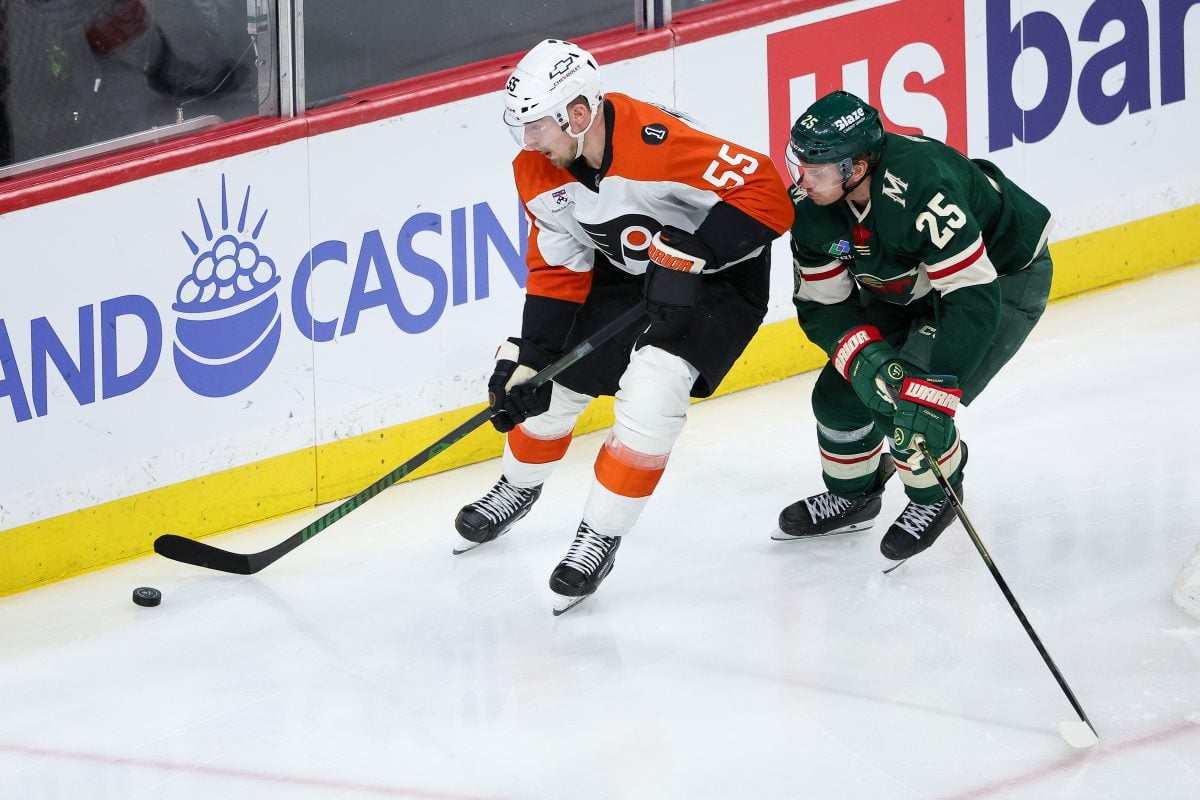
When he was healthy, he was one of Philadelphia’s most important players. He was Travis Sanheim’s most effective and near-exclusive playoff partner, posting the highest expected goals percentage of any Flyers defensive pairing across ten postseason games.
The Contract Situation Still Works
Nothing about the Kesselring acquisition changes the financial logic of a Ristolainen trade. The Sharks are projected to carry more than $41 million in cap space this offseason, which remains the most of any team in the league. Ristolainen has one year left on his deal at a $5.1 million average annual value (AAV), a number that barely registers against what San Jose has available.
Signing Kesselring to a reasonable restricted free agent deal and adding Ristolainen on a one-year bridge does not create any meaningful cap tension, even with Macklin Celebrini’s eventual extension on the horizon. The Flyers’ asking price is a first-round pick and a prospect. San Jose still holds two first-round picks heading into the draft at No. 2 and No. 27.
The No. 27 pick, just acquired from Buffalo, could anchor a Ristolainen package without touching the second-overall selection. Add a mid-tier prospect from the pipeline, and the framework is there. Philadelphia gets what it has been asking for all year. San Jose gets a veteran blueliner who stabilizes the top pairing while Kesselring, Dickinson, and Cagnoni develop behind him.
The Bigger Picture
The Sharks are rebuilding, but they are not rebuilding blindly. Celebrini, Will Smith, and Michael Misa are the foundation of something real, and the timeline for contention is shortening faster than most expected. San Jose is relatively set in their forward corps and should use most of their available dollars to build up the defense.
Adding Kesselring as a reclamation project is a smart, low-cost move. But stopping there would be a mistake. Ristolainen is the experienced hand this young group needs next to it. One year, minimal risk, maximum impact on a blue line that is still at least two seasons away from standing on its own. The Kesselring trade was a good start. It does not have to be the finish.
Free Newsletter
Get San Jose Sharks coverage delivered to your inbox
In-depth analysis, breaking news, and insider takes - free.
Subscribe Free →