Some nights tell you everything you already knew. The Toronto Maple Leafs lost again, this time to the Carolina Hurricanes, and if you were looking for something new, you didn’t find it. Toronto scored enough to stay interesting, gave up enough to lose, and spent most of the game skating uphill.
It wasn’t for lack of effort. It rarely is for this team. They try hard. They just don’t deliver.
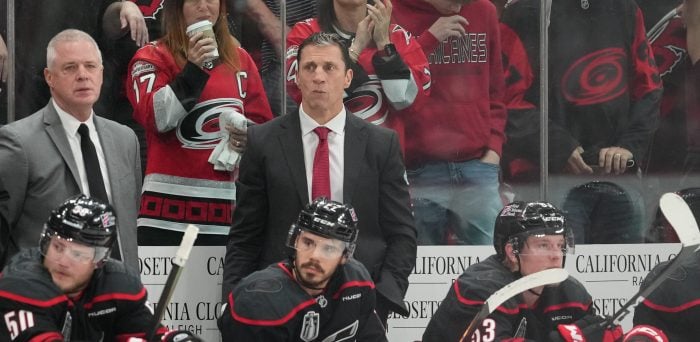
The issue is that the same themes keep showing up — breakdowns, inconsistency, and a style of play that doesn’t look like Craig Berube hockey. For a head coach who came in promising structure and bite, the Maple Leafs still look far too easy to play against.
Three Big Questions the Maple Leafs Must Answer
So, instead of another game recap, maybe it’s time to ask three big questions that this loss left behind.
Question 1. Is the System Working—or Is It Already Breaking Down?
Carolina attempted 89 shots to Toronto’s 36. That isn’t bad luck; that’s domination. The Maple Leafs were trapped in their zone for long stretches, and when they did clear the puck, it came right back. Breakouts looked improvised, gaps were wide, and the defensemen seemed caught between systems — unsure whether to hold position or chase pressure.
When veteran players like Jake McCabe and Morgan Rielly all look hesitant at once, that usually means confusion, not laziness. It’s early yet, but Berube’s structure doesn’t appear to have taken root. The team’s defensive reads are inconsistent, and even the forwards seem unsure of their coverage responsibilities. You can blame execution, but at some point, the system itself deserves scrutiny.
This is a group that wanted to play a straight-up, simple game, forecheck hard, defend together, and make quick decisions with the puck. What we’re seeing instead is hesitation, confusion, and perhaps fatigue. If Berube’s message is clear, it’s not showing up on the ice.
Question 2. Are the Stars Setting the Right Example?
Auston Matthews and William Nylander continue to produce, but leadership isn’t only about goals. It’s about tone. Too often, Toronto’s best players are out of sync with the team’s defensive commitment. The hustle on one shift doesn’t carry over to the next. There’s no real consequence for mistakes — not from the bench, and not from within the room.

Berube has been fiery behind the bench, but that energy doesn’t translate. When the same stars play 20 minutes no matter how engaged they are, the rest of the lineup gets the message: some players are immune from accountability.
That was supposed to change this season. Berube was brought in to install a harder culture, one where the level of “compete” and consistency mattered more than pedigree. Yet so far, it’s the same pattern — a few dazzling moments from the elite players, surrounded by long stretches where the team drifts. Until Toronto’s top players buy into the coach’s demands, no system or scheme will matter much.
Question 3. What Happens If the Players Have Stopped Listening?
This might be the hardest question of all. When every defenceman regresses, when habits fade, and when frustration builds behind the bench, it starts to feel less like a slump and more like a disconnect.
Has Berube already lost part of the room? That’s speculation, but the signs are worrying. There’s visible tension on the bench, minimal in-game adjustments, and familiar late-game collapses. One fiery speech during the Pittsburgh Penguins’ comeback might spark a short-term rally, but constant bluster and beat-downs day after day—can that really sustain a team’s internal drive, or does it risk wearing players down?
It’s not that the Maple Leafs aren’t trying; it’s that they’re playing without conviction. They look disheveled. And that’s a dangerous place to be for a talented team that keeps saying it’s ready to turn the corner.
A Final Thought About This Maple Leafs’ Team
The Maple Leafs don’t lack talent. They lack cohesion. The effort is there in flashes, but the purpose isn’t.
So what’s really going on here? It’s hard to tell. Maybe it’s the culture; the players have not fully bought into what the coach preaches. Perhaps it’s bad habits, the same sloppy turnovers, the same missed assignments, over and over. Maybe it’s poor preparation, with the team simply not ready to execute under high pressure.
The Maple Leafs can survive — and even prosper — against lesser teams when goaltending is strong. But what happens when they run into a hot goalie or a disciplined opponent and the team isn’t prepared? Or maybe it’s a combination of all of these: mental fatigue, internal pressure, poor preparation, friction, or frustration. Each loss leaves us guessing, because the symptoms are apparent but the source is slippery.
Free Newsletter
Get Toronto Maple Leafs coverage delivered to your inbox
In-depth analysis, breaking news, and insider takes - free.
Subscribe Free →