- The Context
- Understanding Montreal’s Asset Hierarchy
- Ranking Montreal’s Trade Pieces
- Scenario #1: Nico Hischier, New Jersey Devils
- Option A: The Foundation Offer
- Option B: Adding Forward Depth
- Option C: The Goaltending Angle
- Scenario #2: Quinton Byfield, Los Angeles Kings
- Option A: The Foundation Offer
- Option B: The Budget Bridge
- Option C: The Young Defensive Anchor
- Scenario #3: Connor McDavid, Edmonton Oilers
- Option A: The Opening Position
- Option B: Adding The Defensive Layer
- Option C: An Unlikely Deal Edmonton Could Not Refuse
- Final Thoughts
Just to be clear, everything here is my own opinion and speculation. There is no insider info, league sources, or rumours behind it. I’m basing this on what we’ve all seen from Kent Hughes and Jeff Gorton since they took over the Montreal Canadiens. If you’re hoping for leaks, you won’t find any. Instead, I’ll lay out why Montreal’s front office, which has never been shy about making bold moves, should consider three big trades this offseason.
The Context
The Canadiens ended the season third in the Atlantic Division, but that in itself doesn’t tell the whole story. They went on to reach the Eastern Conference Final as the youngest playoff team in NHL history by average age. Even more impressive, they set that record last year and broke it again this spring.
This is no longer a rebuild with a bright future somewhere on the horizon. The future arrived ahead of schedule. A year ago, this core had a single playoff victory to their collective name against the Washington Capitals. This spring, they were playing in a conference finals. That is a staggering leap, and it reframes everything about how Montreal should approach this offseason.
The question this summer is not whether Hughes and Gorton are willing to be bold. We already know the answer to that. The question is which bold move makes the most sense, and what Montreal is genuinely willing to put on the table to get it done.
Understanding Montreal’s Asset Hierarchy
Before getting into the trade scenarios, it’s worth establishing clearly what Montreal is working with and how other general managers (GMs) are likely to value it, because the framework shapes everything that follows.
The untouchables are on a short list. Nick Suzuki, Cole Caufield, Lane Hutson, Ivan Demidov, Noah Dobson, Juraj Slafkovsky, and Jakub Dobes. That’s it. Every other roster player, every prospect, every pick is theoretically available. That is an unusual and powerful position for a conference finals team to be in, and it means Hughes and Gorton can build packages that simultaneously solve multiple specific problems for a counterpart.
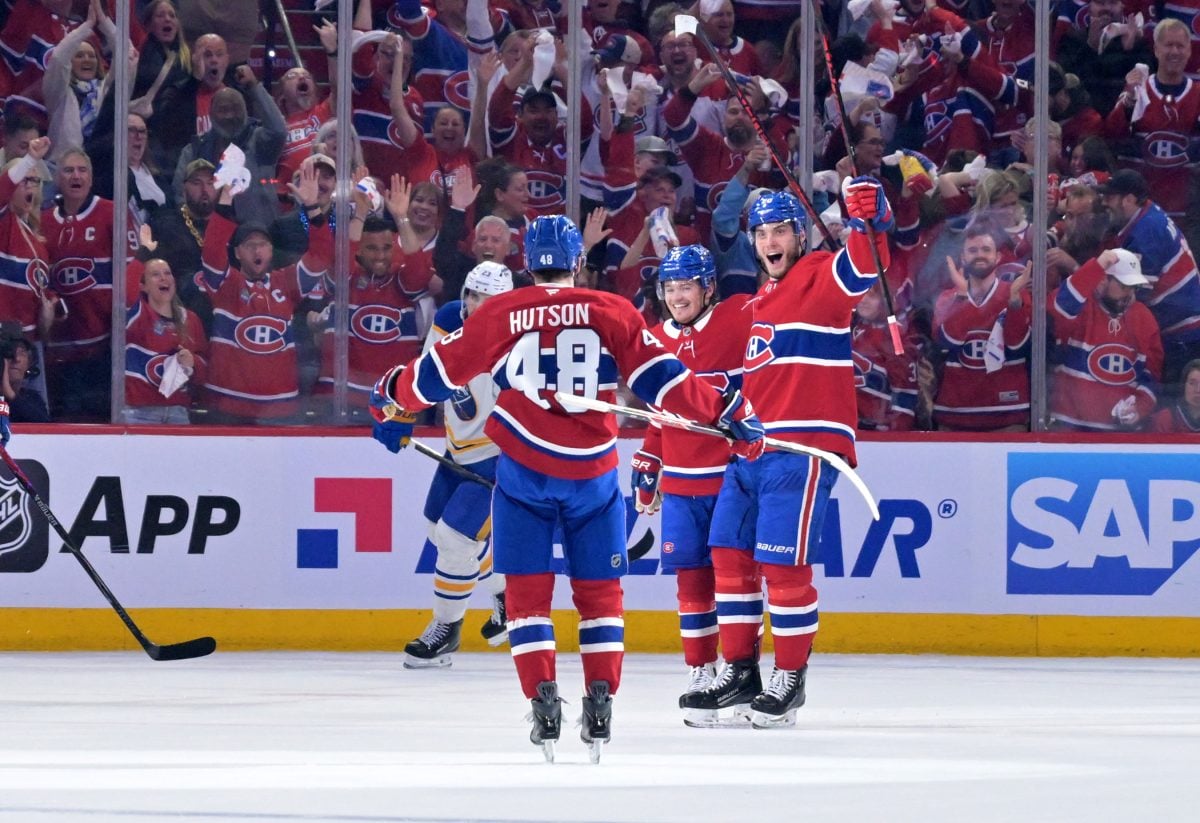
The first-round picks are the cost of doing business. The 2026 and/or 2027 firsts are included in every serious offer. Not as the centrepiece, as the floor. However, the real anchor of every package in this piece is Michael Hage. In every scenario that follows, Montreal is acquiring a centre. Which means every counterpart is losing one. A GM does not move his franchise centre without a credible answer to the question of what comes next at that position.
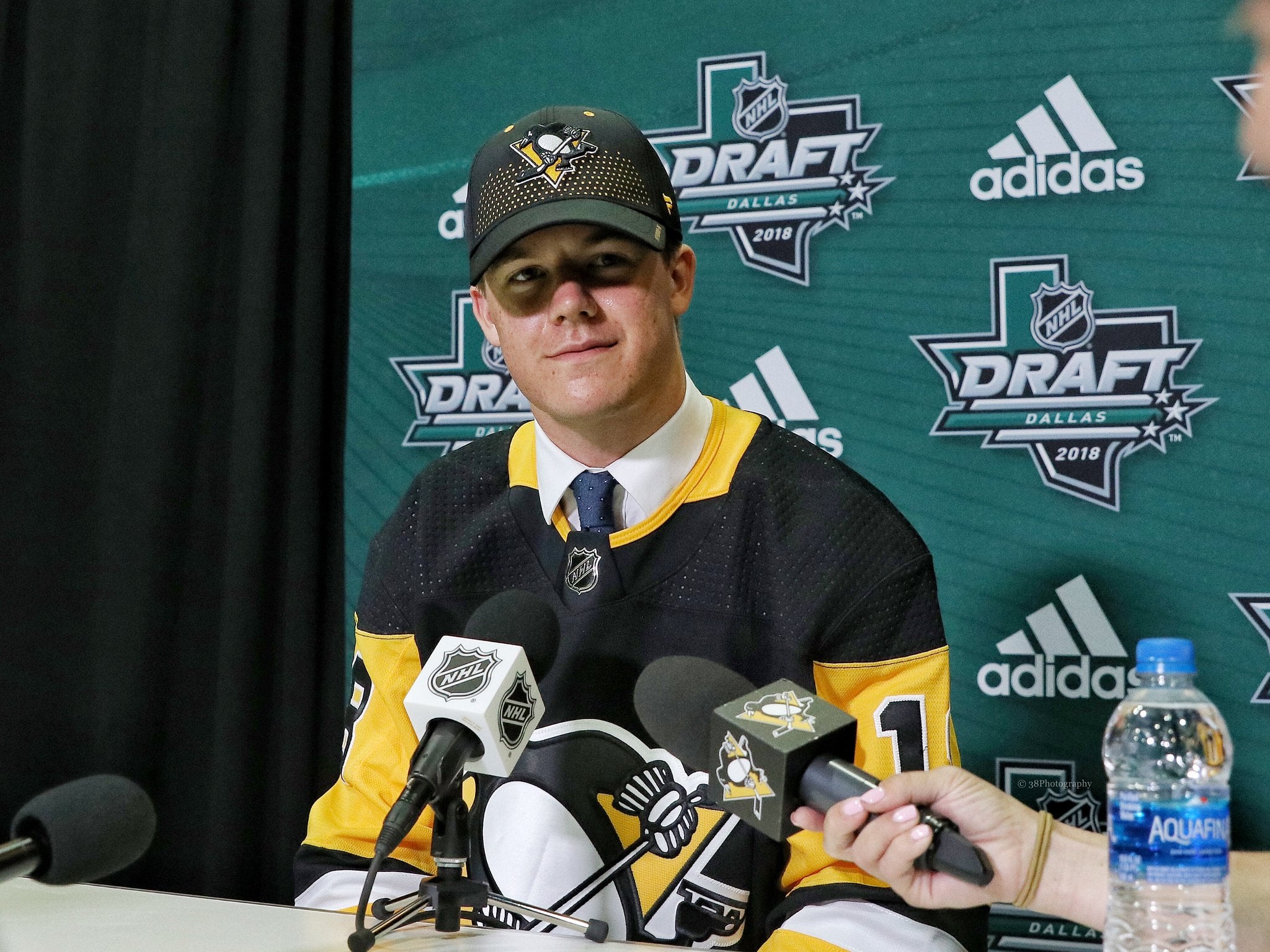
Hage is that answer, but not next season. He is expected to spend another year in the NCAA before making the jump to professional hockey in 2027-28. As a result, any package involving Hage would also need to include an NHL-ready centre. Alex Newhook, Kirby Dach, and Owen Beck are the obvious candidates. Newhook offers the most immediate help, Dach brings the highest upside if healthy, and Beck remains an intriguing young centre who may still be a few years from reaching his ceiling.

What changed, and this matters enormously for how Hughes and Gorton think about him, is that Hage elected to return to Michigan for another NCAA season. That is a friction point for a front office managing an open championship window right now. A top prospect who just pushed his NHL timeline back another year is a prospect whose value to the current window has diminished, even if his trade value to other teams hasn’t.
From there, the supporting cast of each package is built around what the counterpart specifically needs beyond the centre position. On defence, Hughes and Gorton have a few distinct options that appeal to different kinds of teams. Kaiden Guhle is the certainty asset, 24 years old, proven NHL top-four defenceman, signed and cost-controlled, playing right now.
Mike Matheson is a different flavour, a mobile, offensive, veteran defenceman who contributes immediately at a high level and suits teams that want proven production over upside and term. The choice between them depends on what the counterpart values, and crucially, Montreal would not move both in the same deal.
David Reinbacher sits just below that tier, an elite right-shot defensive prospect whose ceiling is genuinely high, despite his injury concerns, along with Adam Engstrom, who has shown promise and looks to be NHL-ready as soon as next season.
Jacob Fowler rounds out the top premium group as one of the best goaltending prospects in the league.
Below that sits a mid-premium tier that is still quite deep. Alexander Zharovsky thrived in the Kontinental Hockey League (KHL) as a rookie, and many analysts project him to be a top-six forward and a first power-play contributor in the NHL. Alongside him sit Newhook and Dach, proven NHL contributors who are far from filler. None of them alone moves the needle enough to complete a deal of this magnitude, but add either one to a package already anchored by Hage and the mandatory picks, and the offer becomes much harder to decline.
Ranking Montreal’s Trade Pieces
- Centrepiece: Hage
- Top premium: Guhle, Matheson, Reinbacher, Fowler
- Mid premium: Zharovsky, Newhook, Dach
- Mandatory cost of entry: 2026 1st, 2027 1st
- Depth: Engstrom, Beck
Scenario #1: Nico Hischier, New Jersey Devils
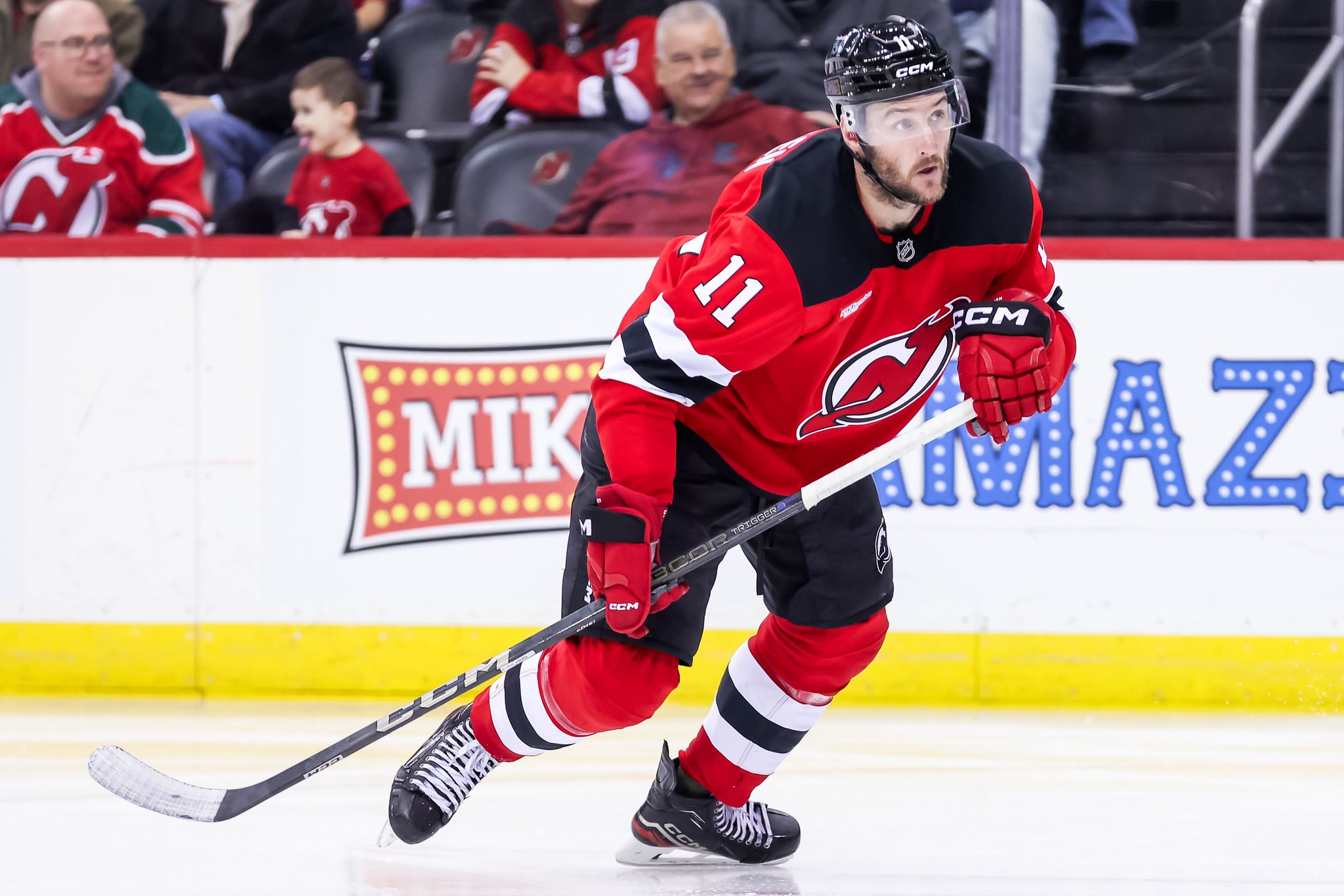
The New Jersey Devils conversation has been fundamentally reframed by a single fact that changes the entire negotiating landscape: Tom Fitzgerald was fired in April, before the season was even over. The Devils missed the playoffs again after years of promise built around their young core, and the organization brought in Sunny Mehta, formerly of the Florida Panthers, where he served as assistant GM and head of analytics for two consecutive Stanley Cup champions.
On his second day on the job, Mehta pledged to build a sustained championship contender and expressed confidence it could happen sooner rather than later. Mehta is coming from a Florida organization that was aggressive in trading draft picks to acquire players who could help them win sooner rather than later, and as assistant GM, he was at the centre of that approach. He has a championship blueprint and the confidence to execute it.
The Devils have $34.9 million committed to six defencemen alone, and Nico Hischier’s extension is projected at over $11 million per season. Mehta will almost certainly be looking to move some of that defensive cap weight this summer to create the flexibility he needs to reshape the roster. Inconsistent goaltending has undermined otherwise competitive rosters for multiple seasons. The roster has both high-end stars and glaring weaknesses, and this summer will be defined by tough decisions that could shape the franchise’s trajectory for years.
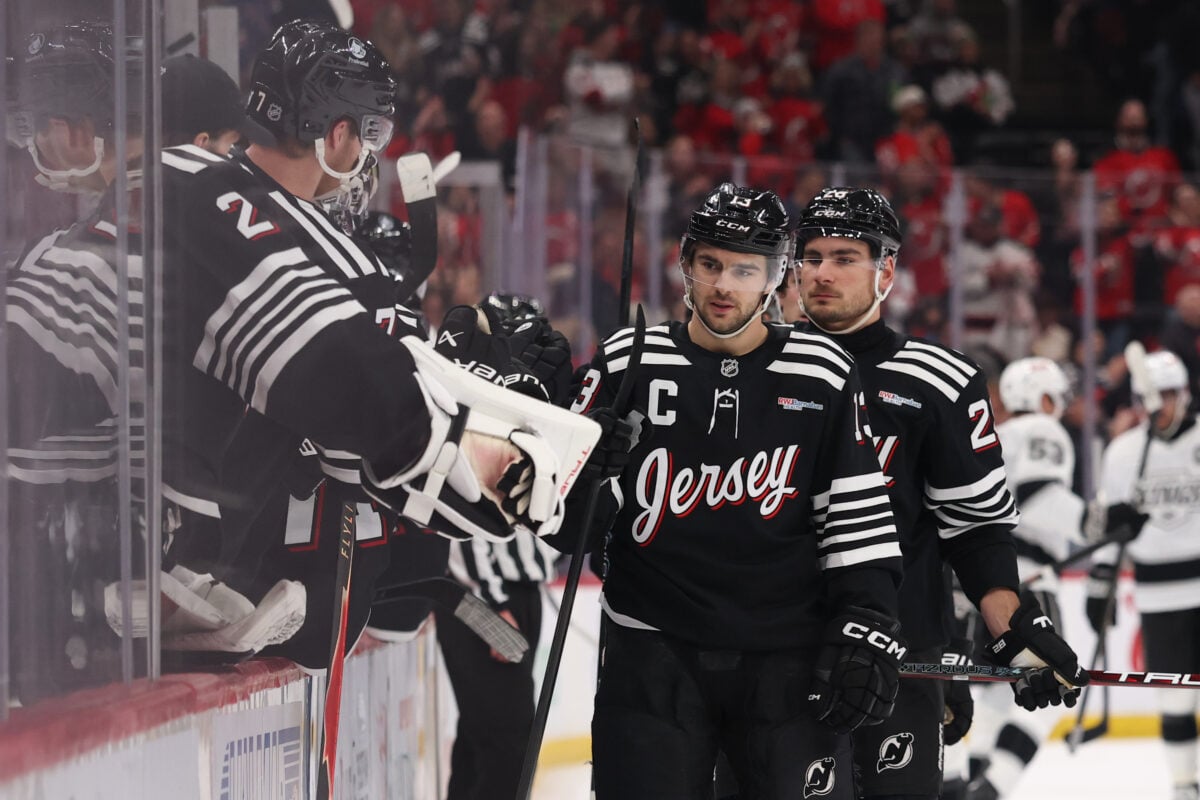
Here is the argument Mehta might actually make to himself: if the existing core hasn’t worked, if goaltending remains chronically unsolved, and if locking Hischier into an $11 million extension for eight years means committing to a third consecutive disappointing cycle around the same group, is that really the right call for a new GM trying to build something different? Or is it smarter to convert Hischier’s value at its absolute peak and build something new around Jack Hughes with assets from a team that has already proven its core can perform when it matters most?
A new GM from a championship organization doesn’t arrive to maintain what came before. He arrives to build something better. That is the opening Hughes and Gorton need.
Option A: The Foundation Offer
Montreal receives: Hischier (with extension)
New Jersey receives: Hage, Newhook or Dach, 2026 1st or 2027 1st
Hage answers the centre question for the long term. Newhook or Dach covers the gap immediately while Hage finishes his NCAA season. One first-round pick rounds out the package.
Option B: Adding Forward Depth
Montreal receives: Hischier (with extension)
New Jersey receives: Hage, Dach or Beck, Zharovsky
For a GM who values high-upside forward projection over a draft pick, this version replaces the first-round pick entirely with Zharovsky. He just won KHL Rookie of the Year in his first professional season and projects as exactly the kind of top-six power play contributor New Jersey needs alongside Jack Hughes. Some GMs would take that over a pick without hesitation.
Option C: The Goaltending Angle
Montreal receives: Hischier (with extension)
New Jersey receives: Hage, Dach or Beck, Jacob Fowler
This is the version that speaks most directly to New Jersey’s most chronic problem beyond the centre position. Goaltending has undermined the Devils for multiple seasons, with shaky stretches, injuries, and an inability to deliver in key moments. Fowler is one of the best goaltending prospects in the league. If Mehta decides that addressing goaltending is the single most transformative thing he can do alongside securing a future centre, a package built around Hage, a bridge centre, and Fowler addresses the two most pressing needs in one move.
Scenario #2: Quinton Byfield, Los Angeles Kings
The Quinton Byfield conversation is harder for a reason that has nothing to do with the player’s value and everything to do with the situation surrounding him now.
Anze Kopitar retired this offseason after a Hall-of-Fame career. The Kings were swept in the first round by the Colorado Avalanche, and there are now real questions about the franchise’s direction. Los Angeles is set with their wingers but has question marks almost everywhere else. Centre depth and defence both need to be addressed heading into this offseason.
Byfield has proven he can handle second-line duties, but his ceiling remains the real story. The physical tools, skating ability, and talent all point to a potential first-line centre. What has yet to follow is the level of production expected from a player drafted second overall. At 24, and with Kopitar no longer standing ahead of him on the depth chart, Byfield’s time has arrived. He enters next season as Los Angeles’ first-line centre, and now faces the challenge of proving he belongs there.

That is the crack Hughes and Gorton need to find. If Ken Holland looks at this offseason and asks himself honestly whether waiting for Byfield to become something he hasn’t yet become is the right call, or whether converting that value now into a package that reshapes the franchise makes more sense, the conversation opens.
Los Angeles has neither urgency nor desperation, but a compelling enough offer could force the kind of internal conversation every GM eventually has to confront: Is it time to cash in on potential, or keep betting on it?
Option A: The Foundation Offer
Montreal receives: Byfield.
Los Angeles receives: Hage, Newhook, Dach or Beck, 2026 1st or 2027 1st
Hage answers the centre question for the long term. Newhook, Dach or Beck covers the gap, and a first-round pick is a useful asset.
Option B: The Budget Bridge
Montreal receives: Byfield.
Los Angeles receives: Hage, Beck, and Engstrom, a first-rounder in 2026 or 2027.
Beck is the lighter bridge option, so a pick is on the table. For a Kings team comfortable developing a younger stopgap alongside Hage, this version still addresses the centre position at both timelines while adding Engstrom on the blue line.
Option C: The Young Defensive Anchor
Montreal receives: Byfield.
Los Angeles receives: Michael Hage, Newhook or Dach, Kaiden Guhle, and a first-round pick.
This is the version that most directly mirrors how LA has historically built their defensive infrastructure: young, proven, cost-controlled, and capable right now. Guhle is exactly that player. Combined with Hage at centre, this is a package that addresses multiple distinct needs in one move.
Scenario #3: Connor McDavid, Edmonton Oilers
Before you close this, hear me out.
There is no inside information here. No reason to believe Connor McDavid has requested a trade or that the Edmonton Oilers have any interest in moving him. This is speculation in the purest sense. But the question was never whether it’s likely. The question is whether it’s possible, and whether Hughes and Gorton pull the trigger if the door cracks open even slightly.
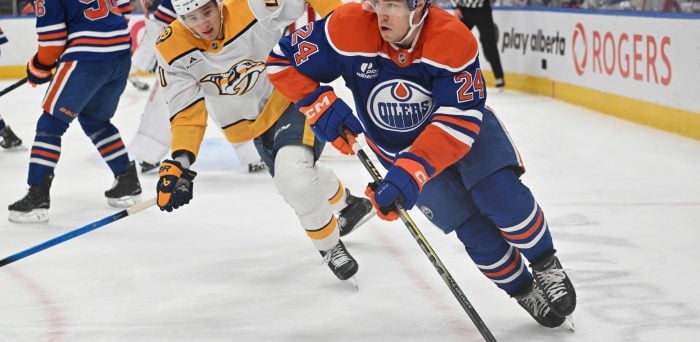
The conditions for that door cracking have never been more present than they are right now. After reaching the Stanley Cup Final in each of the previous two seasons, the Oilers were eliminated by the Anaheim Ducks in the first round. McDavid himself called Edmonton “an average team with high expectations.” Draisaitl was blunter still: “We’re not trending in the right direction. We’ve taken big steps backwards.” These are not the comments of men who feel good about where things are heading.
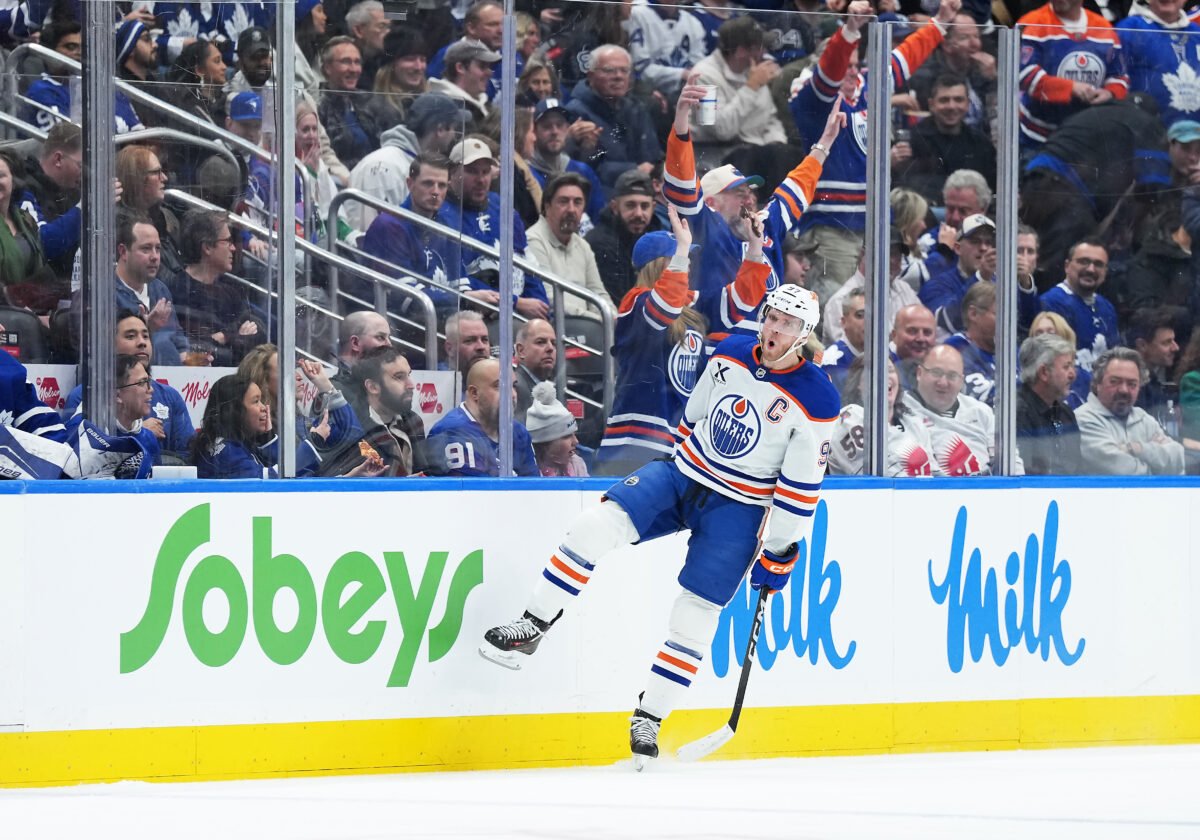
McDavid is 29 years old. The core around him is aging. Draisaitl missed the final 14 games of the regular season with an injury and was not fully healthy in the playoffs. The Oilers have fired their head coach. The goaltending situation remains completely unresolved, with Stuart Skinner gone and the experiment with Tristan Jarry having failed. Questions are now being asked publicly about how much longer this group can sustain a legitimate championship window. McDavid signed a two-year deal at $12.5 million average annual value (AAV) specifically designed to give Edmonton cap flexibility, but the moves haven’t worked, and the clock is running loudly.
None of this means he is available. He almost certainly isn’t. But the frustration is real, documented, and public in a way it has never quite been before. And frustrated elite players with contractual leverage have a way of forcing conversations that front offices never intended to have.
Assume three things: McDavid tells Edmonton he wants out. He identifies Montreal specifically. And he uses whatever contractual protection he has to control the destination. At that point, Edmonton’s leverage changes fundamentally. They are no longer selling to the entire league. They are negotiating with a single buyer under time pressure, risking the loss of the world’s greatest player for nothing. Hughes and Gorton know that. They hold that card, and they don’t let go of it.
What makes Edmonton the most compelling trade partner of the three is precisely that they have the most needs, and Montreal has the assets to address every single one. A future centre to build around Draisaitl. Defensive pieces to shore up a blue line that has been a chronic weakness. Goaltending has been an organizational problem for years and remains completely unsolved. The more problems Montreal can solve simultaneously, the harder the offer becomes to refuse.
Montreal will still overpay. There is no version of this where they don’t. But the overpayment is bounded by the destination control dynamic, and this front office is disciplined and sophisticated enough to know exactly where their ceiling is and hold it firmly.
Option A: The Opening Position
Montreal receives: McDavid.
Edmonton receives: Hage, Newhook or Dach, Reinbacher and a first-rounder in 2026 or 2027.
The floor from which a real negotiation begins. Hage as the future franchise centre to build around Draisaitl, a proven bridge centre to cover the gap year, and one first-round pick. Edmonton pushes back. Hughes and Gorton expected that.
Option B: Adding The Defensive Layer
Montreal receives: McDavid.
Edmonton receives: Hage, Newhook or Dach, Zharovsky, Guhle.
For a GM who values a high-upside forward projection over a draft pick, Zharovsky replaces the first-round pick entirely here. A projected top-six power play contributor who just won KHL Rookie of the Year is directly relevant to an Edmonton team that needs forwards alongside Draisaitl. Guhle addresses the defensive weakness simultaneously.
Option C: An Unlikely Deal Edmonton Could Not Refuse
Montreal receives: McDavid.
Edmonton receives: Hage, Newhook or Dach, Guhle, Reinbacher and Fowler.
Hage gives Edmonton their centre of the future, while Dach or Newhook fill the gap. Guhle and Reinbacher address the defensive weakness. Fowler solves the goaltending problem that has plagued this organization for years.
Final Thoughts
What is clear at this point is that Hughes and Gorton are operating with a detailed, long-term plan, one that has been methodical, patient, and repeatedly validated at every stage. The Dobson acquisition wasn’t boldness for its own sake. It was the logical next move in a plan that was already working, executed at precisely the right moment. That is the signature of how this front office operates: not reactive, not impulsive, but deliberate and precise.
The three scenarios outlined here, Hischier, Byfield, and McDavid, are not departures from that plan. They are its natural next expression. A team that has built the youngest conference finals roster in modern NHL history, with an untouchable core of elite young talent and an asset shelf deep enough to absorb a significant transaction without being gutted, is a team that has arrived exactly where Hughes and Gorton planned to arrive. The next move, whatever it is, won’t come as a surprise to them. It will come as the next step in something they have been building toward all along.
Whether it’s the realistic Hischier deal with a first-year GM in New Jersey who has every reason to reshape his roster, the complex Byfield negotiation that requires making an offer LA can’t easily decline, or the moonshot McDavid scenario that only opens if the stars truly align, the next move from this front office won’t be a surprise. It will be the next sentence in a story Hughes and Gorton have been writing from the beginning.
The likeliest scenario based on Hughes’ and Gorton’s track record is a big splash that no one saw coming, and that’s why the best thing one can do is guess.
Free Newsletter
Get Editor Picks coverage delivered to your inbox
In-depth analysis, breaking news, and insider takes - free.
Subscribe Free →