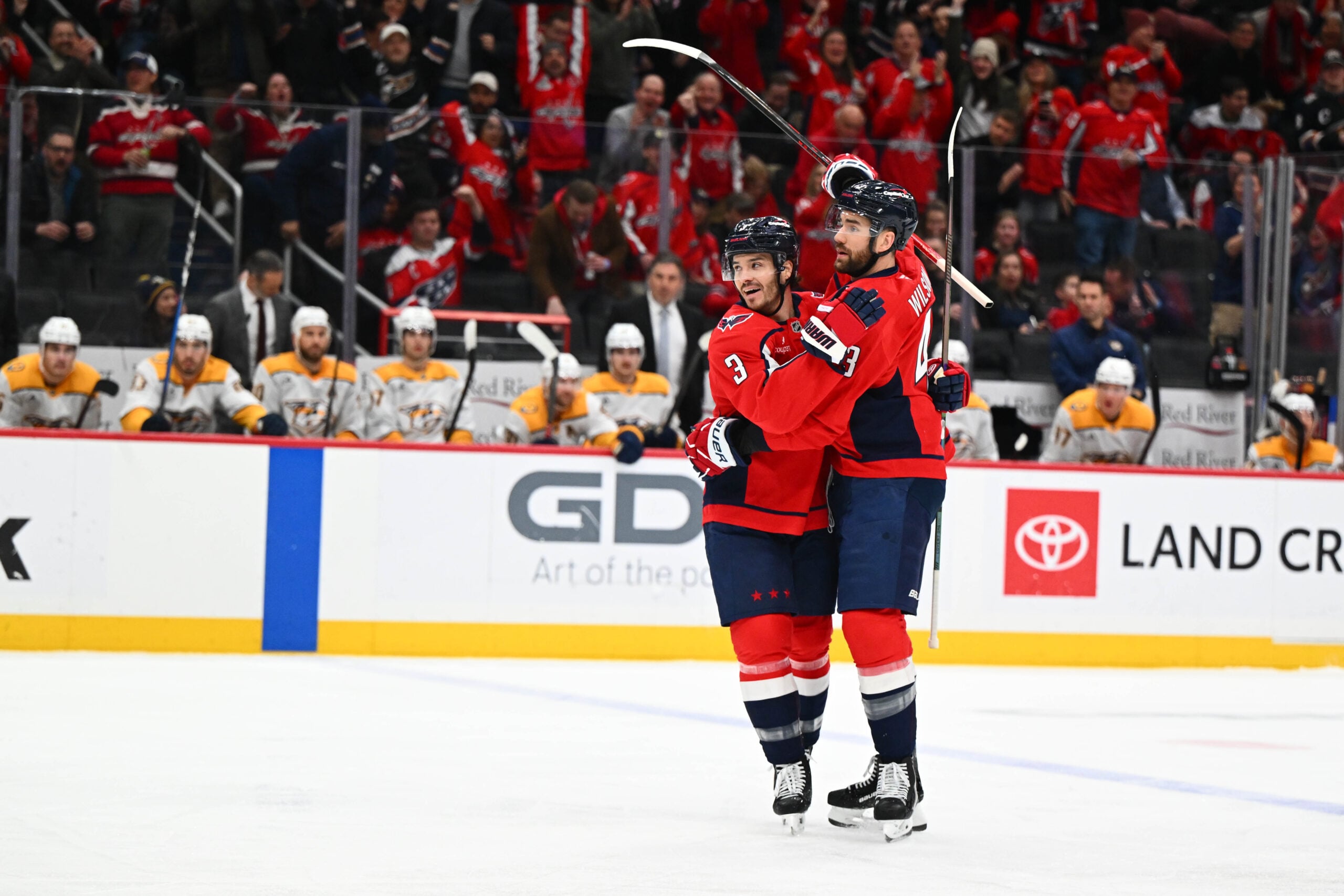
The last five Philadelphia Flyers seasons all ended the same way. After game 82, or whenever the last home game on the schedule was, the players on a Flyers team overmatched by at least half of the NHL made their way to center ice, sticks raised for one last salute. There were cheers for their efforts, but they were always a bit half-hearted, wondering when something better would arrive.
On paper, the actions on Saturday night were no different. But this time, the actions driving them were different. They were preceded by handshakes and heartbreak moments prior, when Jackson Blake buried the final goal of the series and mirrored a classic Patrick Kane celebration, the last person to end a Flyers season on home ice with a playoff overtime winner. More importantly, though, were the prior two months, a successful chase-down of a playoff spot against all odds and a thrilling first-round victory.
It was an imperfect end for an imperfect team that saw up close what a Stanley Cup contender looks like. That’s what the Carolina Hurricanes are, the first team since the 1985 Edmonton Oilers (who also eliminated the Flyers) to begin a playoff run 8-0. The Canes have earned another chance to crack through the Eastern Conference Final stage that has stymied them in years past.
That prize eluded the Flyers, but they could leave Xfinity Mobile Arena one final time in the 2025-26 season with their chins up. Only one team wins the final game of the season, but more than that can end their campaign with the satisfaction of knowing they reached their ceiling and made legitimate progress. For all of the ups and downs this season took the Flyers on, they are one of those teams. It’s not the best place to be, but it’s a lot better than where they’ve finished before.
The Better Team Won
Even though Game 4 went to overtime, the Hurricanes left no doubt on this night and throughout this series. Carolina’s final play-driving numbers – a 40-17 edge in shots on goal and a 66.68% expected goal share at 5-on-5 (per Natural Stat Trick) – were even better than in Game 1, when they caught the Flyers off guard after winning their first-round series just three days before.
Just like in Games 2 and 3, the Flyers came out with some jump. Porter Martone was once again buzzing, and like in Game 2, Philadelphia took the early lead when Tyson Foerster ripped a wrist shot from the slot off a great find by Trevor Zegras, with Martone earning his second assist in as many games.
But Carolina delivered quite the surge once the second period arrived. The long change made it harder for the Flyers to handle the Canes’ forecheck and tenacity. Carolina had a 76.81% expected goal share in second periods throughout the series and outscored the Flyers 3-1 in the middle frame across the series. One of those goals came in Game 4, a bit of a weird one from Blake, but it was on one of 15 shots the Canes fired in the stanza.
That pressure made Logan Stankoven’s go-ahead goal early in the third feel like a dagger. To their credit, the Flyers responded quickly, with a strong effort below the goal line by Travis Konecny to set up Alex Bump in the slot to tie it. But other than a strong sequence from the fourth line just past the halfway mark, Philadelphia rarely threatened to regain the lead the rest of the game.
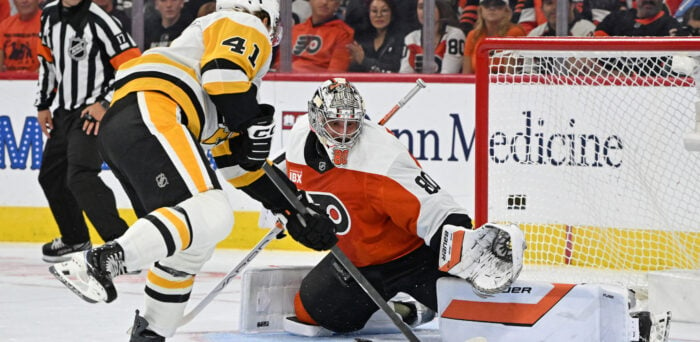
Blake’s winner was close to being caught by Dan Vladař, but it was from a prime area, with Carolina dominating puck possession early in overtime. Unlike in their series-clincher in round one, the Canes didn’t give the Flyers a chance to find their game in sudden death.
There were moments the Flyers played their game – mainly the first 12-15 minutes of every game except the opener, plus most of Game 2’s overtime. But the Hurricanes did to the Flyers what they do to most teams, grinding the Flyers down with their relentless play style. With Philadelphia unable to finish at 5-on-5 and the power play (or generate much at all on the power play, which went 0-for-3 despite another 5-on-3 chance), their first playoff run in six years ran out of steam.
Mich to Discuss
The impact of this game, and this season, is a positive one. But with the Flyers losing this game and their season ending, there will be one negative storyline that will hang around – another healthy scratching for Matvei Michkov, the second of the playoffs.
The reset Michkov received during Game 5 of the first round wasn’t the most popular move, but it was easy to see the logic. The 21-year-old was struggling with his first dose of playoff hockey, and the chance to watch from above and rest physically had benefits. With the Flyers ahead of the Pittsburgh Penguins 3-1 in the series, Michkov was destined to return, and he followed with a better effort in Game 6 that culminated with setting up Cam York’s series winner in overtime.
This time was probably more controversial. For starters, it was Bump replacing Michkov in the first round, who had looked solid in his 17 regular-season games. This time, it was Jett Luchanko, another young player considered one of the team’s top prospects. But Luchanko has much less momentum around him, struggling in two four-game NHL stints over the last two seasons and an offensive regression in the Ontario Hockey League this season.
There was also the very real possibility of Michkov’s season ending in the press box, which it certainly did. With the Flyers struggling for scoring, held to just three goals in the series’ first three games and two of the team’s top-six regular season scorers (Owen Tippett and Noah Cates) unavailable due to injury, voluntarily holding a third out of the lineup is a bold strategy, Cotton – and no, it did not pay off, with Luchanko quiet in a team-low 12:31 of ice time.

Unlike in the Pittsburgh series, it felt like Michkov was showing legitimate signs of life, with several great chances in Game 2 and another crafty deflection in Game 3. His usage when in the lineup wasn’t always the most favorable, either. However, to be clear, he’s not above criticism for only recording one assist in nearly 95 minutes across the eight games he dressed for.
This isn’t necessarily the end of the world. In 2010, the Flyers healthy-scratched a top-seven pick from three years ago twice in the Stanley Cup Final, and James van Riemsdyk still had a quality NHL career. While he didn’t reach the superstar heights hoped for as a second-overall pick, those two games in the press box probably didn’t make the difference.
Of course, van Riemsdyk didn’t truly flourish until after being traded to the Toronto Maple Leafs. Perhaps current Flyers general manager and van Riemsdyk’s teammate Daniel Brière can learn from history, and Michkov can turn this disappointment into an ordinary sophomore slump in hindsight. At the very least, they’ll need a better return than Luke Schenn to feel good about where things end.
Heads High
It’s worth reiterating one last time, especially after the last section: this was a successful season for the Flyers. Very successful, at that. For Michkov and others, it’s better to deal with these struggles (and successes) for the first time now than a few years from now, while he and many of the team’s pieces are still young with plenty of room to grow.
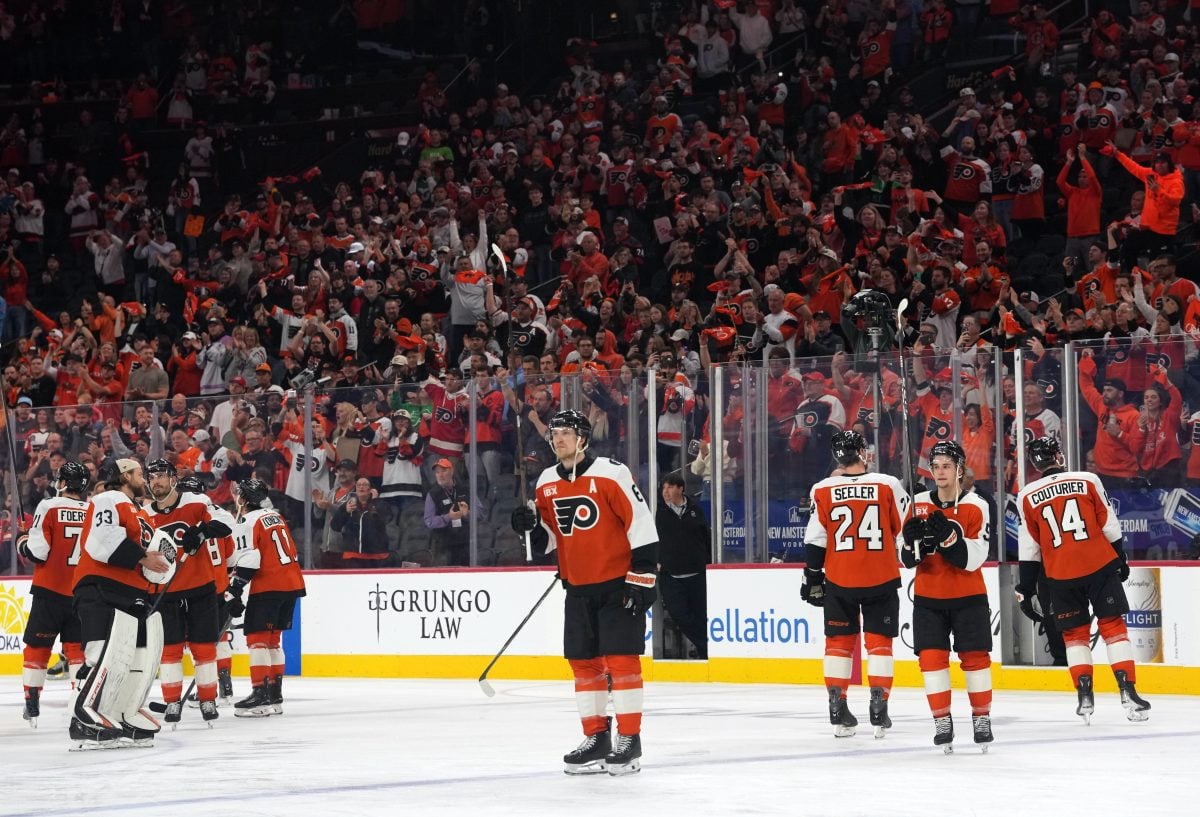
The send-off the team received around 9:15 p.m. on Saturday also shows how far the impact of this run goes. The Flyers have earned goodwill from across the fanbase, especially the more casual hockey supporters, by giving them several incredible memories over the last few weeks, from the shootout clincher to the penalty box celebration to Cam York’s stick throw.
It should also help make the Flyers a more desirable destination across the NHL landscape. It’s fair to wonder exactly how much that matters, with free agency seemingly entering a devaluation period and the team not being enough of a contender yet to likely be a preferred destination of the league’s elite.
Getting swept wasn’t how the team hoped the season would end, but it also allows everyone on the bench and in management to see the gap they need to close up front. They shrank it a bit this season, and it equips them to have a better chance of doing so again in 2026-27.
What’s Next
Ah, the familiar quiet of the offseason. There will be exit interviews in the next few days and a period of rest after that. The Flyers are set to have the 21st pick on June 26 in the first round of the NHL Draft in Buffalo, with free agency to start five days later.
A big summer a year ago is a huge reason the Flyers made it so far this season, as Trevor Zegras, Christian Dvorak, and Vladař all had excellent first seasons in Philadelphia. Five Flyers – Zegras, Jamie Drysdale, Emil Andrae, Nikita Grebenkin, and Sam Ersson – are set to become restricted free agents. There may be extension talks for others, including Vladař.
It will be about five months until meaningful hockey returns to the City of Brotherly Love, one month shorter than Flyers fans have gotten accustomed to over the last few years. But it will probably feel even longer, because the excitement when the puck drops in October is poised to be greater than it has in a long time.
Free Newsletter
Get Philadelphia Flyers coverage delivered to your inbox
In-depth analysis, breaking news, and insider takes - free.
Subscribe Free →