For the Vancouver Canucks, there’s trade chatter picking up around core players, speculation about cap-related moves, and even some discussion about what kind of identity the team wants. Some of it makes sense, some is just noise, but it all feeds into the same question: what does the next version of this Canucks team actually look like?
And in the middle of it, there are smaller storylines that say a lot about where the organization might be headed. Bottom-six identity, leadership style, and long-term roster decisions are all starting to overlap a bit.
Could Yakov Trenin Be a Fit for the Canucks’ Bottom Six?
Every offseason, teams like the Canucks tend to circle the same type of player, and Yakov Trenin from the Minnesota Wild is a pretty classic example. He’s not a player who will change the power play. But he’s the kind of forward who makes a game annoying to play against, and that still has value in today’s NHL.
Trenin is a 29-year-old, bottom-six player who built his game around physicality and straight-line effort. This season, he played all 82 games, put up 23 points, and finished near the top of the league in hits with over 400. That’s his identity. Even in playoff situations, he stays consistent: heavy forecheck, simple decisions, and a willingness to do the uncomfortable work that doesn’t always show up on highlight reels.
For Vancouver, the appeal is obvious. The Canucks have skill in their top six, but the bottom half of the lineup needs improvement. A player like Trenin would immediately change that tone. He brings physical pressure, defensive reliability, and a style that holds up better when the game gets tight in the playoffs. If Minnesota’s cap situation forces them to move out contracts, Trenin should enter the Canucks’ conversation.
Leadership Earned the Hard Way: Why the Sedins Set the Tone
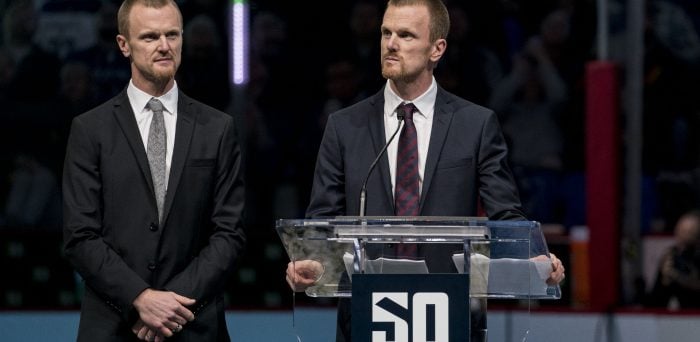
One of the more interesting themes around the Canucks right now is leadership, and it’s hard not to circle back to Henrik and Daniel Sedin when that comes up. Former teammate Todd Bertuzzi recently talked about what they were like when they first arrived in Vancouver, and the story is pretty consistent with what fans remember.
They didn’t come in trying to run the room. They didn’t demand attention. They just listened. For years, it was “all ears, no mouth,” learning how the league worked before ever trying to shape it. That approach didn’t just help them survive—it helped them become elite players.
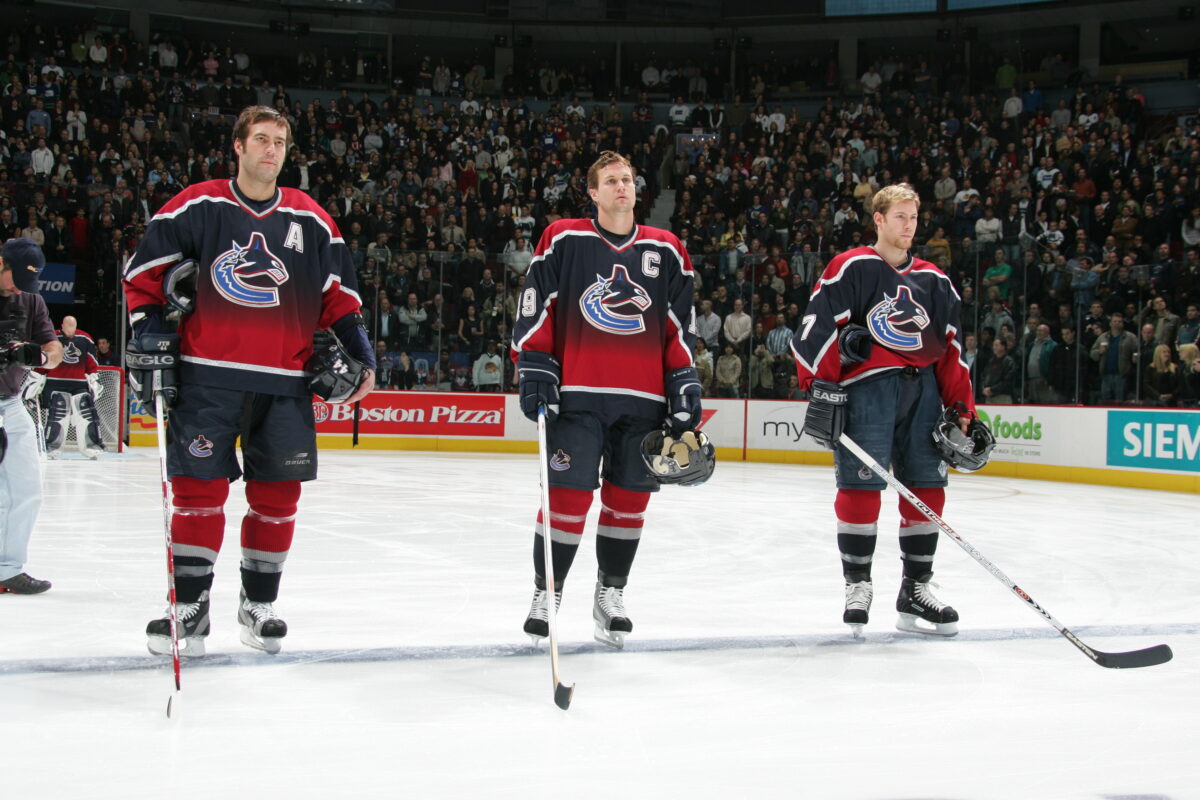
(Photo by Jeff Vinnick/Getty Images)
They studied everything around them: teammates, opponents, systems, and habits. Over time, that quiet, detail-focused approach turned into something much bigger. They earned leadership. That’s why people still talk about them the way they do, especially as they step into management roles with the organization.
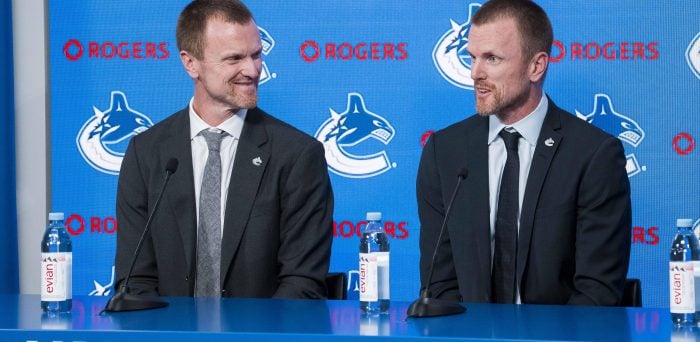
The more you read about them, the more you have to like how they’re approaching their work. That same mindset is now being carried into their front-office approach as co-presidents of hockey operations: patient, structured, and not rushed. It’s not about quick fixes or loud declarations. It’s about building things properly and letting results follow.
DeBrusk, Pettersson, and the No-Move Reality
Then there are the trade rumours involving core players. Jake DeBrusk and Elias Pettersson both have no-movement clauses, which complicates any discussions. It’s not just about whether teams would be interested—it’s about whether the players would even consider leaving in the first place.
DeBrusk is the simpler case. He’s coming off a 23-goal, 42-point season, and according to league reports, there are teams interested in acquiring him. The belief is that he could waive his NMC if the situation makes sense for him. He still has five seasons left on his deal with a cap hit of $5.5 million annually, which makes him both a useful player and a movable asset if the right offer comes along.
Pettersson is a different story. He has six seasons left on his contract at $11.6 million annually, and while there’s always speculation around big market players, this is the type of move that would require a massive shift in direction. Even entertaining it speaks to the significance of his role in the organization. Realistically, this is where rumour and reality tend to drift apart. Interest is one thing. Actual movement is another.
What’s Next for the Canucks?
The Canucks are a team sitting in that awkward middle space right now—trying to stay competitive while also figuring out what the next version of the roster is supposed to look like. That’s why we’re hearing names like Trenin, leadership discussions about the Sedins, and seeing core players pop up in trade speculation. For now, it’s all conversation. But the next few months will start to separate noise from actual direction.
Free Newsletter
Get Vancouver Canucks coverage delivered to your inbox
In-depth analysis, breaking news, and insider takes - free.
Subscribe Free →