The calendars have turned to 2025 and, with it, the NHL is in the midst of unveiling its quarter-century teams. As such, it has us reflecting on the past 25 years. Before NHL.com posts their selection of the best Toronto Maple Leafs since 2000 on Saturday, The Hockey Writers’ own Spencer Lazary took an early crack at what a Maple Leafs’ quarter-century team might look like, blending eras to incorporate 2000-era players like Mats Sundin with 2010’s standouts like Phil Kessel and Dion Phaneuf all the way up to today’s foundational ‘Core Four’.
If you were to glance back to the dawn of this past 25-year stretch since the new millennia, you’d find a 1999-00 Maple Leafs team that bears an interesting resemblance to today’s club – obviously not in terms of personnel, but in style and structure. Heck, each team even had their own Domi!
Anchored by Sundin and in its first full season at what was then known as the Air Canada Centre, that Toronto team used the momentum of a Conference Final appearance to put forth an unprecedented regular season. Not only did Toronto finish first in their division for the first time since the early 1960s, but they topped the 100-point mark for the first time in franchise history. Unless you count a 2020-21 reign atop the pandemic-forced, all-Canadian North Division, the Maple Leafs haven’t finished first since and are currently looking to pursue a division crown while exhibiting characteristics not all that different from the turn-of-the-century group.
Hard-Nosed, Old-School Coach
Currently in his first season as head coach of the Maple Leafs, Craig Berube brings to mind the type of irascible, old-school hockey coach of yesteryear. He employs a simple, punishing brand of puck and isn’t afraid to take action against his charges, such as banning music from the dressing room. A stark contrast to player-friendly former coach Sheldon Keefe, Berube harkens back to bench bosses from the franchise’s past like Punch Imlach, Pat Burns, and Pat Quinn.

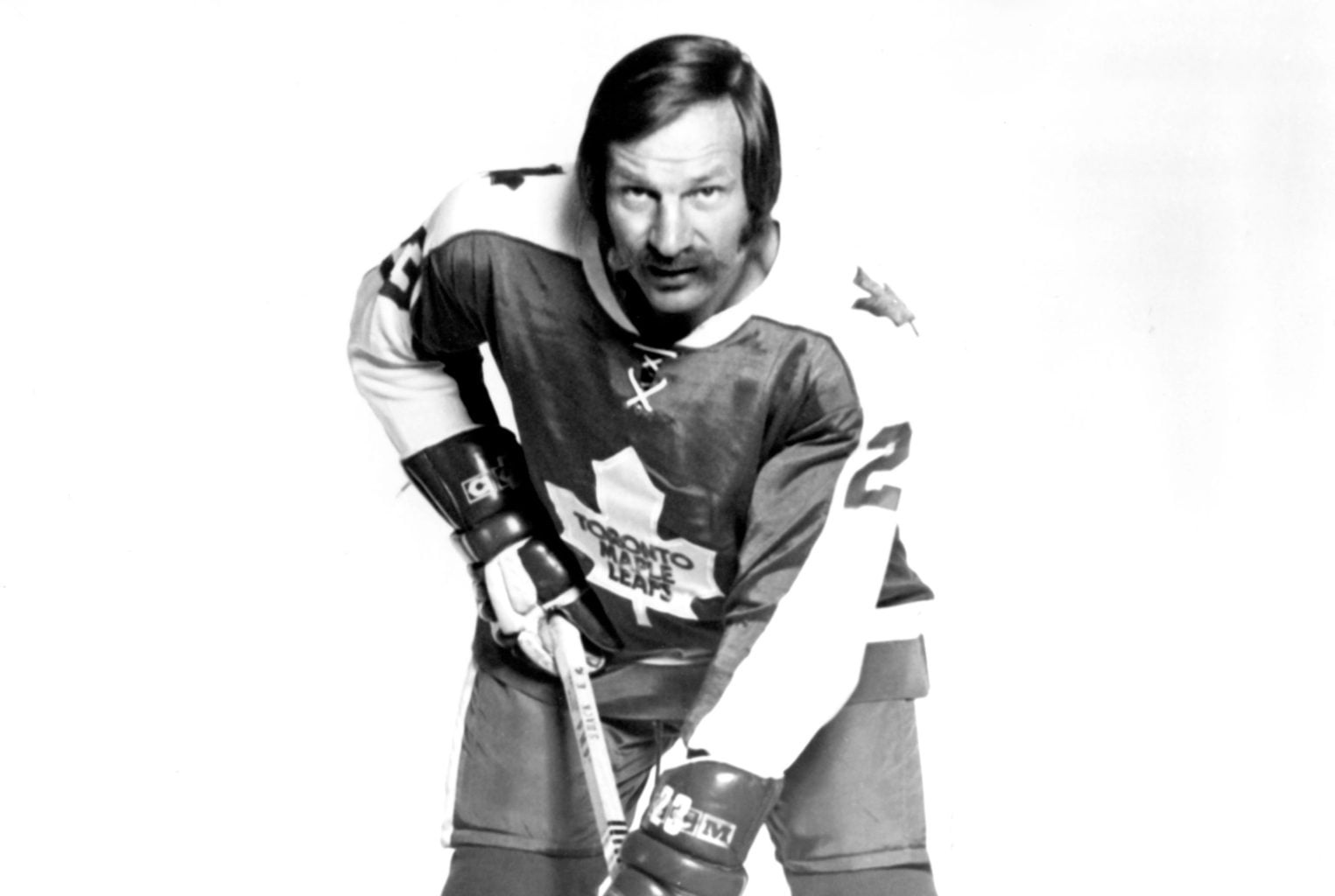
It was the late Quinn who was behind the bench for the 1999-00 team, entering his second season with the Maple Leafs after leading them to the Conference Final in 1998-99. Between the two seasons, Quinn added ‘general manager‘ (GM) to his title, taking over for Ken Dryden. As he preached grit, toughness and physicality from the bench, he further emphasized that by trading Fredrik Modin for Cory Cross and acquiring Darcy Tucker midseason.
You can quibble at the differences between the louder Quinn and the more quietly-intense Berube, but both men cut daunting, intimidating figures that commanded respect. They also have managed to fundamentally change, at two different points in the organization’s history, the team’s style.
Preaching Defense
While Quinn built a reputation as a defensive-minded coach, his initial impact on the Maple Leafs actually offered a shot in the arm to their offensive attack. Employing a faster style of play upon his arrival in 1998-99, the club led the league in scoring by a wide margin. However, Toronto wasn’t as successful at keeping pucks out of their own net, ranking in the bottom third in goals allowed. By 1999-00, Quinn had tightened things up and the club’s defence was back to at least league-average.
Fast forward to today, and Berube has had a similar affect. GM Brad Treliving clearly prioritized defence this past off-season, signing Chris Tanev and Oliver Ekman-Larsson while letting free agent forward Tyler Bertuzzi walk without an immediately obvious replacement. As such, the newly-hired Berube has made everyone — Core Four included -— accountable on the defensive end. As it currently stands, they rank eighth-best in the NHL with 2.79 goals allowed per game, a notable improvement over the 3.18 they averaged last season when they finished 21st overall.
Team Structure
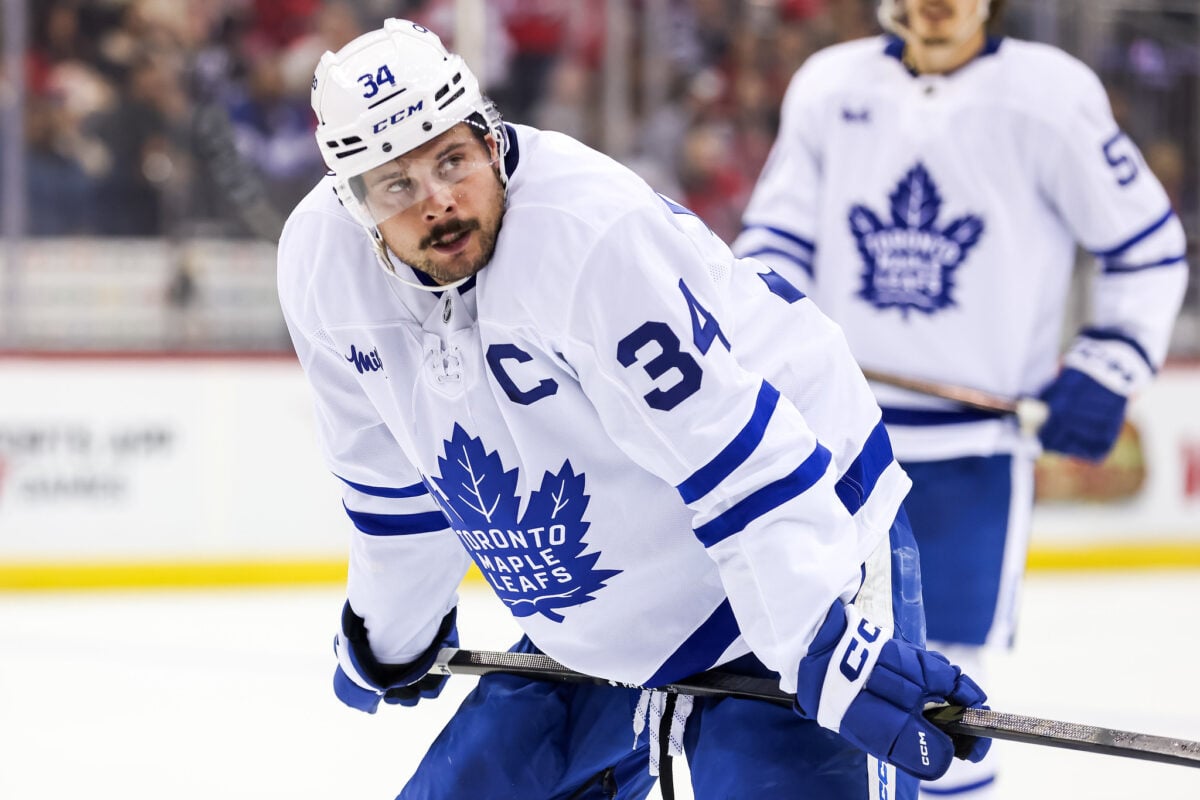
While the 1999-00 team didn’t quite have a ‘Core Four’ of their own, there are nonetheless similarities in the structural make-up of the two teams. Much like today’s team led by Auston Matthews, they were anchored offensively by their number-one centre and captain Sundin. Behind Sundin, however, centre depth was lacking, with Yanic Perreault in the number-two role and a revolving door at number three that included the oft-injured Alyn McCauley and a very young Nik Antropov.
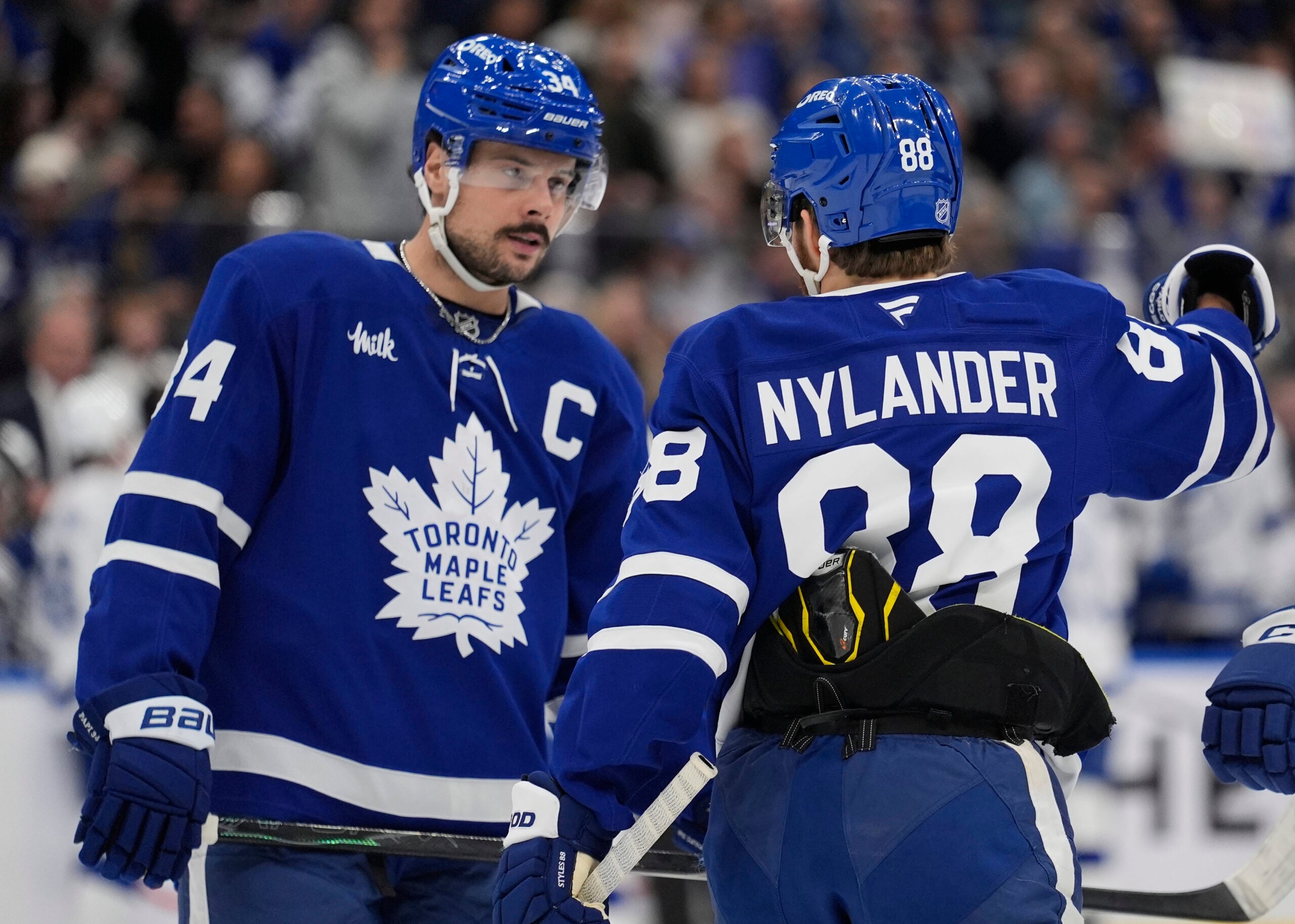
On the plus side, the 1999-00 team mirrored the current club in terms of plentiful talent on the wing. Just as Mitch Marner, William Nylander, and Matthew Knies have sparked the top six this season, Sundin and company had plenty of support from the likes of Steve Thomas, a career-best season from Jonas Hoglund, Igor Korolev, and the late Sergei Berezin. Tucker would join the fray in March of that year.
Defensively, neither club saw much goal scoring from the back end (Tomas Kaberle led the former group with seven goals, while Morgan Rielly currently leads the latter with four), but both were integral units for playmaking and, of course, goal prevention. From a playmaking standpoint, Kaberle and Bryan Berard (before he suffered his catastrophic eye injury) led the charge, while Dmitri Yushkevich proved to be an essential defensive anchor. In a similar vein, Rielly and Ekman-Larsson have been effective puck-movers while Tanev and Jake McCabe have handled lockdown defensive duties.
In net, Curtis Joseph proved to be a slightly better goaltender in his second season in Toronto, setting a then-franchise record for wins in a single season (36) while sporting a 2.49 goals against average and .915 save percentage. While Anthony Stolarz and Joseph Woll employ more of a tandem dynamic than Joseph and backup Glenn Healy did, they’ve found their own puck-stopping success, not to mention the safety blanket we’re seeing right now amidst Stolarz’s absence post-knee surgery.
You Might Also Like
- The Real Maple Leafs Comparison to Makar’s Record Deal Isn’t Who You Think
- Maple Leafs News & Rumours: Raddysh, Tavares, Matthews, Knies & Roslovic
- Maple Leafs News & Rumours: Matthews, Plumins & Two Ends of the Spectrum
- 7 Cool Things About Maple Leafs’ Eddie Shack
- Maple Leafs Fans Shouldn’t Expect Gavin McKenna to Be Alex Ovechkin
Team Success
Obviously, the jury is still out on this one. The 1999-00 Maple Leafs went 45-27-7-3 for a 100-point regular season, toppled the Ottawa Senators 4-2 in the first round, and then were stymied by the eventual Stanley Cup champion New Jersey Devils 4-2 in the second round. While they didn’t achieve the ultimate objective of winning the Stanley Cup, it marked a pretty successful season that included an achievement — a playoff series win — that the franchise has accomplished just once since in more than 20 years. They also haven’t finished first again in any season since, excluding the aforementioned North Division.
This season’s team holds some of that same promise. Their playoff aspirations obviously run deeper than the second round, but the first goal comes in winning the Atlantic Division. As it stands now, the Maple Leafs are deadlocked in a tie for first with the defending champion Florida Panthers as they share identical 23-13-2 records through 38 games. Optimism for Toronto comes in the form of the forthcoming returns of Matthews and Stolarz. Interestingly, the 1999-00 Leafs had also played 38 games heading into the new year, boasting a similar 23-9-4-2 record.
It remains to be seen how well the Maple Leafs can replicate their predecessors from 25 years ago. Perhaps they will add an impact player similar to Tucker. Perhaps they will win their division. Perhaps they’ll even advance past the first round. But if there’s anything to be learned from the 1999-00 version of the club, it’s that a defensive team led by a tough-minded coach and armed with some skilled offensive talent is a pretty good recipe for success.
Free Newsletter
Get Toronto Maple Leafs coverage delivered to your inbox
In-depth analysis, breaking news, and insider takes - free.
Subscribe Free →