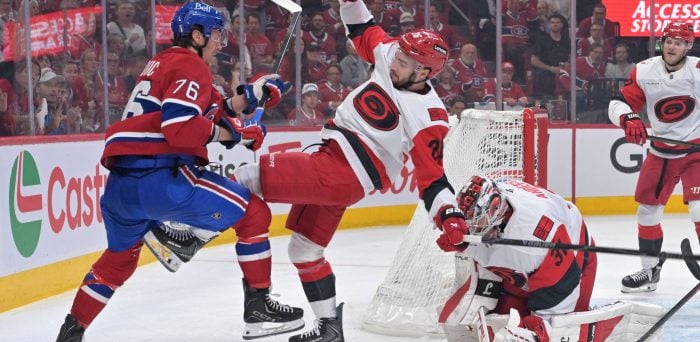
When the Vancouver Canucks front office pulled the trigger on the blockbuster trade that sent Quinn Hughes to the Minnesota Wild in December 2025, the local fan base was understandably divided. Losing a franchise cornerstone is never easy to stomach, but the return focused heavily on a “rebuild on the fly” philosophy. Central to that return was Marco Rossi. At 24 years old, the Austrian playmaker arrived with the reputation of a high-ceiling talent who was just beginning to find his footing as a consistent top-six threat.
Now that the 2025-26 campaign is over, we have a clear look at how Rossi handled the transition from the State of Hockey to the West Coast. It was a season of significant adjustment, defined by a mid-year relocation and the heavy burden of being the focal point of a franchise-altering trade.
2025-26 Performance
Rossi’s season was a tale of two cities, and quite literally, two different roles. He began in Minnesota, where he was reasonably productive, hovering around a half-point-per-game pace while playing reliable minutes. However, the trade to Vancouver on Dec. 12 changed the trajectory of his season.
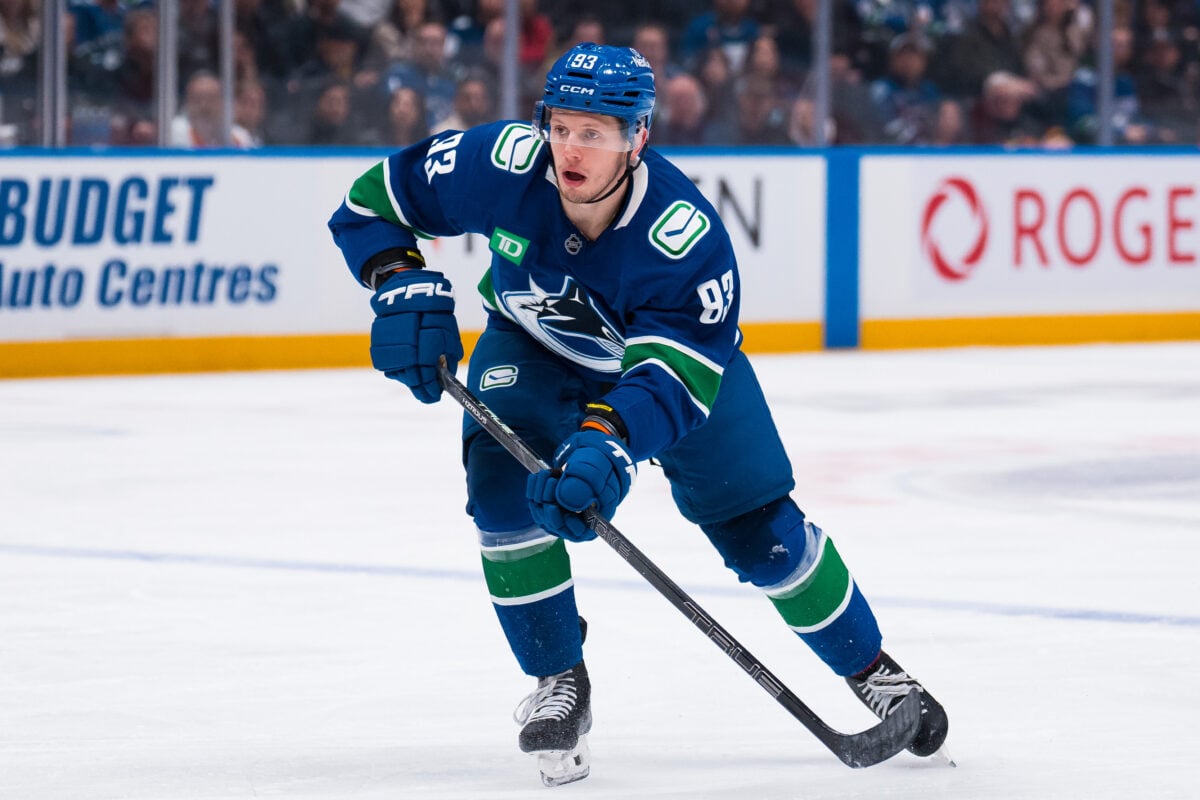
His arrival in Vancouver wasn’t exactly a “plug-and-play” success from day one. There was a noticeable feeling-out process as he adjusted to a new system under Adam Foote. His production initially dipped as he dealt with a couple of injuries and worked to find chemistry with a rotating cast of wingers. However, as the calendar turned to March, Rossi seemed to finally get it. Over the final two months of the season, particularly after the Olympic break, his production spiked significantly. He finished his stint in Vancouver with 22 points in 33 games, a very respectable clip for a player learning a new playbook midseason.
What stood out most wasn’t just the scoring, but his effectiveness on the power play. Rossi demonstrated a high hockey IQ in the offensive zone, showing a patience with the puck that the Canucks had been lacking in their secondary units. While his overall goal-scoring numbers (12 goals total between both teams) might seem modest for a top-six centre, his playmaking remained his primary calling card.
Impact for the Canucks
Rossi’s impact on the roster was felt most in the redistribution of offensive responsibilities. For years, the Canucks’ offence was heavily reliant on a few key stars. Rossi’s presence allowed the coaching staff to balance the lineup, providing a legitimate second-line centre option that freed up other players to slot into more natural roles.
The most intriguing development was the chemistry Rossi found with Brock Boeser and fellow newcomer Liam Öhgren. In this trio, Rossi acted as the cerebral engine. His ability to navigate tight spaces allowed Boeser to find the soft spots in coverage that he thrives in, while Öhgren’s relentless work rate and forechecking provided the puck recovery necessary to keep the line in the offensive zone.
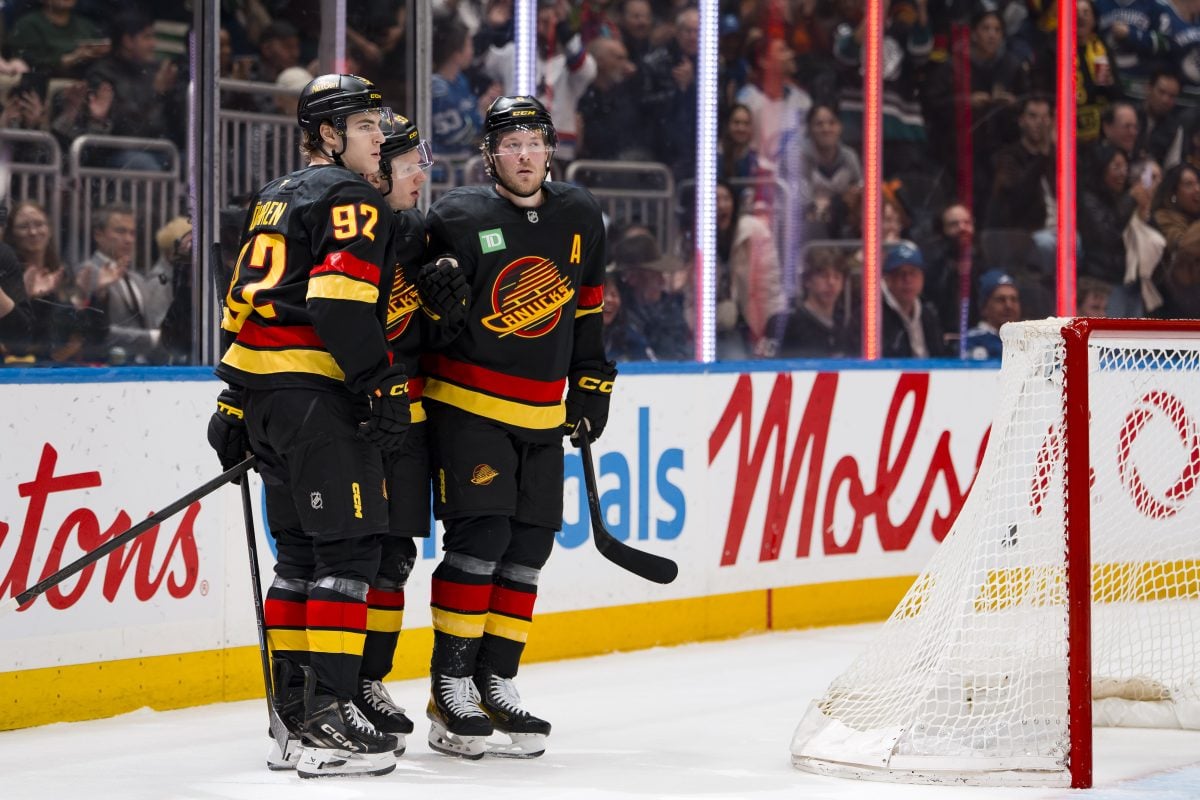
Rossi’s ability to protect the puck despite his smaller 5-foot-9 frame is a testament to his low centre of gravity and core strength. He isn’t a player who will run over opponents, but he is incredibly difficult to strip of the puck once he gains the zone. This was particularly evident when cycling with Boeser; the two seemed to share a similar vision for the game, leading to several high-danger scoring chances per night that simply weren’t there for Vancouver earlier in the season.
Future With the Team
The most encouraging aspect of Rossi’s season is his contract status and age. Signed through the 2027-28 season at a $5 million average annual value (AAV), he represents a cost-controlled asset in what should be the prime of his career. For a team in the midst of a rebuild, having a 24-year-old centre who can play 17 to 18 minutes a night is a luxury.
The rapport he built with Boeser and Öhgren late in the season suggests that the Canucks may have found their second line for the foreseeable future. There is a balance of veteran finishing, youthful energy, and elite playmaking in that group. If Rossi can maintain the point-per-game pace he displayed in March and April over a full 82-game schedule, that $5 million price tag will quickly look like one of the better bargains in the league.
The next step for Rossi will be physical durability. He dealt with a few minor stints on the injured reserve this season, which interrupted his momentum. For him to become the true top-tier centre the Canucks envision, he needs to prove he can handle the grind of a full season in the physical Pacific Division. If he can stay healthy, he is positioned to be a foundational piece of the “new” Canucks.
Overall Grade
Rossi receives a B+ for his 2025-26 campaign. This grade reflects a season that was successful but imperfect. He deserves immense credit for how he finished the season; his performance in the final 20 games (six goals and 17 points) was borderline elite and gave the fan base a reason to be optimistic about the post-Quinn Hughes era. He proved he could handle the pressure of being a primary return piece in a major trade and showed he has the vision to run a top-unit power play.
The grade isn’t an “A” because of the slow start post-trade and the defensive lapses seen in January and February. There were stretches where he seemed to disappear in the flow of the game, particularly against heavier, more physical opponents. However, considering the circumstances of his arrival, the injuries he dealt with and the growth he showed by season’s end, Rossi has firmly established himself as a player the Canucks can build around. He isn’t the finished product yet, but the trajectory is pointing exactly where the front office hoped it would.
AI tools were used to support the creation or distribution of this content, however, it has been carefully edited and fact-checked by a member of The Hockey Writers editorial team. For more information on our use of AI, please visit our Editorial Standards page.
Free Newsletter
Get Vancouver Canucks coverage delivered to your inbox
In-depth analysis, breaking news, and insider takes - free.
Subscribe Free →