The Vancouver Canucks finally seem ready to settle their front-office picture, and the direction they appear to be taking says a lot about where this organization believes it is heading. According to multiple reports, Ryan Johnson is expected to become the next general manager (GM) of the Canucks, while franchise legends Henrik Sedin and Daniel Sedin are expected to take on significantly larger organizational roles.
The surprising part? It may not simply be Johnson running the show with the Sedins advising from the side. Elliotte Friedman hinted that the twins could actually sit higher in the organizational structure than Johnson himself.
And if that’s true, it represents something much bigger than just a front-office hire. It feels like the Canucks are trying to reset the franchise’s culture.
Topic One: The Canucks Are Choosing Familiarity, Stability, and Trust
One thing became very obvious over the past 48 hours: the Canucks could have gone outside the organization for a flashy hire, and they chose not to. A lot of people expected Boston Bruins assistant GM Evan Gold to land the GM job. He was viewed as an analytically-sharp outside candidate who could potentially modernize the organization. Instead, Vancouver leaned into familiarity by promoting Johnson and expanding the Sedins’ influence.
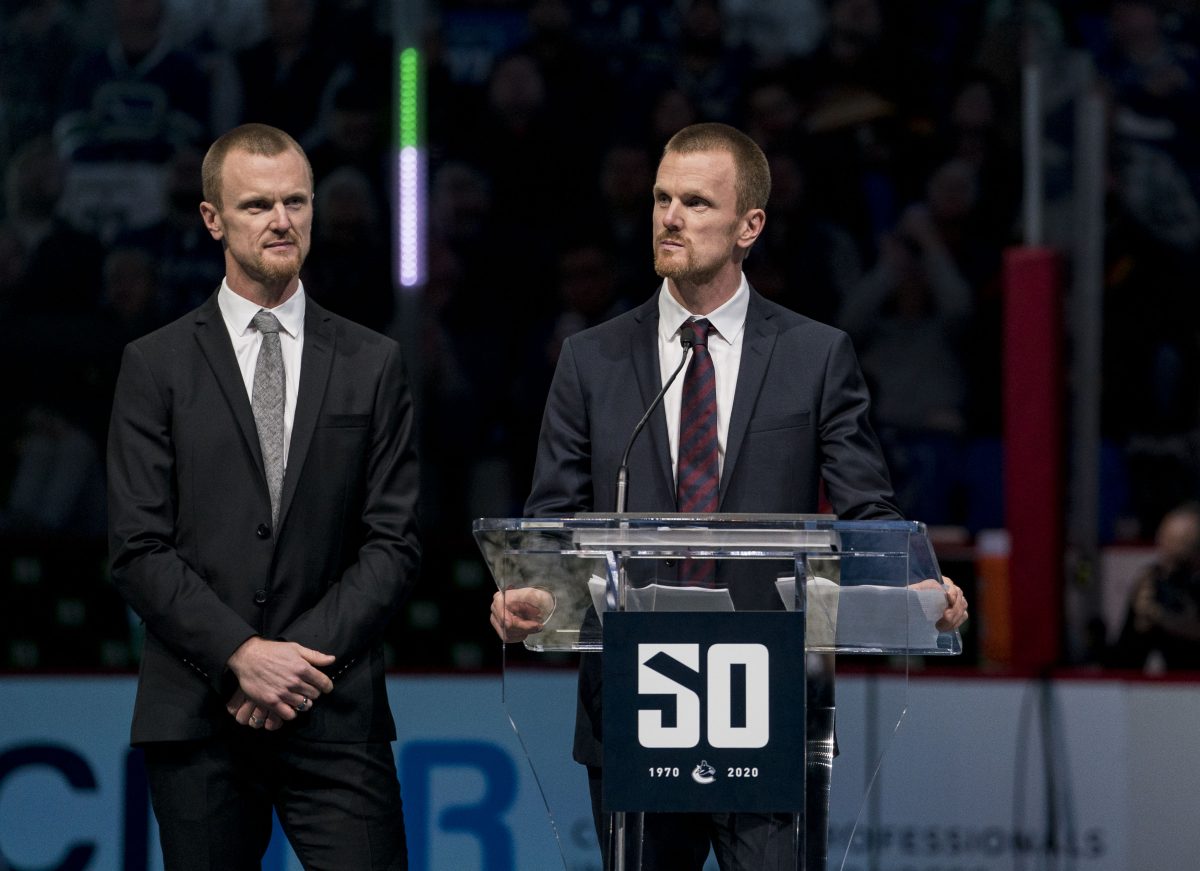
I think that says something important about ownership and where this franchise is emotionally right now. The Canucks have spent years cycling through big personalities, quick fixes, rushed retools, and conflicting visions. One regime wanted grit. Another wanted speed. One wanted to contend immediately. Another quietly hinted at patience before suddenly chasing veterans again. Somewhere in there, the organization lost its identity.
The Sedins change that immediately. Whether they officially become presidents, vice-presidents, or senior advisors almost doesn’t matter. Their presence stabilizes the room. They represent professionalism, consistency, patience, and credibility. In hockey terms, their reputations are about as solid and trustworthy as it gets. They also understand Vancouver better than almost anyone in hockey operations possibly could.
And Johnson quietly makes a lot of sense, too. His work in Abbotsford helped turn the Abbotsford Canucks into a Calder Cup champion and created an actual development pipeline — something Vancouver has desperately lacked for years. This feels less like a flashy hire and more like the organization finally admitting it needs adults in the room who actually understand long-term building. From what I’ve seen, this is a solid move for the organization.
Topic Two: The Manny Malhotra Question Suddenly Feels Bigger
The second big storyline here involves the coaching staff, as this front-office change may ultimately determine Adam Foote’s future behind the bench. Foote’s first season as Vancouver’s head coach was rough: The Canucks struggled to score consistently, struggled defensively, and looked especially uncomfortable at home, where they posted a brutal 9-27-5 record. Young defencemen often looked overwhelmed in the system, chasing plays rather than developing confidently within it.
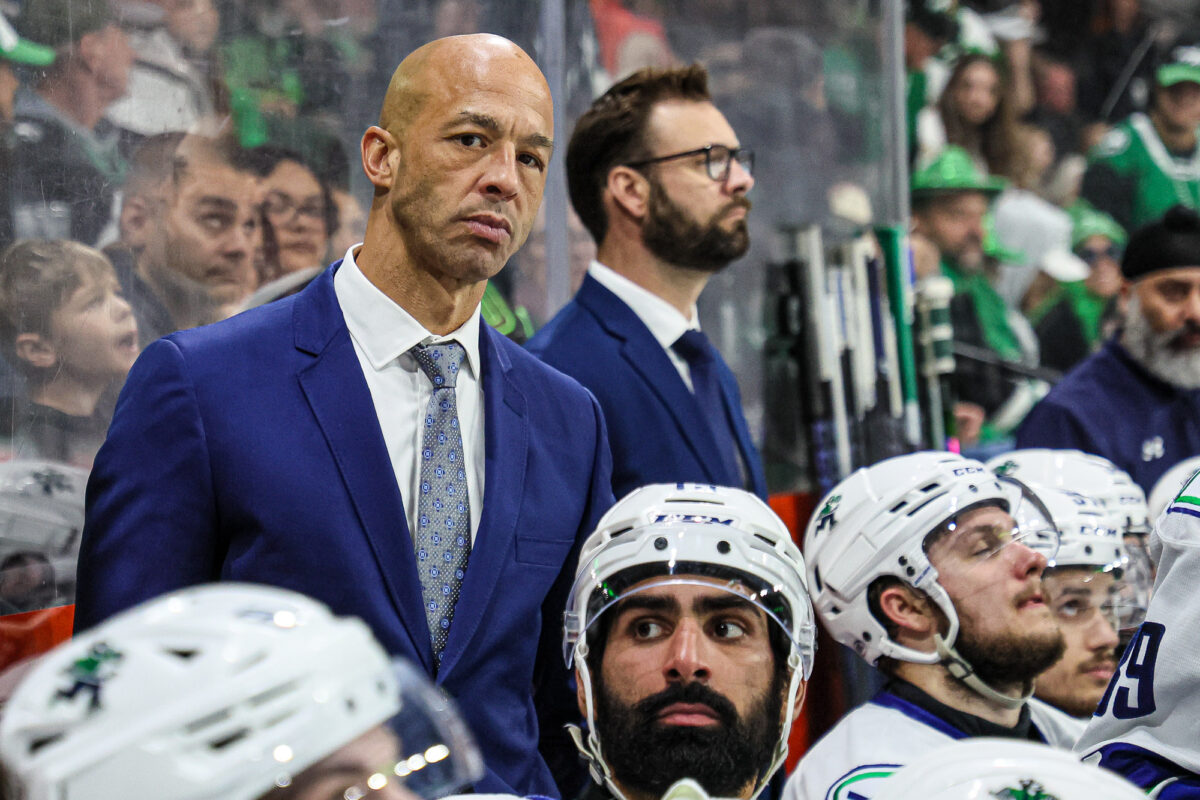
Now the question becomes whether the new leadership group believes Foote deserves more time — or whether they pivot toward someone else entirely. It’s hard not to look directly at Manny Malhotra. His work in Abbotsford has been one of the organization’s few clear success stories recently. Under his leadership, players like Linus Karlsson, Aatu Räty, Max Sasson, and defenseman Elias Pettersson actually developed into NHL contributors instead of stalling out in the system.
The Canucks have spent years talking about development without consistently producing it. Malhotra seems to be one of the few people inside the organization who has actually shown he can help young players improve.
Suddenly, the timing gets complicated because the Toronto Maple Leafs now have a coaching vacancy after firing head coach Craig Berube Wednesday. Malhotra’s name is almost certainly going to surface there. He’s respected league-wide, interviews well, and increasingly looks like an NHL head coach in waiting. The Canucks may have to decide soon whether they view him as part of their future before another team hires him.
Topic Three: The Real Rebuild Finally May Be Starting
This may be the most important part of the entire story. Listening to the reporting around Johnson and the Sedins, it increasingly sounds like the Canucks are finally preparing themselves mentally for a real rebuild instead of another shortcut attempt. That’s overdue.
The Pacific Division is changing fast. Teams like the Anaheim Ducks, Utah Mammoth, and San Jose Sharks are rebuilding with patience, prospect depth, and long-term planning. Vancouver simply hasn’t done that well enough. The drafting numbers are honestly brutal.

From 2006-2015, Vancouver produced NHL players on only 17.7 percent of its draft picks, well below league average. From 2016 to 2020, the success rate dropped even further. Meanwhile, organizations like the Los Angeles Kings and Ducks consistently built prospect pipelines through patient drafting and smart development. [from “Canucks: How do all the pieces fit in the complex hockey operations puzzle?” Ben Kuzma, The Province, May 13, 2026]
That’s not bad luck anymore. That’s organizational failure. And that’s why this front-office reset matters so much. Johnson’s success in Abbotsford suggests he understands that development matters. The Sedins understand patience and culture. The organization reportedly interviewed people like Martin Madden from Anaheim because Vancouver finally seems aware that drafting, scouting, and player development need to become organizational priorities instead of afterthoughts.
The hard part is that rebuilds require discipline. It means trading veterans for futures. It means resisting the urge to chase expensive free agents every July. It means accepting short-term pain to build something sustainable. Historically, the Canucks haven’t shown much appetite for that.
What’s Next for the Canucks?
Now comes the really tough part for the Canucks. They must prove to their fans that this isn’t just another cosmetic front-office shuffle. The Sedins bring enormous credibility, but credibility alone doesn’t rebuild organizations. Johnson has had success at the American Hockey League level, but the NHL is a whole different challenge. And looming over everything is ownership’s willingness to stay patient when the losses inevitably pile up during a true rebuild.
Still, for the first time in a while, there’s at least a sense of organizational direction emerging. The Canucks appear to be prioritizing development over shortcuts, structure over chaos, and stability over splashy headlines. That doesn’t guarantee success. But after years of wandering in circles, it may finally give Vancouver a real foundation to build on.
Free Newsletter
Get Vancouver Canucks coverage delivered to your inbox
In-depth analysis, breaking news, and insider takes - free.
Subscribe Free →