The Vancouver Canucks’ new executive group didn’t exactly begin their tenure with fireworks — and that seems to be the point. With Henrik Sedin, Daniel Sedin, and Ryan Johnson now steering the organization, the messaging from their introductory press conference was less about bold predictions and more about restraint, patience, and long-term planning. For fans who have lived through repeated cycles of rushed retools and short-term swings, the tone felt noticeably different.
Henrik Sedin perhaps summed it up best with one line that stood out more than anything else: “To do this as fast as possible, we’ve got to be very careful and go slow.” That paradoxical mindset — speed through patience — might actually define the next era of Canucks hockey. And while it may not deliver immediate excitement, it does suggest a long-overdue philosophical shift in how this franchise will be built moving forward.
No More Shortcuts: A Clear Break From the “Quick Fix” Era
One of the clearest themes from the new leadership group is that the Canucks are done chasing shortcuts. Johnson emphasized that timelines are secondary to building the right environment, noting that it’s about establishing structure first before chasing results. That may not sound revolutionary, but in Vancouver, it’s a significant philosophical departure from what fans have become used to.
The last decade has been defined by urgency. From Jim Benning’s early declarations that the team could be “turned around in a hurry” to repeated asset trades in pursuit of short-term competitiveness, Vancouver has consistently prioritized speed over sustainability. Even the more recent Rutherford-Allvin era, while more successful in stabilizing the roster, still leaned into aggressive moves designed to accelerate contention.
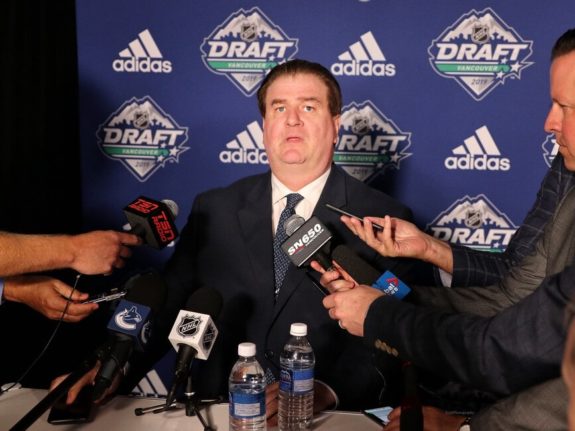
(Amy Irvin / The Hockey Writers)
The result has been mixed at best: a brief playoff appearance, some momentum, and then another step backward. The Sedins’ message is that this cycle needs to stop. Instead of asking “how fast can we get there,” the organization is now asking “how do we make sure we stay there once we arrive?”
The Playoff Trap: Why “Just Getting In” Isn’t the Goal
Johnson also made it clear that the organization understands the danger of chasing the playoff line. As he explained on the Canucks Insider Podcast, teams can sometimes cut corners to get in — but those shortcuts often come at a cost later. Vancouver’s recent history reflects that perfectly. The roster constructed under the current regime was good enough to reach the playoffs in 2024, but not stable enough to sustain that success.
That’s the cautionary tale the new leadership seems intent on avoiding. The goal now is to build something sustainable that doesn’t collapse after one postseason taste. That distinction matters, especially in a market that has spent years oscillating between optimism and reset.
Of course, patience is easier to preach than to practice. But Johnson acknowledged that fan engagement will hinge on visible progress, even if it doesn’t immediately show up in the standings. Growth, structure, and identity will need to be obvious long before wins fully arrive.
Rebuilding Canucks’ Community Connections
The third and most emotional theme from the Sedins’ message was about restoring the Canucks’ connection with the community. Daniel Sedin pointed back to the organization’s historical reputation as a league leader in community involvement, referencing Brian Burke’s early praise of Vancouver as the NHL’s gold standard in that area.
That identity was once a defining feature of the franchise. From Orland Kurtenbach and Stan Smyl to Trevor Linden and later the Sedins themselves, Vancouver players were deeply embedded in the city. Linden’s well-known hospital visits and community-first initiatives became part of the franchise’s culture, followed later by programs like Alex Edler’s outreach efforts and Brock Boeser’s community-driven appearances.

Over time, that connection has faded. Whether due to generational turnover, the departure of core leaders, or the isolating effects of the COVID-19 era, the link between players and community hasn’t felt as strong in recent years. The Sedins clearly see that connection as something worth rebuilding — not as a PR strategy, but as part of the organization’s identity.
Henrik summed it up simply: the goal is to make people “proud to be a Canucks fan again.”
Slow and Steady Are Next for the Canucks?
Taken together, the message from Vancouver’s new leadership is consistent: no shortcuts, no rushed timelines, and no obsession with immediate results. Instead, the focus is on structure, culture, and long-term identity — both on and off the ice.
It may mean more growing pains in the short term, and potentially more seasons outside the playoff picture. But after years of reactive decision-making, the Canucks finally appear to be choosing patience on purpose rather than by accident.
Free Newsletter
Get Editor Picks coverage delivered to your inbox
In-depth analysis, breaking news, and insider takes - free.
Subscribe Free →