The Stanley Cup has been handed out, the champagne has dried, and the NHL quietly shifts from celebration mode into decision mode. For the Vancouver Canucks, that transition feels a little more loaded than usual.
There’s a new management group in place — Ryan Johnson, Daniel and Henrik Sedin, and Manny Malhotra — and the task now is simple in theory but difficult in practice: establish a clear footprint on the organization. This is the time of year when intent starts to matter more than promises.
So the real question isn’t what the Canucks might do this summer. It’s what they are actually trying to become. And that shows up most clearly in two areas: free agency and the draft.
Question One: What Should Canucks Leadership Do About Free Agency This Offseason?
A lot of the conversation right now is circling a familiar question: what should Canucks leadership actually do in free agency this offseason? The honest answer is that free agency is rarely the driver of change for a team trying to reshape itself. It’s the loudest part of the summer, but not usually the most meaningful. By the time July 1 arrives, a team’s direction has already been largely determined.
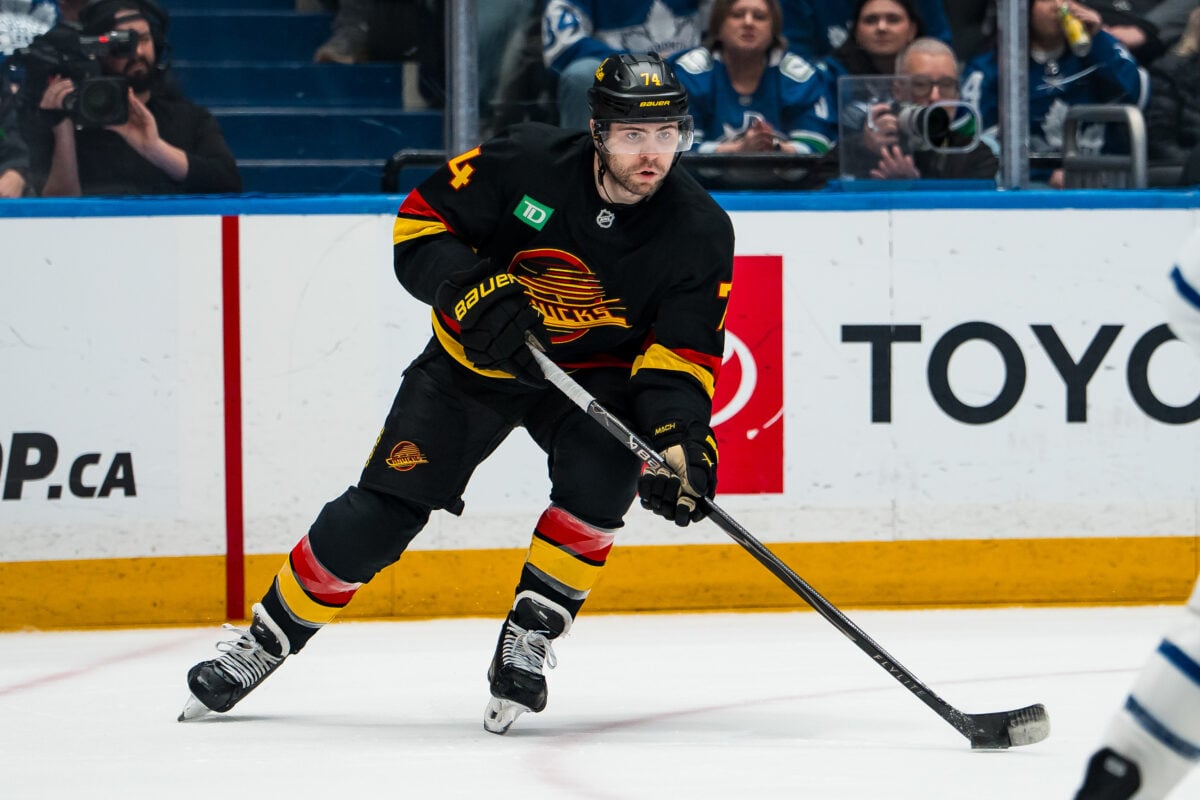
If the Canucks are serious about changing their trajectory, the work has to start earlier than that. It begins with the current roster, not the open market. That means hard decisions. Moving out salary. Finding flexibility. And in some cases, confronting the reality of veteran contracts, such as Jake DeBrusk, with term that no longer match where the team is trying to go.
That’s not the comfortable part of the job, but it is the part that actually signals direction. Without that subtraction, free agency becomes cosmetic. You can add a player or two, but you’re essentially layering new pieces on top of the same structure. That’s how teams convince themselves they are progressing while actually standing still.
There is also a narrow path where free agency can be used strategically. Short-term contracts, one-year bets, or players signed with the idea of flipping value later at the trade deadline. But that only works if the underlying roster has already been reshaped enough to allow flexibility.
So the real question isn’t what the Canucks can buy on July 1. It’s what they are willing to move on from before they get there.
Question Two: Can the Canucks Turn Draft Volume Into Real Rebuild Momentum?
A better question than free agency might be this: can the Canucks actually turn a rare volume of draft picks into meaningful long-term structure? Because this year isn’t just about selection. It’s about scale. Vancouver enters the draft with 10 picks, including multiple selections in the first two rounds. That’s not normal for this organization, and it immediately changes expectations.
But volume alone doesn’t rebuild anything. What matters is conversion. Turning picks into players. Turning players into NHL contributors. And turning contributors into a pipeline that actually feeds the roster over time.
The obvious headline is pick No. 3 overall, but most drafts are not defined by the top selection. They’re defined by what happens in the middle rounds — where scouting, development, and patience actually get tested.

That’s where identity becomes important. The Canucks need more than just “good players available.” They need clarity on what types of players they are actually targeting. Compete level, pace, defensive detail, role projection — these things matter just as much as skill when you’re trying to build a system, not just a prospect list.
Then comes the part that often gets overlooked: development. Ten picks only matter if they are developed properly. That means meaningful minutes in Abbotsford, consistent coaching messages, and patience in letting players grow into roles rather than forcing timelines. This is where drafts are actually won — not in June, but in how they are handled from September onward.
And finally, there is flexibility. With this many picks, Vancouver does not need to treat every selection as a long-term project. Some will be developed. Some may be packaged. Some may become trade capital if the right opportunity emerges.
The goal isn’t to maximize quantity. It’s to convert quantity into structure. Because a draft like this does not guarantee a rebuild. But it does give a management group a real chance to build one — if the decisions are intentional rather than reactive.
What’s Next for the Canucks?
The next few weeks will reveal more about this organization than any single press conference or offseason statement. Free agency will show whether the Canucks are willing to create change or simply decorate the edges of the current roster. The draft will show whether they can convert volume into structure. And the weeks after that will quietly reveal whether patience is part of the plan — or just part of the messaging.
There is no shortcut to where Vancouver wants to go. And there shouldn’t be. Because the teams that actually change are rarely the ones that make the loudest moves in July. They’re the ones that make the hardest decisions before July arrives, and the most disciplined ones after it.
Free Newsletter
Get Vancouver Canucks coverage delivered to your inbox
In-depth analysis, breaking news, and insider takes - free.
Subscribe Free →