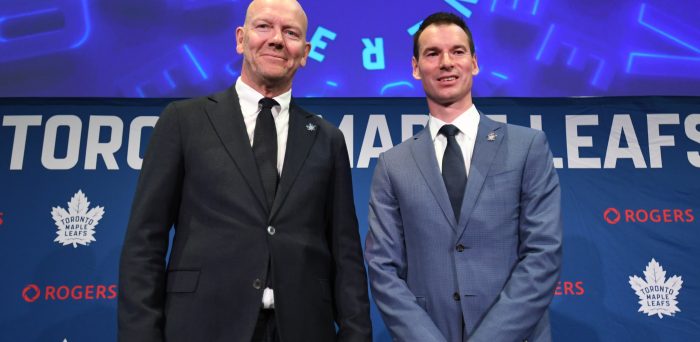
The NHL has officially entered a new era of offer sheets.
For years, they were viewed as a tool that general managers simply refused to use. Whether it was an unwritten code between executives or fear of damaging relationships around the league, offer sheets became one of hockey’s rarest transactions.
That all changed when the Philadelphia Flyers shocked the hockey world by signing Anaheim Ducks forward Leo Carlsson to a five-year, $90 million offer sheet carrying an eye-popping $18 million annual average value. Even if the Ducks ultimately match the contract, the message has been sent. Teams are no longer afraid to weaponize their salary cap space in an attempt to land elite young talent.
That aggressive approach should have the attention of every NHL general manager, including Pittsburgh Penguins president of hockey operations Kyle Dubas. While Connor Bedard is almost certainly untouchable in Chicago, the Penguins are one of the few teams positioned to make the Blackhawks uncomfortable. They have the financial flexibility, they possess the required draft capital, and they’re entering a transitional period where finding the next franchise superstar has become a priority.
A five-year, $20 million offer sheet for Bedard would almost certainly be matched by Chicago, but sometimes forcing another organization into an uncomfortable decision is reason enough to make the call.
Penguins Have the Resources to Make an Offer
From Pittsburgh’s perspective, there is very little downside in exploring the possibility. According to PuckPedia, the Penguins enter the offseason with nearly $25 million in available salary cap space. That gives them more than enough room to submit the richest offer sheet in NHL history without immediately running into cap issues. More importantly, Pittsburgh owns the necessary first-round draft picks required to complete a maximum-compensation offer sheet. Few teams around the NHL can realistically say both of those things.
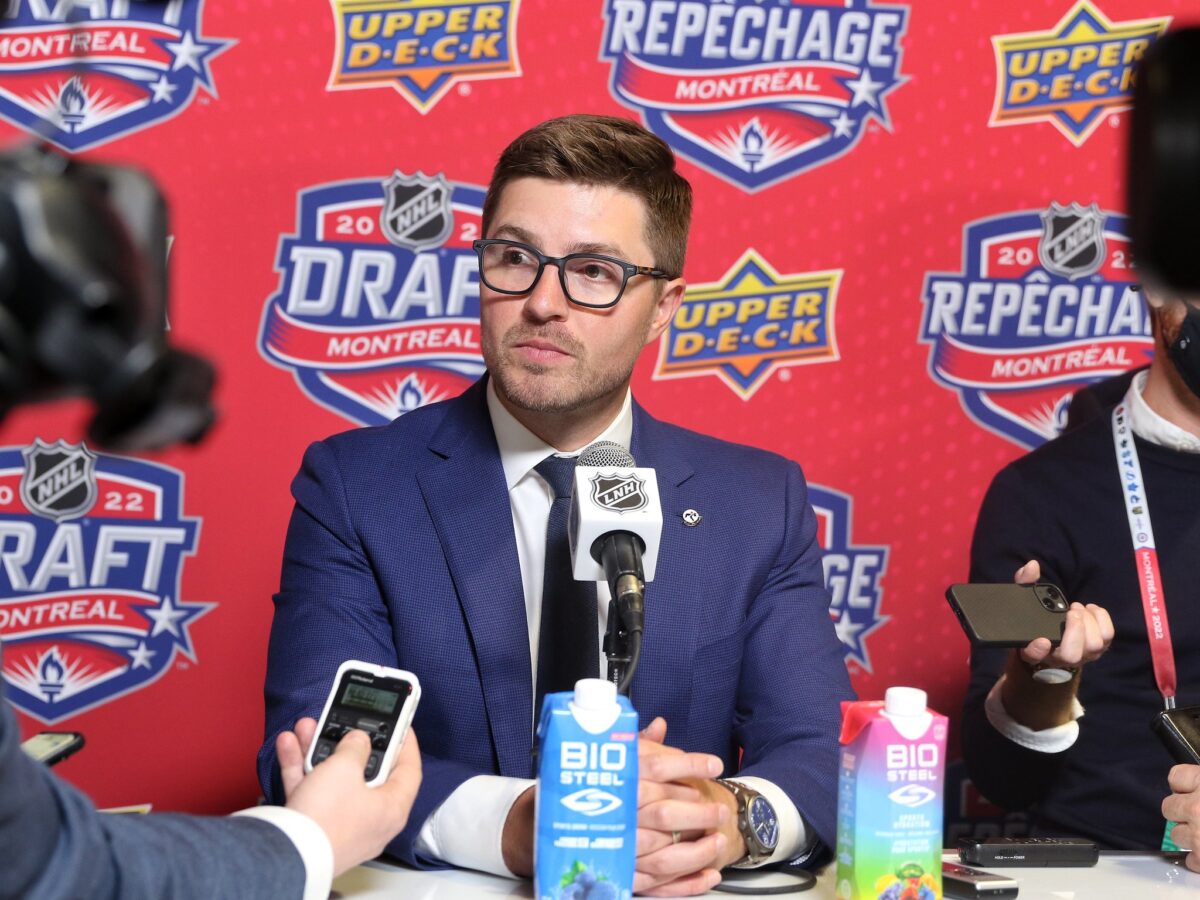
Would a $20 million cap hit be an overpayment? Probably. However, offer sheets have never been about signing players to team-friendly contracts. They are designed to make the opposing organization think long and hard about matching a deal that may alter its salary structure for years to come. The Blackhawks would almost certainly match every dollar of a $20 million offer sheet because Bedard is the cornerstone of their rebuild. Still, Pittsburgh would be forcing Chicago to commit to one of the richest contracts professional hockey has ever seen. That alone makes the exercise worthwhile.
Bedard Would Become Pittsburgh’s Next Franchise Star
There is also a hockey argument to be made beyond simply putting pressure on Chicago. The Penguins are approaching a crossroads as Sidney Crosby, Evgeni Malkin, and Kris Letang continue moving toward the latter stages of their Hall of Fame careers. While Crosby remains one of the NHL’s elite players, Pittsburgh knows it cannot rely on its championship core forever. Dubas has repeatedly spoken about trying to remain competitive while simultaneously building for the future. There may not be a better player to bridge those two timelines than Bedard.
Since entering the league, Bedard has already established himself as one of hockey’s brightest young stars despite playing on a rebuilding Blackhawks team that has struggled to surround him with elite talent. His offensive instincts, elite release, vision, and ability to take over games have drawn comparisons to some of the league’s biggest superstars. He is exactly the type of franchise player organizations spend decades trying to find through the draft. The opportunity to acquire someone of that caliber almost never becomes available, which is why teams should explore every possible avenue, even if the odds are incredibly slim.
Imagine the storyline if Pittsburgh somehow managed to pull it off. Crosby would have the opportunity to mentor the player widely viewed as one of the NHL’s next generational talents before eventually passing the torch. The Penguins would transition from one franchise icon directly to another without enduring the lengthy rebuild many organizations experience after losing a Hall of Fame center. It sounds unrealistic, but so did the Flyers presenting Carlsson with an $18 million offer sheet just days ago.
Cap Ramifications Would Follow
Of course, if the impossible happened and Chicago declined to match, Pittsburgh’s salary cap situation would become significantly more complicated. A $20 million cap hit would consume the majority of the Penguins’ available cap space, leaving the front office with additional work to do before opening night. Restricted free agents Yegor Chinakhov and Arturs Silovs both remain in need of new contracts, and while neither is expected to command superstar money, together they will still require several million dollars in additional cap space.
That means Pittsburgh would almost certainly need to move money off its roster. Conveniently, rumors surrounding Rickard Rakell have continued to circulate throughout the offseason. The veteran winger has reportedly generated interest around the league, and his contract would represent one of the easiest ways for the Penguins to clear meaningful salary if Bedard somehow arrived.
Rakell remains a productive top-six forward capable of scoring 30 goals in the right situation, meaning Pittsburgh would likely receive legitimate assets in return rather than simply dumping salary.
Moving Rakell would undoubtedly weaken the Penguins’ wing depth, but it would create enough flexibility to finalize new contracts for Chinakhov and Silovs while remaining cap-compliant. It is the type of domino effect teams are willing to navigate when acquiring a franchise-altering player. Every Stanley Cup contender eventually faces difficult salary cap decisions, and adding Bedard would be worth every difficult conversation.
Even a Matched Offer Sheet Is a Win
Even if Chicago matches immediately, Pittsburgh still accomplishes something valuable. Offer sheets are not solely about stealing players from other organizations. They can also reshape the marketplace. Carlsson’s $18 million offer sheet has already changed the conversation surrounding the league’s remaining restricted free agents.
Players like Bedard, Macklin Celebrini, and others now have a new benchmark for negotiations. If the Penguins submitted a $20 million offer sheet to Bedard, they would raise that benchmark even higher, forcing Chicago to build its future salary structure around an unprecedented contract.

For years, NHL general managers have treated offer sheets as if they were off-limits. The Flyers have shown that mindset may finally be disappearing, and other organizations should follow suit. Pittsburgh has the cap space, the draft capital, and perhaps most importantly, a legitimate organizational need for its next franchise cornerstone. Those circumstances make the Penguins one of the few teams capable of taking a legitimate swing.
Penguins Have Nothing to Lose
Will Bedard actually become a Penguin? The odds remain incredibly low. Chicago has invested everything into building around its young superstar, and there is virtually no scenario where the Blackhawks willingly allow him to leave. However, that does not mean Pittsburgh should simply accept the status quo. Generational talent is almost never available, and when even the smallest window opens, organizations have a responsibility to explore it.
At worst, the Blackhawks are forced to match the richest contract in NHL history and commit even more long-term money to their franchise player. At best, the Penguins land the centerpiece of their future and secure a seamless transition from the Sidney Crosby era to the Connor Bedard era. In today’s NHL, where offer sheets have suddenly become a legitimate weapon once again, that possibility alone is worth taking the shot.
Free Newsletter
Get Pittsburgh Penguins coverage delivered to your inbox
In-depth analysis, breaking news, and insider takes - free.
Subscribe Free →