Without watching or knowing, if you were told that the Calgary Flames had outshot their opponents in four of their first seven games this season, what would you think their record is? Probably not 1-5-0, right?
Then what if you were told that over the next four, the Flames were outshot in three of them? You probably wouldn’t think they had ripped off three wins in four times out.
But shockingly, that is where we are after the Flames won their third straight game, beating the Detroit Red Wings 4-1 on Saturday night at the Saddledome. While these stretches may be viewed as analytical anomalies, there is a lot to take away from the Flames’ wonky underlying early-season numbers.
Let’s wade through the data and tell the story the numbers show over 10 games.
A Drastic Change of Pace Helping Goaltenders
At the start of the season, the Flames played in all-out chaos. Through their first six games, they and their opponents averaged 112 shot attempts per game at five-on-five. The next closest team to that over that stretch was the New Jersey Devils and their opponents, averaging 98.8 per game (via Natural Stat Trick).
Despite having a 54.38% expected goals percentage over that stretch, the Flames had a 29.03% goal share at even strength. At the time, the goalies took much of the blame because their combined .827 save percentage (SV%) was a league-worst rate for goaltending tandems.
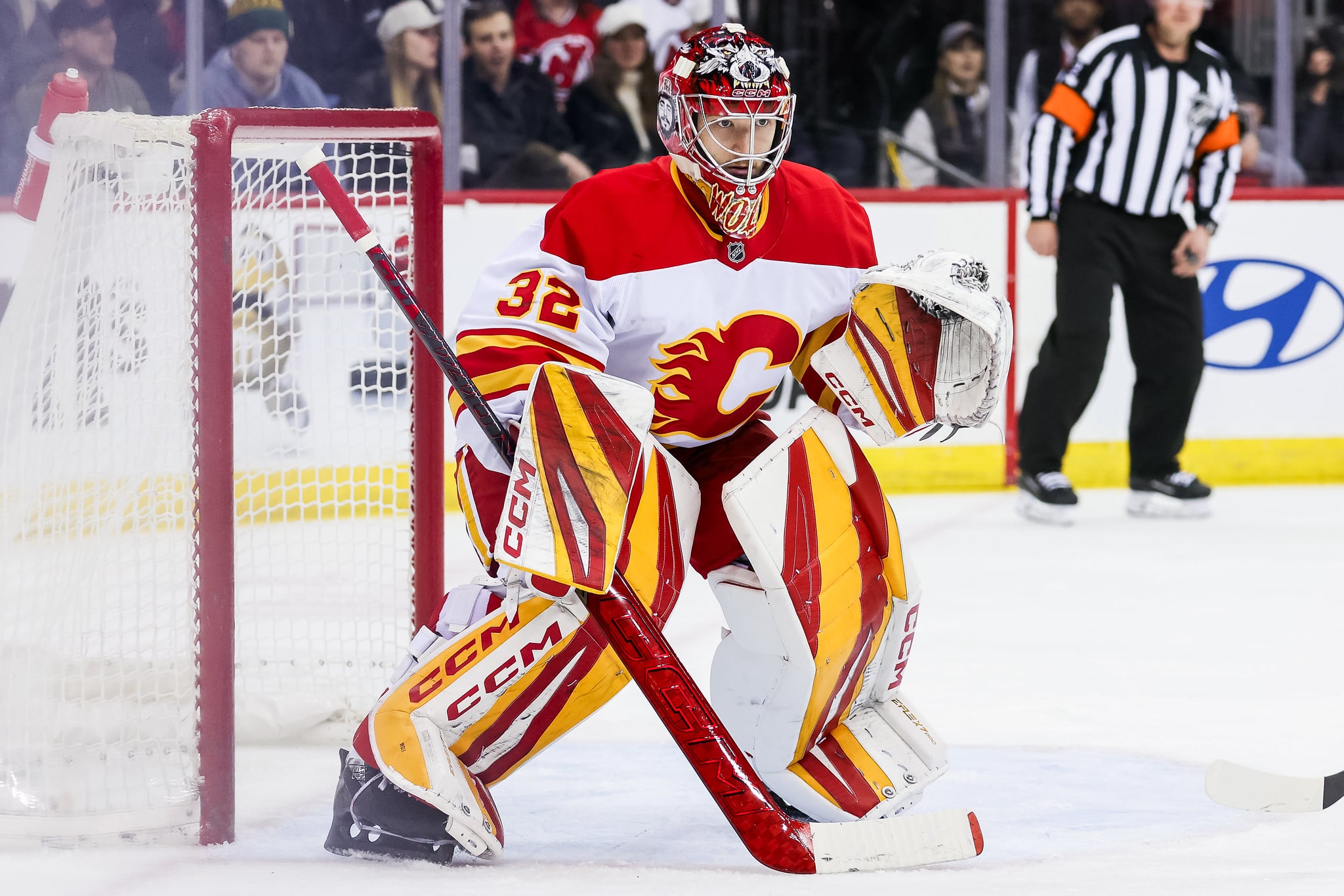
However, if you look back at the goals the Flames gave up, Dustin Wolf and Devin Cooley barely had a chance to read the threats coming at them before reacting to a grade-A chance.

Recently, that’s changed a lot. Over the last four games, the Flames and their opponents have averaged only 89.5 shot attempts per game. This has led to three of their four best games, suppressing scoring chances and expected goals, which has correlated with the far fewer goals against, even though the Flames have been outchanced at five-on-five.
Whether it was intentional or not, this change of pace – slowing the game down and doing a better job of managing pucks – has created a much more stable environment for their goaltenders, which is the strength of this team, and that’s shown with Cooley and Wolf combining for a .961 SV% over this win streak.
The numbers may not say it specifically, but the way the Flames have been playing recently, leaning into their strengths, will be more sustainable with this group of players.
Flames’ Power Play Finding Its Footing
The other major piece of the Flames’ recent hot streak has been their special-teams dominance. Over this win streak, they have scored five power-play goals while giving up zero on the penalty kill.
However, the power-play dominance predates the win streak and has shockingly been a strength all season. The Flames rank second in power-play goals per 60 minutes, and it’s been encouraging to see Matvei Gridin and Zayne Parekh so involved, combining for four primary assists on the eight power-play goals they have scored.
Unfortunately, I have to agree with the analytics and say the Flames’ third-best power-play percentage in the NHL won’t be sustainable with the current underlying metrics.
Across the league, the Flames are averaging the eighth-fewest expected goals, fourth-fewest scoring chances and third-fewest high-danger chances per 60 minutes. That also goes along with their second-highest shooting percentage at 25%, which you’d expect to come back down to earth at some point, given their league-worst five-on-five finishing.
The counterargument to the low offensive chance volume is the Flames averaging the third-most high-danger goals for on the man advantage per 60 minutes. Even without the volume of attempts, the game plan is working to get their shooters space in high-danger areas of the ice, as shown by this beautiful goal from Gridin against the Red Wings.
Whether being one of the league’s best power plays is sustainable, it’s been encouraging to see the Flames find their footing when up a man after posting the second-worst power-play percentage in the NHL last season.
Flames’ Penalty Kill Dominance Highlighted in Turnaround
The other part of the Flames’ turnaround and their winning four of their last five games has been the other half of the special teams. Over that stretch, the Flames killed off 13 of the 16 penalties that they took.
This definitely isn’t the biggest reason for the turnaround, as the Flames’ penalty kill killed off 13 of the 15 penalties they took in their first five games of the season and sits seventh-best in the league.
It’s been much more noticeable and impactful now that the Flames haven’t given up more than four goals per 60 minutes at five-on-five over the last handful of games.
If you combine teams’ power-play and penalty-kill percentages, you’ll find the Flames ranked second-highest at 116.8. The league average currently sits at 99.58%. Again, it could be argued that this unit is due for some regression as well.
Even though they currently have a top-10 penalty kill percentage in the NHL, the Flames allow the eighth-most expected goals and the fourth-most high-danger chances against per 60 minutes, while their goalies have the fourth-best high-danger save percentage when shorthanded, currently sitting at 94.74%, which is 20% above the league average and will unfortunately likely even out as the season wears on.
Final Takeaways From the Flames’ First 10 Games
Through the first five, things were grim; sure, there were probably positives to take away, like the penalty kill or the power play contributing all season so far, but there’s no point in arguing that when they were repeatedly losing by multiple goals.
However, over the last five, the Flames have at least shown strengths in areas that are needed to make long playoff runs. That won’t be this season; they’ll regress from their recent form. But strong goaltending, a solid blue line, and special teams are always huge talking points in the playoffs.
So far, that’s been this group’s strength. They may still be multiple seasons away from that conversation; you can at least see the blueprint working and have faith that this team will only improve as they continue to rebuild and add talent, after stripping the roster last season and probably selling again later this season.
The losses will still come, but a little hope is all you can ask for from a rebuilding group.
Free Newsletter
Get Calgary Flames coverage delivered to your inbox
In-depth analysis, breaking news, and insider takes - free.
Subscribe Free →