The Toronto Maple Leafs landed Kirill Marchenko the day before the season began and immediately signed him to a long-term extension. It looked like a franchise-altering win. A month later, it has left the Leafs boxed in by a rule most fans have never heard of. It’s called tagging room, and Toronto has less of it than any team in the NHL.
Even more interesting is how it might indirectly affect the Maple Leafs’ chances of trading for and signing Nikita Kucherov to an extension.
What is Tagging Room?
PuckPedia’s Hart Levine explains it as the amount of cap space a team has left to add commitments for next season while still playing this one. It’s measured against the current cap plus 10%, which comes to $114.4 million for 2026-27. Every contract on the books for 2027-28 counts, even for players currently in the minors.
Basically, it stops teams from packing too much salary into future seasons so they do not accidentally violate the salary cap later. The Leafs have just $648,000 left, the lowest in the league.
The Maple Leafs got there by giving multi-year deals to depth forwards over the summer. Those contracts were reasonable on their own. Then GM John Chayka acquired Marchenko and signed him to an extension worth $12.5 million per season starting next year, roughly $4.75 million more than Matthew Knies, the player he effectively replaced.
Together, those moves used up almost every dollar of room. Hart notes that tagging was also behind the reworking of the Marchenko-Knies trade itself.
What Does This Mean for Toronto Moving Forward?
I’m not an expert, but as I understand the rule, the Maple Leafs will have to navigate this. They can’t call up players on two-way contracts for next season. Ben Danford, for example, would jump from $0 to $780,000 in tagging room the moment he’s recalled. They can’t add anyone by trade, waivers or signing if that player has a contract for 2027-28.
Their call-up options are limited to players without deals for next season or those already in the organization on suitable contracts.
LTIR doesn’t help either, because it only applies one season at a time. If injuries keep stacking up, Toronto could struggle to dress a full lineup. The CBA has emergency exceptions for current-year cap problems, but he says people around the league don’t know how a shortage caused by tagging would be handled.
Would This Impact a Potential Kucherov Trade?
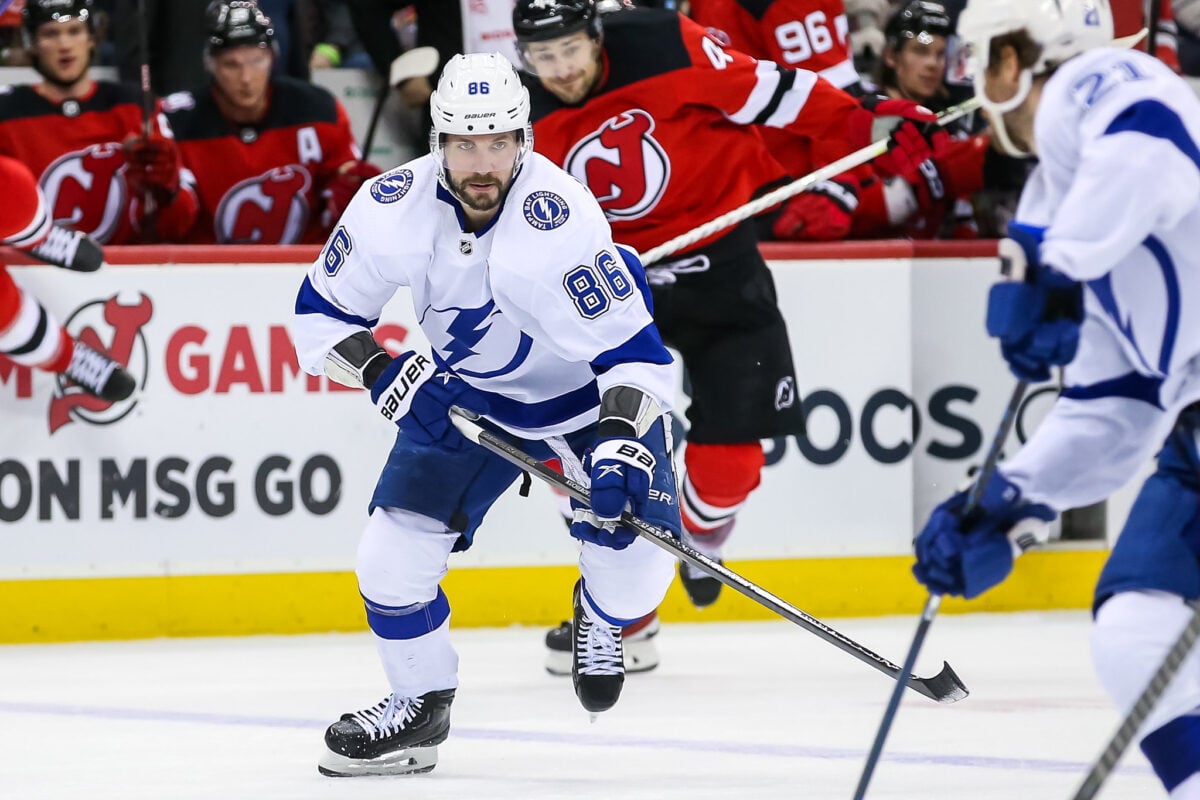
The Maple Leafs have options, but one of the big rumors out there right now is that Toronto might be in the mix for Nikita Kucherov if the Tampa Bay Lightning agree to trade him. Would the tagging rule impact any trade?
Not directly. But it does become a bit more complicated.
Kucherov has told Tampa Bay he won’t re-sign there, but Elliotte Friedman reports he’d consider Toronto. If the Leafs wanted him long-term and were willing to trade for him, they’d need to extend him after the season or include serious money in the deal. Any extension counts against the tag room the moment it’s signed.
In other words, the one thing that might dictate how much Toronto is willing to give up in the trade is the extension. If they can’t sign Kucherov to that extension immediately, they have to trust he won’t bail at the end of the season. If he’s looking for $20 million on his next contract, it’s easy to see how things become challenging.
The Leafs’ return to Tampa would almost have to include players with term. Moving them would clear tagging room and make the extension possible. Even then, it’s tight. The tagging rule is more a constraint on how Toronto would structure a deal than a dealbreaker.
Free Newsletter
Get Toronto Maple Leafs coverage delivered to your inbox
In-depth analysis, breaking news, and insider takes - free.
Subscribe Free →