- Goalkeeper: Logan Thompson
- Left Back: Jakob Chychrun
- Center Back(s): Matt Roy & Martin Fehervary
- Right Back: Cole Hutson
- Defensive Midfielder: Pierre-Luc Dubois
- Central Midfielder: Dylan Strome
- Central Attacking Midfielder: Aliaksei Protas
- Left Wing: Ryan Leonard
- Right Wing: Tom Wilson
- Striker: Alex Ovechkin
- Reserves: Connor McMichael, Ilya Protas, Rasmus Sandin, Charlie Lindgren
- Enjoy the Beautiful Game
With football (aka soccer) taking over North America this summer for the 2026 FIFA World Cup, the sports world will have its eyes locked on pitches in Mexico, the United States, and Canada over the next five weeks. The World Cup operates in the same manner as the 2026 Winter Olympics did. A group stage round followed by knockout-stage matchups to crown a single champion. Every four years, the tournament brings football’s best players together to battle for international glory. The World Cup kicks off June 11, beginning 27 consecutive days of action between the opening match and the end of the Round of 16 and culminating in 104 matches across 39 days ending with the Final on July 9 at MetLife Stadium in New Jersey.
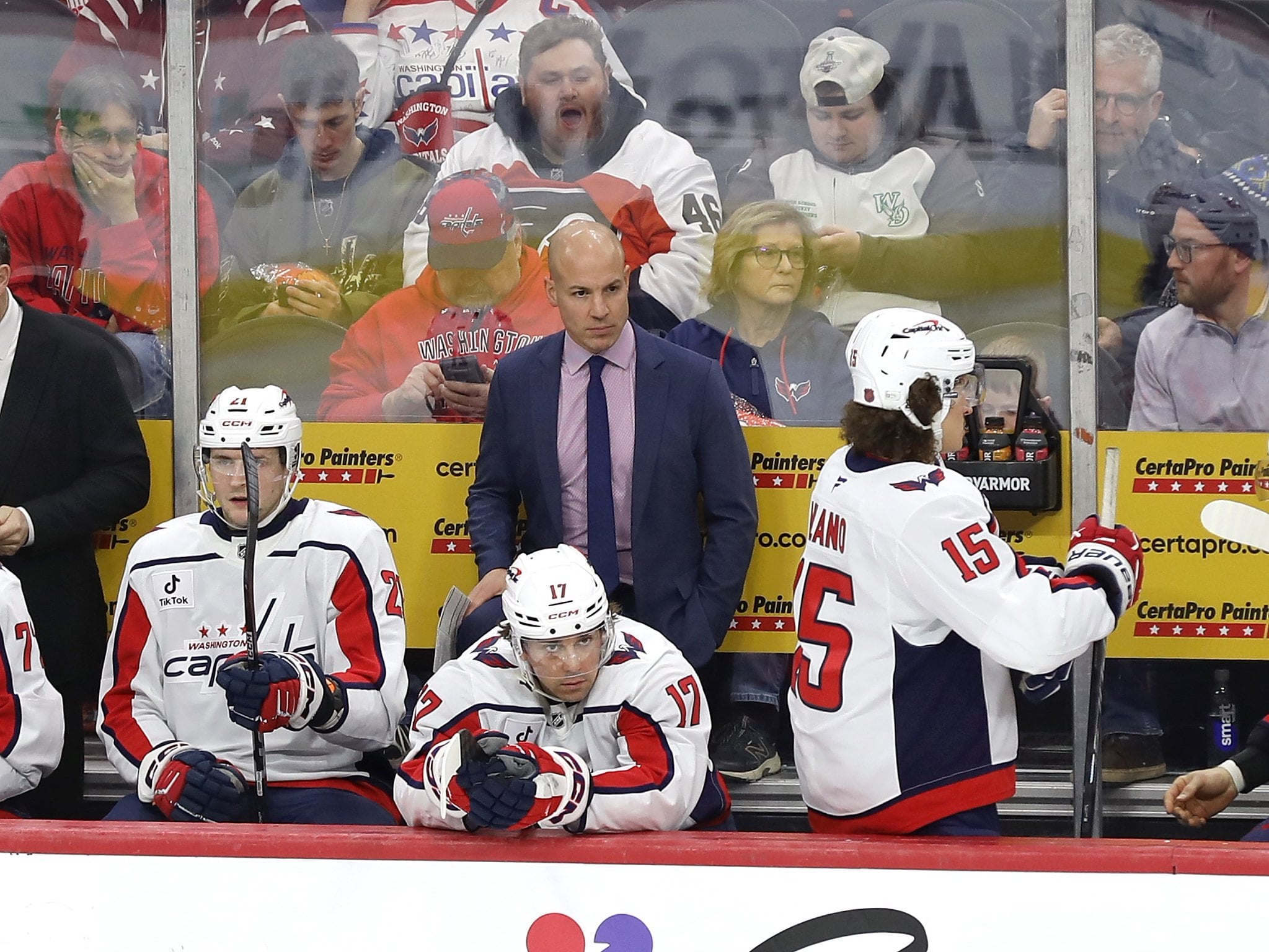
So, what would a Washington Capitals lineup look like at the 2026 World Cup? Let’s take a trip through the 2025-26 roster and select the starting eleven players for head coach Spencer Carbery’s squad in a fantasy world where NHL teams sent a squad to compete against soccer superstars, like Argentina’s Leo Messi and Norway’s Erling Haaland. In this mental experiment, Washington is using a 4-3-3 formation, meaning four defenders, three midfielders, and three attackers (along with the goalkeeper) to fill the team sheet.
Goalkeeper: Logan Thompson
Similar to hockey, a goalkeeper is the last line of defense against the opposition. They are responsible for disrupting scoring attempts and stopping shots on net. Goalkeepers are the only players on the field allowed to play the ball with their hands during a match, with elite teams gaining an advantage simply due to rostering an elite goalkeeper, like Belgium’s Thibaut Courtois.
Washington has this position locked down behind starting goaltender Logan Thompson. The 29-year-old netminder shows good patience in the net with solid rebound control, a critical element for a football keeper, too. Thompson is a safe puck-handler, which would translate well on the pitch as safe outlet passes rather than a riskier flip sending the ball into traffic. His size (6-foot-4) would be a natural intimidation factor for a goalkeeper, and his agility would allow for total coverage of the net.
Left Back: Jakob Chychrun
The left back is part of the defensive back line, typically featuring four players with distinct responsibilities. This defender handles players attacking down the sidelines and defusing passes into the penalty box. A left back is usually one of the top defenders on the team, capable of stopping speedy attackers down the wing. In football, the role has evolved to include a role facilitating the offense to help control the middle of the field. Canada’s Alphonso Davies, the youngest captain of any squad at 25, is a prime example of the blend of speed and physicality teams look for in the position.
At 25 years and eight months, #CANMNT's Alphonso Davies is the YOUNGEST captain at the 2026 #FIFAWorldCup 🇨🇦 pic.twitter.com/kePDaCqBku
— TSN (@TSN_Sports) June 11, 2026
Jakob Chychrun fits the left back role as the top shutdown option on the Capitals’ roster this season. The 28-year-old defenseman finished the 2025-26 campaign with a plus-20 rating, which was tied with Aliaksei Protas as the best mark on the team. Chychrun has been equally adept at shutting down scoring threats as he has been scoring goals during his time in Washington. His offensive skills ultimately push him to left back, where he would find more opportunity to impact the game than if he were used exclusively as a shutdown defender.
Center Back(s): Matt Roy & Martin Fehervary
A center back plays in the middle of the back line to prevent scoring opportunities, win aerial battles, and organize the defense against oncoming attackers. These players are typically the best defenders on the squad and are responsible for eliminating top-scoring threats. Most teams feature a pair of center backs, while some alignments double down on defense with three center backs across a five-person front. In hockey terms, a tall, athletic, defensive blueliner works the best in this spot.
Washington features a pair of defenders who excel at marking opposing threats: Matt Roy and Martin Fehervary. Both players have the size (6-foot-2) to neutralize aerial attacks and deflect simple passes through their territory. Roy finished with the second-best plus/minus on the roster at plus-18, with Fehevary right behind him in third place at plus-15. Their combined defensive abilities allow Carbery to play Chychrun outside at the center back position.
Right Back: Cole Hutson
A right back serves as an elite two-way player capable of shutting down opposing wingers and aiding the transition game to create offense. Speed is a critical element for a successful player at the position, requiring stamina, agility, and the pace to run up and down the pitch. A right back will often sprint down the flank to create an open passing lane for a searching midfielder.
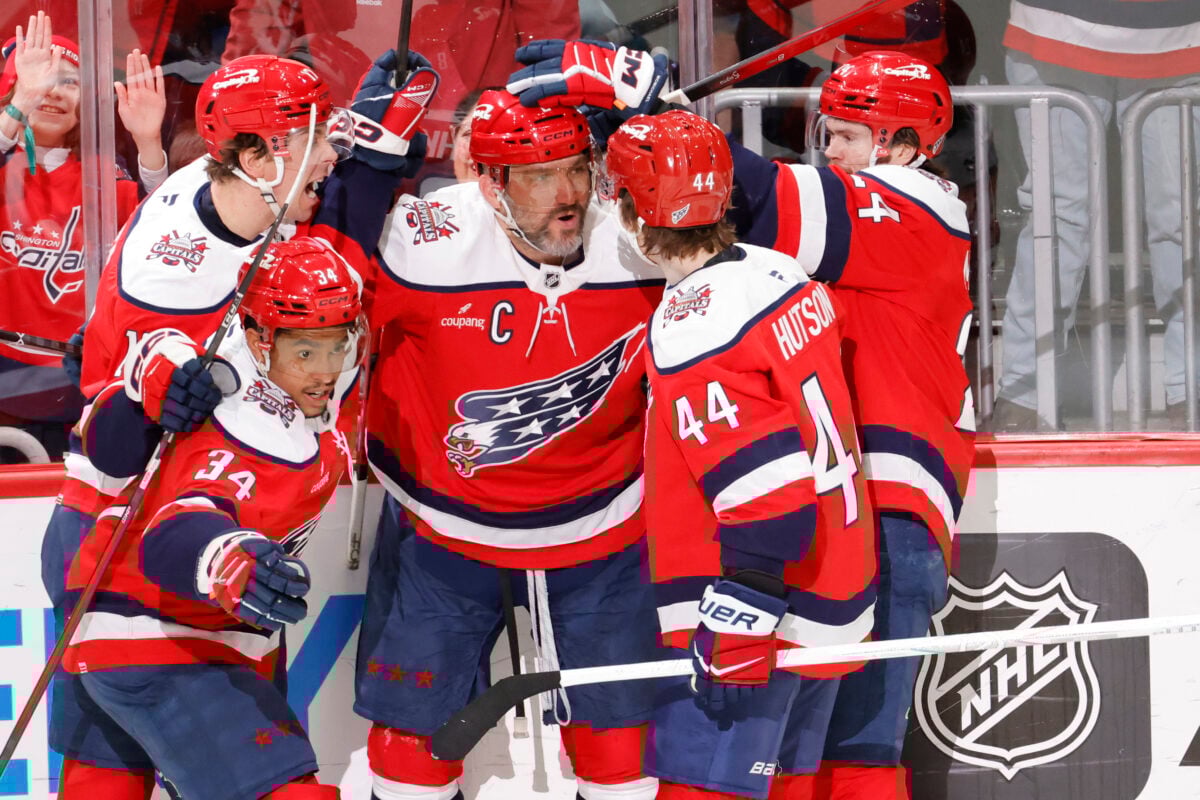
Cole Hutson slots in extremely well as a right back thanks to his elite skating and speed. The 19-year-old defender reached 22.94 miles per hour (mph) in a game against the St. Louis Blues last season, while eclipsing the 20 mph threshold 13 times during a limited 14-game NHL experience at the end of the season. His size (5-foot-11) could be a slight concern on the defensive end, but he would represent one of the premier dual-threat options available on defense due to his quick-movement abilities.
Defensive Midfielder: Pierre-Luc Dubois
A defensive midfielder, or “holding midfielder”, operates in front of the defensive line and is responsible for breaking up opponent attacks, winning tackles, and intercepting the ball in the middle of the field, while distributing possession to teammates once the ball is in control. Tactical awareness is critical in the position, as most defensive midfielders are expected to read and break up plays before they become scoring threats.
Pierre-Luc Dubois features the size (6-foot-4) and shutdown skills to thrive in this role as a 200-foot player. The 27-year-old center was limited to 29 games last season due to various injuries, including a fractured hand at the end of the season. When healthy, Dubois has the athleticism and defensive acumen to thrive in a defensive midfielder role just like he does on NHL ice.
Central Midfielder: Dylan Strome
An all-around player who connects the defense and the attacking units, a central midfielder is responsible for controlling the tempo of the game, maintaining possession, and providing defensive support when necessary. Vision, passing skills, and high stamina are required to operate in the large space between the boxes. Spain’s Pedri is one of the top players to watch over the next few weeks, specifically due to his passing abilities.
Dylan Strome has become an effective two-way player at the top of the Capitals’ lineup due to high hockey IQ and elite playmaking skills. The 29-year-old center totaled 39 assists to lead the Capitals in that category this season. Strome’s defensive play allows Alex Ovechkin, the NHL’s all-time regular-season scoring leader, to focus his energy on what he does best for Washington. The Capitals’ first-line center would be able to roam the midfield and seek opportunities to spring a teammate with a crafty pass from a midfield position.
Central Attacking Midfielder: Aliaksei Protas
A central-attacking midfielder (CAM) is the primary link between the midfield and the forward group. The CAM is a creative, two-way player who can exploit gaps in the defense and convert on scoring chances when given the chance. This athlete must demonstrate a deep understanding of the game to make critical decisions about when to attack or drop back to defend. Portugal’s Bruno Fernandes is a fantastic example of this type of player in the midfield.
Protas delivered a balanced performance, scoring 25 goals and amassing 27 assists this season. The 25-year-old forward could provide a sizeable tactical advantage as a 6-foot-6 playmaker. He would be difficult for smaller defenders to navigate around in the box during rebound scrambles and/or to attempt to move out of the way during net-front scoring opportunities.
Left Wing: Ryan Leonard
A left winger is similar to the role in hockey: An attacking player capable of pulling opponents out of position to open up space for himself and/or teammates. Speed and agility are important for beating defenders in 1-on-1 situations, while also being able to backtrack down the pitch to help out defensively.
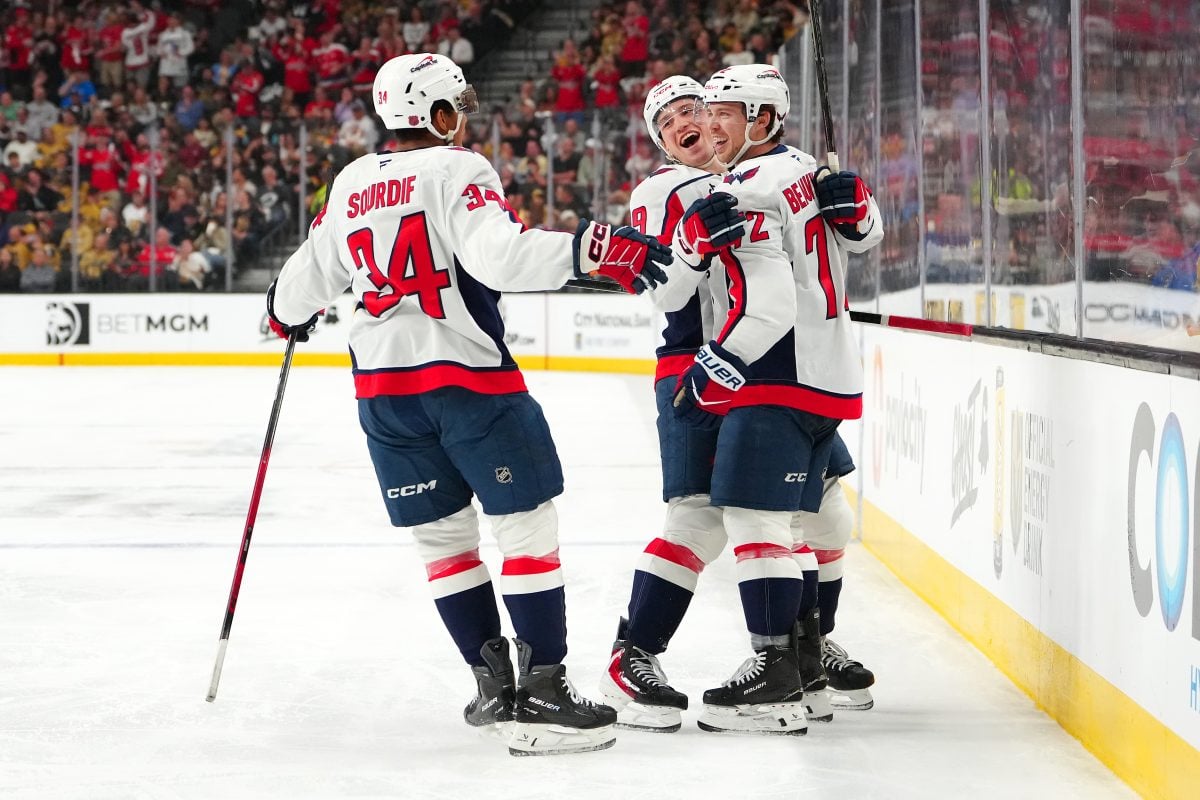
Washington will employ an “inverted winger” tactic, using a right-handed player on his off-wing in our fantasy scenario. Carbery is left with a choice between three right-handed scoring wingers for three attacking positions. Ryan Leonard deserves a starting opportunity after a 20-goal, 25-assist rookie season. The 21-year-old winger excelled largely due to his skating speed, which topped 24 mph at one point last season, according to NHL Edge stats. Leonard’s wheels would provide a huge advantage as a target for outlet and/or seam passes to stretch the defense.
Right Wing: Tom Wilson
An attacking player controlling the right side of the field, a right winger’s duties are similar to his left wing counterpart: press the defense, create chances, and score goals when given the chance. Strength and/or speed are weapons against defenders looking to take away time and space. Argentina’s Lionel Messi is perhaps the most famous footballer in the world due to the chaos he can wreak from the right wing.
Despite his 6-foot-4 frame, Tom Wilson still reached a skating speed above 22 mph in a game against the Boston Bruins this season. The 32-year-old forward has showcased an ability to generate and convert on scoring opportunities as he’s grown into his top-six role with the Capitals over recent seasons. Wilson scored 30 goals — the second-highest total in Washington this season — and would serve as a better option to get back on defense than Ovechkin would, so Wilson lands at the right wing spot on our list.
Striker: Alex Ovechkin
A striker is the attacker positioned closest to the goalkeeper in the offensive formation. Their main responsibility is to finish scoring opportunities, create rebound chances, and apply pressure to defenders (or a goalkeeper) looking to move the ball up the field. Forwards are typically the best goal-scoring and/or play-making athletes on the club.
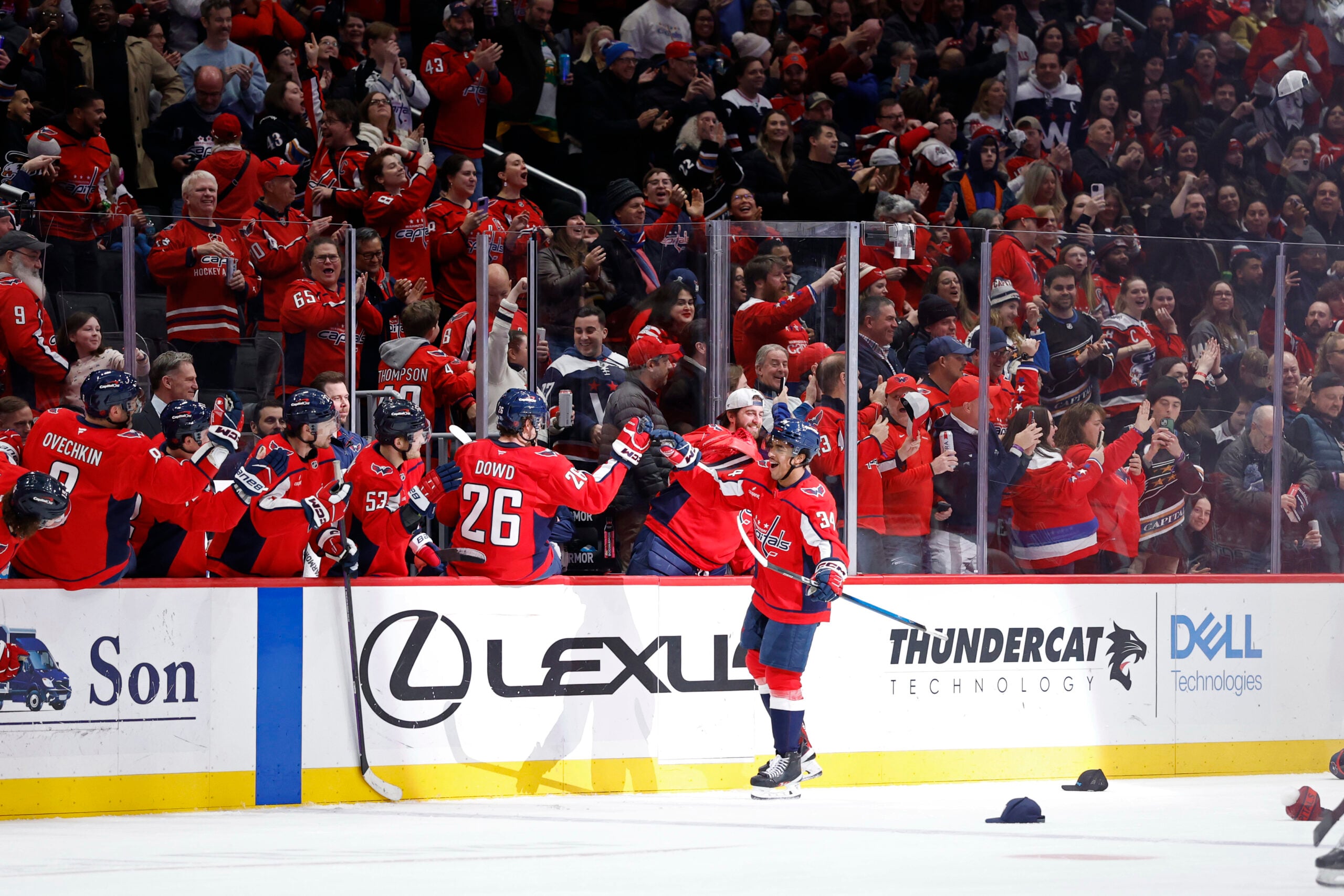
Ovechkin has been a premier goal-scoring threat since he stepped onto the NHL ice two decades ago. While the Capitals’ management awaits his decision to return for a 22nd NHL season, it’s fun to think about the goal-scoring celebrations you would see as the NHL star slices a shot into the back of the net. Ovechkin might not have the same speed he once did, but he would still strike fear into every goalkeeper he encountered.
Reserves: Connor McMichael, Ilya Protas, Rasmus Sandin, Charlie Lindgren
Reserve players act as tactical substitutes and/or backups in the event a player is injured (or suspended). Each club carries between 23 and 26 players on an official roster with three mandatory goalkeepers. This leaves some room for reserve players to be moved in and out of active roles as coach’s game plan for the next match. These athletes train with the first team to stay in shape, but watch most games in a tracksuit until selected for action. Teams received five substitutions per match at the World Cup. Once a player is substituted off the pitch, they are not allowed to re-enter the contest.
Capitals players who missed out on a spot among the starting eleven fall into this category. Connor McMicheal, Ilya Protas, and Rasmus Sandin come to mind as athletes who could make an impact in a substitution role off the bench. McMichael would be an asset in the midfield to generate offensive opportunities, while Protas could provide another skyscraper in a midfield and/or attacking role. Sandin could provide a veteran option right back in late-game situations. Charlie Lindgren, the Capitals’ current backup goalie, would land as a reserve player to serve as a replacement for Thompson.
Enjoy the Beautiful Game
Washington might not be the best team, but the Capitals would conceivably be a tough elimination with the offensive weapons they possess throughout the entire starting unit. Enjoy the next month of high-level competition on your TV, tablet, and phone screens. If nothing else, it should be a worthwhile distraction as the 2026 Stanley Cup Playoffs draw to a close. Meanwhile, the rest of the league eagerly anticipates the start of the 2026 NHL Entry Draft on June 26.
Free Newsletter
Get Washington Capitals coverage delivered to your inbox
In-depth analysis, breaking news, and insider takes - free.
Subscribe Free →