NHL free agency always creates plenty of excitement around the league. Every year, teams hand out massive contracts in hopes of finding the missing piece to contend for a Stanley Cup. While some organizations are expected to spend aggressively, don’t expect the Montreal Canadiens to be among them.
Kent Hughes has consistently shown that he prefers patience over panic, and all indications suggest this year’s free agency will be no different. Montreal may add a few depth pieces, but don’t expect a blockbuster signing.
Patience Has Been the Canadiens’ Approach
Free agency is one of the easiest ways to improve a roster without giving up draft picks or prospects. However, it is also one of the riskiest times of the year. Players often receive contracts that are significantly richer than what they would earn on the open market during the season. General managers are forced into bidding wars, leading to longer contracts, higher salaries and, more often than not, no-trade or no-movement clauses.
Hughes has avoided falling into that trap since taking over the Canadiens. Rather than chasing the biggest names available, he has preferred making calculated moves that fit both the current roster and the organization’s long-term plan. Montreal is still one of the youngest teams in the NHL, and the front office knows that several prospects are expected to compete for NHL jobs over the next few seasons.
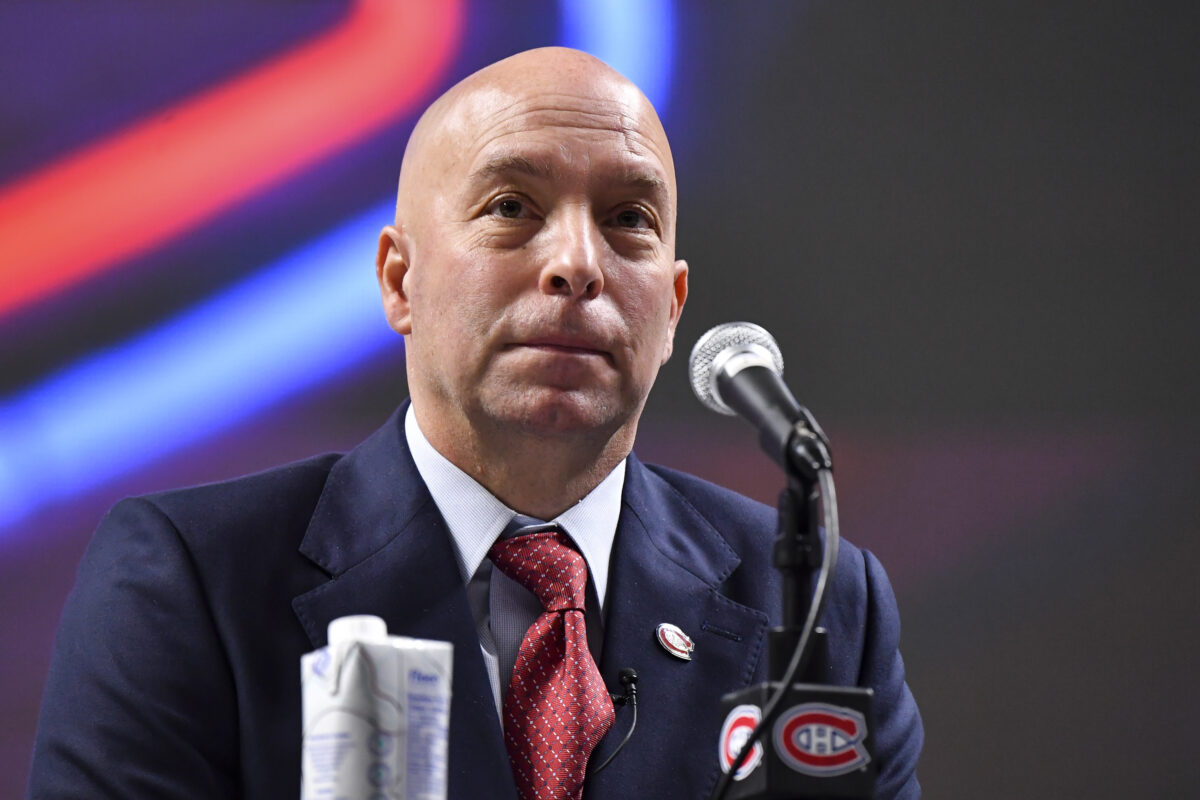
That is one of the reasons the Canadiens reportedly won’t overextend themselves. According to Pierre LeBrun, Montreal had interest in veteran power forward Mason Marchment, who would certainly fill a need with his size, physicality and ability to contribute offensively. However, Hughes is reportedly unwilling to offer the kind of long-term contract that Marchment is expected to receive on the open market.
A lengthy deal could eventually block opportunities for young forwards such as Michael Hage, Alexander Zharovsky or other prospects still making their way through the system. Hughes has repeatedly emphasized building through development, and handing out a six or seven-year contract simply doesn’t fit that philosophy.
Salary Cap Flexibility Remains a Priority
Another reason Montreal is expected to stay relatively quiet is its financial flexibility. The Canadiens have already locked up several cornerstone players to long-term contracts. Nick Suzuki, Cole Caufield, Lane Hutson, Ivan Demidov and Juraj Slafkovsky are all signed, giving the organization a strong core moving forward.
Despite still having more than $14 million in available cap space, that doesn’t mean Hughes should feel obligated to spend every dollar. Cap space has become one of the NHL’s most valuable assets. It gives teams the ability to absorb contracts in trades, take advantage of opportunities that arise during the season and negotiate from a position of strength. Hughes has used that flexibility before, and there’s every reason to believe he intends to continue doing so.
The Canadiens are not yet in a Stanley Cup-or-bust window. Yes, expectations are growing after last season’s deep playoff run, but this remains a team whose best years are still ahead. Overpaying a player simply because cap space is available would go against everything Hughes has built over the past few years. Patience today could allow Montreal to make a much bigger move tomorrow when the timing is right.
Expect Depth Additions Instead
Just because the Canadiens won’t be making headlines doesn’t mean they won’t make any moves. Last summer provided a perfect example of Hughes’ approach to free agency. Rather than committing major money to big-name players, Montreal added experienced depth through short-term contracts.
Joe Veleno, Kaapo Kähkönen and Sammy Blais all arrived on one-year deals. Those signings provided competition throughout the organization without creating long-term salary cap issues or blocking young players from earning opportunities.
Expect a similar strategy this summer. The Canadiens could look to add another veteran goaltender to strengthen the organizational depth chart, especially if Samuel Montembeault ends up being traded. A physical bottom-six forward or a reliable defensive defenseman on a short-term contract could also make plenty of sense.
Those types of additions improve the team without compromising the organization’s future. Hughes has never been a general manager who signs players simply to win the headlines in free agency. Instead, he has focused on maintaining flexibility while allowing the Canadiens’ young core to continue developing together.
Fans hoping for a blockbuster signing may end the day disappointed. But if history has taught us anything, it’s that Hughes is perfectly comfortable waiting for the right opportunity instead of forcing one. And in the long run, that patience could prove far more valuable than any splashy free-agent signing.
Free Newsletter
Get Free Agents coverage delivered to your inbox
In-depth analysis, breaking news, and insider takes - free.
Subscribe Free →