There’s a certain feel to the Vancouver Canucks right now that’s a little different than your classic “tear-it-down” offseason chatter. The word rebuild gets tossed around, sure, but the actions coming out of the front office don’t quite match that tone.
Instead, Canucks GM Ryan Johnson is taking a more controlled, almost cautious approach to reshaping the roster. Two recent storylines capture that better than anything else: the club’s stance on no-trade conversations and the ongoing cloud around Elias Pettersson.
Canucks Stay Pat on No-Trade Talks — What It Really Says About Roster Construction
Start with the structure. According to Thomas Drance, the Canucks have not asked any player to waive their no-trade or no-movement clauses, including defenseman Filip Hronek. That might sound like a small detail, but in NHL terms, it says quite a lot.
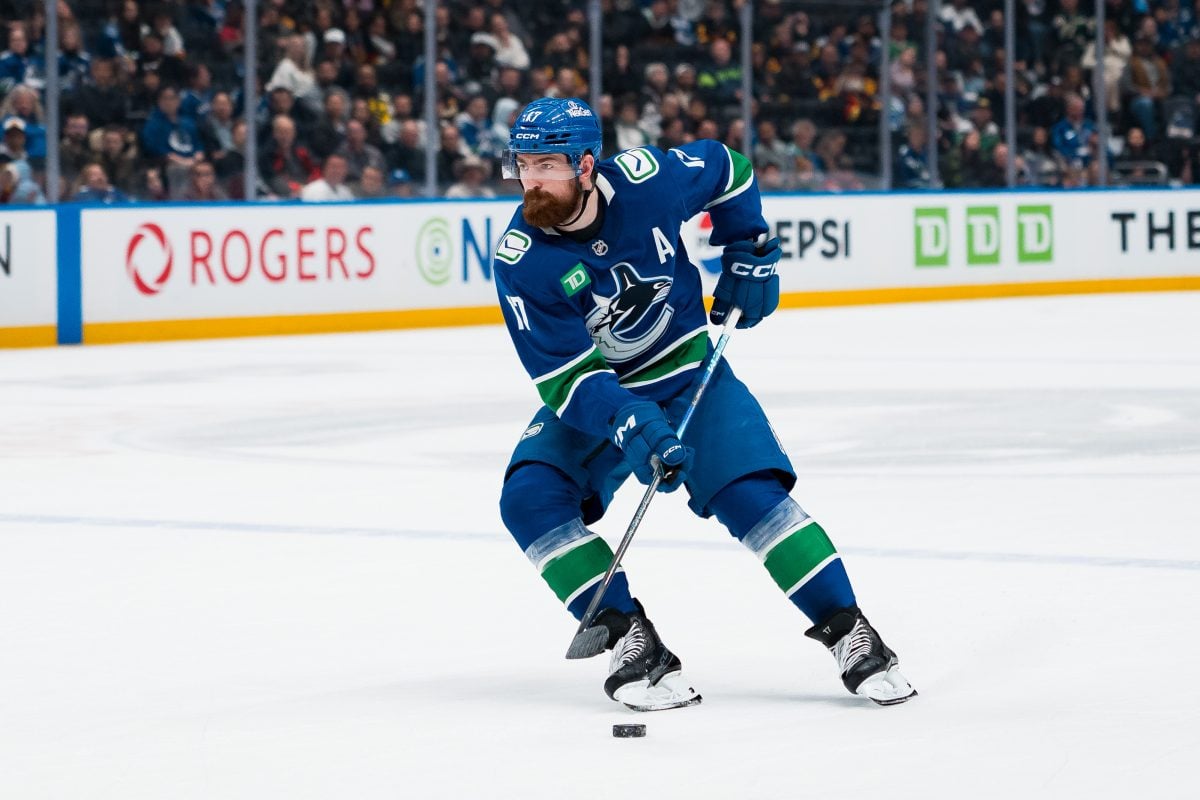
Teams in full asset-collection mode usually start those conversations early, to gauge the market and open doors. Vancouver hasn’t gone there. Instead, the message is more about continuity than subtraction, even as the organization remains clearly in a transitional phase.
What that means in practice is a roster that’s likely to evolve slowly rather than dramatically. We’re not looking at a fire sale or a mass clearing of veteran contracts, but rather incremental changes such as depth tweaks, selective moves on the margins, and a greater reliance on internal development to shift the balance over time. Players like Hronek staying in the conversation rather than on the trade block suggests the Canucks still see value in keeping a competitive base intact while they adjust around it.
Why Moving Elias Pettersson Isn’t as Simple as It Sounds
And that brings us to the bigger, more complicated piece of the puzzle. There was a time when Pettersson was the simplest answer on the roster. Franchise centre, point-per-game upside, the player you build everything around. Now, he’s become something much more layered. The talent hasn’t disappeared, and nobody around the league doubts what he can do at his best. But the conversation has shifted into a more cautious space. Teams looking into him are at least doing their due diligence on effort and consistency, which tells you how far the dialogue has moved beyond pure skill.
The contract only sharpens that reality. At $11.6 million for six more seasons, Pettersson isn’t a short-term gamble or a rental swing. He’s a structural decision. Any acquiring team has to believe not only in the player, but in the version of him that shows up every night. That’s a big ask, especially when the price tag sits at the top end of the market. It forces teams into a much narrower evaluation window than they would prefer.
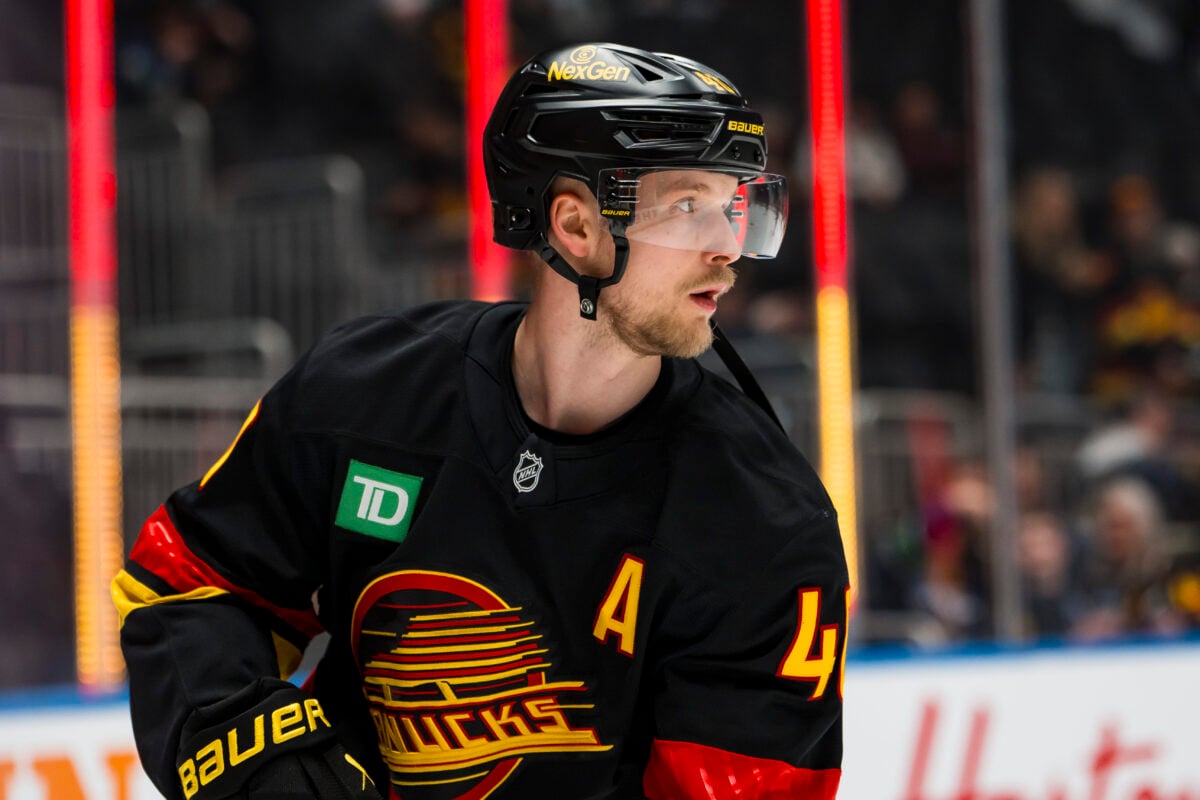
Then you add in the no-movement clause, and the market tightens even further. Vancouver doesn’t get to shop Pettersson to the league; they get to shop him to whatever team he agrees to go to. Suddenly, we’re not talking about broad league interest; we’re talking about a shortlist shaped as much by lifestyle and preference as hockey logic. A destination like the Los Angeles Kings, for example, might check boxes on both sides, but that’s only one piece of a much smaller puzzle.
And maybe the most important factor is the simplest one: belief. Around the league, Pettersson isn’t viewed in a vacuum anymore. Teams either see a high-end centre still worth building around, or they see risk tied to inconsistency and cap commitment. That split opinion is exactly what makes these situations drag out longer than people expect.
What’s Next for the Canucks?
From a Canucks perspective, the organization is in a bit of a holding pattern. They’re not tearing down, they’re not fully committing to a retool, and they’re not rushing into major structural trades. Instead, they’re trying to walk a line between competitiveness and recalibration. And right now, Pettersson sits right in the middle.
What emerges from all of this is a clear theme: Vancouver is trying to stay functional while it figures itself out. The refusal to start no-trade conversations suggests stability. The uncertainty around Pettersson suggests everything else is still on the table. And somewhere between those two realities is where this roster will be shaped over the next stretch.
Free Newsletter
Get Vancouver Canucks coverage delivered to your inbox
In-depth analysis, breaking news, and insider takes - free.
Subscribe Free →