- The Dubas Era and the Original Blueprint
- The Criticism: Skill Without Enough “Edge”
- The Shift: “We Need a Little More Snot in Our Game”
- Analytics Fade From the Maple Leafs’ Spotlight
- Enter John Chayka: Déjà Vu Returns
- A New Cycle for the Maple Leafs — But With Different Conditions
- The Matthews Question Remains Huge
- A Simple Closing Thought About the Maple Leafs
We guess our ages show when we use that famous Yogi Berra quote — but it may be relevant to the current Toronto Maple Leafs and the direction the franchise appears to be headed.
The Dubas Era and the Original Blueprint
On May 11, 2018, 32-year-old Kyle Dubas was promoted to general manager of the Maple Leafs by team president Brendan Shanahan. Dubas was touted as a new-age, data-driven analytics wunderkind who would bring Toronto into the 21st century. His philosophy emphasized skill, speed, talent, and puck possession.

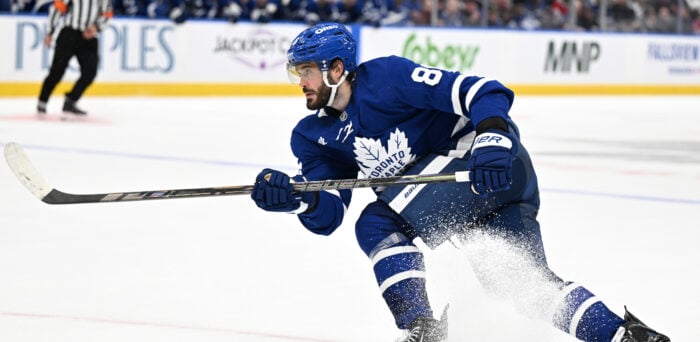
(Photo by Alana Davidson/NHLI via Getty Images)
Dubas’ first major move was signing John Tavares. He already had Auston Matthews, William Nylander, and Mitch Marner in the fold, with Morgan Rielly providing offence from the back end. At the time, no NHL team could match Toronto’s offensive firepower.
The problem — and ultimately the team’s downfall — was the cost of keeping that core together. Once Matthews, Nylander, and Marner completed their entry-level contracts, their new deals, combined with Tavares’ contract, left more than half of the salary cap tied up in four players. There was little money left to surround the core with anything beyond minimum-salary NHLers and unproven young talent.
The hope was that a steadily rising salary cap would eventually provide enough flexibility to improve the supporting cast. Then the COVID-19 pandemic hit. Revenues plunged, the salary cap remained frozen for three seasons, and increased by only $1 million annually over the following years. The supporting cast never truly arrived, and the core players proved unable to carry the team through the postseason.
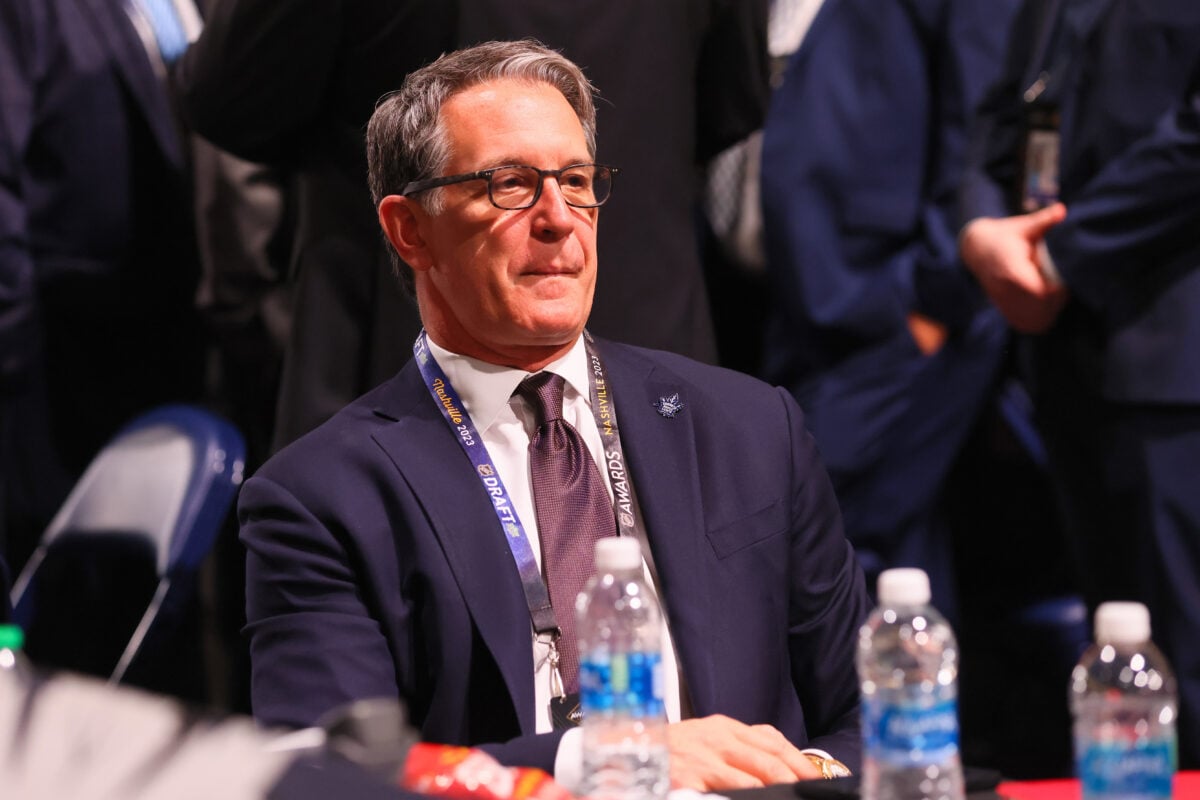
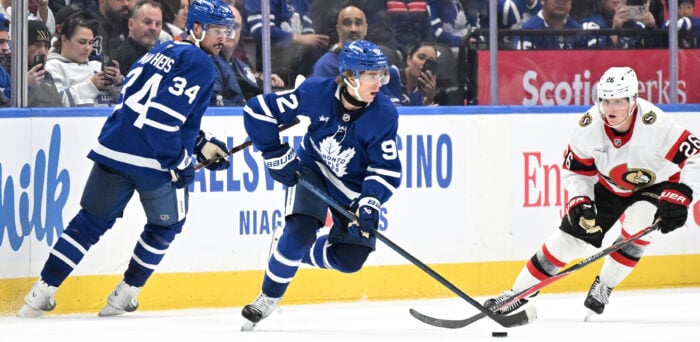
(Photo by Bruce Bennett/Getty Images)
By the time the Shanahan/Dubas plan was ultimately deemed a failure, between May 2023 and May 2025, Shanahan, Dubas, and head coach Sheldon Keefe were all shown the door.
The Criticism: Skill Without Enough “Edge”
One of the primary criticisms of that era was that the team relied too heavily on elite offensive talent. That formula worked during the regular season, when teams faced each other only a handful of times. Regular-season games were less physical.
But playoff hockey is different. The intensity rises, the checking tightens, and physicality becomes a defining factor. Many believed Toronto simply was not built for that style of play. The team was also viewed as defensively vulnerable.
The Shift: “We Need a Little More Snot in Our Game”
The first major hire of the new era was Brad Treliving as GM. During his introductory press conference, Treliving famously stated, “We need a little more snot in our game.”
Treliving then hired Craig Berube as head coach. In his first media availability, Berube emphasized that he wanted Toronto to become “a heavy team” and that “it’s about winning battles.”

From that point forward, the Maple Leafs became bigger and more physical. Resources were poured into building a veteran defensive core, with greater emphasis on preventing goals than on scoring them. The focus shifted toward playing without the puck.
Analytics Fade From the Maple Leafs’ Spotlight
Another significant change occurred behind the scenes. Under Shanahan and Dubas, the Maple Leafs had built one of the NHL’s most respected analytics departments, and the data generated by that group heavily influenced organizational decision-making. Dubas and Keefe regularly referenced analytics in interviews and press conferences.
Under Treliving, the analytics department remained in place, but it largely disappeared from public discussion — perhaps for good reason. By the end of the 2025–26 season, Toronto ranked near the bottom of the league in virtually every major analytical category.
One statistic stood out above all others: Matthews — arguably the greatest goal scorer of his generation — reportedly led all NHL forwards in blocked shots. That single number may best summarize the Treliving/Berube era. Gone was the modern, data-driven philosophy. In its place came old-school hockey built around grit, shot blocking, and “character.”
The Maple Leafs had gone from being young, skilled, fast, and analytics-driven to big, older, slower, and guided more by instinct than numbers.
Enter John Chayka: Déjà Vu Returns
Now comes 36-year-old John Chayka as the new GM. Ironically, Chayka’s claim to fame is remarkably similar to Dubas’. A decade ago, he became the 26-year-old analytics wunderkind hired by the Arizona Coyotes — the youngest GM in NHL history. In many ways, Chayka was Arizona’s version of Dubas, and his team-building philosophy closely mirrors Dubas’ approach.
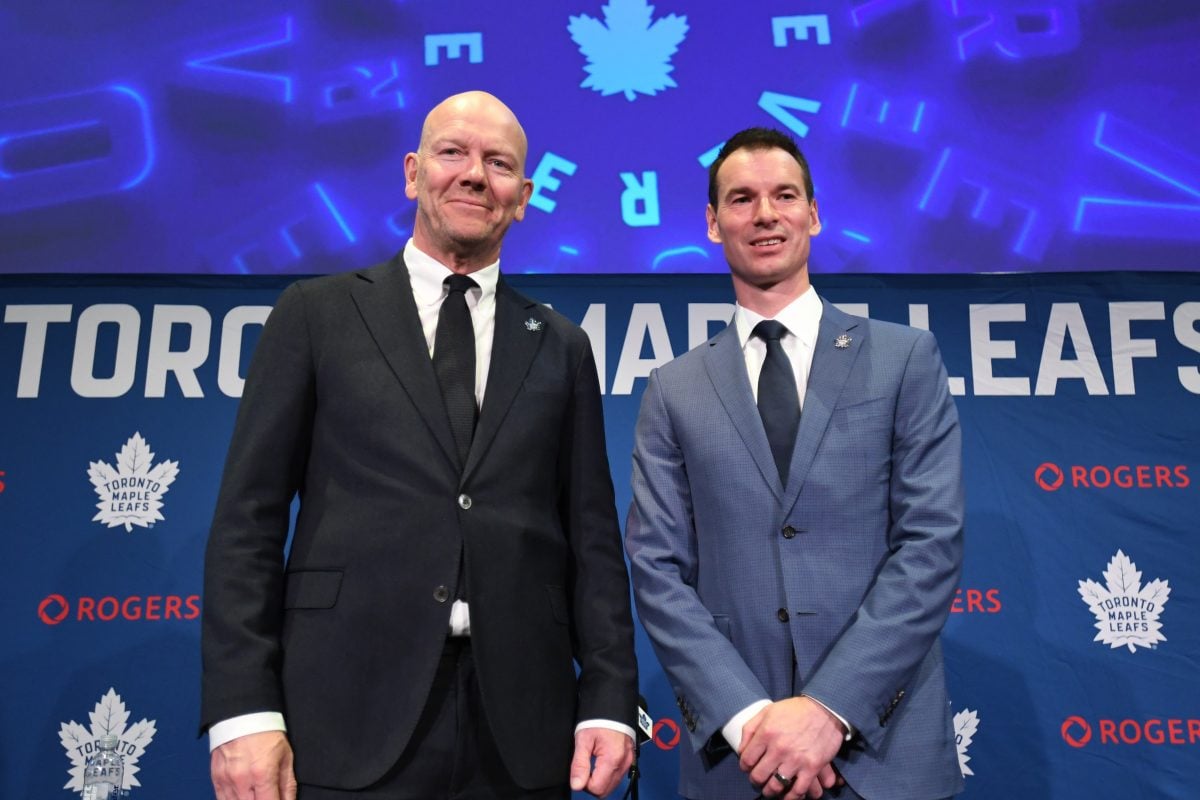
It truly is ‘déjà vu all over again.’ Just 10 days after being hired — and after publicly praising him as a coach — Chayka fired Berube. On the surface, the move makes sense. Philosophically, the two appeared completely opposed in how they believe the game should be played.
Now attention turns to who will become the next head coach. Chayka has already stated there will be a “very wide and deep” search.
A New Cycle for the Maple Leafs — But With Different Conditions
It appears the Maple Leafs may be heading toward a Dubas/Keefe era, version 2.0. This time, however, there is one major difference: the NHL’s financial landscape has never been stronger. Unless another worldwide crisis intervenes, the salary cap is projected to rise significantly over the coming years.
At present, the Maple Leafs have only two players earning more than $10 million per season. They also possess young, talented forwards in Matthew Knies and Easton Cowan. For just the third time in franchise history, Toronto will also hold the first overall pick in the upcoming NHL Draft. Unless the organization makes an unexpected move, Gavin McKenna is expected to be the selection. He’s a player whose style resembles that of the departed Mitch Marner.

McKenna’s age-16 numbers closely mirror Marner’s production at age 17. In 56 games, McKenna scored 41 goals and added 88 assists for 129 points. Marner, one year older, recorded 44 goals and 82 assists for 126 points in 63 games.
Adding McKenna would give Toronto three exceptionally talented young forwards, enough financial flexibility to keep them together, and a rising cap environment that could finally allow management to build the kind of supporting cast the previous core never truly had.
The Matthews Question Remains Huge
The biggest question facing the organization now is the future of Matthews. He is signed for only two more seasons, and uncertainty surrounds his long-term direction. While Knies has already established himself as a legitimate power forward, Cowan and McKenna will still require time to fully develop.
By the start of the 2026-27 season, Matthews will be 29 years old. Does he want to stay in Toronto, mentor the next wave of stars, and allow them time to grow? Or does he believe his best opportunity to win is right now, elsewhere, with a team already positioned to contend for the Stanley Cup?

If Matthews stays, the Maple Leafs would still possess two elite veteran forwards in him and Nylander. With growing cap flexibility and an influx of young talent, it is not unreasonable to think the franchise’s rise could happen just as quickly as its fall.
A Simple Closing Thought About the Maple Leafs
This version of “déjà vu all over again” may not be such a bad thing for the Maple Leafs after all.
[Note: I want to thank long-time Maple Leafs fan Stan Smith for collaborating with me on this post. Stan’s Facebook profile can be found here.]
Free Newsletter
Get Toronto Maple Leafs coverage delivered to your inbox
In-depth analysis, breaking news, and insider takes - free.
Subscribe Free →