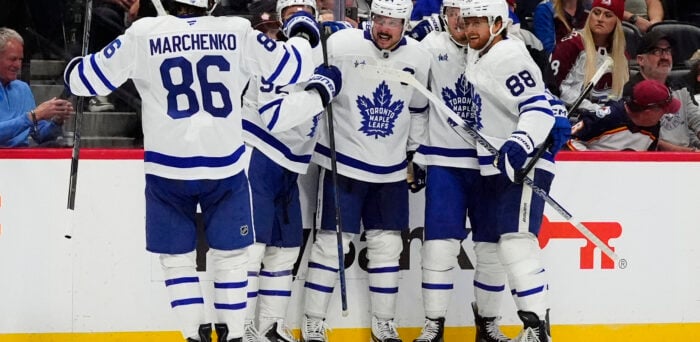
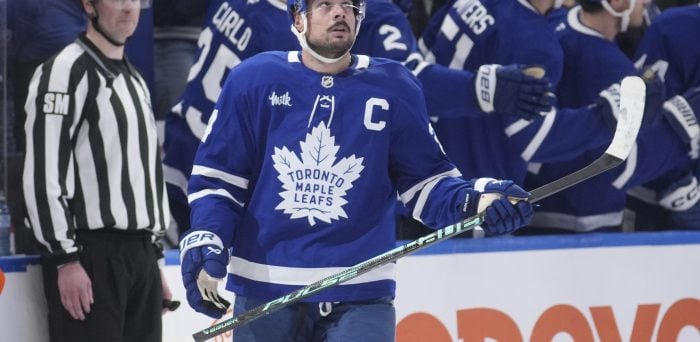
There seems to be even more uncertainty surrounding the Toronto Maple Leafs now than there was when their season officially ended. That’s saying something, because right after the final whistle in May, the debates were already in full swing about whether this team needed a rebuild, a re-tool, or something in between.
For a while, it looked like we had a direction. There were announcements, some organizational reshuffling, and a sense that a new path was being laid out. But as the weeks have passed, that clarity has faded again.
Now the conversation feels more open-ended. You’ve got a top prospect like Gavin McKenna potentially entering the picture, a coaching search still unfolding, and the usual speculation around roster tweaks and younger players pushing up from the system. It doesn’t feel chaotic, but it also doesn’t feel settled.
The Maple Leafs are, once again, in a holding pattern until they hire a new coach. Right now, that seems like the tipping point. Until then, the middle ground is where this franchise lives.
The Coaching Search: Clarity Still Missing in Toronto
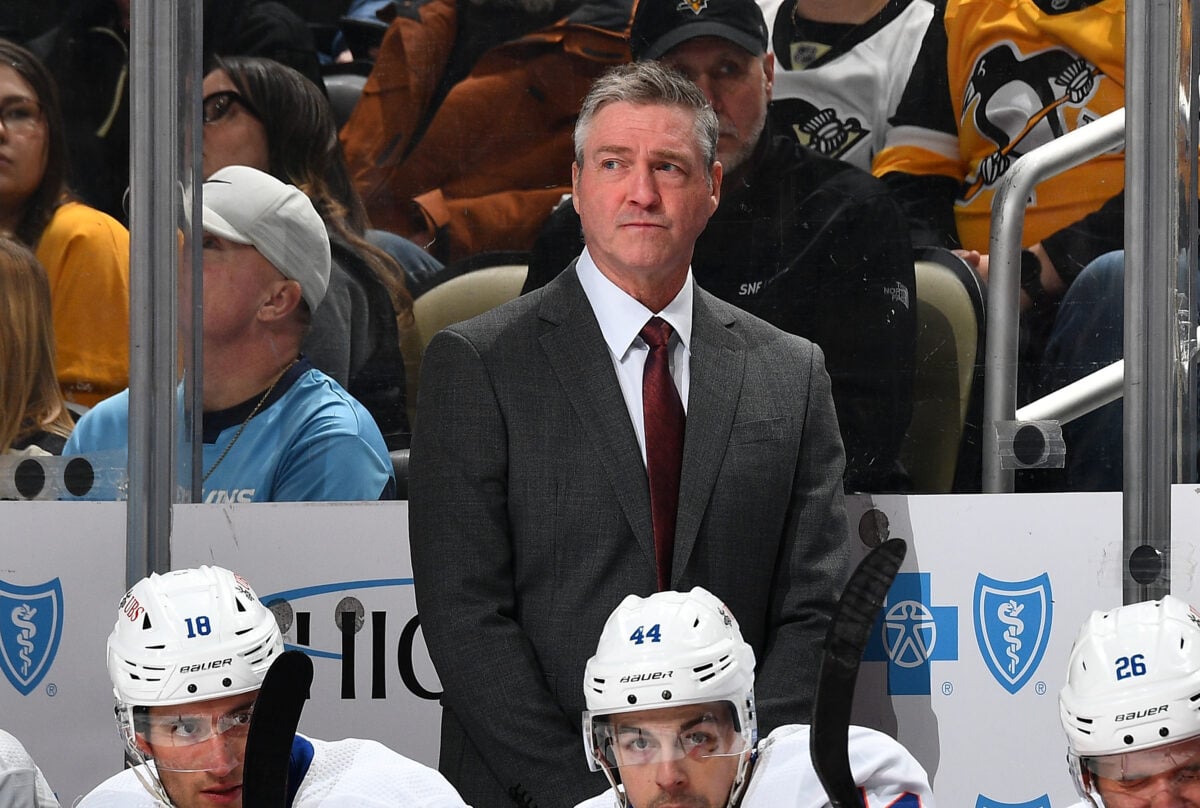
One of the most interesting storylines right now is what to make of the coaching search. On the face of it, the organization still hasn’t landed on its identity. Patrick Roy’s name has floated around more recently in the process, but given the focus on adding analytics to the mix, he seems like an unlikely fit for this version of the Maple Leafs.
To me, all these interviews seem more symbolic than practical. Unless they are involved in a more extensive organizational audit, as I wrote about last week, it seems more like part of a process meant to demonstrate due diligence to Leafs Nation rather than a real destination.
New general manager John Chayka, meanwhile, is reportedly running a thorough process, but there’s also a sense that the market itself may not be overflowing with perfect options. That’s the reality of NHL coaching searches: demand is always higher than supply. Hence, the constant recycling of coaching bodies.
It also doesn’t help that Toronto remains one of the most demanding jobs in hockey. Everyone knows it. Players know it. Coaches know it. Whether people want to admit it publicly or not, that reputation matters.
Any wise coach—especially one still collecting a paycheque from a previous employer (like ex-Edmonton Oilers head coach Kris Knoblauch)—will think carefully before stepping into that environment. In today’s NHL, coaching opportunities come and go, but so do coaching jobs. It’s easy to imagine candidates doing their homework before committing to the league’s most scrutinized market.
Names like David Carle have surfaced, but there’s no clear indication that anything advanced came from those discussions. It’s starting to feel like the Maple Leafs may end up with a coach who isn’t necessarily a headline name, but someone who fits the internal vision Chayka and Mats Sundin are trying to build.
Jussi Ahokas and the “Next Wave” Coaching Conversation
Another name gaining traction among fans is Jussi Ahokas. He’s becoming one of those “fanbase coaches” — the kind of name that grows through discussion, reputation, and recent success more than direct NHL exposure. He comes with a reputation as a proven developer of young talent and a coach who knows how to build a winning culture.
The 45-year-old native of Oulu, Finland, guided the Kitchener Rangers to steady improvement during his three seasons behind the bench. After posting a 41-win season in 2023-24 and a 47-win campaign in 2024-25, Ahokas led the Rangers to an Ontario Hockey League (OHL) Championship in 2025-26 with a 47-14-7 record.
While his playing career was brief—he appeared in just one game as a goaltender for the Victoria Salsa in the British Columbia Hockey League (BCHL) during the 1998-99 season—his coaching résumé tells a much richer story.
Ahokas has become known as a patient teacher and strong developer of young talent. The Rangers’ rise under his leadership, capped by an OHL title, is a significant reason why he has become a respected name in hockey circles. There is an interesting contrast here. Much of the enthusiasm around Ahokas stems from his work with younger groups, but the Maple Leafs’ core is no longer a young, developing roster. This is a team built around established stars, not prospects learning on the fly.
Still, it would be a mistake for the Maple Leafs not to at least have the conversation. Modern coaching hires often come from unexpected places, and organizations increasingly value adaptability and communication over pure resume weight. Whether Ahokas is “the guy” or not, he represents the type of coach who could fit into a longer-term organizational shift — one that blends development thinking with NHL structure.
What’s Next for the Maple Leafs?
The next phase of this story will hinge on two things: the coaching hire and the Maple Leafs’ willingness to trust their young players. The new coach will reveal a great deal about the organization’s direction, whether the goal is stability, a culture shift, or something more fundamental.
After that, the focus will return to the roster itself and to whether Toronto is finally prepared to create space for its prospects rather than search for more short-term solutions. For now, this is a team in transition. The picture isn’t fully formed, and the path ahead remains uncertain. But in Toronto, the most intriguing stories often begin when the direction is still taking shape.
[A quick thank you to The Hockey Writers regular discussion contributor Windshear, whose ideas helped shape part of this edition of News & Rumours. I appreciate your contributions and the thoughtful comments you continue to share.]
Free Newsletter
Get Toronto Maple Leafs coverage delivered to your inbox
In-depth analysis, breaking news, and insider takes - free.
Subscribe Free →