


The Pacific Division is officially a dumpster fire, and last night’s Vegas Golden Knights–Vancouver Canucks game was Exhibit A. But this isn’t just about one sloppy contest; it’s about a season-long pattern where the division’s top teams look oddly mediocre, the basement squads are historically bad, and goaltending or luck paper over the deeper roster problems.
The Good Teams in the Pacific Aren’t That Good
Even the “good” teams aren’t all that good. The Edmonton Oilers and Vegas Golden Knights sit tied for first with 88 points after 78 games. These totals wouldn’t even sniff the Eastern Conference playoff picture. The Anaheim Ducks are the only Pacific club with more wins than losses, and even they’re hardly inspiring. When the leaders can be beaten by basement teams, and tiebreakers or playoff readiness feel arbitrary, it’s clear the division’s strength is a mirage.
Related: 3 Takeaways From Canucks’ 2-1 Loss to Golden Knights
For Vancouver, that chaos isn’t an abstract problem. They are the worst team in the Pacific. Their 8-27-5 record at home is on track to set franchise lows in the salary-cap era. That’s not just bad luck; it’s a culture problem. Players talk about tension at home; weird, loose play on the road; and a lack of confidence that seeps into every shift. If you can’t be a threat in your own building, then coaching, leadership, and psychology have to be addressed as much as the roster.
Last Night’s Golden Knights and Canucks Game Made the Point
Last night’s game was a microcosm of the issues. The Golden Knights dominated possession and shots — 28-11 overall, 26-8 at 5-on-5. Yet, they only eked out a 2-1 win. Goaltender Nikita Tolopilo was great, and he stole the night for Vancouver while Vegas leaned on cautious, score-first play. One-goal wins and strong stats on paper don’t equal depth, balance, or resilience. And for a team like the Canucks, hoping luck will cover flaws has been a painful lesson all season.
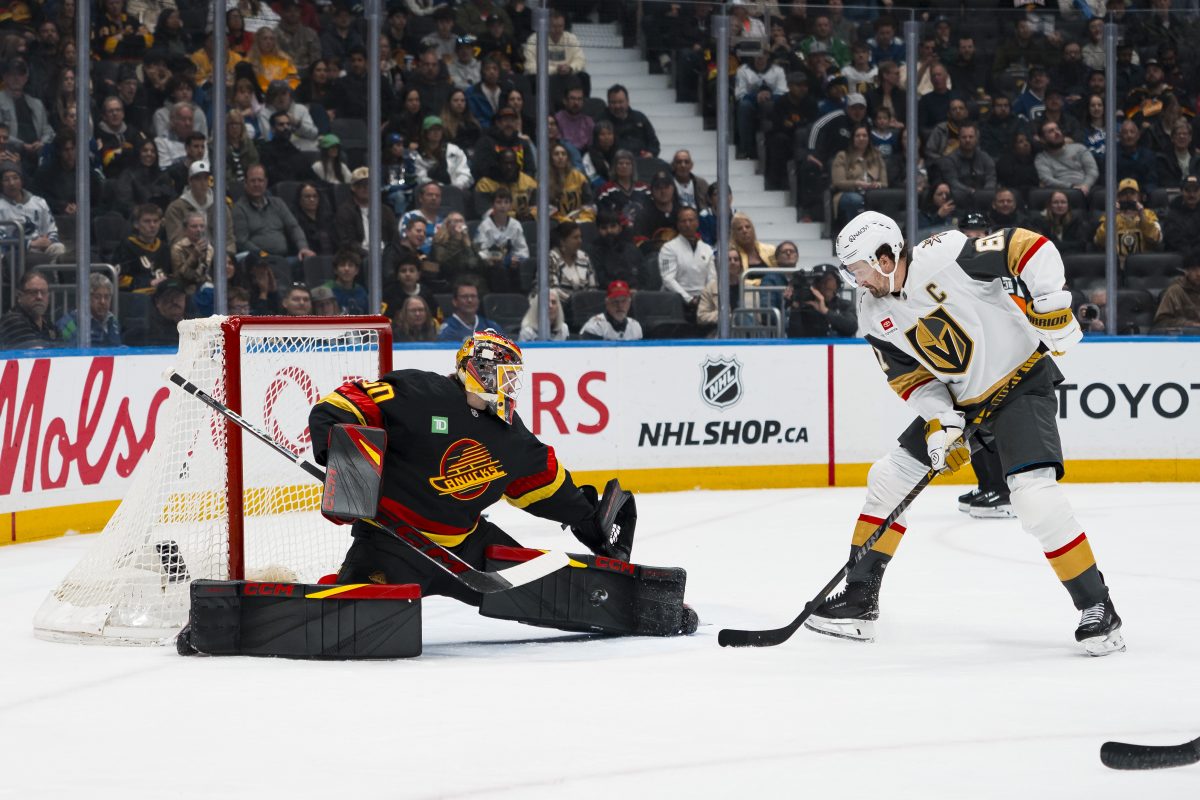
(Bob Frid-Imagn Images)
So what does this mean for the Canucks’ offseason? The answer is simple, brutal, and non-negotiable. They must build a team that wins for the right reasons. That starts on the ice with repeatable offence — high-danger chances, not just firing pucks at the net and hoping one sneaks in. Systems need to matter: tighter neutral-zone play, cleaner zone exits, and clearly defined roles for every player. Depth can’t be an afterthought; the team has to be able to survive stretches without relying on a single star or a goalie having a hot night.
The Canucks Have Tons of Work to Do
Off the ice, the work is equally critical. An evaluation of head coach Adam Foote is in order; leadership development, sports psychology, and simplified home-game plans are all essential to restoring confidence and culture. Vancouver has been circling the drain because it hasn’t tackled these fundamentals. Talent alone won’t be enough. The Canucks have to build a team that knows who it is and how to play, regardless of the opponent, the crowd, or the standings.
Related: Brock Boeser Is Reinventing Himself as a Canucks Cornerstone
Ignore these fundamentals, and another lost season is inevitable. The scoreboard might occasionally flash a one-goal win or a lucky shootout, but that hides the structural flaws. Fix the systems, deepen the roster, invest in leadership and confidence, and you start building stability. For the Canucks, the Pacific’s chaos isn’t just entertainment — it’s a cautionary tale.
How Can the Canucks Rise from the Bottom?
If Vancouver wants to rise from the bottom, this offseason has to be about fundamentals, not quick fixes. Depth, structure, and culture are the non-negotiables. Everything else — luck, hot streaks, goaltending flashes — is icing on the cake.
Ignore them, and the Canucks will continue to be the league’s cautionary tale, stuck in a Pacific Division where chaos rules the day. Even if they get the first-overall pick in this 2026 NHL Entry Draft, they will need much more.

