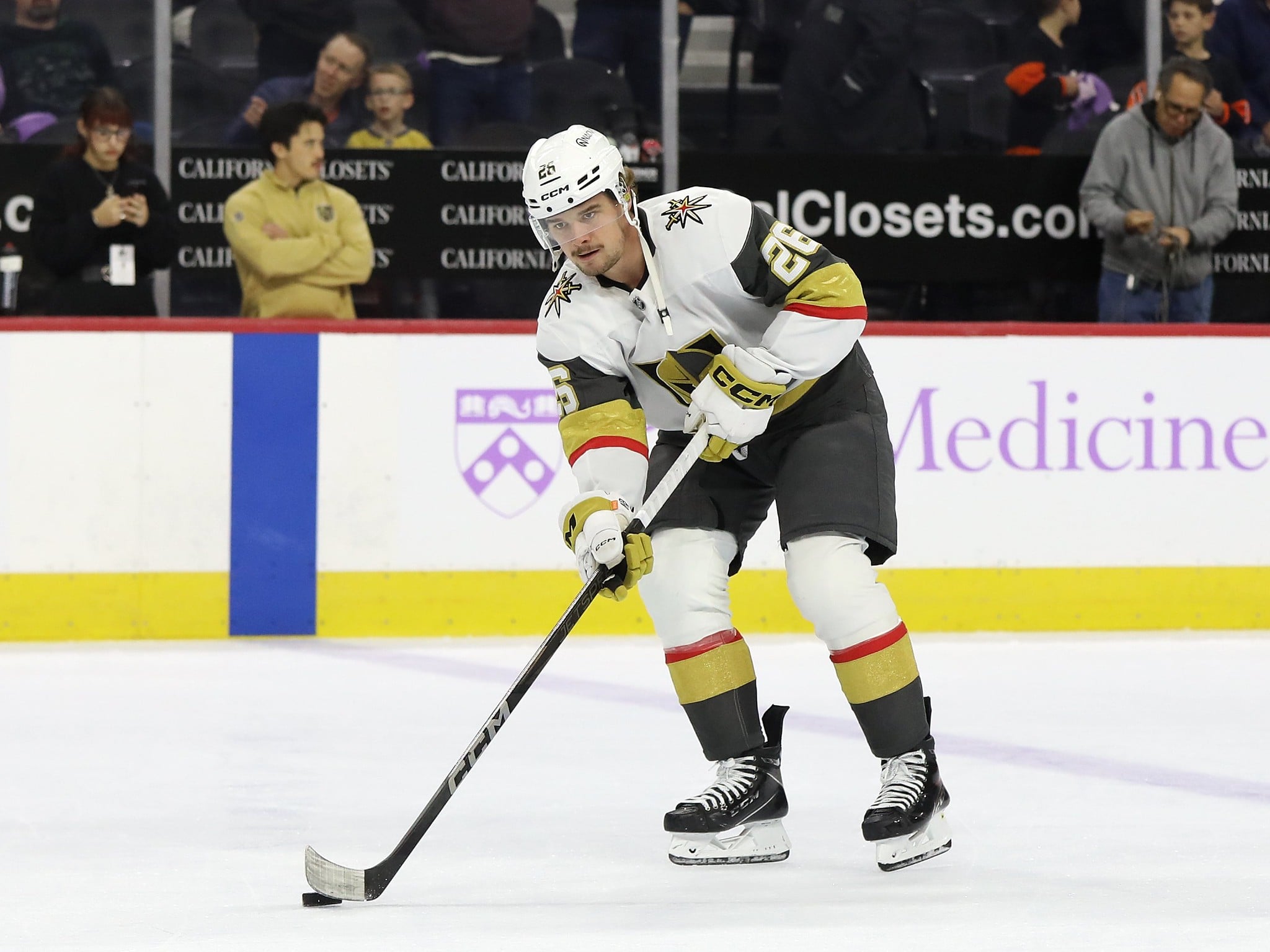
Troy Terry did not record a single body check in his first 58 regular season games this season, though he did add two hits late in the season. In a league that logged over 56,000 hits during the 2018-19 season alone, a number that has climbed every year since, that is a genuinely remarkable stat.
And yet, when the calendar flipped to the playoffs, and the games got harder, faster, and more physical than anything the regular season produces, Terry has been one of the Anaheim Ducks’ most effective forwards. So how does a player who barely touched an opponent all season thrive in the most physically demanding stretch of the hockey calendar?
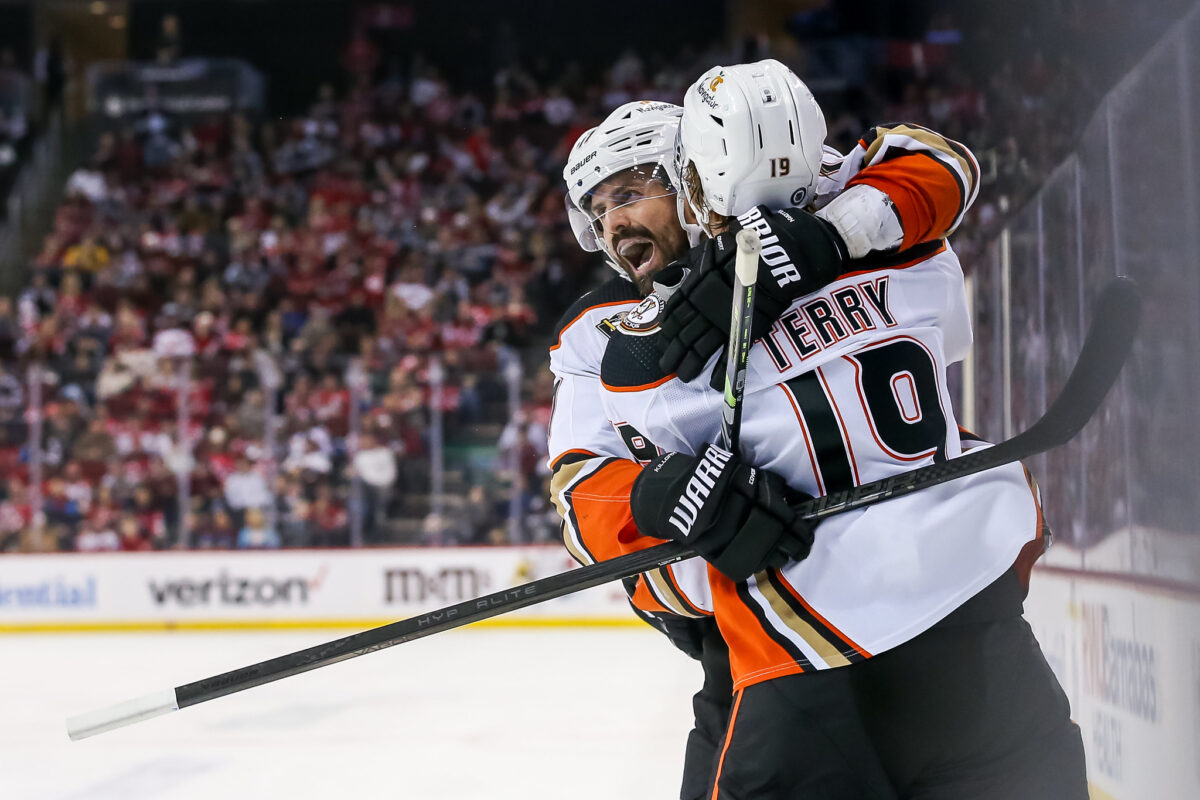
The answer says as much about how the Ducks are built as it does about Terry himself.
The Right Team for the Right Player
To understand Terry’s effectiveness, you have to look at the roster around him. The Ducks are not a finesse team asking one player to carry the physical burden alone. Five players on the Anaheim roster recorded 100 or more hits this season, and players like Beckett Sennecke, Jeffrey Viel, Mason McTavish, and Tim Washe were all pushing into the 90s. That is a significant amount of physical presence distributed across the lineup, and it matters because it means the dirty work is being handled by the players built for it.
When a team has that kind of physical foundation, it frees skilled forwards to operate differently. Terry does not need to throw hits because the Ducks have plenty of players who do it better and more naturally. His job is to do what nobody else on the roster does quite as well: control the puck.
The Puck Is the Main Objective
There is an old coaching saying that goes something like — high hit counts can sometimes be a sign that a team does not have the puck enough. It is a debated point among analysts, but the logic holds when you look at how Terry plays. If you are hitting that much, someone else has possession, and possession is where games are won and lost.
Puck dominance is its own form of physical control. When Terry is on the ice, he dictates play rather than reacts to it. He is not chasing the puck, which means he is rarely in a position where he needs to separate an opponent from it through contact. His exceptional puck control keeps him out of those situations entirely. You cannot hit someone when you are the one holding possession, unless it’s a reverse hit. Terry holds possession at an elite level.
What separates him from other skilled forwards is what he does while the puck is on his stick. He is not holding it for the sake of it. He is processing the ice in real time, reading his teammates’ routes, identifying defensive gaps, and scanning for shooting lanes, all while maintaining control under pressure. The puck handling and the decision-making happen simultaneously, and that combination is exceedingly rare.
The Kucherov Blueprint
The player who does this best in the modern NHL is Nikita Kucherov of the Tampa Bay Lightning, and Terry’s game carries echoes of that approach. Kucherov is a master of manufactured pressure — he will pin himself against the boards, use his back and body as a physical barrier, and draw two or three forecheckers toward him by appearing vulnerable, like he has no options. The moment those players commit, he fires a backhand sauce pass to a teammate who has been left completely open by the defensive overload.
It sounds simple. It is anything but. To execute that play successfully, you need poise under pressure, elite spatial awareness, and the ability to remember where your teammates were a full second before the puck arrives. You have to trust that they will be where you expect them to be, and you have to deliver the puck on time without being able to see them clearly.
Terry operates with that same composure. He slows the game down while everyone around him speeds up, and he uses that gap to find plays that other forwards cannot see.
Skill Wins Games Too
The playoffs are physical. Nobody is disputing that. Board battles are harder, hits are bigger, and forwards who cannot handle contact get swallowed up by the intensity. But the idea that physical play is the only currency that matters in May has always been overstated.
One precise, high-danger pass from a skilled forward can do more damage to a penalty kill than ten clean open-ice hits. One power-play goal generated by a player who held the puck long enough to draw two defenders and find the open man can swing a series. Terry’s contribution does not show up in the hits column, but it shows up in the places that actually determine who advances.
When you have players like Viel and Washe doing the physical work at a high level, asking Terry to contribute in that same way would be redundant at best and counterproductive at worst. The Ducks are in the second round because different players are fulfilling different roles, and Terry is fulfilling his at exactly the right time.
In hockey, the puck is always the most valuable thing on the ice. Terry almost always has it, and that turns out to be worth quite a lot in the playoffs.
Free Newsletter
Get Anaheim Ducks coverage delivered to your inbox
In-depth analysis, breaking news, and insider takes - free.
Subscribe Free →