In the modern NHL, depth is often touted as the ultimate currency. We talk endlessly about “next man up” mentality and the structural integrity of a roster. But the Tampa Bay Lightning are currently testing the absolute limits of that philosophy.
For the better part of a month, the Lightning have been engaged in a delicate balancing act, navigating a schedule littered with obstacles while their roster card looked more like a hospital admission log. Initially, the narrative was one of impressive, almost defiant resilience. They weren’t just treading water; they were climbing the Atlantic Division standings.
However, the recent additions of Nikita Kucherov and Andrei Vasilevskiy to an injury report that already featured Brayden Point, Ryan McDonagh, and Erik Cernak seem to have finally tipped the scales. Also on the day-to-day list is center Curtis Douglas. We are witnessing a complex, two-phased impact on this team: a surprising defensive rigidity in the face of adversity, followed by an inevitable mechanical failure once the offensive engine was removed.
Surviving the Captain’s Absence
If you had told any knowledgeable observer that Victor Hedman would miss 12 games and the Lightning would emerge from that stretch with an 8-4-0 record, you would have been met with skepticism. Hedman isn’t just a defenseman; he is the tilt of the ice for Tampa Bay. Yet, contrary to the doom-and-gloom projections, the Bolts excelled.

During the captain’s month-long hiatus with an undisclosed injury, the defensive metrics were surprisingly tidy. We saw a “pieced-together defensive core”—a mix of depth veterans and younger prospects—step into the vacuum. They didn’t try to replicate Hedman’s game, because you can’t. Instead, they simplified. They collapsed around the net and managed to hold opponents to roughly 2.5 goals per game. Perhaps more impressively, they suppressed high-danger chances.
Related – Islanders Blank Lightning to Win 2-0
This period was a testament to the system head coach Jon Cooper has installed. Younger players were forced into elevated minutes and larger roles, a development Hedman himself later described as “inspiring.” It proved that defensively, at least, the Lightning could survive on structure and grit alone.
The “One Step Forward, Two Steps Back” Reality
Unfortunately, the excitement built up with Hedman’s return evaporated almost immediately. The dynamic shifted abruptly with the news that both Kucherov and Vasilevskiy were out. It is the classic case of taking one step forward and two steps back.
The impact was immediate and palpable. While the defense could be jury-rigged with hard work and system discipline, elite offense is much harder to manufacture. Losing Kucherov—who had posted 34 points in 25 games prior to the injury—stalled the Lightning’s attack completely.
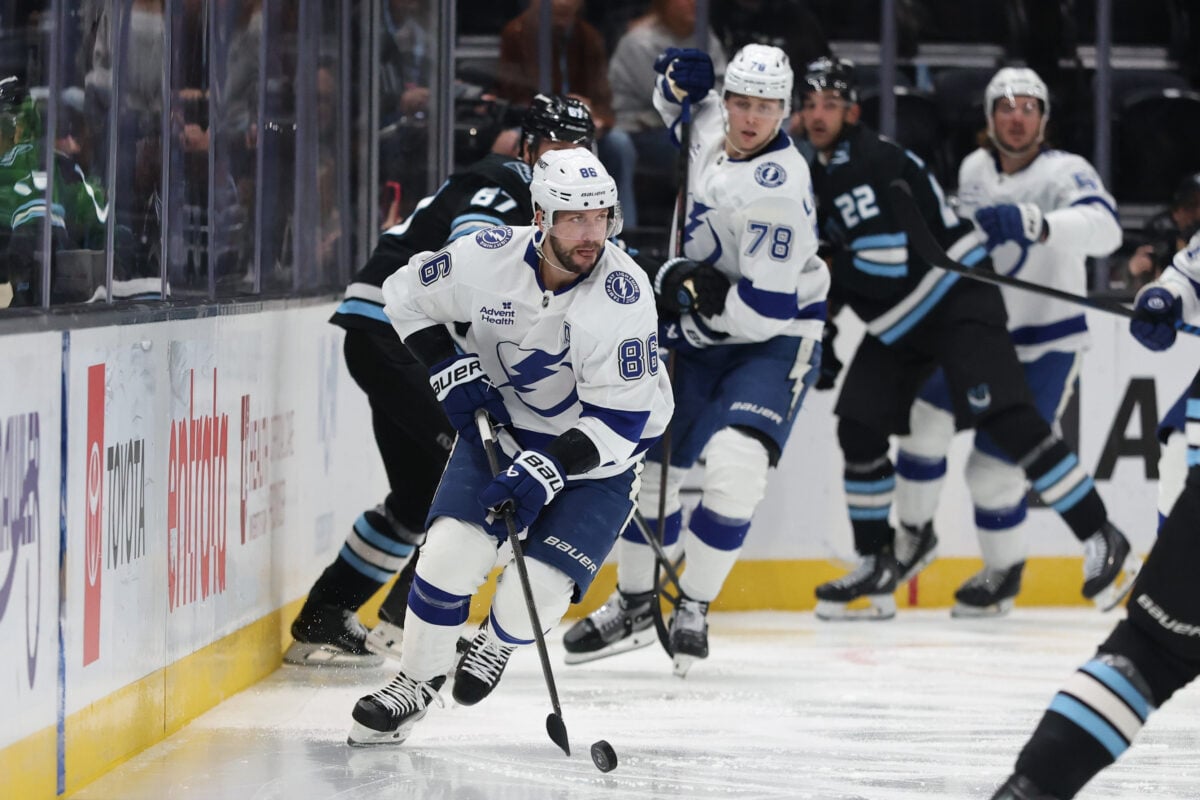
We saw the result clearly in the recent 2-0 shutout loss to the New York Islanders. It wasn’t just that they didn’t score; it was how disjointed they looked trying to generate sustained pressure. Without Kucherov driving the play along the half-wall, the creativity vanished. The team looked laborious in transition and toothless in the offensive zone. The report from the ice was simple: the absence of their top scorer showed, and in the NHL, if you can’t threaten the net, you can’t control the game.
A Power Outage on the Man Advantage
The cumulative effect of these injuries is perhaps most visible on special teams. The power play is about chemistry and timing, two things that are impossible to maintain when the personnel changes nightly.
Related – Lightning Extension Candidates After Ryan McDonagh’s Deal
Even during the successful stretch without Hedman, the cracks were forming. The power play conversion rate dipped from a respectable 18.0% to 13.9%. Now, with Kucherov removed from the equation, the unit looks out of sync. In the loss to the Islanders, the Lightning went 0-for-2 with the man advantage, failing to capitalize on the few opportunities they had to swing the momentum. When you are struggling to score at 5-on-5, a stagnant power play is a death knell.
It’s Not a Goaltending Crisis
It is easy to look at the loss of a world-class goaltender like Vasilevskiy and assume that is where the game was lost. However, the data suggests otherwise. The recent stumbling block hasn’t been keeping the puck out of the net—it’s been putting it in the other one.
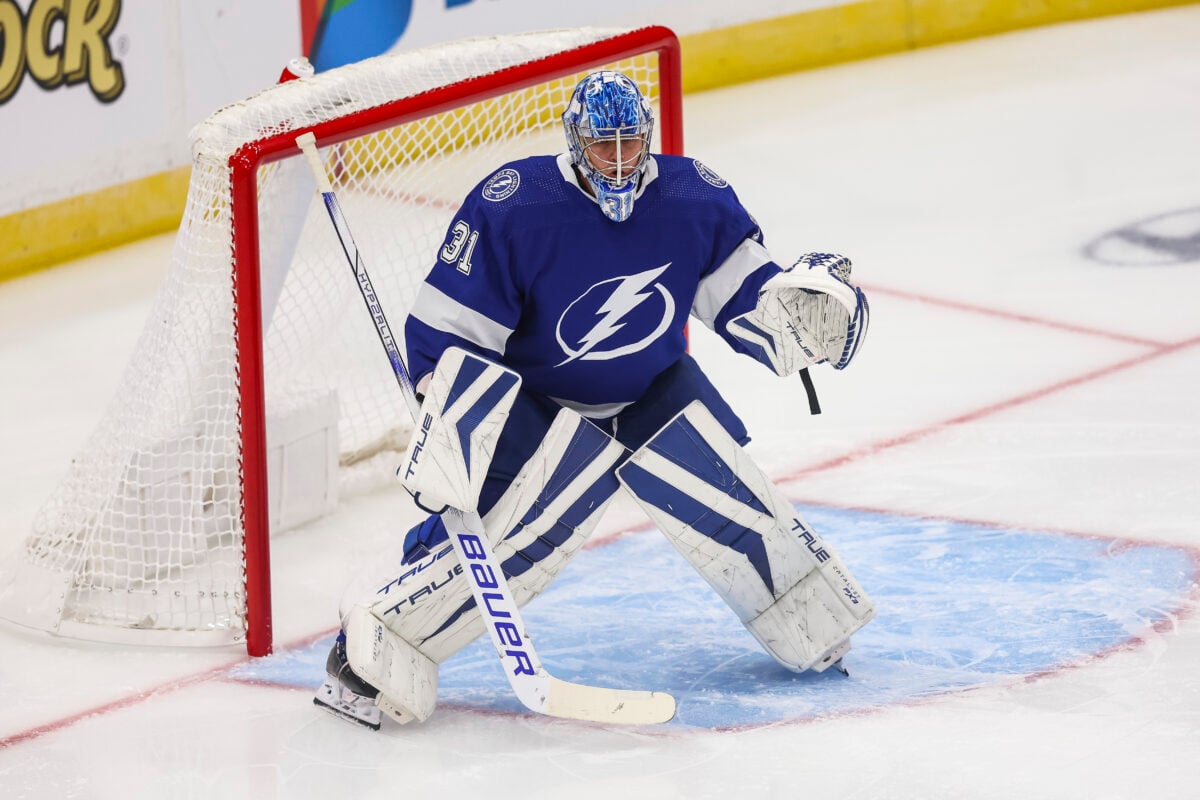
Backup netminder Jonas Johansson deserves credit for his recent performance. Stepping in for Vasy, Johansson posted a .944 save percentage against New York, stopping 17 of 18 shots and earning the game’s “Third Star.” He did his job. He gave the team a chance to win. The narrative that the Lightning are sinking because of goaltending doesn’t hold water; the loss was driven almost entirely by an inability to provide run support.
The Verdict
Losing Kucherov and Vasilevskiy is a mechanical failure that no amount of defensive structure or backup goaltending can mask. When you combine that with the absences of Point, McDonagh, and Cernak, the talent deficit becomes simply too large to overcome in the short term.
The Lightning have proven they have the depth to survive the loss of a single superstar. But asking them to survive the simultaneous loss of their best players is asking for a miracle.
AI tools were used to support the creation or distribution of this content, however, it has been carefully edited and fact-checked by a member of The Hockey Writers editorial team. For more information on our use of AI, please visit our Editorial Standards page.
