Forget the sophomore slump. Macklin Celebrini is bypassing that narrative entirely, and he’s doing it by rewriting his own playbook.
In his rookie campaign, the 2024 first-overall pick was a revelation—a whirlwind of explosive strides and raw, goal-scoring talent. He was dynamic, exciting, and, as his minus-31 rating suggested, often learning on the job.
In his second season, the learning has given way to dominance.
Celebrini has become the undisputed “engine of the team” in San Jose, but not by simply being a year older. He has fundamentally evolved his offensive approach, matured into a committed 200-foot player, and is now dragging the Sharks into the fight alongside him.
And he’s doing it all while tying Hall of Famers in the record books.
The Numbers Don’t Lie
Before we break down the how, let’s establish the what. Celebrini’s statistical start to 2025-26 isn’t just good; it’s historic.
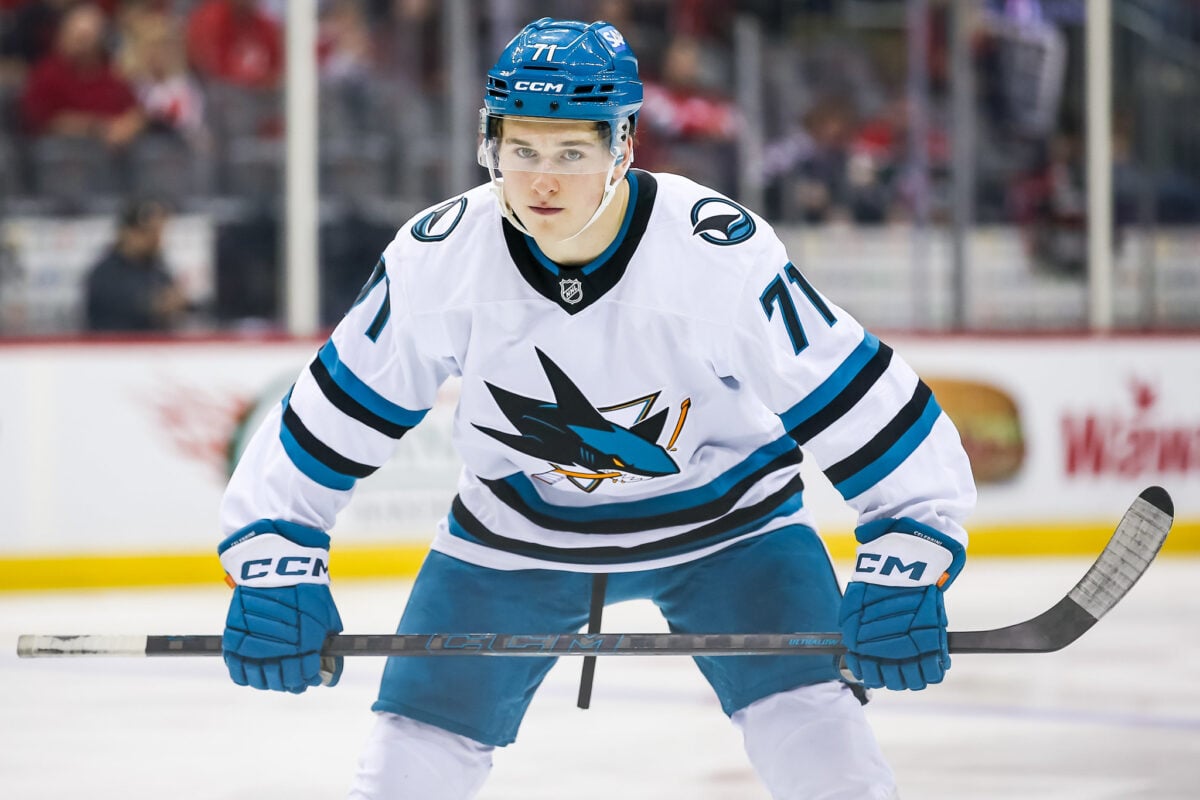
As of Nov. 12, the 19-year-old has amassed 26 points (10 goals, 16 assists) through the Sharks’ first 17 games.
To put that in perspective, he recently tied the record for the most points by a teenager through his team’s first 16 games. The other names on that list? Wayne Gretzky (1980-81), Steve Yzerman (1984-85), and Sidney Crosby (2006-07).
That’s the company he’s keeping.
After 14 games, he was tied with Connor McDavid for the NHL scoring lead. He’s already produced a signature five-point hat trick performance. Perhaps most telling, his minus-31 rookie rating has swung to a plus-8. He isn’t just producing; he’s winning his minutes, and the Sharks are winning games as a result.
The points are the headline, but the tactical adjustments behind them are the real story.
Solving the Neutral Zone Problem
Last season, Celebrini’s transition game was his primary weapon. He was an “open-ice fiend” who demanded the puck and used his explosive handle to shred defenses.
This season, opponents have the tape. They are game-planning to deny him the puck, committing multiple defenders to clog his handoff routes in the neutral zone.
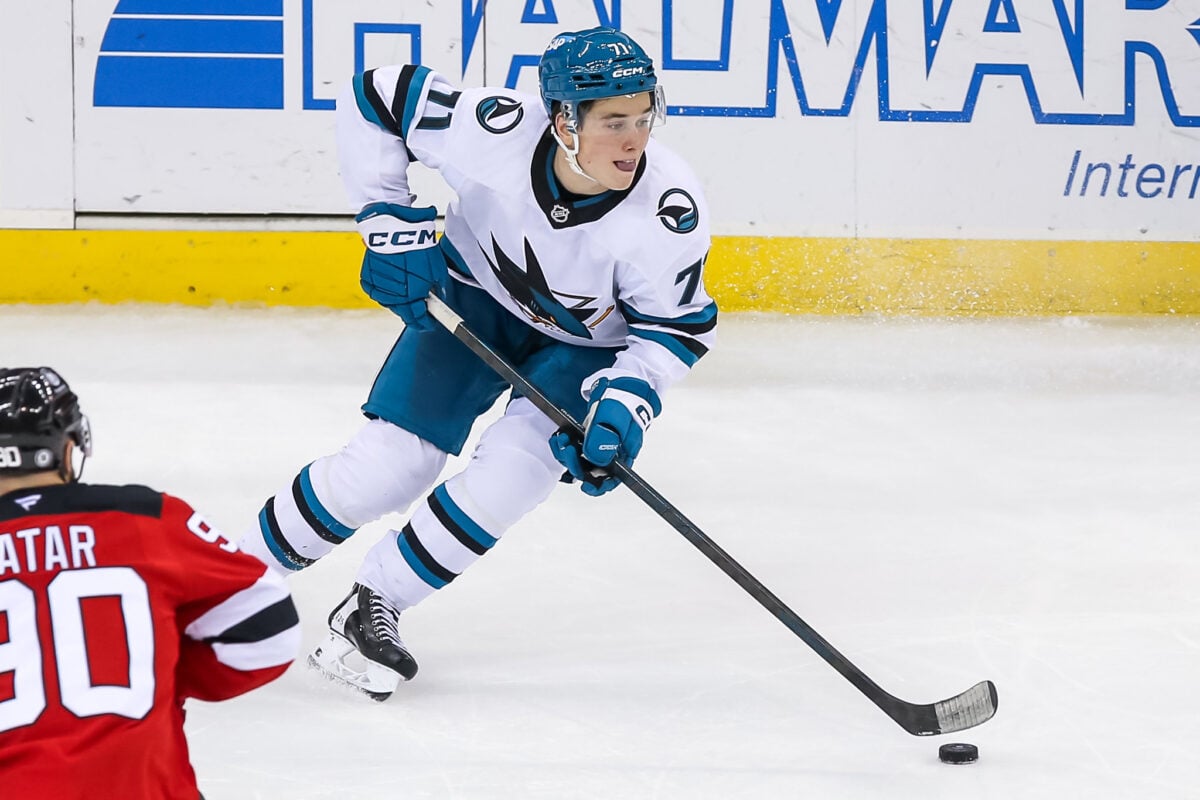
The adaptation from Celebrini and the Sharks’ coaching staff has been brilliant. Instead of forcing him to be a solo artist, they’ve implemented structured link-up actions designed to get him the puck with momentum. The team is utilizing strong-side out plays that spring into middle-ice designs, allowing Celebrini to generate tempo without the puck first.
He’s showing elite play recognition, knowing when to drive the central corridor and when to swing weak-side for an outlet. He’s also thriving on the wall, where the craftiness of his wingers, Tyler Toffoli and Will Smith, both deft small-area passers, combines with his improvisation.
In one sequence, he was seen stepping over a pass to intentionally draw a defender, instantly creating a 2-on-1. It’s this combination of “busy feet, an explosive handle, and sharp vision” that throws, as one scout noted, “so much information at defenders” that he’s past them before they can process a solution.
The “Dual-Threat” Deception
Once he’s in the offensive zone, Celebrini is an entirely different puzzle. He has consciously shifted from being the primary shooter to a dual threat of the highest order.
At 5-on-5, he’s showing a slight bias toward playmaking, but it’s the way he’s doing it. He is distributing the puck with immediacy, zipping passes through the slot before defenders can get set or pin him down.
He’s become, in the words of one analyst, a “no-look salesman.” He thrives on the “drama” of the play, using exaggerated body language to carve out space or sell false intentions, freezing a defender just long enough to free his true target.
The irony is that this pass-first look has amplified his scoring potency. Opponents now have to guess. Is the “snake” (a quick-release wrister) coming, or is the “sledgehammer” (a forceful drive to the net)? Is he looking to pass or to shoot?

By the time they guess, the puck is usually in the net. His shot profile isn’t about volume; it’s about exceptional puck placement, consistently finding the top corners or shooting against the grain.
The Engine Room: More Than Just Points
What elevates Celebrini from a star to a franchise cornerstone is what happens when he doesn’t have the puck. The offensive evolution is paired with a profound commitment to the 200-foot game.
Sharks head coach Ryan Warsofsky describes the 19-year-old as a “natural leader” with “no fear” who “drags guys into the fight.” Veteran John Klingberg simply calls him the team’s “engine.”
It’s not just talk. His motor is relentless. He shows high-end anticipation, tireless puck pursuit, and a willingness to compete defensively and on faceoffs.

Florida Panthers head coach Paul Maurice, who knows a bit about dominant two-way centers, noted a similarity to Aleksander Barkov—specifically, in Celebrini’s “willingness to be good” and his refusal to “cheat the game to put up numbers.”
It’s an attitude perhaps best summed up by his landlord and mentor, Sharks legend Joe Thornton. Thornton, who continues to house Celebrini in his second year, calls him a “full, 200-foot player,” adding that his dedication clearly shows he wants to be “one of the greats.”
The New Standard in San Jose
Celebrini is setting a new standard for his organization, and the team is responding by emulating his structured, fast, and skilled game.

Perhaps the most frightening part for the rest of the NHL? He’s doing all this while reportedly not at 100 percent, potentially battling the lingering effects of an illness and lower-body issue from training camp. The team’s new blueprint, focused on getting him the puck in motion, has allowed his average playing speed to remain top-tier even as he recovers his max gear.
The league is on notice. The “face of the franchise” is already in the conversation with Connor Bedard to represent Team Canada at the 2026 Winter Olympics.
As Thornton, a 2010 gold medalist himself, said: Celebrini deserves his chance.
Based on this start, he’s not just earning a chance—he’s taking it.
AI tools were used to support the creation or distribution of this content, however, it has been carefully edited and fact-checked by a member of The Hockey Writers editorial team. For more information on our use of AI, please visit our Editorial Standards page.