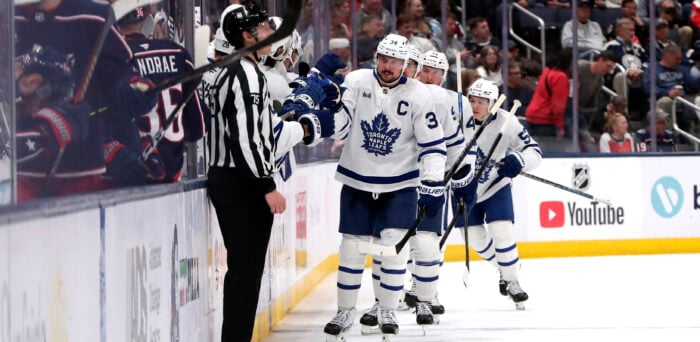
The Toronto Maple Leafs pulled off a thrilling 3–2 comeback victory over the Nashville Predators on Wednesday, fueled by a game-changing decision by head coach Craig Berube. Trailing 2–1 late in the second period, Berube reunited Auston Matthews and Mitch Marner, pairing them with Matthew Knies. The move paid immediate dividends, as Matthews scored two quick goals early in the third, with Marner assisting on all three of Toronto’s goals.
Berube’s Decision Was a Turning Point in the Game
Berube’s decision to pair Matthews and Marner was pivotal. The team struggled to generate consistent offence, and the move reinvigorated the Maple Leafs’ attack. Within minutes of being reunited, Matthews and Marner took over the game, with Matthews finding the net twice and Marner creating plays with his elite vision and passing.
Their chemistry, honed over years of playing together, allows them to anticipate each other’s moves, making them one of the league’s most dangerous duos.
Matthews and Marner Are a Dynamic Duo Worth Watching
The Matthews-Marner connection once again proved its value, sparking a comeback and extending Toronto’s successful run. As the season progresses, Berube must decide how best to deploy his stars. Should they remain a constant pairing or a secret weapon for clutch moments?
One thing is for sure. When Matthews and Marner are on the ice together, the Maple Leafs are a force to be reckoned with. The question is whether they should be split up regularly. Indeed, there are times when splitting the two would be necessary in a game. But as a regular occurrence? Is that such a good idea?
Nick Kypreos, Justin Bourne, and Sam McKee recently had a tongue-in-cheek debate about whether the Maple Leafs should pair Matthews and Marner together more frequently. With their elite chemistry in key moments, the trio of analysts examined the potential pros and cons of relying on this dynamic duo.
The Magic of Matthews and Marner
The panel highlighted the instant impact when Matthews and Marner are reunited. According to Kypreos, the decision to pair the two in a recent game seemed like Berube pulling a trusted move from his coaching playbook. The duo’s on-ice synergy was on full display, with Marner’s playmaking complementing Matthews’ scoring instincts in a flawless tic-tac-toe play that energized the team.
The panel added that chemistry is not just a buzzword but a tangible factor that elevates both players’ games. “When those two get together, they’re really good,” they said, noting how their instinctive connection creates high-danger scoring opportunities that few other pairings in the NHL can replicate.
The Case for Separating Matthews and Marner
However, McKee agreed that constantly keeping Matthews and Marner together could lead to diminishing returns. Justin Bourne pointed out that “complacency” can creep in when the pairing becomes too routine. The team can maintain unpredictability by occasionally splitting them up while giving them both opportunities to thrive in different roles.

Bourne also noted that Matthews scored at a better pace last season when separated from Marner, proving that both players can drive lines independently. “It’s not just Marner that energizes Matthews—Matthews has shown he can produce on his own,” Bourne argued.
Timing Is Key for Partnering Matthews and Marner
The consensus among the analysts was that the key lies in timing. Kypreos suggested that deploying Matthews and Marner strategically, such as in critical moments or during playoff games, can maximize their impact without overusing the combination. “You pull the lever at the right time,” he said, emphasizing the importance of keeping their chemistry fresh and impactful.
The panel echoed this sentiment, adding that Matthews and Marner’s connection is a powerful weapon that should be reserved for when the team needs a spark. “They’re both excellent apart, but when you need that boost, there’s no better duo to turn to.”
The Bottom Line: A Matthews-Marner Partnership Is Tactical
The debate ultimately underscores the importance of balance. While Matthews and Marner thrive together, over-reliance on the pairing could lead to stagnation. By selectively reuniting them in high-stakes moments, the Maple Leafs can harness their chemistry without losing the depth and unpredictability of balanced line combinations.
Could a more strategic use of Matthews and Marner be the secret to playoff success? If recent performances are any indication, Maple Leafs fans may see these two reunited at just the right moments to carry the team to new heights.
Free Newsletter
Get Toronto Maple Leafs coverage delivered to your inbox
In-depth analysis, breaking news, and insider takes - free.
Subscribe Free →