There are days in hockey where two completely separate stories start to feel like they’re speaking to each other. For the Toronto Maple Leafs, this is one of those moments.
On one side, you’ve got Mitch Marner doing something that Leafs Nation waited nearly a decade to see. On the other, you’ve got the organization circling an entirely unconventional coaching candidate in Joe Pavelski. Individually, they’re interesting. Together, they start to form a broader—and maybe uncomfortable—question about what Toronto has been missing all along.
Marner’s Historic Night Raises an Old Toronto Question
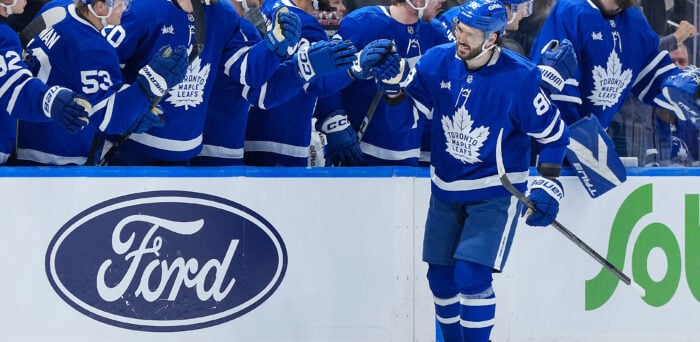
Former Maple Leafs forward Mitch Marner gave hockey fans something to talk about Saturday night, and Toronto fans may have had more complicated feelings than most. Marner recorded a natural hat trick and four-point period in Game 3 of the Stanley Cup Final, setting records and helping push the Vegas Golden Knights closer to a championship. It was the kind of performance that immediately sparked a familiar conversation back in Toronto.
The question isn’t whether Marner was great. He was. The question is whether this is a different player than the one the Maple Leafs had for nine seasons. Some observers believe a change of scenery unlocked another level in his game. Others point to the reduced spotlight and pressure that comes with playing outside Toronto. Those explanations may contain some truth, but they probably don’t tell the whole story.

Players change over time. They learn, they mature, and sometimes they simply reach a point where experience catches up with talent. The Marner playing in Vegas today isn’t frozen in time from his Toronto years. He’s older, more seasoned, and carrying the weight of playoff lessons that don’t show up neatly in highlight reels.
Still, it’s understandable why many Maple Leafs fans feel conflicted. They spent years waiting for a signature playoff explosion like the one Marner delivered in Game 3. Now they’re watching it happen in another jersey, on the sport’s biggest stage. That’s where the story starts to overlap with something happening back in Toronto. Because while Marner is rewriting his playoff narrative elsewhere, the Maple Leafs are trying to decide what kind of leadership they want next.
Personally, I wasn’t unhappy to see Marner move on. What’s surprising is how much I find myself genuinely happy for him now. It looks as if he got exactly what he wanted. That doesn’t happen every day for an NHL player.
Pavelski and the Search for Something Different
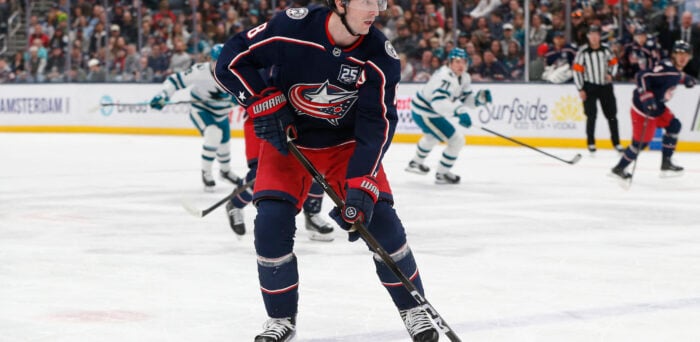
Just when it seemed the Maple Leafs’ coaching search couldn’t get any stranger, a new and very different name entered the mix. According to Elliotte Friedman, former NHL star Joe Pavelski is expected to interview for Toronto’s head coaching vacancy.
At first glance, it feels like an outlier. Pavelski has never coached professionally and only recently retired. Most contending teams lean toward established coaching résumés, playoff track records, and tactical reputations built over years behind benches. But the Maple Leafs, at least in this moment, don’t appear to be thinking in conventional terms.
Friedman emphasized the respect Pavelski commands around the league, and that might be the real currency here. Pavelski wasn’t just a productive player—he was a stabilizing one. For nearly two decades, teammates trusted him in a way that goes beyond strategy boards and systems talk.

One story Friedman shared stands out. Tomas Hertl was stuck in a long scoring drought during the playoffs. Pavelski noticed, reached out, and gave him a push. Shortly after, the slump ended. Whether that call directly caused the turnaround almost doesn’t matter. What matters is the response: players listen when Pavelski speaks.
That kind of influence doesn’t show up in coaching trees or analytics models, but it matters where it counts most—in the dressing room. That brings Toronto back to the question it keeps circling.
What’s Next for the Maple Leafs?
The connection between these two stories—Marner’s breakout and Pavelski’s interview—isn’t obvious at first, but it becomes clearer the longer you think about it. Marner’s performance is a reminder of what elite talent looks like when everything aligns: confidence, freedom, timing, and trust. Pavelski’s candidacy, meanwhile, hints at something the Maple Leafs may be trying to rebuild internally: belief, connection, and buy-in.
One story is about unlocking hockey skills. The other is about unlocking people. Toronto, for all its offensive firepower over the years, has often looked like a team trying to find the bridge between those two things. The core remains familiar: Auston Matthews and William Nylander still drive the offence. Matthew Knies, Easton Cowan, and Ben Danford represent the next wave. But the organization is clearly searching for something beyond structure and systems.
That’s where Pavelski becomes interesting—not because he’s the safest option, but because he represents a different idea of leadership entirely. If Marner’s night is about what happens when a player finally breaks through on the biggest stage, Pavelski’s interview is about what kind of leadership might help other players do the same.
Toronto doesn’t seem to be looking for just a coach anymore. They’re looking for a way to change how moments like these are created—and who gets to create them.
Free Newsletter
Get Toronto Maple Leafs coverage delivered to your inbox
In-depth analysis, breaking news, and insider takes - free.
Subscribe Free →