There’s a strange feeling around the Toronto Maple Leafs right now. For the first time in years, it feels possible that the core of this team could actually change in a meaningful way. That’s why the Gavin McKenna conversation has picked up so much steam. Nobody’s saying he’s Mitch Marner 2.0, and nobody should expect a teenager to walk into Toronto and instantly replace one of the best playmakers in hockey or recreate the chemistry Marner built with Auston Matthews.
Still, when you start looking at the details, the similarities between McKenna and Marner become pretty hard to ignore. In this edition of Maple Leafs News & Rumours, we will take a look at the relationships between the 3M’s – McKenna, Matthews, and Marner.
Could Gavin McKenna Become the Maple Leafs’ Next Mitch Marner?
As the Maple Leafs go into the second season without Marner, one interesting comparison keeps surfacing: McKenna’s game looks remarkably familiar. No one is suggesting McKenna simply steps into the NHL and replaces Marner overnight. Still, stylistically, the similarities are hard to ignore. Both players are elite playmakers first, creating offence through vision, creativity, and puck distribution more than pure goal-scoring.
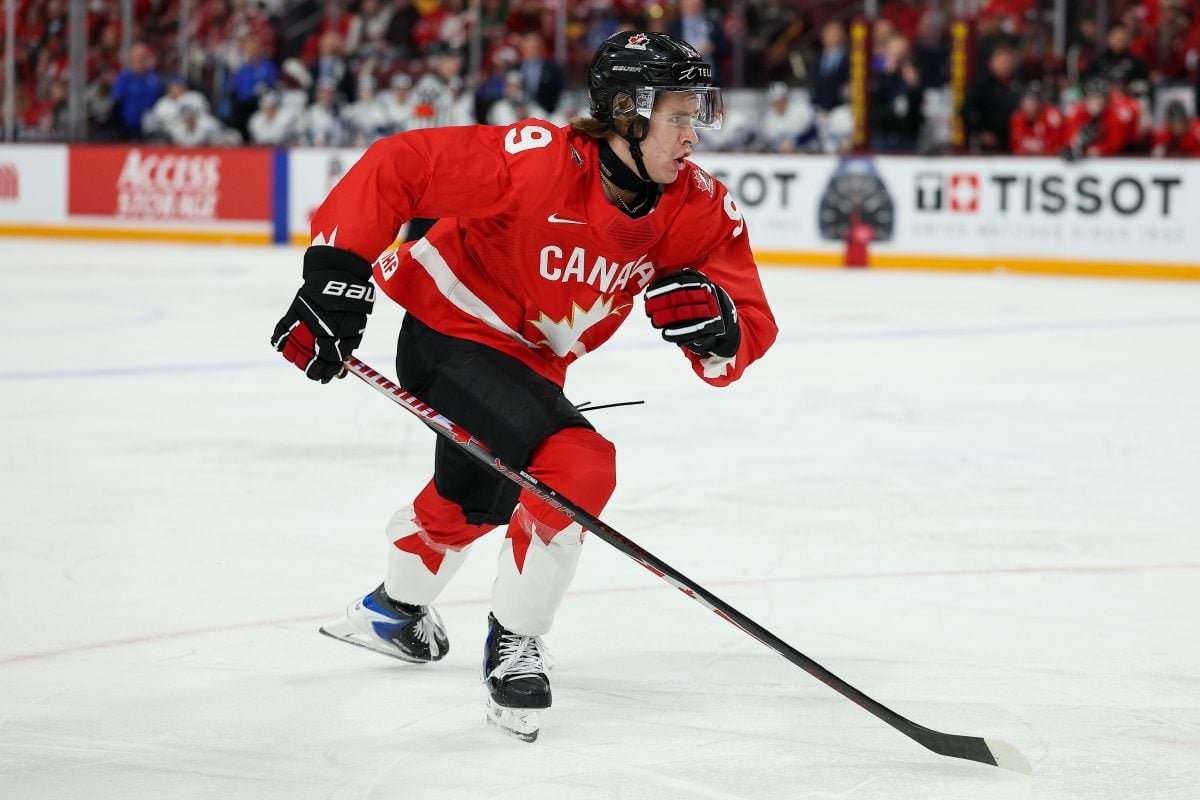
The numbers back that up, too. In junior hockey, Marner averaged 2.02 points per game during the regular season, while McKenna sits right beside him at 1.93. Even more striking is the way they produced those points. Both players maintained a roughly two-to-one assist-to-goal ratio, showing their natural instinct to set up teammates before looking for their own shot. That kind of offensive profile is rare, and it’s part of what made Marner such a unique talent when he entered the NHL.
There are differences, however. Marner’s junior production stayed remarkably steady over his final two seasons, going from 2.00 to 2.04 points per game. McKenna’s development curve has been more dramatic. After posting 1.59 points per game as a rookie, he exploded to 2.30 in his sophomore season. That suggests his offensive ceiling may still be climbing. For a Maple Leafs organization potentially facing major roster changes in the coming years, that kind of trajectory makes McKenna an incredibly intriguing possibility.
Gavin McKenna Learning at the NCAA Level
One thing that makes the McKenna conversation interesting is that he took advantage of the NCAA rule changes and spent a season playing U.S. college hockey. That matters more than people think. College hockey in the United States is usually tighter, more structured, and a lot heavier on defensive responsibility than Canadian junior hockey. Players don’t get nearly as much free ice, and coaches expect them to think the game at both ends of the rink.
That’s one reason NHL teams often see college players as being a little more “pro-ready” when they arrive. They’re older, stronger, and usually more familiar with systems and defensive details.
So while nobody should expect McKenna to walk into Toronto and instantly replace an experienced Marner, his path may actually give him a better chance to handle the transition quickly. He’s not just putting up points. He’s learning how to play a more complete game. This is part of the reason Matthew Knies looked so ready when he jumped into the NHL from the University of Minnesota.
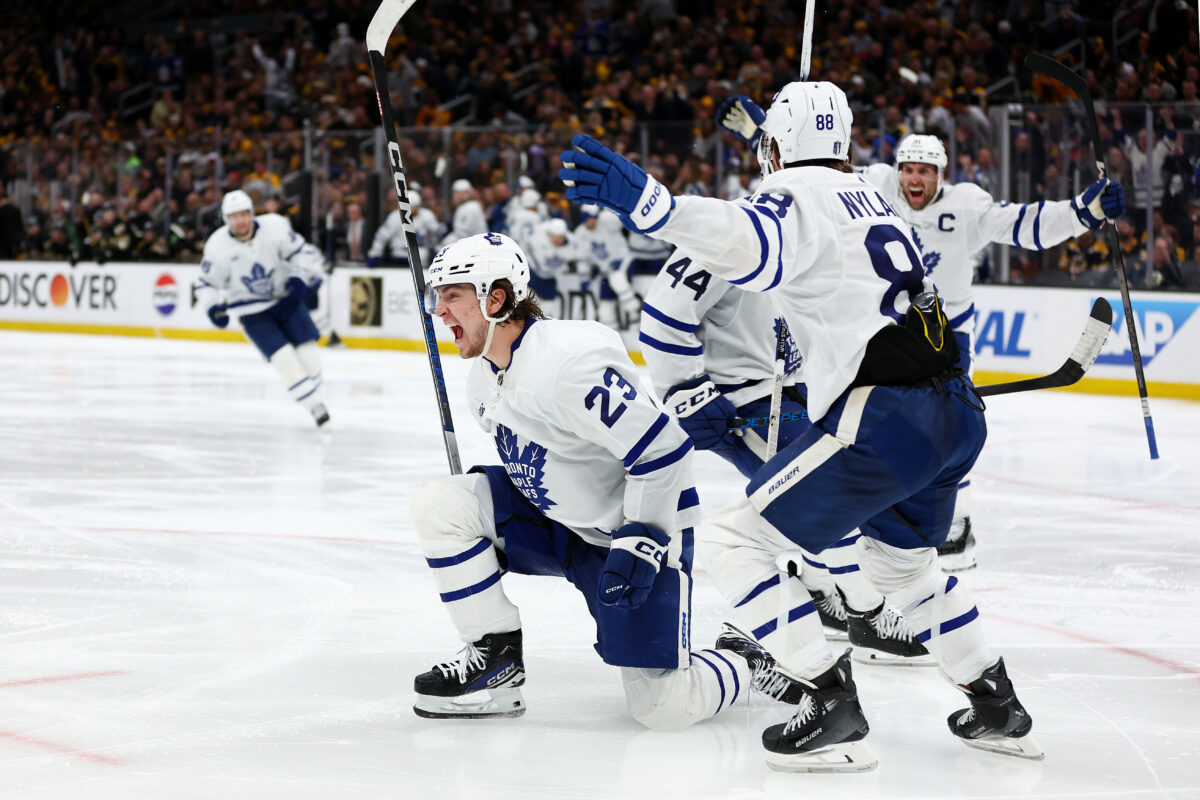
When you circle back to the Marner comparison, that’s where it gets intriguing. The offensive similarities are already there — the playmaking, the vision, the assist-heavy production. But adding that year of college hockey into the mix could make McKenna a little further ahead defensively than most junior stars his age. For a Maple Leafs team that may be staring at some huge changes over the next couple of seasons, that’s not a small thing.
One Small Problem With a Matthews-McKenna Duo
There is one interesting wrinkle when people start imagining McKenna beside Matthews. Handedness matters in hockey, especially for elite offensive players. Matthews shoots left. Marner was a right-shot winger who naturally played the right side. That created a certain balance between the two. McKenna is also left-handed, and he’s traditionally played left wing. On paper, that looks a little awkward compared to the Matthews-Marner setup Maple Leafs fans watched for many seasons.
But when you actually watch McKenna play, it doesn’t feel like a major issue. He looks comfortable on the right side of the ice, and honestly, he almost seems to prefer having his stick toward the middle of the rink. Especially on the power play, you can see him drifting into spots where he can attack the centre lane and make plays with the puck on his forehand. That’s something a lot of elite playmakers like to do now. The game has become much less rigid about “strong side” and “off-wing” than it used to be.
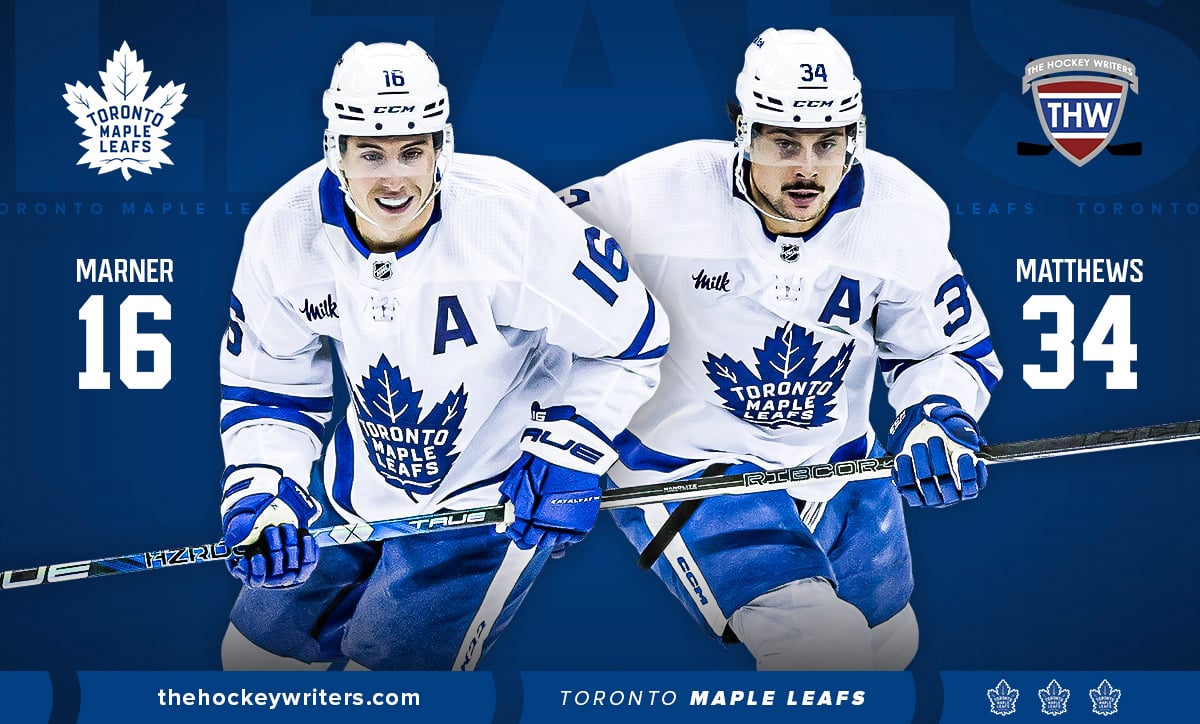
No, the chemistry between Matthews and McKenna probably wouldn’t look exactly like the Matthews-Marner connection. Marner has a very unique style, and the two of them developed years of timing together. Still, the similarities are there. McKenna has the same instinct to distribute the puck, slow the game down, and create offence through vision rather than force. It wouldn’t be a copy of the old duo, but you can definitely see why people are making the comparison.
If the Maple Leafs Choose McKenna
At the very least, the idea of Matthews and McKenna playing together is an interesting hockey conversation. Right now, Toronto fans could probably use one of those. Nobody knows what the roster will look like two or three years from now.
But if Toronto really does end up with a player like McKenna in the mix, you can already see the outlines of what the next version of this team might look like.
[Note: I want to thank long-time Maple Leafs fan Stan Smith for collaborating with me on this post. Stan’s Facebook profile can be found here.]
Free Newsletter
Get Toronto Maple Leafs coverage delivered to your inbox
In-depth analysis, breaking news, and insider takes - free.
Subscribe Free →