For a long time, there’s been a sense around the Toronto Maple Leafs that something was missing — not talent, not effort, but clarity. A clear direction. A sense of what this team is actually trying to become instead of what it’s reacting to.
Over the past week, that fog has started to lift. The hiring of Jim Hiller as head coach, combined with a pair of aggressive roster moves, suggests the organization finally has a defined idea of where it’s going. For the first time in a while, the pieces don’t feel random. They feel connected.
That’s the backdrop for the acquisition of Darren Raddysh. Because this isn’t just a depth add or a contract swing. It looks like another step in a specific blueprint being drawn in real time.
Raddysh Signals the Maple Leafs’ New Direction Under Chayka
Raddysh arrives from the Tampa Bay Lightning after a breakout season that saw him produce 22 goals and 70 points, an unusual level of offence for a defenceman who has evolved into one of the more dynamic puck movers in the league. What stands out in his game isn’t just the production, but how he produces it. He can transport the puck under pressure, make plays off the rush, and activate in the offensive zone without needing perfect conditions. In other words, he helps solve the exact problem Toronto has been circling for years.
Because the issue in Toronto has never been hard to spot. Breakouts stall too often. Defensive-zone exits drift to the boards. Forechecks arrive early, and the puck gets trapped in predictable lanes. Even skilled teams struggle when the puck doesn’t move cleanly through the first layer of pressure.
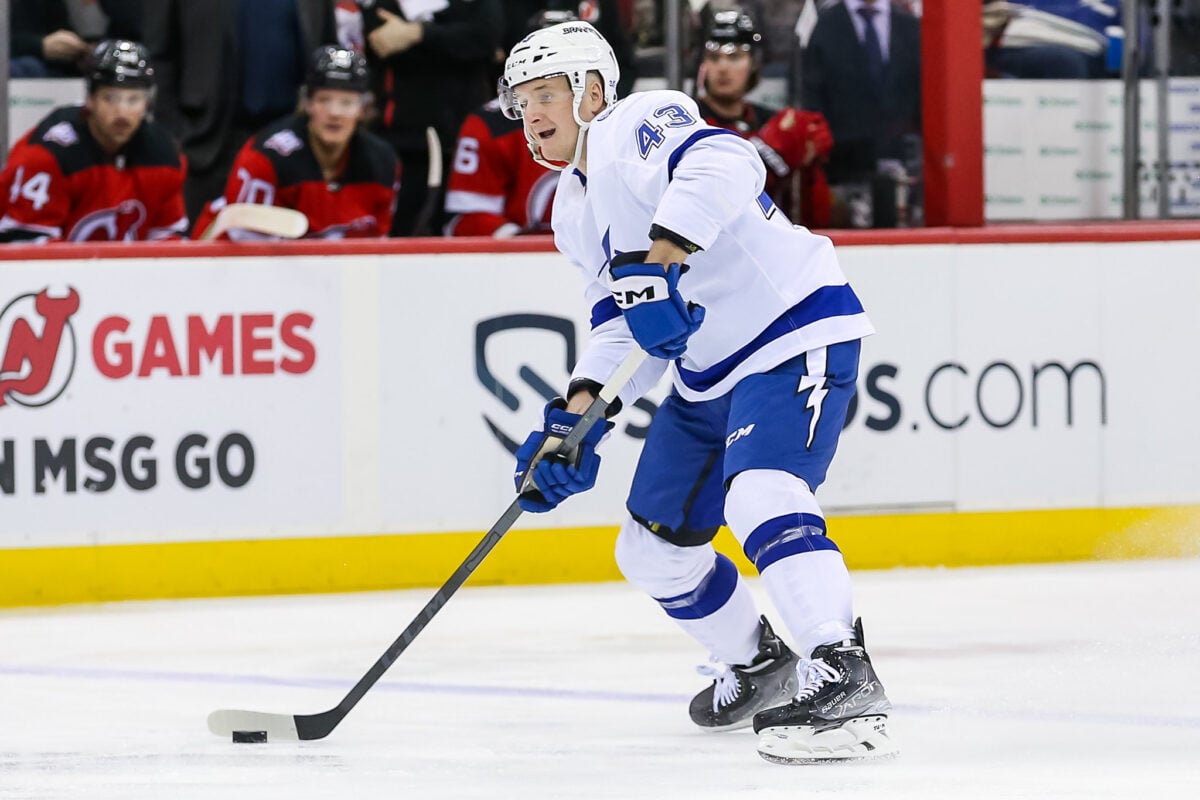
Raddysh changes that dynamic. He doesn’t just clear the zone; he can escape it with control. That difference matters more than raw points when you start thinking about how a team transitions from defence to offence. And just as importantly, he fits a pattern that is now hard to ignore.
Emil Andrae was brought in only days earlier, and his profile mirrors this shift: mobile, puck-focused, and comfortable handling pressure rather than simply surviving it. Neither move is about size or traditional shutdown reliability. Both are about movement.
Taken individually, these are smart hockey additions. Taken together, they start to suggest something more deliberate.
Maple Leafs Finally Identified the Real Problem
A funny thing happens when you zoom out on the last few moves. The conversation around the Maple Leafs starts to line up in a way that feels a bit more coherent than it has in the past. For a long time, the debate hasn’t really been about effort or coaching systems. It has been about structure. Specifically, Toronto has struggled to move the puck cleanly out of its own end and through the middle of the ice.
When that part of the game breaks down, everything else starts to follow. Breakouts get pushed to the perimeter. Forechecks become more effective. And even highly skilled teams end up defending longer shifts than they should. It’s not always dramatic, but it is consistent.

Now look at the way this roster has started to shift. Andrae comes in as a mobile, puck-carrying defender. Raddysh arrives as a proven offensive blueliner coming off a major breakout season. Neither move screams traditional “stay-at-home stability.” Instead, both point toward pace, transition, and puck movement.
That’s the real change worth noticing. It suggests the Maple Leafs are finally targeting the root issue instead of patching symptoms. If the puck moves cleaner out of the zone, everything else improves with it — offensive zone time, forecheck pressure, even special teams rhythm. Nothing is automatic, but the logic is clear.
And for a franchise that has often tweaked around the edges rather than rethinking the structure, that alone feels significant.
What’s Next for the Maple Leafs?
The next question is whether this is the full picture or just the beginning of a larger reshaping of the blue line. The acquisitions of Raddysh and Andrae don’t feel random anymore. They feel like part of a design — a deliberate shift in what the team values. If that’s true, then the Maple Leafs may not be finished yet.
Because once a front office starts prioritizing a specific problem this clearly, the natural follow-up is usually more of the same type of solution. More puck movers. More transition defenders. More players who can handle pressure with the puck instead of simply surviving it.
For now, though, the message is already fairly clear. This isn’t just about adding players. It’s about changing how the puck leaves the zone. And that might end up being the most important structural shift the Maple Leafs have made in years.
Free Newsletter
Get Toronto Maple Leafs coverage delivered to your inbox
In-depth analysis, breaking news, and insider takes - free.
Subscribe Free →