On April 2, the NHL and Rogers Communications extended their broadcast agreement for an additional 12 years, under which the Toronto-based communications company will pay $11 billion Canadian (CDN$) for exclusive rights to broadcast NHL games across Canada until the end of the 2037-38 season. Rogers will own TV, digital and streaming rights to all regular season and playoff games, along with all special events. The deal covers broadcast rights in all languages across all regions.
The question on the minds of Canadian hockey fans is whether the new deal will mean a better viewing experience for them and, if so, at what cost? Here’s a look at what the deal could mean for the NHL and its fans.
Will Canadian Fans Pay More to Watch Hockey?
Rogers president and CEO Tony Staffieri side-stepped questions about whether a doubling of the cost of Rogers’s NHL broadcast rights under the new deal would be absorbed by viewers. Still, reading between the lines, Rogers doesn’t seem to be aiming at increasing the value of its NHL broadcast franchise by boosting revenue and profit per viewer only. Viewer numbers seem more important.
As Staffieri explained it on announcing the deal, “The value of live sports content just continues to appreciate, and it’s really rooted in viewership continuing to grow. If you look at our NHL deal over the last decade, viewership grew by 50%. And with that kind of growth, what you see is revenue growing at a very steady and healthy pace in terms of advertising revenue, subscription revenue, and in the deal we have now, sub-licensing revenue. And so as we look to the next 12 years, we were very thoughtful in how we thought about the economics.”
With Rogers seemingly focused on growing customer numbers instead of just increasing pricing, Canadian NHL fans may be able to rest a little easier about the deal. Even so, as audiences move off cable to subscription TV channels, streaming services and digital platforms, access to NHL games could become more fragmented and costly as the number of subscriptions required to watch all NHL games increases.
Will the Rogers Deal Improve the NHL Viewing Experience?
Rogers customers in Canada have complained throughout the current deal about blackouts. For example, fans of the Montreal Canadiens have not been able to watch their team play games in Alberta for reasons that leave many fans baffled. The new deal should change much of that. According to Rogers Sports & Media president Colette Watson, “We secured the opportunity to take more of the regional games. That means fewer blackouts.”
Related: NHL TV Blackouts & Why They Happen?
Not only that, but the deal allows Rogers to sub-license its rights, giving it the ability to broaden its viewership. Still, that’s not guaranteed. The Canadian Broadcasting Corporation (CBC) licenses Saturday night games to show on its iconic “Hockey Night in Canada” broadcast – all for free across Canada. Whether or not the CBC can afford to renew its sub-license with Rogers could be in jeopardy should the Conservative Party of Canada win the upcoming April 28 federal election and make good on its promise to “defund” the CBC.
Many pundits claim that Rogers will have the ability to adopt technology that has the potential to improve fans’ viewing experiences, perhaps by personalizing games to suit the tastes of individual viewers. Yet technology to allow viewers to select such things as customized camera angles and feeds or their preferred audio feeds and commentary, perhaps aided by artificial intelligence, is expensive. With Rogers granted the exclusive rights in the Canadian market to all NHL games for 12 years, questions arise as to whether the company may become too complacent to adopt new technology.
For Rogers, the NHL Deal Is Lucrative But Risky
The fact that the value of the new deal between Rogers and the NHL is worth double what the previous agreement was worth says it all about its value to both Rogers and the NHL.
For its part, Sportsnet, owned by Rogers and broadcasting NHL games, more than doubled its revenues and grew its viewership by half since 2013 when the league and Rogers signed their first agreement. Even so, long-term deals are burdened by all manner of business risk.
That seems apparent to investors in Rogers stock who saw the value of their shares drop by 5.8% after the deal was announced. National Bank of Canada Financial Markets analyst Adam Shine said, “Investors wondered how the company was making money on its current NHL deal. Those questions won’t go away when it is about to spend 112 percent more on the new 12-year package.”
Rogers Deal Important to NHL But Risky
NHL Commissioner Gary Bettman gushed about the Rogers deal, saying, “For more than a decade, Rogers has done an incredible job of conveying what NHL hockey, our players and our teams mean to hockey fans and their communities from coast to coast to coast. We’re thrilled to continue our landmark partnership for an additional 12 years. The NHL and Rogers have a shared commitment to best serving Canadian fans and the unmatched passion that they have for our game, and we are particularly excited that through this agreement, we’ll bring more live games to more fans across Canada.”
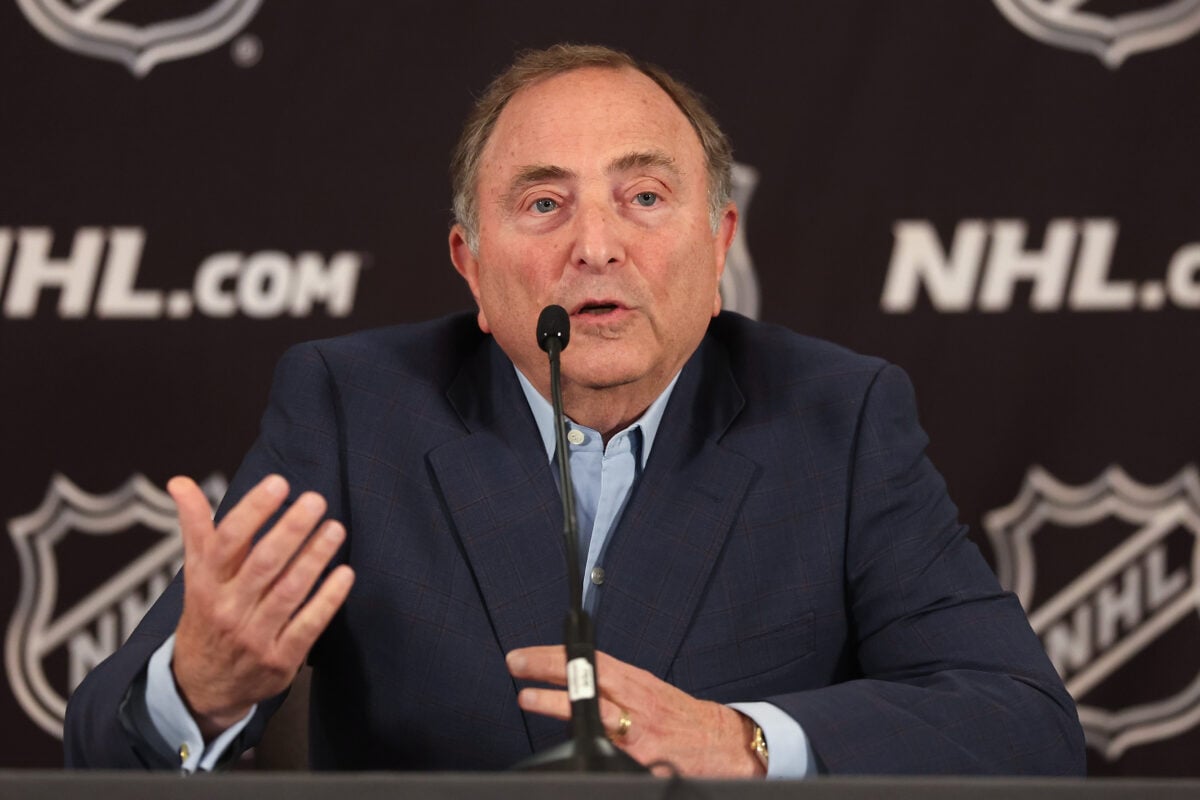
The Rogers deal is by far the most important broadcasting deal the NHL has. Even though the US economy and population are almost 10 times larger than Canada’s, the NHL earns far more from its deal with Rogers than it does in the US from its broadcasting contracts with ESPN and Turner Broadcasting combined. (CDN$917 million per year vs CDN$625 million)
Even so, the deal with Rogers is fraught because revenues are earned in Canadian dollars and that presents currency risk for the league should current trade tensions between Canada and the US tank the Canadian dollar. As Bettman put it, “We have revenue sharing but a lot of our Canadian clubs do quite well. But that’s going to be impacted by what happens with the Canadian dollar. We’re hoping, I’m hoping, that this is a moment in time and both countries find a way to work through this. Should its value decline because of current trade tensions between Canada and the United States league revenues could take a hit.”
Rogers and the NHL – Together for Better or Worse
The NHL and Rogers uncorked champagne on April 2 to celebrate the renewal of their broadcasting marriage vows until 2038. Like all marriages, it’s for better or worse, and only time will tell what it turns out to be.
