On June 4, 2026, Detroit Red Wings star center Dylan Larkin requested a trade. It was just a few days before the Carolina Hurricanes hoisted the Stanley Cup, and he joined a list of players on the Olympic Gold-winning U.S.A. team (Brady Tkachuk, Quinn Hughes) to request a trade.
Now, another player on that U.S.A. team has requested a trade: Winnipeg Jets goaltender Connor Hellebuyck. He made the request privately at the beginning of the offseason, with many thinking he was trying to wait out the season to see if Winnipeg would bounce back.
It feels like these trade requests are being met with opposite reactions. While fans salted Larkin for requesting a trade, Hellebuyck’s request hasn’t generated as much negativity. I want to dive into the five differences between Larkin’s trade request and Hellebuyck’s trade request, and how that’s causing such a different reaction from fans.
Team Situation
The teams’ situations strongly contrast. Larkin’s Red Wings now have the longest active streak of missing the playoffs, with the Buffalo Sabres making it this past season. They haven’t made it since the 2015-16 season, his rookie season. Larkin’s been through the 2019-20 Red Wings, who were one of the worst teams in NHL history, and yet he still hasn’t seen the team reach the postseason.
Winnipeg, meanwhile, has largely seen success in the Connor Hellebuyck tenure. To be fair, that success has coincided with Hellebuyck taking the starting job in the crease. The Jets didn’t win a playoff series until Hellebuyck’s third season, and in the 10 seasons Hellebuyck has at least 45 starts, the Jets have made the playoffs in seven of them, including four series wins.
Still, while the Jets are expected to be mediocre this season (with a loaded Central Division not helping), they’re only two seasons removed from winning the Presidents’ Trophy, and the only major difference between the 2024-25 team and this one is that Nikolaj Ehlers is now on the Carolina Hurricanes. That feeds into this next point.
Organizational Direction
The way the two players’ respective teams have been built over the years is vastly different, and Hellebuyck has the key advantage. Larkin has never seen the team earn the No. 1 pick, not even that 2019-20 team. They used the fourth pick in the 2020 NHL draft to select Lucas Raymond, and he’s been a franchise superstar alongside Larkin.
However, Raymond, Larkin, and Moritz Seider are the only true building blocks the Red Wings have developed in Larkin’s tenure. The Red Wings have fallen to mediocrity due to some rough free-agent contracts, bad drafting, and stalled prospect development. Steve Yzerman, the architect of the team since 2019, is out as general manager, and he left the team directionless.
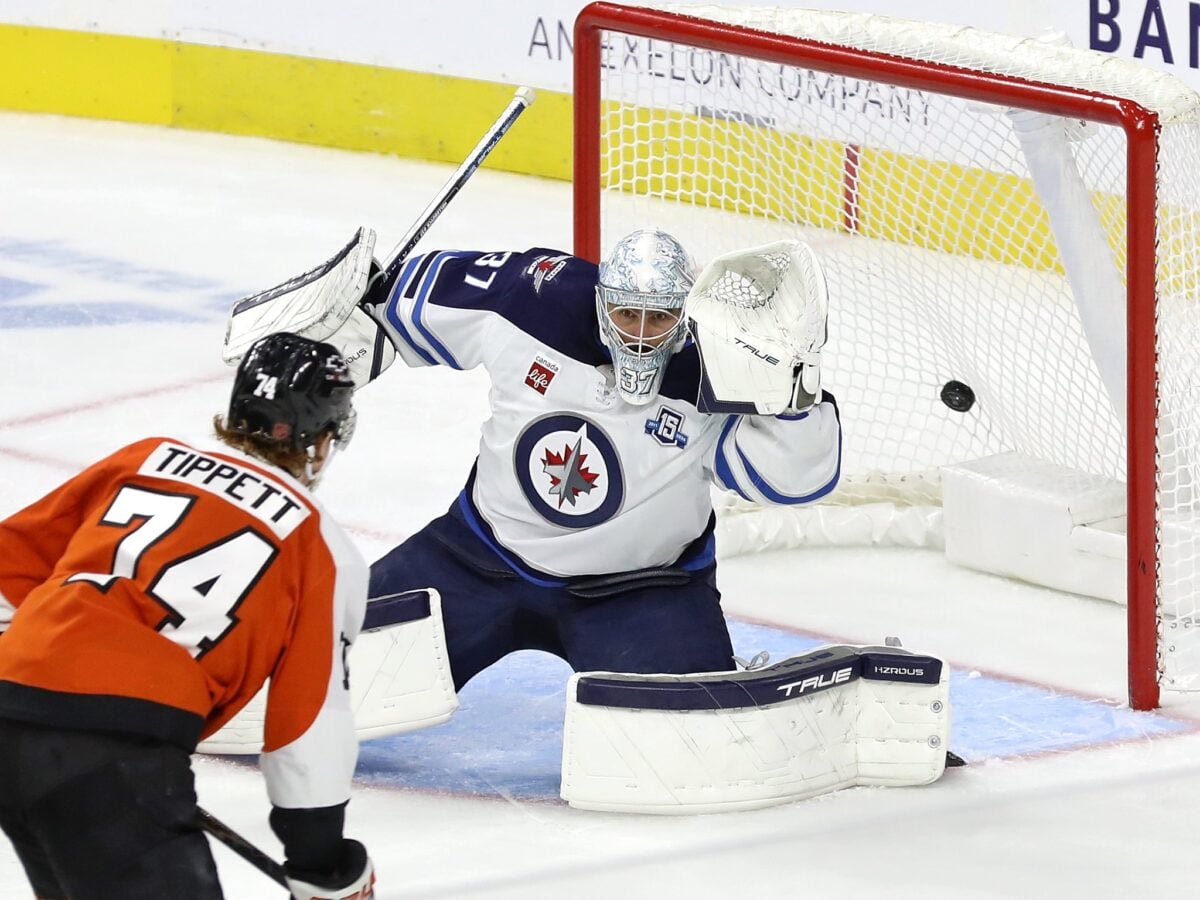
Winnipeg also appears directionless now, but they have had good drafting for the most part in Hellebuyck’s tenure. Out of the 2017-18 squad that made the Western Conference Final, there were six players with over 40 points: Mark Scheifele, Kyle Connor, Blake Wheeler, Dustin Byfuglien, Patrik Laine, and Bryan Little. Scheifele, Connor, and Laine were drafted by the organization, and Wheeler, Byfuglien, and Little were all acquired when the Jets were the Atlanta Thrashers.
The Presidents’ Trophy squad still had Scheifele and Connor, but it also developed a couple of prospects. Josh Morrissey went from a second-pairing defenseman in 2017-18 to one of the best defensemen in the league. Gabriel Vilardi, a piece in a trade involving Pierre-Luc Dubois, turned into a core player. Cole Perfetti turned into a 50-point player, and Neal Pionk, involved in the Jacob Trouba trade, became a stable presence on that defense.
There’s little reason to believe Winnipeg will be a playoff team this upcoming season. However, they’ve been a much better-built team over the years than Detroit, and Hellebuyck has reaped the rewards.
Team Role
I think the role on the team is part of it, too. Larkin has been the captain of the Red Wings since the 2020-21 season. Considering the history of the Red Wings, that’s a high amount of pressure.
The Red Wings have had 13 players with the “C” on their jersey make the Hall of Fame, and six of them have won the Stanley Cup in Detroit. Nobody’s comparing Larkin to Ted Lindsay or Gordie Howe when discussing great Red Wings captains, but before Larkin, Henrik Zetterberg was their captain from 2012-18.
Zetterberg spent his entire 15-season career with the Red Wings, and he even won the Conn Smythe Trophy for helping them win the 2007-08 Stanley Cup. Sure, he’s had Hall of Fame teammates such as Pavel Datsyuk and Niklas Lidstrom to play with, but he’s clearly made an impact, and he has a pretty good shot at the Hockey Hall of Fame as well.
Considering Larkin and Zetterberg play the same position and they came one after another, it’s easy to compare the two, and Larkin hasn’t held up. Captains are expected to endure the suffering and bring their franchise back from the ground, and Larkin hasn’t been able to do that. That’s immense pressure.
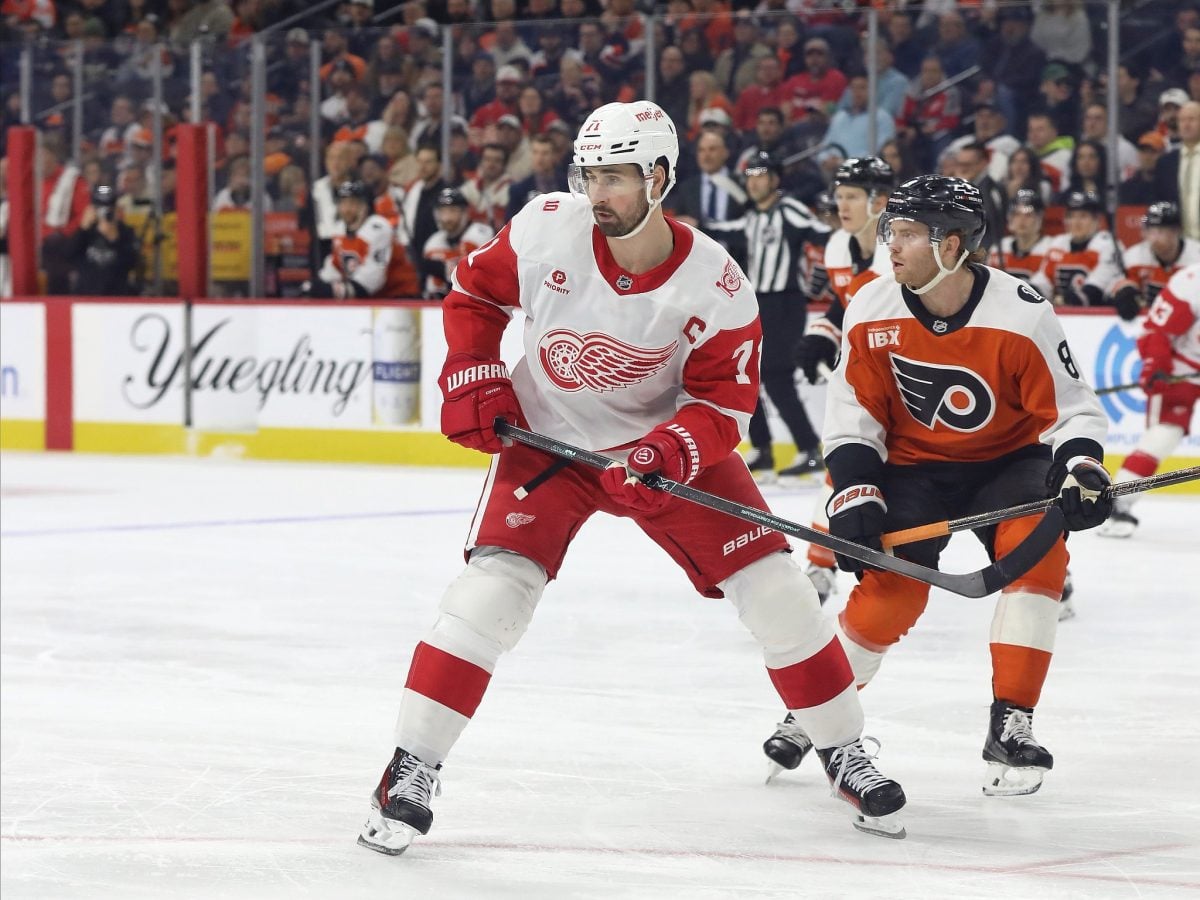
Hellebuyck, meanwhile, doesn’t have to deal with those comparisons. He’s never had to wear the “C” patch, and he’s never had to uphold a standard like Larkin. This newest iteration of the Jets has only been around for 16 seasons, so there’s not a deep history like the Red Wings. Their top-scoring captain is Wheeler, who had fewer points than Zetterberg in his entire 16-season career.
Hellebuyck still holds a lot of pressure as the team’s goaltender. After all, the Jets never came close to the Stanley Cup without him. However, the pressure of a captain is about the same, if not more, than the pressure of a goaltender.
Clutch Performance
There’s also an argument to be made about clutch performance. An NHL player is often judged by how they perform when the games matter the most, and Hellebuyck has had many more opportunities than Larkin.
Unfortunately, Hellebuyck hasn’t performed well in those stretches. Among goaltenders with at least 50 starts in the Stanley Cup Playoffs, he has the worst goals-against average (GAA, 2.90) and second-worst save percentage (SV%, .903), behind Stuart Skinner. Hellebuyck has had 58 career starts in the playoffs.
The past three times he’s made the playoffs have been incredibly egregious. Winnipeg made the playoffs each season from 2022-23 to 2024-25, and in that span, Hellebuyck had a .870 SV% and 3.60 GAA. In the Jets’ Presidents’ Trophy-winning season, Hellebuyck had a 3.08 GAA and a .866 SV%.
Yes, the Jets have been buoyed by Hellebuyck’s excellence in the regular season, but when the lights have shone brightest, he hasn’t performed. There have been discussions about Larkin struggling at the end of the season, but last season, he had 13 points in 14 games from March onwards.
Still, it doesn’t feel like people address Hellebuyck’s playoff struggles much when talking about his trade request, as people are more keen to point to Larkin not even making it. Larkin hasn’t had the opportunity to succeed in the playoffs, while Hellebuyck has, and he hasn’t come through recently.
Contract/Protection
There is a difference between the contracts and the commitment these players made to their teams. Both of them signed long-term extensions ending in 2031, but there are important distinctions in the trade protections.
Larkin, with a no-movement clause, has been criticized for including just four preferred destinations: Minnesota Wild, Dallas Stars, Florida Panthers, and Vegas Golden Knights. With his no-movement clause going until the 2028 offseason, he has a lot of leverage. That’s why, despite his request coming on June 4, the Red Wings haven’t caved to his demands.
Hellebuyck, also with a no-movement clause this season, appears to be more flexible with his trade list. The trade protection falls to a 10-team-approved trade list starting next season, so it makes sense. There aren’t any reports on how many teams he’d consider, but he should be more flexible than Larkin.
Final Verdict
I’m not going to say that either one of them is more justified than the other in making a trade request. Both of them are in their 30s, both are on teams that are stuck in the middle, and they’re trying to do their best to win the Stanley Cup, which has a big impact on a player’s legacy. There could be other reasons they demand trades out that the hockey media isn’t privy to.
I just wanted to highlight how these key differences cause the discourse around these trade requests to feel different. It feels like the reaction to these two requests says more about how fans view the players than about the actual merits of their trade requests.
Larkin’s a solid and capable first-line center, but he’s a little ways away from the top 10 centers in the league. He’s been the “franchise player” for the franchise with the longest active playoff drought, and there are some “franchise players” on rebuilding teams who’ve done better in worse situations (Macklin Celebrini). That leaves people believing he’s looking for a cop-out instead of trying to improve the situation, like some franchise superstars.
Hellebuyck, meanwhile, is probably the best goaltender in the league. He’s won multiple Vezina Trophies and even the Hart Trophy for his contributions, and there were seasons you could argue he was the sole reason Winnipeg was in the playoffs. That leaves people believing he’s more justified, since he’s “done all he can” to win Winnipeg a Stanley Cup. It’ll be interesting to see which team gives in to the trade request first, and which team or teams will benefit from it.
Free Newsletter
Get Commentary coverage delivered to your inbox
In-depth analysis, breaking news, and insider takes - free.
Subscribe Free →