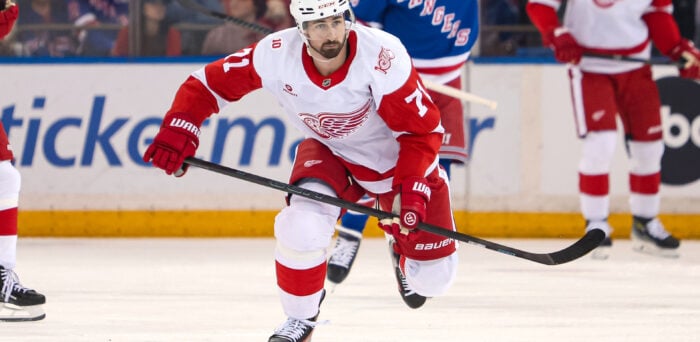
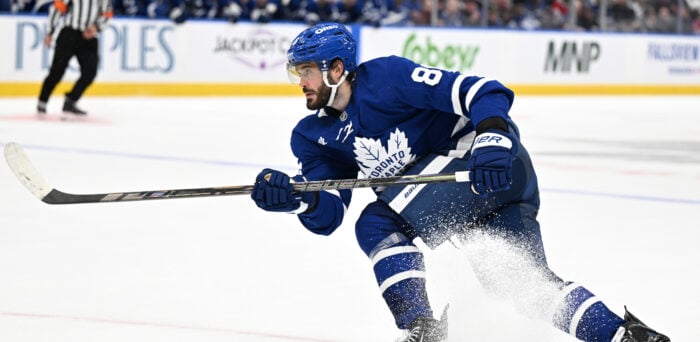
When the Detroit Red Wings eventually/probably/maybe trade Dylan Larkin, much of the attention will understandably focus on the return package, whether that’s NHL-ready players, prospects, and/or draft picks.
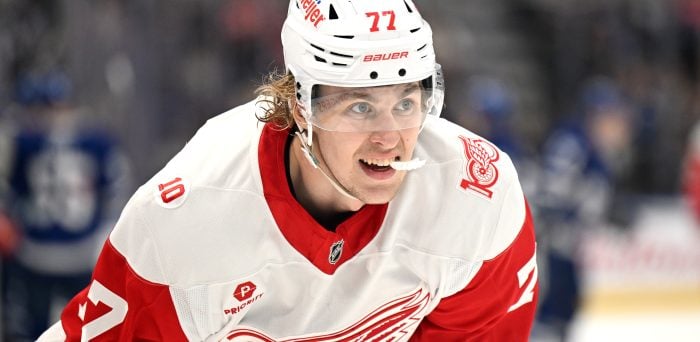
Flying under the radar a bit is the downstream impact on the rest of the Red Wings. And, more specifically, with Marco Kasper.
No player on Detroit’s roster stands to benefit more from Larkin’s departure than the 22-year-old forward. A vacancy in the top six would almost certainly elevate Kasper into a permanent offensive role, giving him the opportunity to capitalize on what projects to be a pivotal season in his development. Here’s why.
Red Wings’ Kasper Primed to Step Up In 2026-27
On the surface, Kasper’s nine goals and 19 points in 81 contests last year aren’t very encouraging. That said, his underlying numbers offer some hope.
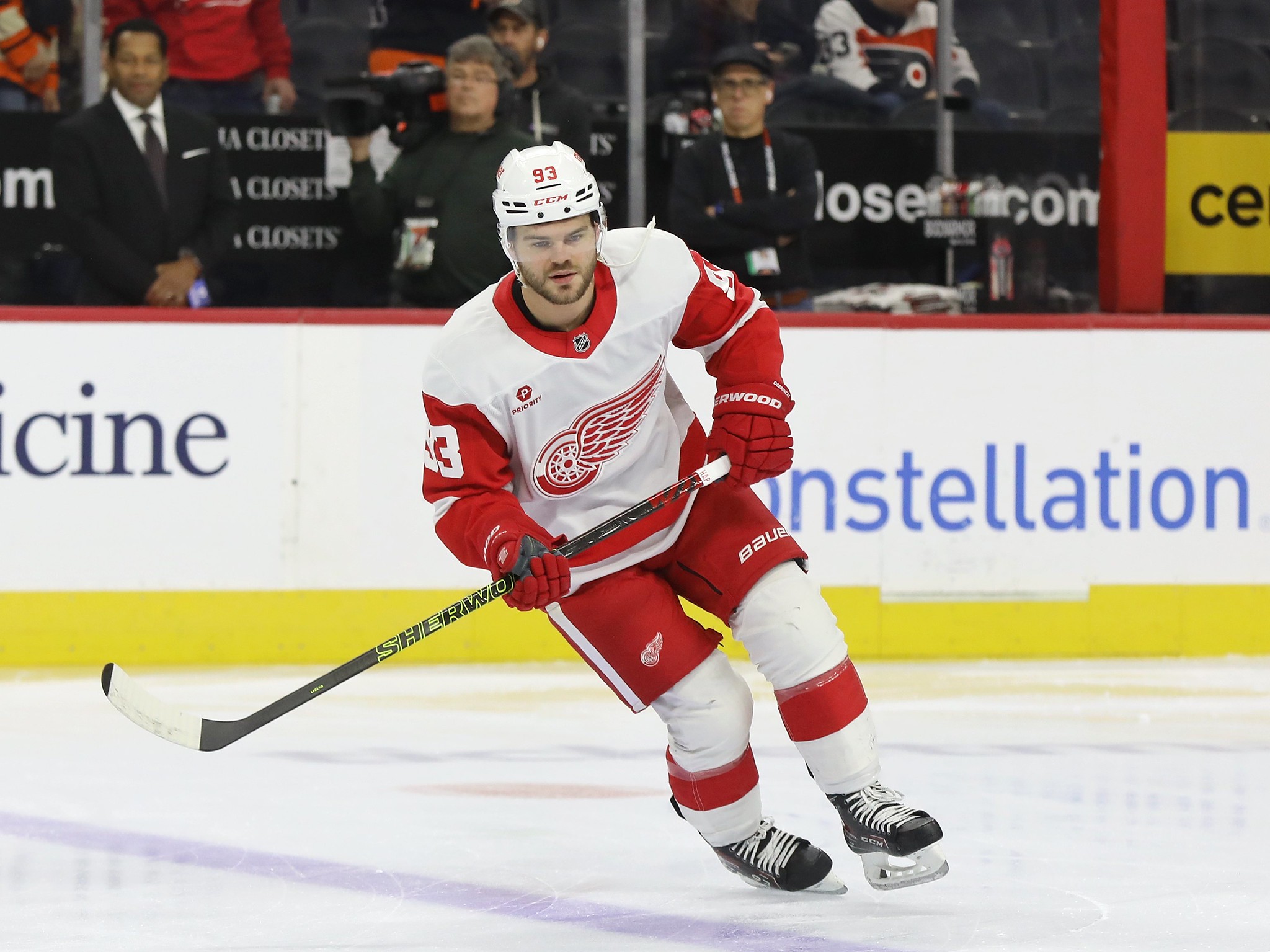
Kasper’s 15.43 expected goals (ixG) at five on five ranked second on the Red Wings, trailing only Alex DeBrincat. On a per 60 basis, Kasper ranked 56th league-wide (0.96 ixG/60) – tied with Mason McTavish, Andrei Svechnikov, and Jimmy Snuggerud.
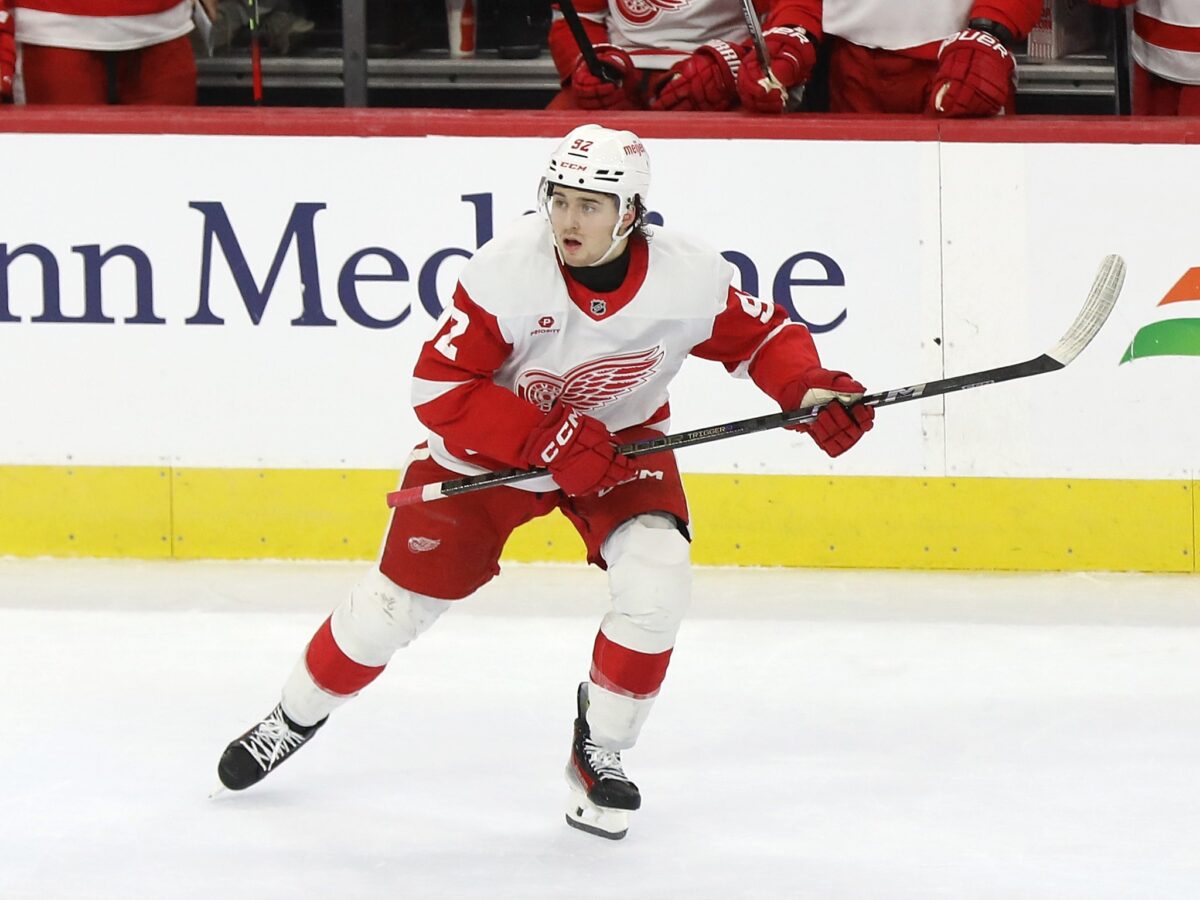
The reason why this didn’t translate to actual goals: Kasper spent much of the season in Detroit’s bottom six, frequently matching up against opposing checking lines while receiving limited offensive-zone opportunities. Those assignments helped round out his two-way game, but they also suppressed his counting statistics and produced a paltry 6.14 percent shooting percentage.
Even while struggling through a sophomore slump, Kasper drove play with his pace and relentless puck pursuit. He consistently pressured defenders into turnovers, recovered loose pucks, and generated controlled offensive-zone possessions. Those are the types of habits that analytics models tend to reward, even when they aren’t immediately reflected on the scoresheet.
That’s an important distinction. Counting statistics often fluctuate based on usage, quality of teammates, and shooting percentages. Play-driving metrics, meanwhile, tend to stabilize more quickly and provide a better indication of whether a player is consistently impacting the game. Kasper’s ability to tilt the ice remained evident despite the modest point totals.
In addition to the expected positive regression, Kasper is set to enter the final year of his entry-level contract. Not only will he be playing for his next deal, but he’ll also be reaching the point on NHL age curves where many forwards begin taking meaningful offensive strides. League-wide production tends to increase throughout a player’s early 20s as experience catches up to physical ability, and Kasper appears to be entering that window.
Lastly, the Larkin trade, and the impact it has on the lineup. Kasper and Andrew Copp figure to center the top two lines – something they did while Larkin was injured last season. And for Kasper, a promotion into the top six would likely improve nearly every variable that had been working against him.
More ice time naturally creates more scoring opportunities. Better linemates increase the likelihood that quality scoring chances become goals. More offensive-zone starts reduce the amount of energy spent defending. Even an increase in power-play usage could significantly boost his production over the course of an 82-game season.
Whether he ultimately settles in as a center or spends time on the wing, the Red Wings would almost certainly ask Kasper to play a much larger offensive role. His combination of speed, physicality, forechecking pressure, and defensive awareness already makes him a reliable NHL player. The next step is determining whether he can consistently produce against top competition.
Final Word
Detroit has spent years assembling a young core led by Moritz Seider, Lucas Raymond, Simon Edvinsson, and Kasper. If Larkin is moved, internal development becomes even more critical to the club’s long-term success. While acquiring future assets would be one objective of a trade, creating meaningful opportunities for the next generation would be another.
For Kasper, the stars may finally be aligning. He’ll be entering his age-22 season, playing for a new contract, and—if Larkin is no longer in Detroit—should finally receive the top-six deployment that many believed he was ready for a year ago. History suggests players at his age often begin to ascend. His underlying play-driving numbers indicate there’s more offense to unlock. And his role should provide the opportunity he’s been missing.
A Dylan Larkin trade would leave an enormous void in Detroit’s lineup. It may also be remembered as the moment Marco Kasper’s career truly took off.
Data courtesy of Natural Stat Trick.
Free Newsletter
Get Detroit Red Wings coverage delivered to your inbox
In-depth analysis, breaking news, and insider takes - free.
Subscribe Free →