- The Analyst’s Argument: Control Was Lost
- A Different Lens: What Strong Organizations Actually Look Like
- NHL Players Are More Than Employees in Any Traditional Sense
- Collaboration Isn’t Chaos; It’s Often Misread That Way
- The Missing Variables in This Simplistic Take
- The Bigger Point: How We Evaluate Hockey Leadership
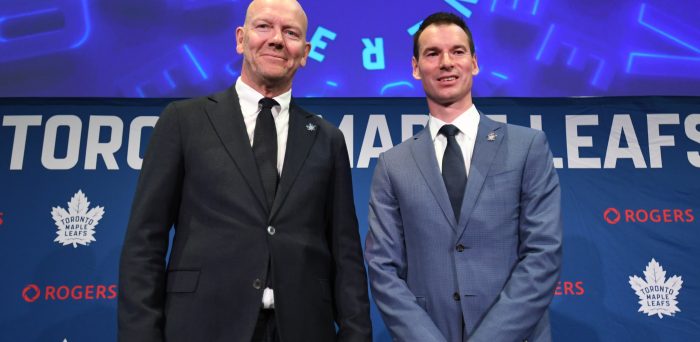
There’s a familiar argument that pops up whenever the Toronto Maple Leafs fall short in the playoffs: the idea that the players — the so-called “Core Four” of Auston Matthews, Mitch Marner, John Tavares, and William Nylander — held too much influence inside the organization.
The most recent version of that critique comes from a hockey analyst who suggested that the Maple Leafs gradually lost their traditional chain of command. In his view, authority should flow cleanly from ownership to management to coaches and finally to players. Anything else, he argues, becomes a problem. When players gain too much say, the thinking goes, discipline fades, structure weakens, and the organization drifts.
It’s a simple story. It’s also an appealing one, because it gives failure a neat explanation. But it may also be too simple to actually explain how modern organizations — in hockey or anywhere else — really function.
The Analyst’s Argument: Control Was Lost
At the centre of the critique is a classic, almost old-industrial view of leadership. Strong organizations, in this model, are hierarchical. Leaders decide; underlings execute. Players, who in this model sit at the bottom of the hierarchy, don’t shape direction; they follow it. When things go wrong, it’s because that hierarchy has been softened or blurred.
From that perspective, the Maple Leafs’ problem becomes easy to diagnose. Too much comfort. Too much deference to star players. Too many situations where difficult decisions were avoided in order to maintain harmony in the room. It’s a clean narrative: the structure weakened, so the results then had to follow.
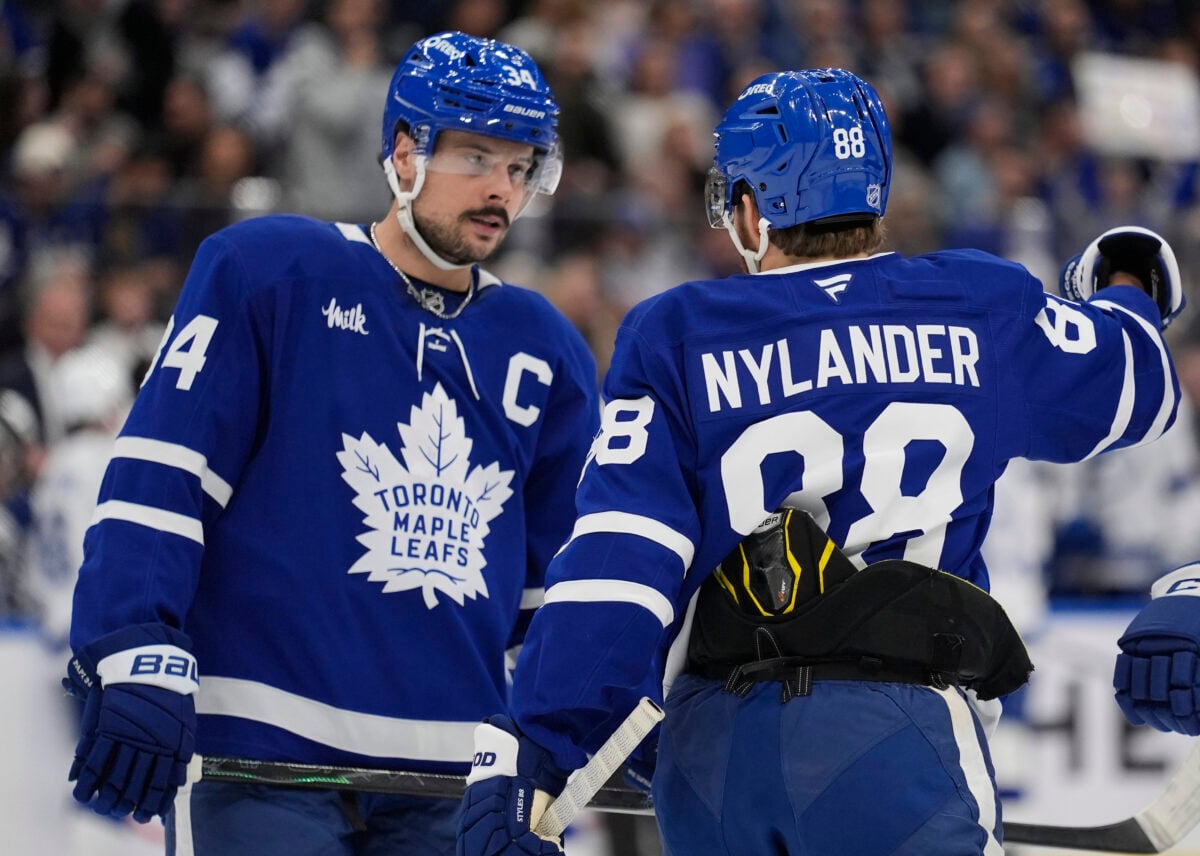
To be fair, there are moments in any long-running team cycle where that interpretation feels intuitively right. When teams don’t make bold roster changes, when core players are kept together through repeated disappointment, or when messaging becomes overly careful, it’s easy to assume the organization has lost its edge.
But that assumption rests on one major leap: that top-down control is the only legitimate form of leadership.
A Different Lens: What Strong Organizations Actually Look Like
That’s where the argument starts to fall apart. In leadership research and theory outside of hockey — particularly in high-functioning organizations — the strongest environments rarely operate as rigid command structures. In successful schools, for example, principals do not “run” classrooms from above. Teachers are not treated as passive executors of policy. They are professionals with direct, real-time knowledge of what works and what doesn’t.
That’s true in other organizations as well. The most effective leaders in those settings build partnerships, not pipelines. Authority still exists, but it is informed by people closest to the actual work. There’s a strong argument that hockey, at its best, functions the same way. That’s at least the direction some NHL teams are moving in.
NHL Players Are More Than Employees in Any Traditional Sense
Players are not employees in the traditional sense. They are high-performance professionals operating under extreme pressure, with constant feedback loops that happen on the ice that management simply cannot experience firsthand. They understand locker room dynamics, emotional momentum, fatigue, system fit, and chemistry in ways that cannot be fully observed from an office.
That doesn’t mean players should “run the team.” But it does mean their input is not a threat to a team’s solid structure. In fact, it is part of how structure actually works in modern elite environments.
Collaboration Isn’t Chaos; It’s Often Misread That Way
One of the biggest flaws in the “players took over” argument is that it confuses collaboration with loss of control. Those are not the same thing.
In many successful NHL organizations over the years, leadership groups inside the room have played a huge role in setting standards. Veteran players often enforce accountability far more directly than coaches can. They establish expectations, manage culture day-to-day, and create internal pressure that no management group could replicate from above.
Coaches and executives design the framework. Players live inside it. The strongest teams usually have alignment between those layers — not dominance from one.
When critics say the Maple Leafs became “too player-driven,” what they might actually be describing is an organization trying to operate in a more modern, partnership-based way. Many critics don’t like it. The real question is not whether players had influence. It’s whether that influence was aligned, productive, and ultimately effective.
The Missing Variables in This Simplistic Take
There’s also a deeper issue with reducing Toronto’s playoff history to organizational structure alone. It assumes that if the leadership hierarchy had been tighter, results would automatically improve. But that ignores a long list of variables that actually determine playoff outcomes: roster balance, cap constraints, goaltending performance, injuries, matchups, and simple variance in short-series hockey.
It also ignores something less tangible but just as important — the psychological weight of playing in Toronto. Pressure, expectation, media scrutiny, and historical narrative all shape performance in ways that don’t map neatly onto leadership diagrams.
The Bigger Point: How We Evaluate Hockey Leadership
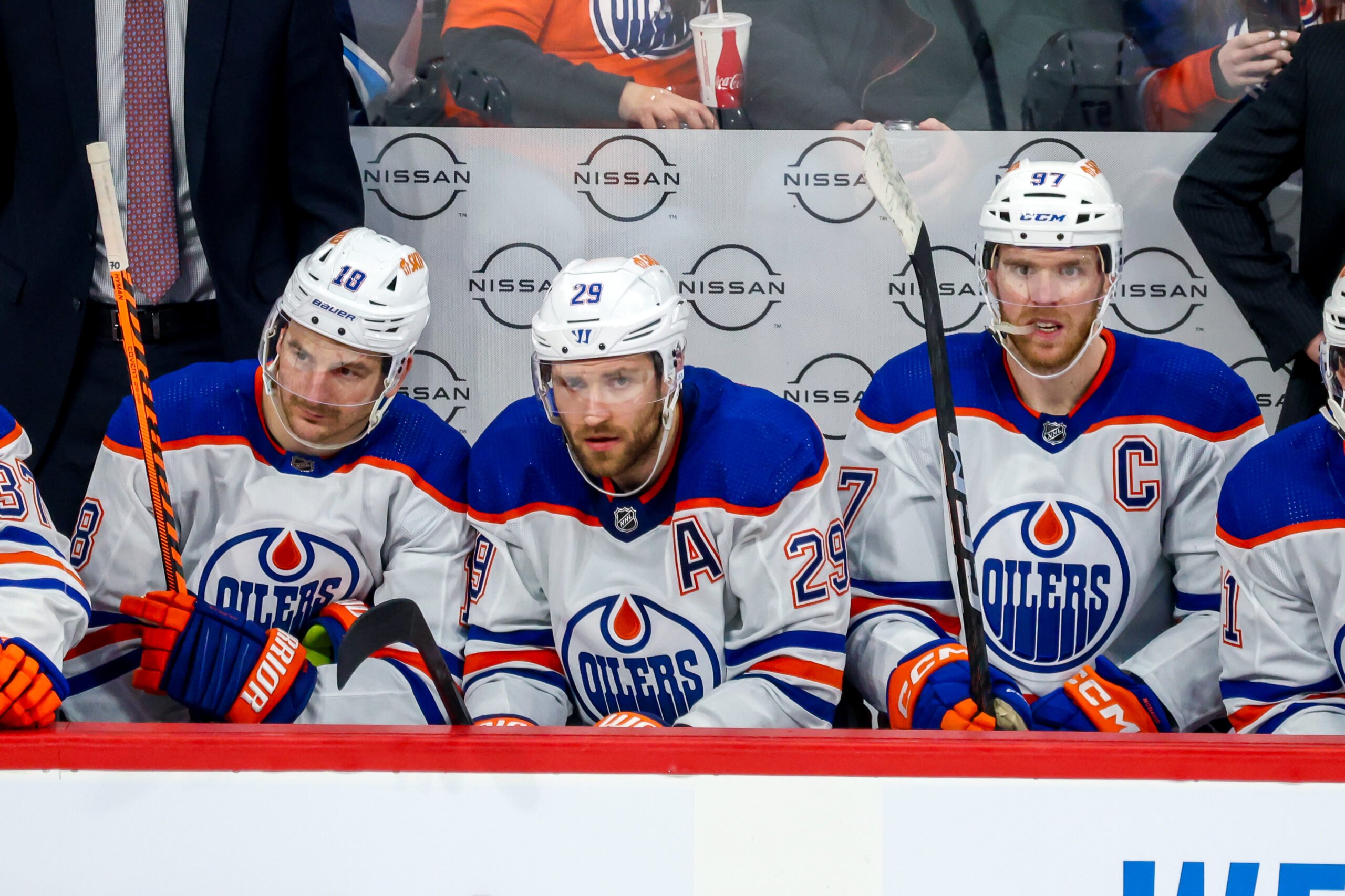
There’s a final irony in all of this. In sports, leadership models are often judged backward. If a team wins, collaboration gets praised as empowerment. If a team loses, the same structure gets reframed as “loss of control.” That’s not analysis — that’s outcome bias. It’s a lazy take that ignores context. This kind of outcome bias also shows up elsewhere in the league — including in how coaching changes are often framed with other teams, like the Edmonton Oilers.
The truth is more complicated. The Maple Leafs may not have suffered because players had too much influence. They may have suffered because the organization — like many modern teams — was trying to balance structure with collaboration in an environment where only results are remembered.
In that sense, the real debate isn’t whether players ran the Maple Leafs. It’s whether we still rely on an outdated idea of leadership to explain modern team performance.
Free Newsletter
Get Toronto Maple Leafs coverage delivered to your inbox
In-depth analysis, breaking news, and insider takes - free.
Subscribe Free →