- Canadian Teams Keep Undermining Themselves
- What Winning Actually Looks Like
- Successful Teams Keep Building Forward
- Different Models, Same Organizational Discipline
- Montreal: The Blueprint Nobody Else Will Follow
- Toronto: The Organization That Doesn’t Know What It Doesn’t Know
- Edmonton: Wasting the Greatest Player of His Generation
- Vancouver: When Everything Goes Wrong at Once
- Calgary: Three Years of Hesitation, Then a Course Correction
- Winnipeg: From Presidents’ Trophy to Missing the Playoffs in One Year
- Ottawa: The Rebuild That Still Can’t Win a Series
- The Real Pattern: Vision vs. Reaction
For years, the conversation around Canadian hockey followed a familiar and convenient script. The NHL’s seven Canadian franchises operate in high-tax jurisdictions. Players effectively earn less than they would under identical contracts in Florida, Nevada, or Texas. Meanwhile, the Florida Panthers, Tampa Bay Lightning, and Vegas Golden Knights have combined to win five of the last seven Stanley Cups. The conclusion seemed obvious: the no-tax advantage was real, it was decisive, and Canadian teams were fighting a battle they simply could not win. I used to believe that argument, at least partially. I don’t anymore.
Canadian Teams Keep Undermining Themselves
What is happening across Canada’s hockey markets right now, simultaneously and in plain sight, is not a story about tax rates. It is a story about ownership dysfunction, management malpractice, and organizations that have squandered elite talent, alienated elite coaches, and made decisions that would get a front office fired in any American market long before now. The no-tax states did not steal the Stanley Cup from Canada. Canadian franchises have handed it away, market by market, decision by decision.
Then there is the Montreal Canadiens. After beating the Lightning in a seven-game first-round series, they now face the Buffalo Sabres in the Eastern Conference Semifinals. Through four games, the series is locked at two apiece, with Game 5 in Buffalo on Thursday. They are doing it in Canada, in the country’s highest-tax province, with a young team built almost entirely through the draft, and one that looks very much like a program still on the rise. The contrast with the rest of the country could not be more stark.
Before examining what Canada is getting wrong, it is worth understanding what right actually looks like, because the American franchises winning Stanley Cups are not succeeding simply because of lower taxes. They are succeeding because they established clear organizational visions, empowered hockey people to execute them, held management accountable for results, built continuity instead of chaos, and embraced a more modern, analytically grounded approach to team-building and player development.
What Winning Actually Looks Like
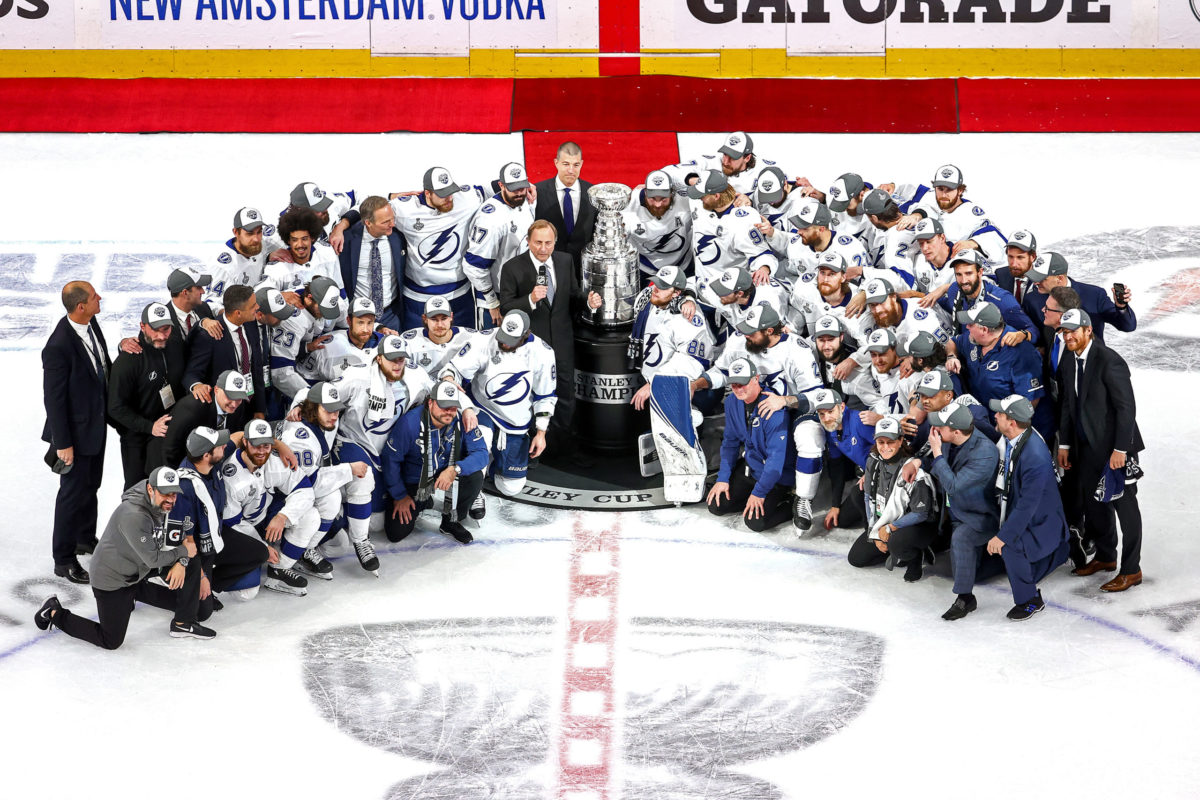
Tampa Bay’s dynasty was built in two distinct phases, both of which expressed the same organizational principle. Steve Yzerman drafted the foundation, Nikita Kucherov, Ondrej Palat, Andrei Vasilevskiy, Brayden Point, Anthony Cirelli, with Victor Hedman and Steven Stamkos already in place. When Yzerman stepped down in 2018, he handed the operation to Julien BriseBois, his assistant general manager (GM) from the start, a man who had absorbed the organization’s culture completely.
BriseBois made the moves that actually won the Cups, acquiring the grit the roster needed, navigating the salary cap with extraordinary creativity, and sustaining a championship window through back-to-back titles in 2020 and 2021. The reason it worked is that two different executives were building the same thing, in the same direction, without interruption. That is the model. That institutional continuity is exactly what winning organizations sustain and failing ones constantly disrupt.
The Carolina Hurricanes tell a similar story through different means. When Don Waddell became GM in 2018, he inherited a young core assembled through the draft: Sebastian Aho, Jaccob Slavin, Brett Pesce, and immediately added Andrei Svechnikov with his first lottery pick.
Over six seasons, the Hurricanes made the playoffs every year and reached the Eastern Conference Final twice, becoming one of the most consistently successful organizations in the league. They haven’t won a Cup yet, or at least since 2006, but this year they have already qualified for the Eastern Conference Final by sweeping both the Ottawa Senators and Philadelphia Flyers. Nothing to sneeze at.
Successful Teams Keep Building Forward
The deeper story is what happened when Waddell left. Rather than hiring externally, the organization promoted Eric Tulsky, an analyst who joined the Hurricanes in 2014, to director of analytics, then assistant GM, and finally GM, to run the team. His first significant front-office hire was an assistant GM, specifically sought for his encyclopedic knowledge of hockey data.
Carolina’s success was not built exclusively through high-lottery talent. Seth Jarvis arrived 13th overall. Jalen Chatfield went undrafted before eventually becoming a valuable part of Carolina’s blue line. Jordan Martinook evolved from a depth acquisition into a core identity player and playoff leader. Sean Walker became another example of Carolina targeting mobile defenders who fit a very specific system profile. The pattern repeats throughout the roster. Carolina rarely chases celebrity. It identifies specific player traits, finds players who fit, and places them into clearly defined roles that remain stable year after year.
Different Models, Same Organizational Discipline
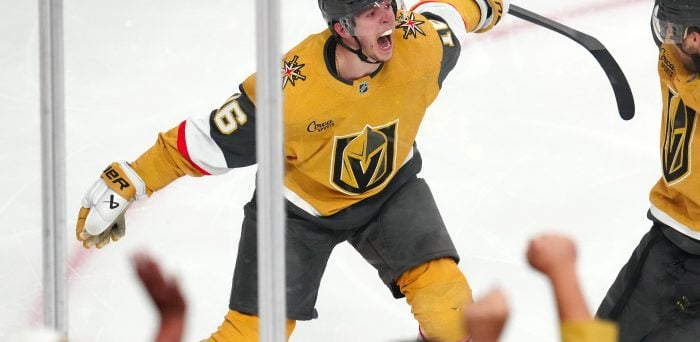
Vegas was built differently through the expansion draft and aggressive pro scouting rather than patient development, but the organizational principle is identical. Owner Bill Foley gave George McPhee and, later, Kelly McCrimmon real authority and genuine resources.
McCrimmon has described the approach plainly: remove every excuse from players, give them every resource to perform, and make calculated, even cold-hearted, hockey decisions focused solely on success. Since their inaugural season, the Golden Knights have qualified for the playoffs eight times in nine years, reached the Stanley Cup Final twice, and won the Cup in 2023, all in a desert city with no hockey tradition whatsoever.

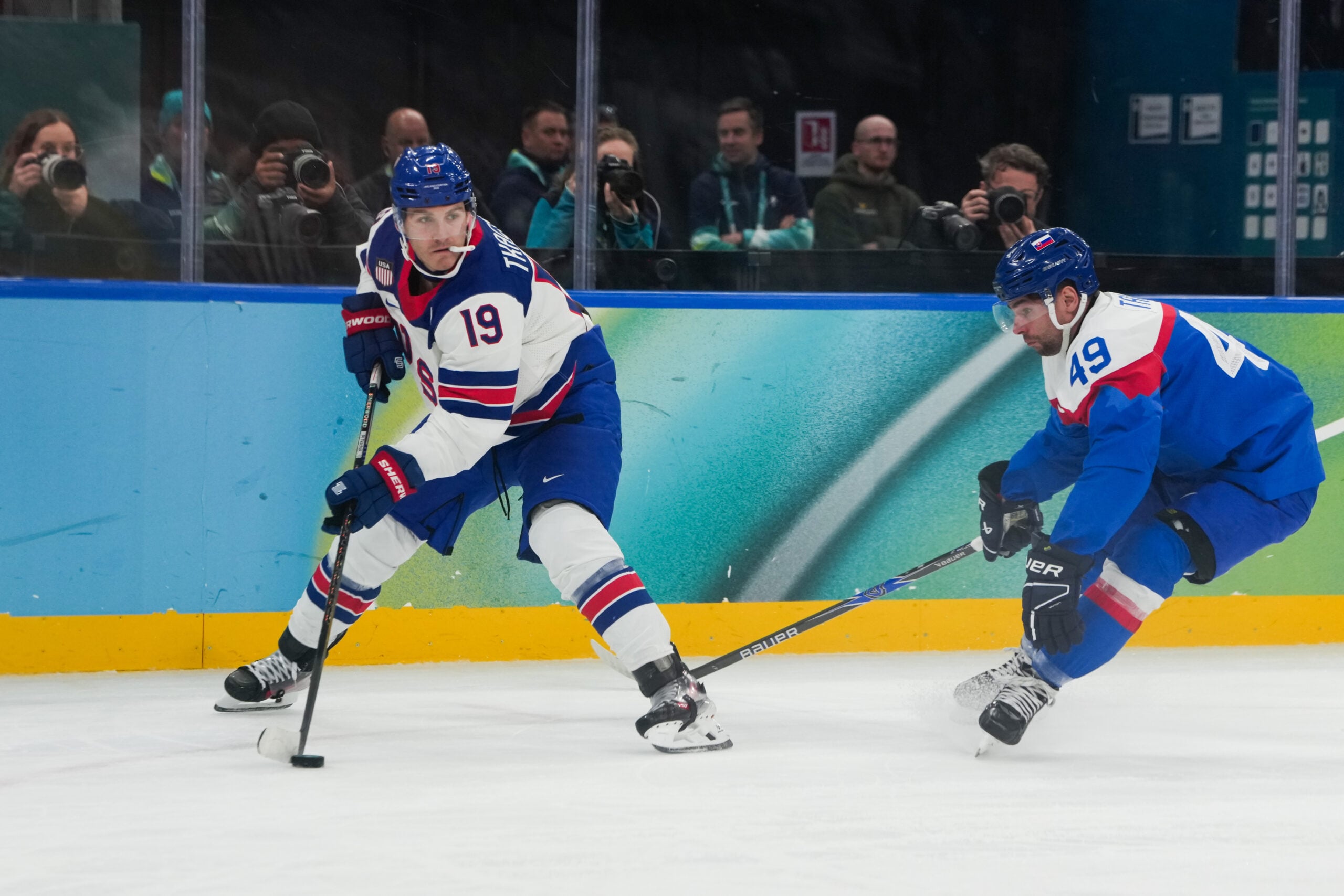
Florida’s Bill Zito completed this picture. Inheriting a talented roster in 2020, he moved aggressively, trading Jonathan Huberdeau after a 115-point season to acquire Matthew Tkachuk, hiring Paul Maurice to transform the culture after a Presidents’ Trophy team flamed out in the playoffs, and backed every decision with clarity and conviction. His Panthers reached the Stanley Cup Final three consecutive times and won back-to-back championships in 2024 and 2025.
What made Zito effective was not his résumé but his process: two decades immersed in the contractual and strategic machinery of professional hockey, first as an agent, then as a front office apprentice, before receiving genuine authority and using it decisively.
The pattern across all four franchises is not geography, climate, or tax policy. It is this: ownership structures that empower hockey people, front offices that build and sustain institutional knowledge, and decision-making cultures that think in years rather than news cycles. Now look at what Canada keeps doing instead.
Montreal: The Blueprint Nobody Else Will Follow
The Canadiens are the most important story in Canadian hockey right now, and the reason they matter is not simply that they are winning. It is how they decided to win, and how many times along the way the consensus said they were wrong.
When Jeff Gorton arrived as EVP of hockey operations in November 2021, his first public assessment was blunt: the franchise had, in his words, “a little bit of an old-school feel.” That was a diplomatic way of saying that one of the NHL’s most storied franchises had been operating decades behind the analytical curve while pretending otherwise. When Gorton hired Kent Hughes as GM in January 2022, the first substantive thing they did together, before the draft, before free agency, before any roster reconstruction, was create the Canadiens’ first in-house analytics department, appointing Christopher Boucher, a pioneer of hockey data work at Sportlogiq, as its inaugural director.
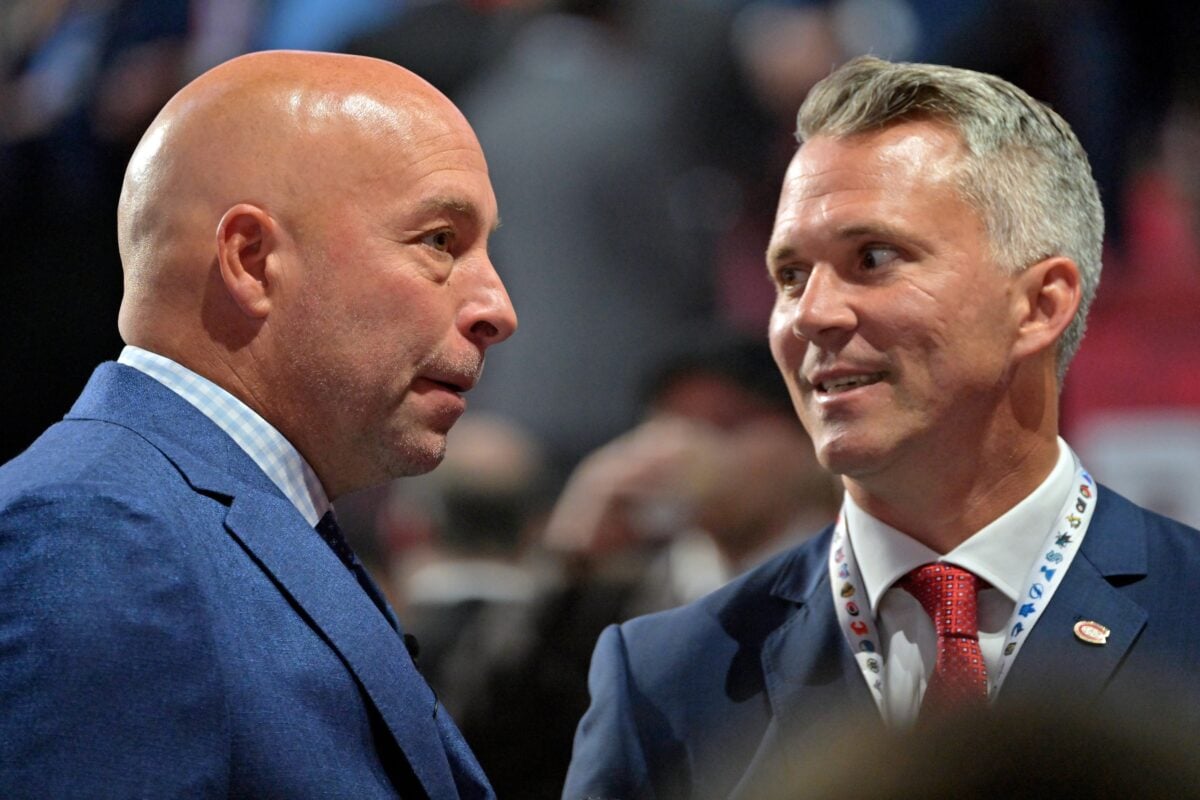
Hughes described exactly how the analytics function integrated into actual hockey decisions: “For example, the other day, I told Marty I thought a player didn’t have a particularly strong game, but Marty told me the information said otherwise. So I returned to the tape and watched it again, to find what I missed and what the information is telling us.” That is not analytics as a public relations exercise. That is a GM adjusting his own evaluation in real time based on data, and being comfortable saying so publicly. It reflects a fundamentally different relationship with information than the gut-feel culture that still dominates most NHL front offices, particularly the failing Canadian ones.
The coaching hire was equally unorthodox and equally questioned. When Hughes fired Dominique Ducharme midseason in February 2022, he replaced him not with an experienced bench boss but with Martin St. Louis, a retired superstar with zero professional coaching experience at any level. The media skepticism was immediate and loud. Hughes and Gorton saw something in St. Louis that his traditional résumé did not capture, and they held that conviction without flinching.
The result is a team in the second round in its fourth year of a rebuild, competing in the most scrutinized hockey market in North America, under daily pressure that would collapse a less disciplined organization. The lesson is not that Montreal is lucky or merely talented. It is that they applied a coherent philosophy, built the infrastructure to support it, made decisions that the consensus questioned, and trusted the work long enough for results to vindicate it.
Toronto: The Organization That Doesn’t Know What It Doesn’t Know
The Toronto Maple Leafs’ hockey operations are nominally led by Keith Pelley, a broadcast executive whose broader corporate ecosystem remains closely tied to Rogers Media, the NHL’s national rights holder and a company with every incentive to keep the Leafs at the centre of the hockey conversation. That is a ratings interest, not a hockey interest, and it colours every decision the organization makes.
Pelley brought in John Chayka as GM and Mats Sundin as senior executive advisor of hockey operations last week, surprising many around the league. Chayka resigned from the Arizona Coyotes in 2020, was suspended for a full calendar year by commissioner Gary Bettman for conduct deemed “detrimental to the league,” and had not worked in the NHL during the six years since. His four seasons in Arizona produced a 131-147-38 record and draft-pick penalties for unauthorized prospect workouts. Sundin is one of the greatest Maple Leafs, a Hockey Hall of Famer, and a man who has never held a management role in professional hockey, not for a single day.
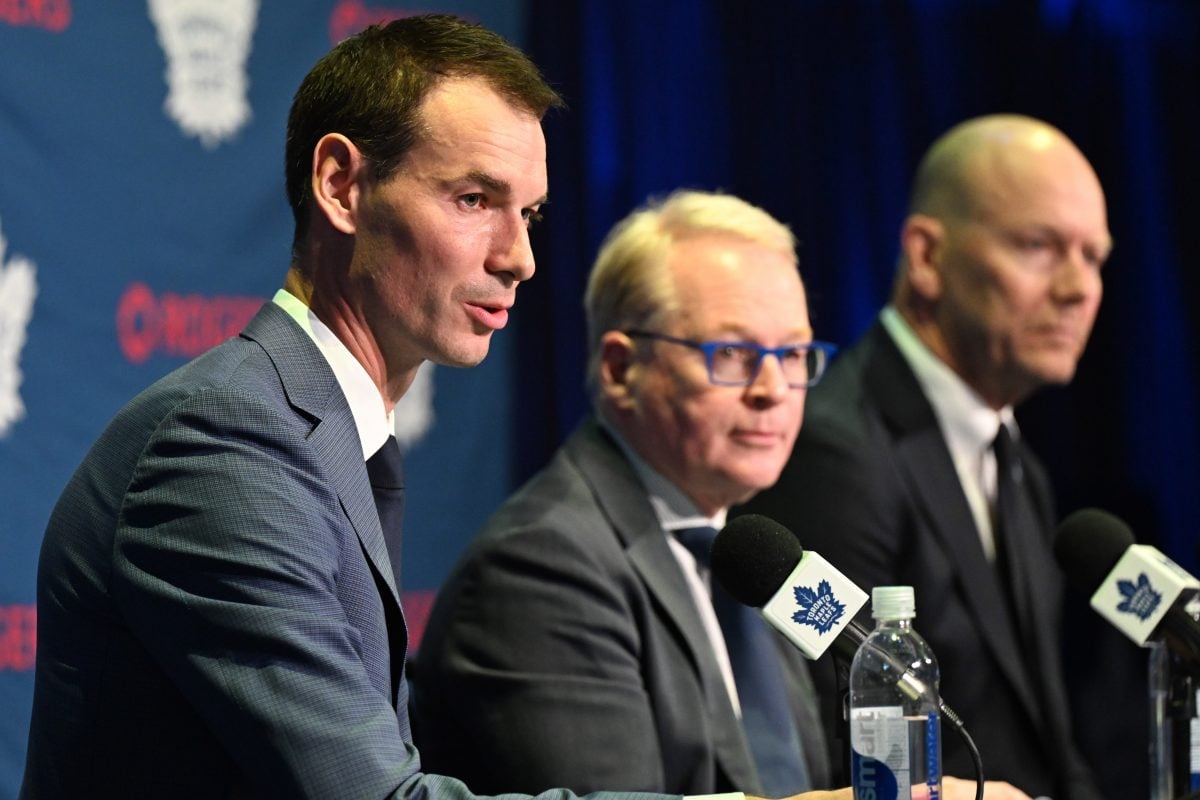
Less than 48 hours after Chayka and Sundin were introduced to an unconvinced fanbase, the Maple Leafs won the first overall pick. Chayka called it “a fortuitous bounce.” Sundin said it was “a great night.” The irony is almost too much to absorb: an organization whose management credentials are actively questioned just landed the most valuable draft asset in the sport.
The lottery does not validate the hires. It does, however, scramble the calculus considerably, because Gavin McKenna, the consensus top prospect, is either a franchise cornerstone or the type of trade asset capable of reshaping Toronto’s roster at a moment when Auston Matthews appears to be closely evaluating the franchise’s direction.
This is the Edmonton situation, replicated in Toronto. A generational talent watches a new management regime make decisions that inspire no confidence, wonders whether his prime years will be wasted in organizational dysfunction, and starts doing the math. Matthews turns 29 in September. His window is not infinite. Chayka and Sundin will be auditioning for his trust through draft week in June and into free agency on July 1. The first overall pick gives them one enormous chip to play. Playing it wrong will render the lottery luck irrelevant.
Edmonton: Wasting the Greatest Player of His Generation
No failure in Canadian hockey is more urgent or more painful to document than what has happened in Edmonton. Ken Holland built the team that reached the Stanley Cup Final in 2024, assembling the strongest supporting cast Connor McDavid had ever played with. The Oilers came within one win of a championship.
Ownership then moved on from Holland after his contract expired and replaced him with Stan Bowman, a GM who had resigned from the Chicago Blackhawks in 2021 after the Blackhawks’ mishandling of sexual assault allegations, had been ineligible to work in the NHL, and was reinstated shortly before Edmonton hired him. Bowman inherited a roster that had just reached Game 7 of the Stanley Cup Final. That roster reached the Final again in 2025, more a reflection of McDavid and Leon Draisaitl than any great managerial reset, before losing in six games to Florida. Then came the collapse that erased any remaining goodwill.
Start with goaltending, the one problem everyone could see. Stuart Skinner was pulled in the second round against the Vancouver Canucks in 2024, and Calvin Pickard started Game 4. Skinner was pulled in the first round against the Los Angeles Kings in 2025. Pickard took over, and then Pickard was injured in the second round. Skinner was pulled twice in the Stanley Cup Final against Florida.
Bowman’s response was to keep Skinner, re-sign Pickard, and change the goaltending coach. When the position cratered again this season, he finally acted, sending Skinner, Brett Kulak, and a 2029 second-round pick to the Pittsburgh Penguins for Tristan Jarry and Samuel Poulin. It was framed as the correction that should have come earlier. Instead, it became one of the worst trades of the season. Jarry posted an .858 save percentage in 19 games with Edmonton, was pushed down the depth chart, appeared in one playoff game, and remains attached to a $5.375 million cap hit through 2027-28.
There were also Philip Broberg and Dylan Holloway, lost to offer sheets; Trent Frederic signed for eight years; Andrew Mangiapane moved with a conditional first-round pick attached before finishing half his contract; and Jake Walman signed through age 36, despite persistent durability concerns.

McDavid’s exit interview said it plainly: “We were an average team all year. An average team with high expectations, you’re going to be disappointed.” Paul Bissonnette was even blunter on national television, saying management had failed them and that he was disgusted by how Edmonton had surrounded McDavid over the last two years. McDavid is 29. Draisaitl is in his prime. The Oilers had consecutive chances at the Stanley Cup and chose to run back the most obvious weakness until it forced a desperate trade. By the time Bowman tried to fix the crease, he had made it more expensive, less stable, and harder to escape.
Vancouver: When Everything Goes Wrong at Once
The Canucks’ collapse over the last two seasons is one of the most dramatic in recent memory, implicating ownership, management, coaching, and the franchise player simultaneously. The Quinn Hughes departure is the defining chapter. Hughes, a Norris Trophy winner and the franchise’s all-time leading scorer among defencemen, chose not to re-sign. Rutherford admitted at season’s end that he had known before the season began that Hughes was not staying.
He proceeded anyway, re-signing the goalie, promoting a first-year head coach, never publicly acknowledging the rebuild ahead, before trading Hughes midseason to the Minnesota Wild for three young players and a first-round pick. The Hughes departure, like Matthew Tkachuk’s exit from Calgary before it, demands honest framing: Hughes left a team that had won the Pacific Division the prior season. This was not about taxes. It was about organizational stability and trust.
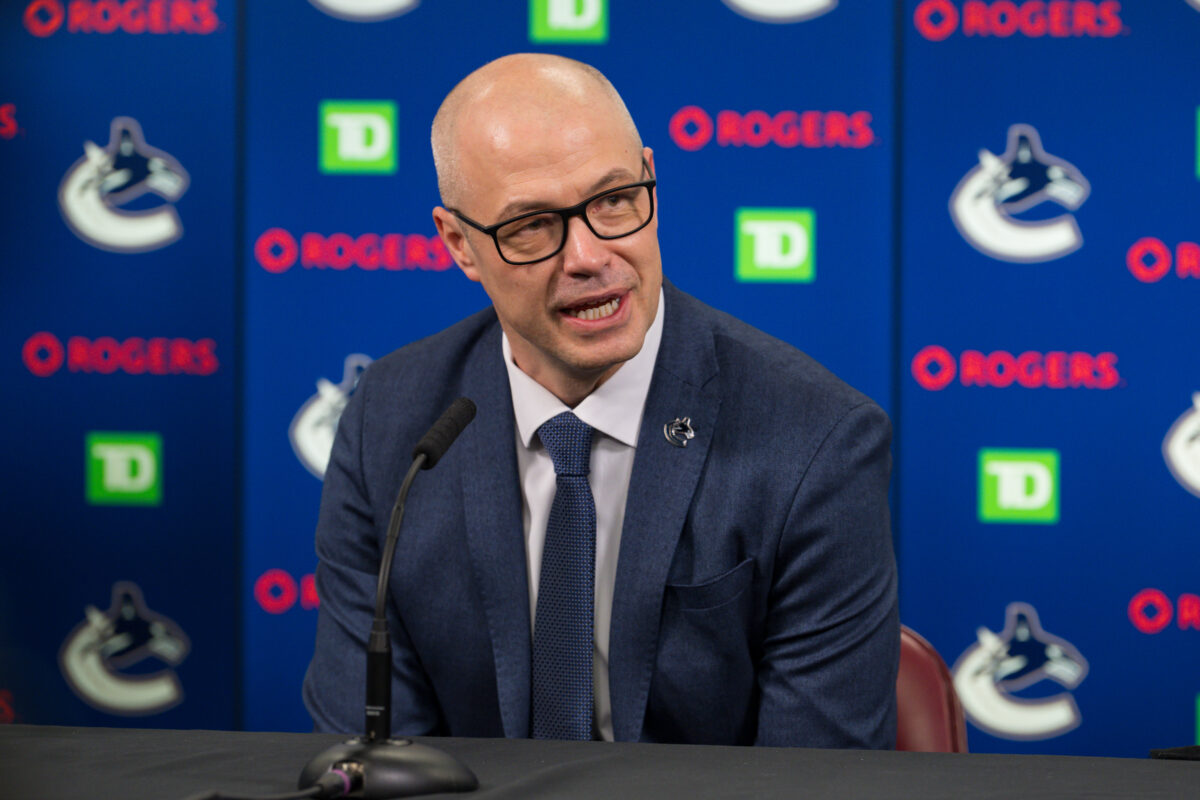
That trust had been eroding for years. Five consecutive drafts following the loss of their amateur scouting director in 2020 produced just one player who appeared in more than 50 NHL games. The personal friction between Elias Pettersson and JT Miller, allowed to fester rather than be resolved, eventually went public and forced Miller out midseason.
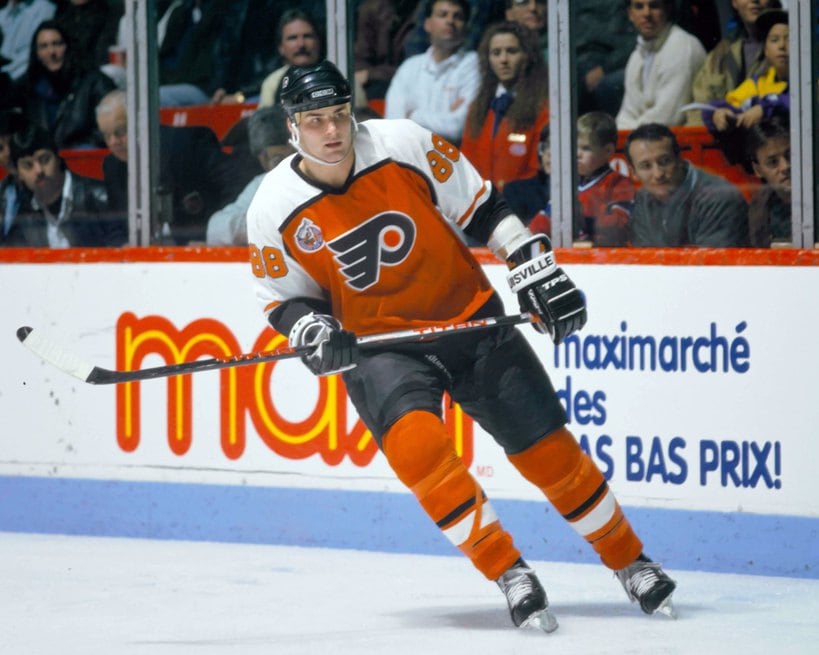
Then Rick Tocchet, who won the Jack Adams Award as the NHL’s best coach in 2024, walked away from a team option on his contract to coach the Flyers. His reasoning at the introductory press conference was unambiguous: he cited ownership stability in Philadelphia, walked through their practice facility with three sheets of dedicated ice, and confirmed the lack of a proper rink influenced his decision. The Canucks, a franchise owned by billionaires in one of Canada’s largest cities, borrow practice ice from UBC. When the Flames complete their new facility, Vancouver will be the only NHL team in its own city without a dedicated practice rink. A Jack Adams Award-winning coach assessed that situation and chose Philadelphia.
Organizational uncertainty has since deepened. Patrik Allvin was fired in April after a 25-49-8 season, the worst in the NHL. Days later, Jim Rutherford, president of hockey operations since December 2021, announced he will step back from day-to-day responsibilities following the June draft, moving into an advisory and alternate governor role at 77. He has told the media that the GM candidate list has been narrowed from 17-plus names to five, with a decision expected imminently. What the front office structure looks like after that hire remains, in Rutherford’s own words, unresolved.
Vancouver, therefore, enters the most consequential offseason in recent franchise history without a GM, without a permanent hockey operations president, with ownership dysfunction that no single departure resolves, and with the third overall pick arriving at the June draft. Rutherford is a three-time Stanley Cup winner and a Hockey Hall of Famer. His tenure in Vancouver was not a success. The question the organization has never been able to answer, who actually runs this team, and to whom do they answer, remains entirely open.
Calgary: Three Years of Hesitation, Then a Course Correction
Calgary’s story is perhaps the most nuanced of the group, and the verdict on Craig Conroy remains genuinely unwritten. He has made several necessary moves. Whether he made them quickly enough and whether this organization can finally convert draft capital into a genuine contender remains to be seen.
When Conroy took over from Brad Treliving ahead of the 2023-24 season, he inherited a veteran-laden roster with most core players one year from unrestricted free agency. He moved quickly on the obvious cases, trading Tyler Toffoli, Nikita Zadorov, Elias Lindholm, Chris Tanev, Noah Hanifin, Andrew Mangiapane, and Jacob Markstrom, seven significant pieces within his first 14 months. But rather than committing fully to the rebuild immediately, Calgary spent the next two seasons competing and retooling at the same time. The result was a team that fell just short of the playoffs in 2025, then struggled badly at the start of this season before Conroy finally traded Rasmus Andersson, MacKenzie Weegar, and Nazem Kadri and formally committed to a rebuild.

The accumulated draft capital is significant. Calgary projects to hold eight picks in the first three rounds of the 2026 Draft alone, including two first-round selections, the 6th and 28th overall. Multiple first-round picks in 2027 and 2028 follow.
Three years of half-measures cost the franchise meaningful development time, and the rebuild that should have begun immediately is only now truly underway. Consider how long Calgary fans have been waiting: the last Stanley Cup came in 1989. The last Final appearance was in 2004. Conroy has accumulated the assets to potentially change that. But Calgary has been here before, promising a rebuild, exciting prospects, and reasons for optimism, and the franchise’s history demands skepticism until results say otherwise.
Winnipeg: From Presidents’ Trophy to Missing the Playoffs in One Year
The Winnipeg Jets became one of just five teams in NHL history to miss the playoffs the season after winning the Presidents’ Trophy. They went from 116 points to 82, losing 21 wins and 34 points in a single year. The uncomfortable truth, and the one most hockey coverage tiptoes around, is that Winnipeg operates with less margin than almost any other NHL market. It is cold, remote, and not exactly the first choice for wealthy professional athletes with options. That is not a knock on the city. It is the practical reality of doing business there. When you cannot easily lure players, and when overpaying still may not be enough, the draft becomes more than important. It becomes the whole engine.
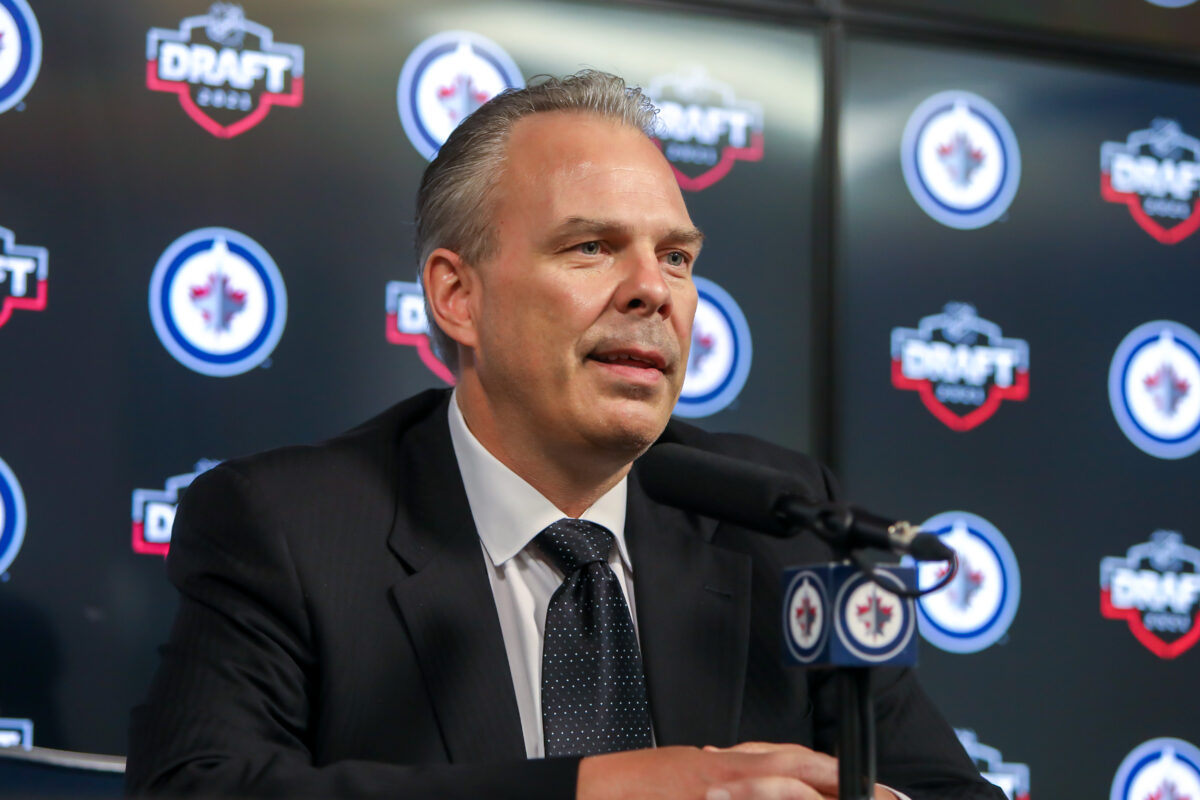
That is why Kevin Cheveldayoff deserves credit for the first half of his tenure. He built a real contender through the draft. Mark Scheifele, Connor Hellebuyck, Nikolaj Ehlers, Josh Morrissey, and Kyle Connor gave Winnipeg a legitimate core, one strong enough to win the Presidents’ Trophy and spend years as a serious Western Conference threat.
The Jacob Trouba trade in 2019 was one of the first signs of how thin the margin really was. Trouba was a pending restricted free agent, his long-term future in Winnipeg appeared uncertain, and the Jets were not negotiating from a position of strength. Still, the return mattered. Winnipeg moved a top-pairing defenceman to the New York Rangers for Neal Pionk and the 20th overall pick. Pionk became a useful NHL defenceman, but the pick became Ville Heinola, who never developed into the impact player the organization needed from that type of trade.
The draft thinned out badly once the first wave was established. Kristian Vesalainen, a first-round pick in 2017, never stuck. Heinola never became a fixture. Cole Perfetti, taken 10th overall in 2020, has flashed offensively but still has not delivered the level of impact expected from that draft position. The pipeline that produced Scheifele, Hellebuyck, Ehlers, Morrissey, and Connor did not produce anything comparable behind them. When the core began to age, there was no second wave ready to take over, push veterans, or provide cheaper internal solutions.
The Ehlers situation became another version of the same problem. Cheveldayoff had a choice with him: trade him at the 2024 Draft when his value was still strong, or re-sign him and keep him as part of the long-term core. He did neither. The Jets reportedly shopped him at the draft and could not find a return they liked, so they ran it back with him on an expiring contract. They won the Presidents’ Trophy, lost in the second round, and then watched him sign a six-year, $51 million contract with Carolina in free agency.
His public reasoning was that he wanted a fresh challenge and new scenery. Maybe that is all it was. But in a market where you cannot simply replace core players through free agency, letting Ehlers reach unrestricted free agency without either signing him early or extracting a major asset was not a minor mistake. It was exactly the kind of asset management failure a small-market team cannot afford.
Cheveldayoff built one genuine contender through the draft, and that part of the record deserves real credit. But when that core aged and the pipeline ran dry, the organization kept leaning on modest free-agent additions, deadline rentals, and internal belief instead of producing the next wave. In Winnipeg, that is not a secondary issue. It is the central one. Fifteen years into Cheveldayoff’s tenure, with one Conference Final appearance and four playoff series wins, legitimate questions remain about whether this approach can still move the franchise forward.
Ottawa: The Rebuild That Still Can’t Win a Series
The Ottawa Senators were swept by the Hurricanes in the first round, never leading for a single second, their power play collapsing to 1-for-21 despite four separate 5-on-3 opportunities. It was the second consecutive year Ottawa failed to advance past the first round and another reminder that making the playoffs is not the same thing as becoming a contender.
That distinction matters because, on paper, Ottawa looked much stronger than a team fighting desperately for the second wild-card spot before immediately getting swept. Only Colorado, Tampa Bay, and Carolina finished the regular season with a better five-on-five expected goals percentage. Travis Green imposed a better structure. The roster is talented, yet the Senators still spent most of the season trying to recover from problems of their own creation.
The clearest example was the goaltending plan. With Linus Ullmark signed to a four-year, $33 million extension back in 2024, Ottawa entered the season expecting 23-year-old Leevi Merilainen to handle the backup role behind him. The idea collapsed almost immediately. Ullmark struggled badly early, Ottawa’s team save percentage fell to last in the NHL, and the organization eventually had to sign 37-year-old James Reimer just to stabilize the position after Ullmark stepped away on personal leave. By January, the Senators were on the edge of losing the season entirely.
Ottawa surged back with a 21-6-3 run to claim the second wild-card spot. Ullmark recovered and was arguably Ottawa’s best player against Carolina, posting a .932 save percentage in the series. The goaltending problem was eventually solved. The Senators still got swept.
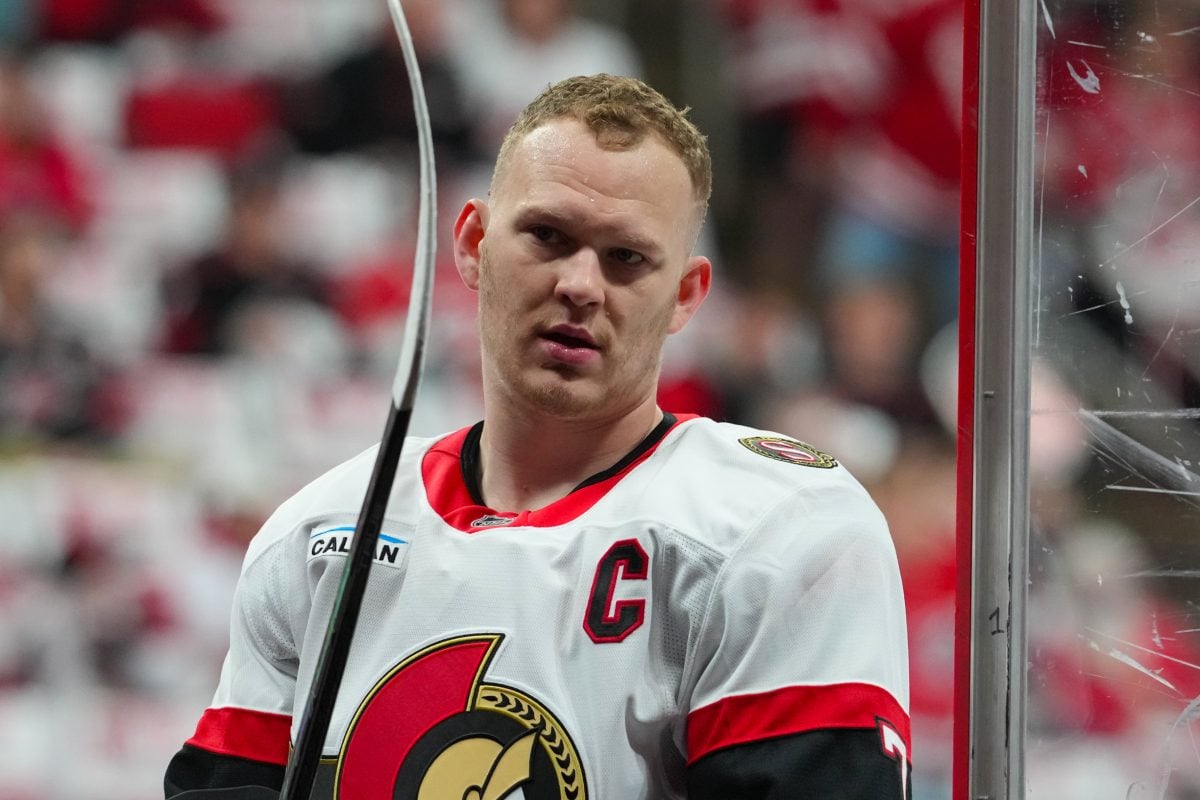
That is where Ottawa becomes difficult to evaluate and where the organizational questions begin. The Senators increasingly resemble a franchise that understands how to accumulate talent and improve its underlying numbers, but still is not entirely sure how to construct a mature contender psychologically. Modern NHL organizations are no longer simply identifying skill. They are identifying leadership profiles, emotional stability, accountability structures, and personalities capable of surviving playoff pressures.
Carolina looked completely certain of its identity throughout the series. Ottawa did not. The Hurricanes remained composed and emotionally controlled while the Senators became increasingly reactive and overwhelmed as the series slipped away. Brady Tkachuk went pointless and finished minus-4. Tim Stützle managed one goal and one assist. Ottawa never looked like the calmer or more certain team at any point in the series.
Two consecutive first-round exits, including a sweep in which Ottawa never led, inevitably raise harder questions about whether the organization has correctly identified not just its core talent but also the emotional and psychological identity capable of carrying a franchise through meaningful playoff expectations.
GM Steve Staios deserves credit for acknowledging that the backup goaltending plan was mishandled, but the broader concern remains unresolved. Ottawa is no longer rebuilding in the traditional sense, yet it still does not resemble a finished contender with a settled identity or established leadership hierarchy. The Senators have accumulated talent. What remains unclear is whether they have built the organizational culture and psychological structure necessary to turn that talent into something sustainable when the games matter most.
The Real Pattern: Vision vs. Reaction
Look across every one of these markets, and across the American franchises succeeding, and a single thread emerges. Not taxes, not geography, not market size. What separates winning franchises from spinning ones is organizational sophistication: long-term vision executed with discipline, hockey decisions made by hockey people, and ownership structures that empower rather than undermine.
These are not tax problems. They are organizational problems. The Canadiens are proving, right now, in the most scrutinized hockey market in the world, that a Canadian team can draft intelligently, develop patiently, build institutional knowledge, and compete for a championship. The blueprint is available to anyone willing to follow it. The mystery is why so few of them are.
Free Newsletter
Get Commentary coverage delivered to your inbox
In-depth analysis, breaking news, and insider takes - free.
Subscribe Free →