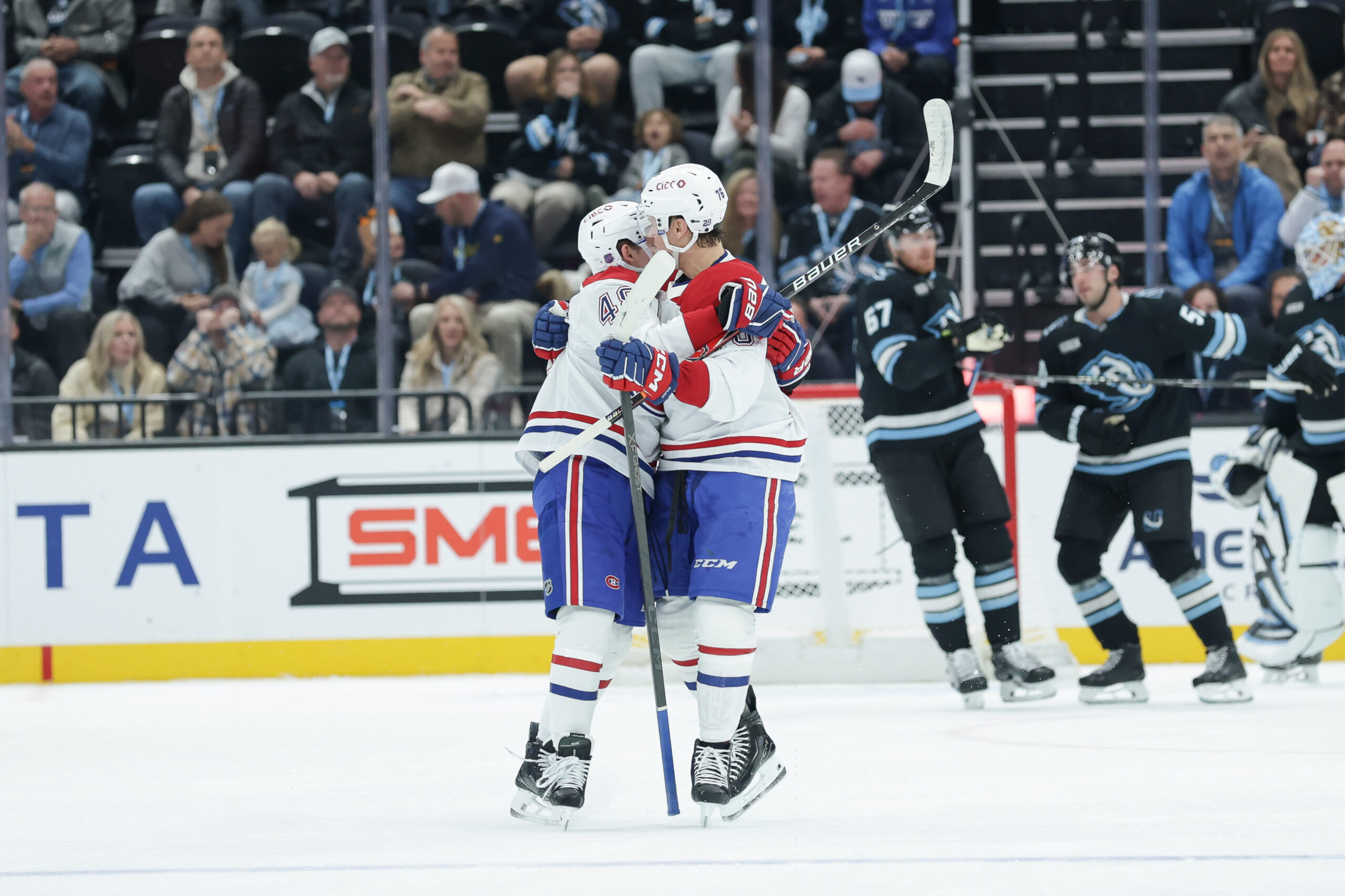
There is a distinct, suffocating panic that usually grips an NHL bench when a season hangs in the balance and everything goes wrong in the opening ten minutes. On Thursday night at the KeyBank Arena, during Game 5 of the Eastern Conference Semifinals, that panic belonged to anyone wearing red, white, and blue except the 20 men on the ice. Three goals allowed on the first four shots. A shell-shocked rookie goaltender. A raucous home crowd suddenly reduced to an anxious, murmurous hum. The Buffalo Sabres looked poised to hijack the series momentum. Yet, what followed was not a collapse, but a clinic.

By the time the final horn sounded on a 6-3 Montreal Canadiens victory, the Canadiens had secured a 3-2 series lead and recorded their 30th comeback victory of the 2025-26 campaign. It was an exhibition of psychological warfare disguised as hockey. Under head coach Martin St. Louis, the Canadiens have transformed the deficit from a position of weakness into an absolute weapon. To understand how this young roster stands one win away from the Eastern Conference Final, one must dissect the structural, psychological, and historical anatomy of Montreal’s relentless resilience.
Anatomy of a Turnaround
When Buffalo’s third goal crossed the line early in the first period, St. Louis did not burn his timeout. He did not skate to the bench to scream, nor did he immediately pull goaltender Jakub Dobes. Instead, he stood on the bench, chewed his gum, and caught the eyes of his leadership group.
This systematic response is driven by small changes in their tactical plans. The moment a deficit is faced, the bench rejects emotional panic in favour of an immediate tactical restructure, adjusting defensive gap control and shortening breakout passes to stabilize the game. This structural adjustment triggers a collective emotional reset on the ice, lowering the players’ heart rates and allowing the young roster to play with cognitive safety rather than desperation. This is done emotionally as well, as St. Louis provides his players with a steadying emotional anchor by maintaining an ice-cold, calm demeanour on the bench that shields his young roster from panic during high-stakes deficits.
This modern approach fosters an environment of safety, giving his players the psychological freedom to view early mistakes as mere data points rather than season-ending disasters. So, once poise is restored, the Canadiens launch a relentless counter-attack, using aggressive five-man rotations and heavy forechecking to overwhelm opponents who have been lulled into a false sense of security by an early lead.
The turnaround in Game 5 began with these very same adjustments. Montreal stopped stretching the ice with risky vertical passes that played into Buffalo’s neutral-zone trap and allowed them to deploy their mobile and offensively gifted defence pairings. St. Louis ordered his defencemen to use short, horizontal D-to-D passes to exploit the aggressive nature of the Sabres’ forecheck, creating gaps in coverage and allowing Montreal’s forwards to clear the zone, begin an odd-man rush while they gain speed through the neutral zone.
The second adjustment was behavioural. The Canadiens stopped chasing hits and started hunting pucks. Nick Suzuki’s line took control of the game’s rhythm. By establishing a heavy, below-the-hashmarks cycle, they forced Buffalo’s defence to defend for long periods, wearing them down physically, making mental errors more likely as they fatigued. This structural shift allowed Dobes to settle down, eventually stopping 32 consecutive shots to shut the door after allowing three goals on the first four shots he faced. Montreal did not score five unanswered goals by gambling; they did it by choking out Buffalo’s transition game and executing under immense pressure.
Weaponizing the Deficit
For most teams, trailing by multiple goals creates desperation; that desperation leads to structural breakdowns, long shifts, and individual puck-hogging as players try to do more in the hopes of getting their team back into the game. For the 2025-26 Canadiens, a deficit acts as a tactical trigger. Montreal’s head coach has engineered a system rooted in an error-tolerant system. Players are taught that a mistake is merely data, not a disaster. This psychological freedom allows the NHL’s youngest roster in these playoffs to make adjustments and to play without fear when trailing.
The Canadiens have amassed 52 total victories across the regular season and playoffs, driven largely by 30 comeback wins that account for 54.5% of their win total this season. This relentless resilience is further highlighted by three distinct multi-goal comebacks executed under the high-pressure lights of the postseason. When trailing, Montreal activates its defencemen into the play with aggressive counter-rotations. Lane Hutson’s incredible playoff performance is a prime example. Instead of retreating into a conservative shell when down, Hutson was given a green light to drive deep into the offensive zone. This calculated aggression creates numerical advantages that opponents, lulled into a false sense of security by a lead, fail to track.
They do not change their identity to chase a game; they tighten their execution until the game comes back to them.
Ghosts of the Forum
The ghosts of the Montreal Forum seem to have spent the spring of 2026 waking up. It is impossible to watch this iteration of the Canadiens navigate the postseason without drawing comparisons to previous deep runs. For instance, the 1993 championship team (the last Canadian team to win the Cup) cemented their legacy through ice-cold veteran composure and an NHL-record 10 consecutive overtime wins. In parallel, the 2026 squad channels a similar resilience through an absolutely fearless young core, weaponizing a remarkable 30 total comeback wins and defensive lockdowns like Dobes’ 32-save performance in Game 5.
In 1993, Jacques Demers’ squad set an NHL record by winning 10 consecutive games in overtime. They were not dominant wire-to-wire, but they were unbreakable when the margins shrank, displaying a confidence that seems to permeate the current roster in Montreal. When Patrick Roy gave his famous wink after stopping Tomas Sandstrom in the Final, it symbolized an entire locker room that knew it could not be broken.
The 2026 team shares similar psychological DNA. Where the 1993 team relied on veteran savvy and Roy’s brilliance, the 2026 team relies on St. Louis’ calm and collected demeanour and an explosive, interconnected young core. When Suzuki, Cole Caufield, and Ivan Demidov share the ice during a power play, comeback push, they display the same eerie, smiling composure that was exhibited over three decades ago. They didn’t look like a group fighting for their lives; they looked like a group executing an inevitability.
A team does not achieve 30 comeback wins without flawless execution from its core pillars. The Canadiens opened Game 5 in a deep defensive emergency, surrendering three goals on four shots in the first nine minutes. St. Louis could have pulled Dobes in the hopes of shaking up the bench, but instead, he decided to let him stay in. During the next commercial break following Buffalo’s third goal, he settled his roster. Montreal then shifted the momentum by executing a focused forecheck pressure to help tilt the ice in their favour.
This emotional reset led to a critical second-period structural overhaul, where the coaching staff initiated a strict D-to-D neutral-zone transition to bypass Buffalo’s aggressive trap and preserve zone entry cleanliness. After this adjustment, the Canadiens erupted for four unanswered goals, entirely fueled by three key pillars: Suzuki’s elite two-way play, which saw him neutralize Tage Thompson’s line while also registering three crucial points, Hutson’s poise to walk the blue line to escape high-stakes pressure, and Ivan Demidov’s masterful puck control.
Saturday Night Blueprint
Game 5 proved that the Canadiens possess a playoff gear that Buffalo simply cannot match when the emotional stakes rise. But a 3-2 series lead is a dangerous place to rest. Close-out games are notoriously the hardest to win; just look back to Game 6 against the Tampa Bay Lightning in Round 1. They are especially for a roster with minimal collective deep postseason experience as the Canadiens have.
To secure the series in Game 6 on Saturday night at the Bell Centre, Montreal will need their top line to continue to produce at even strength as it began to do in Game 5. Also, Montreal must stop treating the first period as an information-gathering phase. Weaponizing comebacks is an elite trait, but relying on them against an elimination-facing opponent is playing with fire.
To eliminate the Sabres in Game 6 on Saturday night and avoid a winner-take-all Game 7 on the road, Montreal must transition from a team that survives multiple deficits to one that dictates the game from the opening puck drop. Under St. Louis, the NHL’s youngest playoff roster has weaponized an elite psychology to secure 30 comeback wins this season, drawing parallels, as stretched as they can be, to the 1976 and 1993 championship teams that each had a franchise record of 31 comeback victories.
But closing out this Eastern Conference Semifinal requires near immaculate tactical execution. Montreal must deploy their third attacking forward to neutralize Buffalo’s transition game that relies on speed up the middle, implement clean horizontal defence-to-defence passes to bypass Buffalo’s neutral-zone trap, and lean on the top line, and the return of Mr. Saturday Night, Caufield’s scoring touch to withstand the initial emotional surge of the Sabres but also that of the Bell Centre crowd, turning structural discipline into a ticket to the Eastern Conference Final.
St. Louis must ensure his squad matches Buffalo’s desperate physical push right from the opening drop of the puck. Dobes must establish his rhythm early, and the defence must protect the house to prevent another early deficit. If the Canadiens can pair their proven resilience with a dominant, front-running start, the Bell Centre will not just celebrate a Game 6 victory; it will welcome back the legitimate aura of a Stanley Cup contender.
Free Newsletter
Get Montreal Canadiens coverage delivered to your inbox
In-depth analysis, breaking news, and insider takes - free.
Subscribe Free →