For the first time in a while, the Philadelphia Flyers are entering the offseason with lots of optimism. They advanced to the second round for the first time since 2020 and did so with fans in the stands for the first time since 2012.
Just because the Flyers won a few playoff games doesn’t mean that they have to win the Stanley Cup next season—the future is still of the utmost importance. For fun, though, what does the team need to reach that next level? What do they already have?
What the Flyers Have Covered
You don’t reach the second round by accident, even if the Flyers’ first-round matchup wasn’t particularly difficult on paper. Below is what they already have covered heading into 2026-27.
Item One: Wingers
The Flyers’ offense—both now and in the long term—is built to win through its wingers. Deployment will be the big question mark heading into 2026-27, but youngsters Porter Martone and Matvei Michkov are more than ready to make an impact. They likely won’t reach their ceilings for another few seasons, but their playmaking and scoring abilities are already high-end.
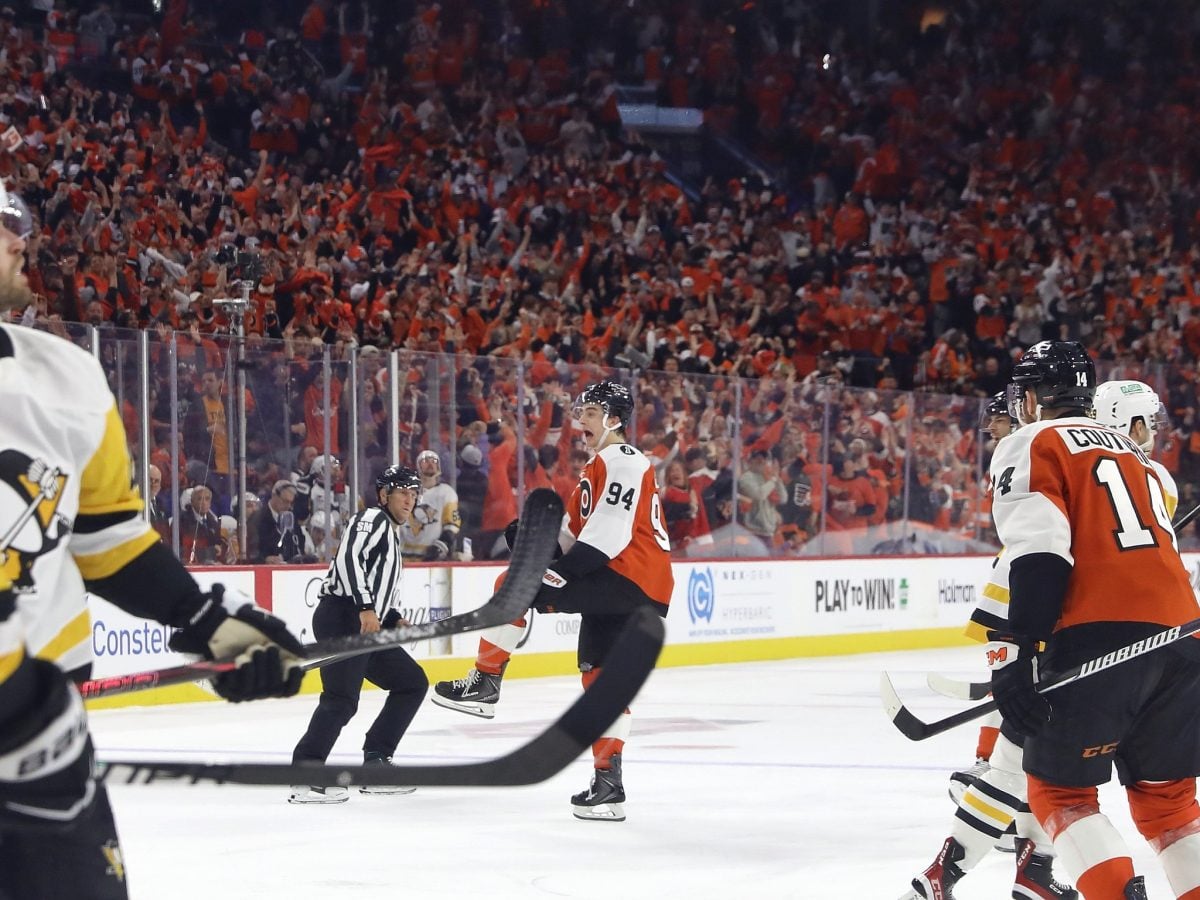
Even with the arrival of Martone and Michkov, the true face of the offense is still Travis Konecny until proven otherwise. He averaged 19:06 of ice time in the regular season and recorded 68 points in 77 games.
Sticking with the veterans, Owen Tippett has game-breaking skill off the rush. He hasn’t reached the 30-goal or 55-point marks in a single season, but he has come awfully close. Tyson Foerster, meanwhile, remains a solid two-way goal-scoring option for the top nine. He can reach the next level by improving his playmaking.
Shifting back to the younger side, rookies Denver Barkey and Alex Bump were quite impressive despite limited usage at times. Across the regular season and the playoffs, Barkey recorded 19 points in 53 games, and Bump had 11 points in 23 games.
At the bottom of the lineup, the Flyers are set with Nikita Grebenkin, Garnet Hathaway, and, if he re-signs this summer, Carl Grundström.
When you break it down, the Flyers are almost a bit too deep on the wing. Barkey can theoretically switch to a center role, something he embraced in Round 2 against the Carolina Hurricanes, but that would create a similar problem down the middle. The wingers could be good trade bait to address some of the team’s needs.
Item Two: No. 2-4 Centers
The Flyers still lack that No. 1 center, which we’ll get into later, but the rest of their center core is covered. Trevor Zegras is a more than capable 2C, putting up 67 points in the regular season and often looking like the team’s most dynamic player in the postseason. He’ll be a restricted free agent this summer, however, so his contract situation still needs to be taken care of.
Christian Dvorak, whose five-year extension kicks in next season, is a solid middle-six center option. That said, he played a top-six center role admirably for the Flyers, leading them to the playoffs with 51 points on 18:28 of average ice time.
Noah Cates is an excellent defensive 3C who had his most productive season to date. He had career highs in goals (18), assists (29), points (47), and plus/minus (plus-26). Voting for the Selke Trophy hasn’t come out yet, but he could finish in the top 10 or even the top five.
After Rodrigo Ābols went down with an injury just before the Olympic break, captain Sean Couturier eventually embraced his fourth-line center role. This brought the best out of the 33-year-old and gave the Flyers a true shutdown line. He may have earned more minutes next season, but he’s kind of the perfect 4C.
Item Three: No. 2-6 Defensemen
The foundation of the Flyers’ defense is in a good spot. Travis Sanheim is a trustworthy top-pairing defender, consistently eating big minutes. His two-way game has evolved a lot over the past few seasons, and he arguably had his best showing to date in 2025-26.
Slowly but surely, Jamie Drysdale has evolved into a true top-four defenseman. He had some of the worst on-ice metrics among regular NHLers when he first arrived in Philadelphia, but has since become one of the team’s best defenders. He’s a solid No. 3.
Rasmus Ristolainen and Cam York are probably best categorized as No. 4 defensemen, but they can play almost anywhere in the lineup. The former may be trade bait, as his five-year contract is set to expire in 2027, but for now, his versatility is valuable.
Finally, Emil Andrae might not always look it on the ice, but he is a great No. 6 defenseman. The 24-year-old doesn’t concede much, and his offense is a lot better than that of the standard bottom-pairing defender.
Item Four: Starting Goaltender
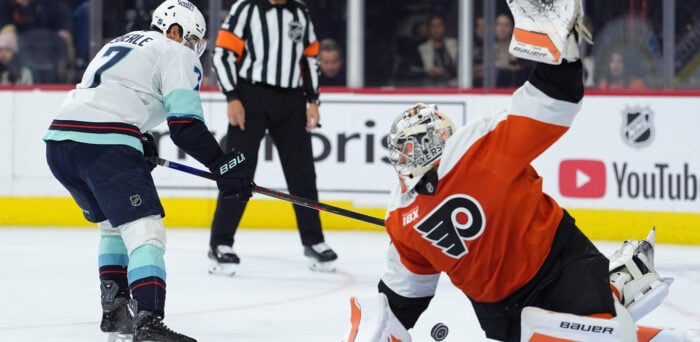
This section is self-explanatory. Despite being a career backup previously, Dan Vladař was one of the league’s best 5-on-5 netminders in a starting role. In the regular season, he had a .926 save percentage and a 1.80 goals-against average at five-a-side hockey, both of which were some of the best marks in the NHL. He improved those numbers in the playoffs and effectively carried the Flyers to a Round 1 win over the Pittsburgh Penguins.
There’s the question of sustainability, as Vladař came out of nowhere to become one of the league’s best. He’s someone to keep an eye on, because if he regresses even slightly, a playoff berth may be out of reach.
What the Flyers Still Need
The Flyers still have some sizable holes in their lineup, both now and long-term. What are they?
Item One: No. 1 Center
This is a talking point that doesn’t really have an end in sight. As good as the wingers are, the Flyers could use a true No. 1 center—someone who is top 10 at the position in the NHL.
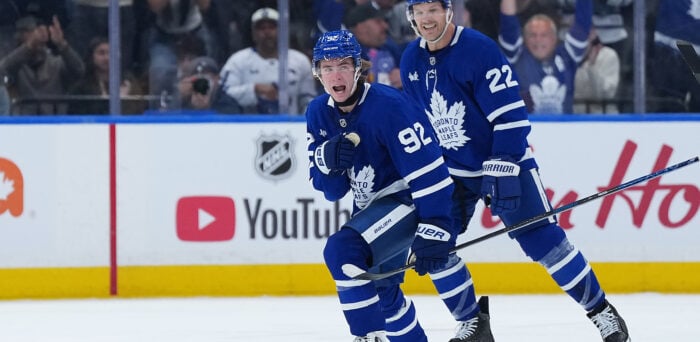
Two names have been floated out there in the rumor mill: Robert Thomas of the St. Louis Blues and Auston Matthews of the Toronto Maple Leafs. They seem like long shots, especially considering each team has a new general manager, but nobody else is really out there. Elias Pettersson would be a fun one, but a reunion with head coach Rick Tocchet seems extremely doubtful.
The Flyers might be able to address the 1C hole with the Maple Leafs’ 2027 first-round pick, which Philadelphia will almost certainly have unprotected ownership of, but that’s a long-term solution. As for a right-now solution, options are scarce.
Item Two: No. 1 Defenseman
To take that next step, the Flyers could also use a No. 1 defenseman. It doesn’t have to be someone as good as Quinn Hughes, but that’s more or less the type of splash you’re looking for.
There’s an argument to be made that Sanheim has taken enough of a leap that this section could simply be a “top-pairing defenseman” instead of a No. 1, but if Hughes’ Minnesota Wild are any indication, winning the Stanley Cup is hard. Ideally, you go for the latter.
Unfortunately, the defenseman market is pretty scarce. Dougie Hamilton of the New Jersey Devils would be a decent buy-low option, but he’s A) 32 years old and B) not a No. 1 defenseman. On the other hand, if the Wild could get Hughes for what was a fairly affordable cost, all things considered, anything is possible for the Orange and Black.
Item Three: Backup Goaltender
Samuel Ersson deserves kudos for bouncing back after the Olympic break, posting a .912 save percentage and a 1.99 goals-against average across nine games, but the Flyers should probably go in a different direction with their backup goalie position.
Philadelphia can’t put an entire season on Vladař’s shoulders again—doing so would give him almost no margin for error. Thus, getting a reliable backup who can comfortably play around 30 games and put up serviceable numbers would go a long way. Having a better backup could’ve added several points to the Flyers’ record in 2025-26. So, they should go out and get one.
Nobody expects the Flyers to win a Stanley Cup in 2026-27 or seriously compete for one. Management’s goal is likely to see more growth out of the young players who they hope will eventually help lead this team to glory. But to build on last season’s success, a No. 1 center, a No. 1 defenseman, and a backup goaltender will need to be added.
Free Newsletter
Get Philadelphia Flyers coverage delivered to your inbox
In-depth analysis, breaking news, and insider takes - free.
Subscribe Free →