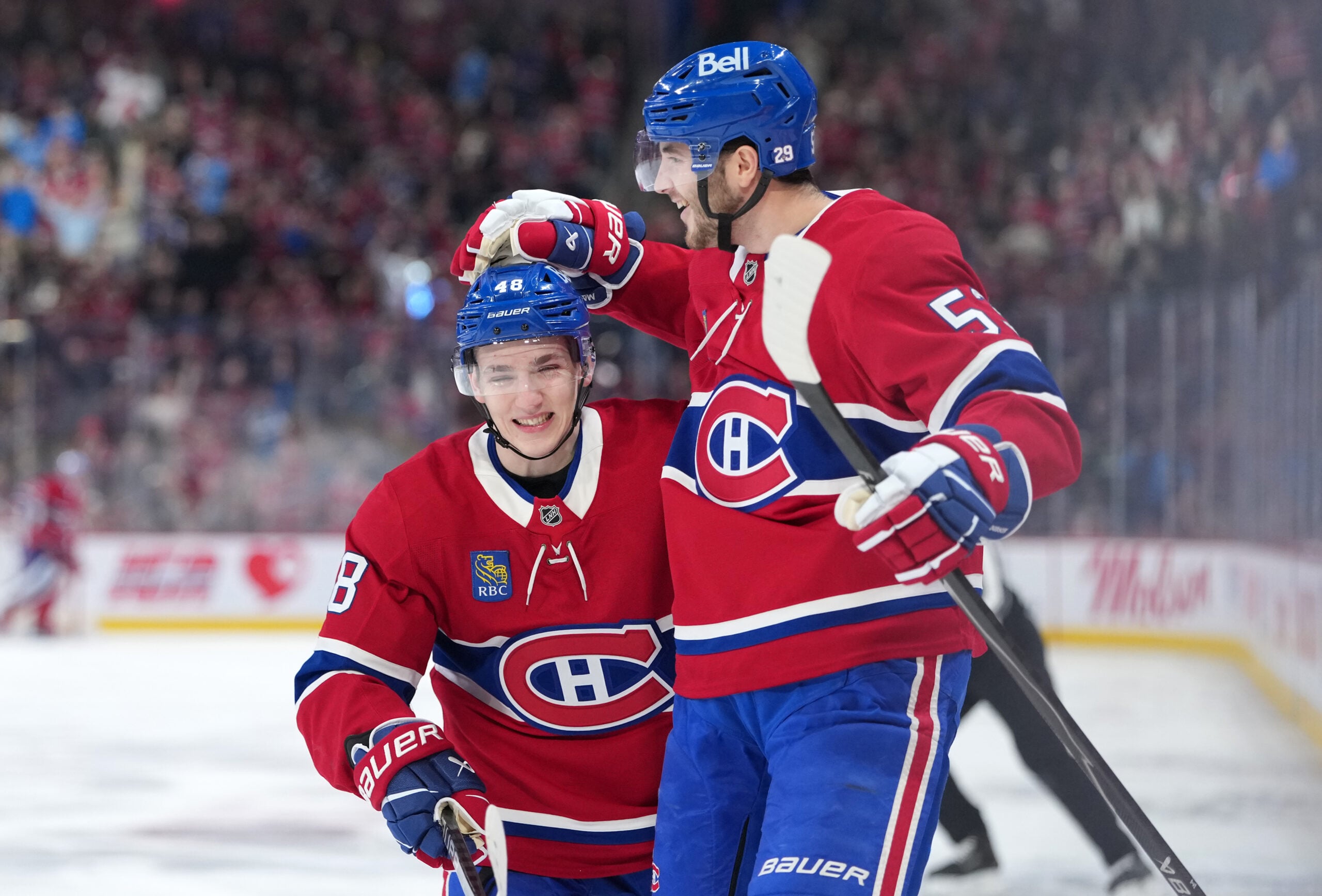
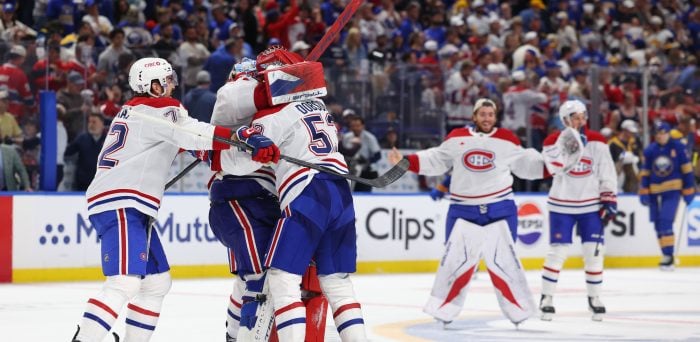
It is a brutal, unyielding truth as old as the Stanley Cup itself: you can’t survive the punishing, bone-crushing gauntlet of the playoffs on skill alone when your bottom-six gets physically overwhelmed. When the Montreal Canadiens watched their unexpected, exhilarating playoff run dissolve in a five-game Eastern Conference Final (ECF) exit against the Carolina Hurricanes, the post-mortem didn’t require advanced engineering to decipher.
It was a matter of identity, or, more accurately, the lack thereof further down the bench. The pain of that 6-1 Game 5 loss in Raleigh will linger, but it provides executive vice president Jeff Gorton and general manager (GM) Kent Hughes with an invaluable blueprint as they were provided a practical example in playoff heavy-ball, shifting the conversation in Montreal.
As Gorton noted in his season-ending address, losing hurts, but it makes you hungrier. It also exposes the gap between a team that is highly entertaining and a team built to endure the brutal four-round marathon of the Stanley Cup Playoffs. Having watched the Hurricanes systematically hunt, pin, and wear down a resilient but structurally light Montreal roster hammered that point home.
Building Identities
To be a true, perennial Stanley Cup contender in the modern NHL, a coaching staff cannot simply roll out 12 talented forwards and hope for chemistry. The ideal construct requires four distinct, specialized forward line identities. When a roster is perfectly balanced, each line operates as its own ecosystem, possessing a specific role, tailored traits, and a singular focus. Let’s break down that championship blueprint and look at how the Canadiens stack up against the terrifying reality of what it takes to win.
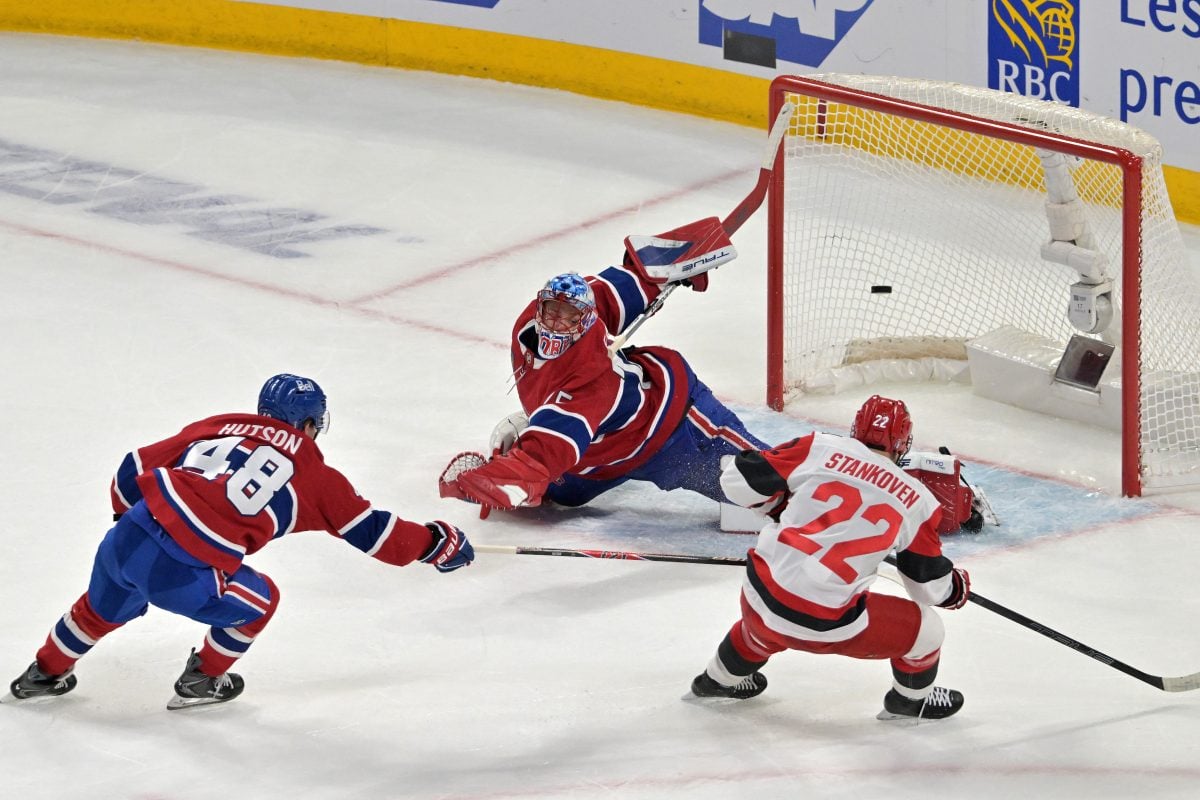
Establishing clear identities for each line gives the coach a tactical advantage by allowing him to optimize player usage across all four forward units. When players operate in defined roles, whether they are elite scorers, disciplined checkers, or physical grinders, they develop an intuitive chemistry that allows coaches to exploit opponent weaknesses or neutralize superstar players.
By utilizing a skilled scoring line to generate high-octane offence, a disciplined two-way line to neutralize the opponent’s top superstars, a relentless identity line to execute a heavy physical forecheck, and a high-energy fourth line to absorb tough minutes and spark the bench, a team establishes an unstoppable, balanced rhythm. This structural cohesion allows coaches to dictate strategic matchups and wear down opposing defencemen with constant physical pressure over 60 minutes to force critical turnovers and control the game’s momentum.
First Line: The Elite Engine
Every true Stanley Cup contender is anchored by an elite engine, the crown jewel of the roster, comprised of the franchise cornerstones whose mission is to dictate the game’s pace and tilt the ice. When this line steps over the boards, it doesn’t merely adapt to the flow of a playoff series; it needs to dictate the pace through their playmaking and high-volume scoring execution under the most suffocating defensive pressure. Their generation of high-danger scoring opportunities is designed to put the opposing coach into immediate survival mode.
In Montreal, this is the one area where management can comfortably check the box, as the trio of Cole Caufield, Nick Suzuki, and Juraj Slafkovsky blossomed into a legitimate, top-tier NHL engine this past season. Suzuki, fresh off a Selke Trophy-winning campaign where he proved he belongs in the upper echelon of 200-foot centres, gives Montreal the cerebral, elite playmaking driver they’ve lacked for decades, while Caufield’s space-finding sniper instincts and Slafkovsky’s imposing physical maturation on the cycle allow them to dictate terms against anyone.

Yet, as the Hurricanes series so brutally exposed, even the most finely tuned engine will eventually overheat if it is asked to pull the entire train alone.
Facing the best shutdown defenders without the protection of a secondary scoring threat severely crippled their offensive sustainability. Because opposing coaches didn’t have to worry about a dangerous second line, they aggressively hard-match their elite, shutdown defence pairs and top two-way checking forwards strictly against the Suzuki unit. Without a reliable secondary wave of attack to punish the opposition for hyper-focusing on the top unit, the entire team’s offence dries up, leaving the squad highly predictable, easily neutralized, and entirely dependent on uncharacteristic depth scoring to stay competitive.
Second Line: Missing The Tactical Support
An effective NHL second line acts as a championship-standard tactical support system, blending high-end skill with two-way responsibility to exploit weaker, or just the secondary, defensive pairings and alleviate offensive pressure from the top unit. While Canadiens head coach Martin St. Louis cobbled together a solution for that line by pairing the explosive straight-line speed of Alex Newhook with the elite puck-handling of rookie phenom Ivan Demidov and using Jake Evans as a defensive safety valve, this makeshift speed-and-skill identity remained heavily over-reliant on generating its offence off the rush.
In stark contrast, the Cup champion Hurricanes established a suffocating second-line benchmark with Taylor Hall and Logan Stankoven, a unit specifically built to punish secondary defensive pairings by dominating the dirty areas of the ice. The primary difference lies in how a line handles the postseason, where open ice instantly evaporates, and transition lanes are choked out. While Montreal’s young trio excels at stretching the ice in transition, Carolina’s second unit thrives by using a cycle game to systematically grind opposing defences down.
For Montreal’s secondary unit to transition from a regular-season luxury into the lethal, mismatch-exploiting weapon showcased by Carolina, Montreal needs a line that can be more versatile and evolve past any rush-reliant tendencies. They must learn to sustain a grinding, low-cycle offence, proving that true tactical support requires a balance of high-end finesse and the physical willingness to win battles along the boards. This is why there is a push for Hughes to find a top-six forward with size and skill to add to the roster for next season.
Third Line: Incomplete Energy
You simply do not lift the Stanley Cup without a shutdown line that makes opposing superstars absolutely miserable. This unit isn’t defined by the numbers they put up on the scoresheet, but rather by the zeroes they force onto the opponent’s stat line through a grueling combination of hard-checking, high-IQ defensive responsibility, and a soul-crushing, incessant cycle. Tasked with neutralizing the opposition’s top line, these defensive specialists start the majority of their shifts pinned deep in their own zone, win the draw, and systematically grind the puck 200 feet down the ice to tilt momentum and hand their stars premium offensive zone starts.
It is a championship standard famously perfected by Yanni Gourde, Barclay Goodrow, and Blake Coleman during the Tampa Bay Lightning’s back-to-back Cup runs, and weaponized today by Carolina’s gold-standard trio centered by Jordan Staal, who don’t just defend, they physically punish you and wear down elite defenders by pinning them low for 45 seconds at a time.
This is precisely where the Canadiens ran into a structural wall. While St. Louis attempted to patch together a matching unit by utilizing Phillip Danault alongside veteran Josh Anderson, the line lacked the collective, heavy-possession identity required to shift the ice against elite competition. The solution to this identity crisis lies in a blend of internal graduation and shrewd, targeted unrestricted free agent (UFA) recruitment. Inserting a cerebral, defensively mature prospect like Owen Beck, who has already flashed an elite 58.7% faceoff clip at the NHL level, gives Montreal a speedy, natural low-zone anchor with the high hockey IQ needed to choke out top-tier centres.
To weaponize Beck on the cycle, Hughes must look to the open market for a rugged, heavy-forechecking UFA like Quebec native A.J. Greer, whose Cup ring, 6-foot-3 frame and straight-line physical bite would instantly transform the line’s DNA from a passive checking unit into an exhausting, board-rattling containment line capable of tilting the ice, especially if paired with Anderson.
Fourth Line: Muscle Wanted
The fourth line in today’s NHL is no longer a graveyard for lumbering enforcers who play three ceremonial minutes a night; it has evolved into a critical tactical weapon. A true contender’s fourth line acts as a pure energy spark, stepping over the boards after an opposing goal or a flat power play to immediately seize the momentum back through sheer, unadulterated work ethic and heavy physical contact.
This unit is defined by a relentless forecheck, strict defensive safety, and mistake-free hockey that stays above the puck to completely exhaust the opponent’s top defencemen during short, high-intensity shifts. It remains an essential modern blueprint for giving star players a critical breather without sacrificing a single inch of ice.
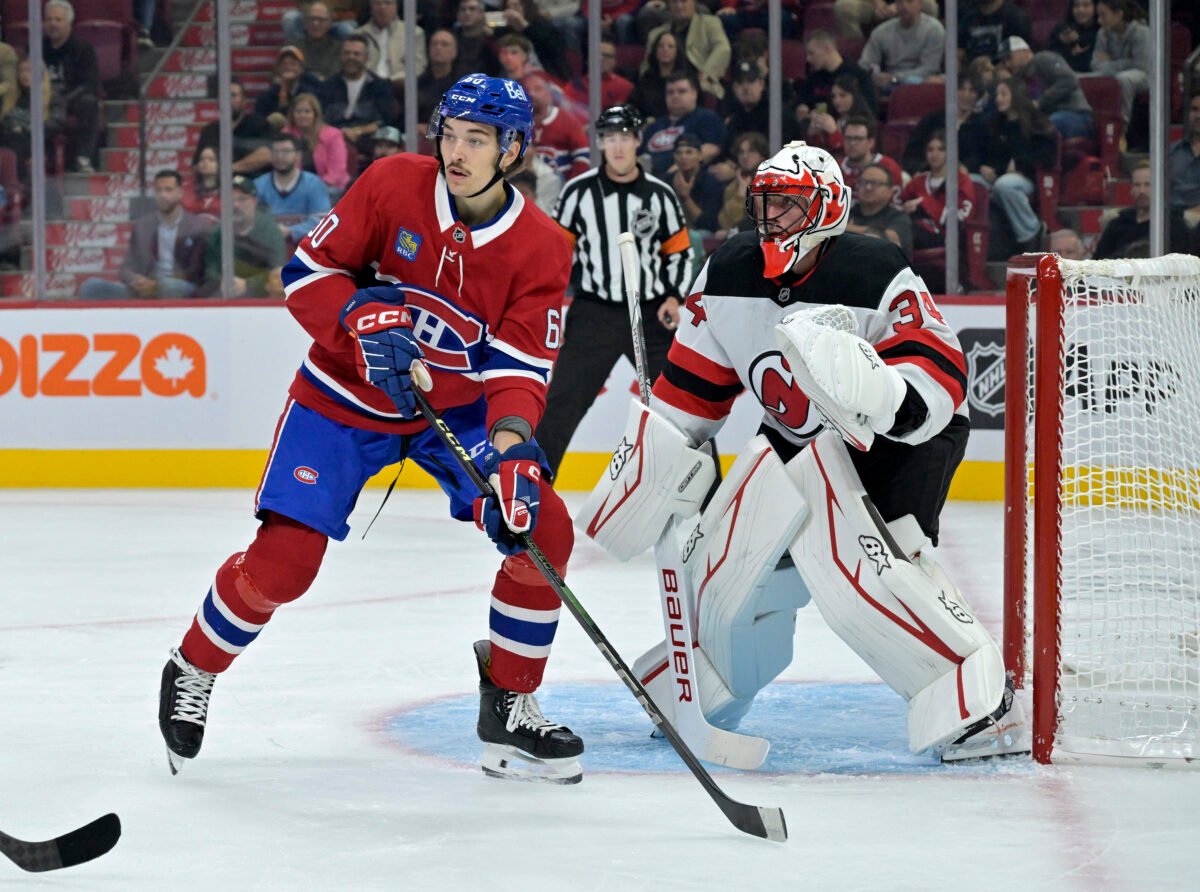
During the ECF, however, Montreal’s fourth line suffered from a severe identity crisis that ultimately crippled their depth. The unit lost St. Louis’ confidence, and the shorter bench fatigued the top line due to the over-reliance on their play. Rather than icing a heavy, predictable unit, St. Louis was forced to rotate combinations of utility players who completely struggled to establish a cohesive style.
Somehow, despite that, Brendan Gallagher still couldn’t crack the lineup. They simply weren’t heavy enough to punish Carolina’s mobile defence on the dump-and-chase, nor were they defensively insulated enough to earn the coaching staff’s trust in high-leverage, late-game scenarios.
Meanwhile, Carolina’s fourth line, anchored by the bruising duo of William Carrier and Eric Robinson, sprinted down the ice, finished every single check, and completely dictated the physical terms of the bottom-six matchup. Solving this riddle requires an injection of raw, unyielding grit, and the Canadiens may have a built-in internal solution waiting in Florian Xhekaj. Possessing the same broad-shouldered, mean-streaked DNA as his older brother Arber, the younger Xhekaj has the exact heavy-hitting, space-clearing style needed to establish a permanent, terrifying identity on Montreal’s fourth line.
The Canadiens are no longer a rebuilding team searching for a direction; they are an emerging group that has tasted the bitter reality of championship-level hockey. They possess the foundational pieces. The elite engine is locked in. The young talent on the second line offers a glimpse of an incredibly bright, creative future. However, the final frontier for this front office is adding size to the top six as well as finally building out the identity of the bottom six. To transition from an entertaining playoff participant to a true Stanley Cup favourite, Montreal must inject their third and fourth lines with the heavy-cycling, hard-checking, and relentless identity that defines champions.
The blueprint is clear. Now, the work begins.
Free Newsletter
Get Montreal Canadiens coverage delivered to your inbox
In-depth analysis, breaking news, and insider takes - free.
Subscribe Free →