- What Paul Coffey Actually Changed for the Oilers
- Bouchard’s Numbers with the Oilers Tell the Story
- So… What’s the Plan for the Oilers Now?
- Three Ways This Could Go for the Oilers’ Blue-Line
- Why The Oilers’ Blue-Line Success All Comes Back to Bouchard
- The Final Question: Without Coffey, Is the Spark Still There?
Last season, the Edmonton Oilers’ defence didn’t just play solid hockey—it helped drive the offence. From Evan Bouchard’s offensive game to steady production from veterans like Darnell Nurse and Mattias Ekholm, the blue line was firing on all cylinders.
But this fall, there’s one significant change: Paul Coffey isn’t behind the bench anymore. He’s still part of the organization, but he’s moved upstairs into an advisory role. No more hands-on coaching. No more in-game chats, which raises a big question heading into 2025–26.
Can their defence—and Bouchard especially—keep pushing the pace without Coffey’s voice in their ear?
What Paul Coffey Actually Changed for the Oilers
When Coffey joined the coaching staff partway through the 2023–24 season, many wondered how he would do. Sure, he’s a Hall of Famer, but he hadn’t coached at this level. He didn’t come in with a detailed playbook.
Turns out, he didn’t need one. Coffey focused less on structure and more on instinct—giving his defensemen permission to make plays, not just survive shifts. He encouraged them to jump into the rush, carry the puck with confidence, and trust their skill. It worked.
Here’s the proof: Bouchard broke out as one of the most productive blueliners in the league. Ekholm and Nurse played freer, more aggressive hockey. Even depth players like Brett Kulak and Ty Emberson looked sharper and more assertive.
Coffey even made small cultural changes—it’s been noted that he had all his defensemen sit together in the dressing room to boost communication: subtle move, impactful leadership. By the end of the season, the Oilers’ defence was one of the most active and dangerous groups in the NHL. It was no coincidence. It had a lot to do with Coffey’s coaching.
Bouchard’s Numbers with the Oilers Tell the Story
Here are some tangible results: Bouchard in 2024–25 put up 14 goals, 53 assists—67 points (coming off an 82-point 2023–24 season). In addition, he added 23 points in 22 playoff games (after 32 points in the 2024 playoffs).
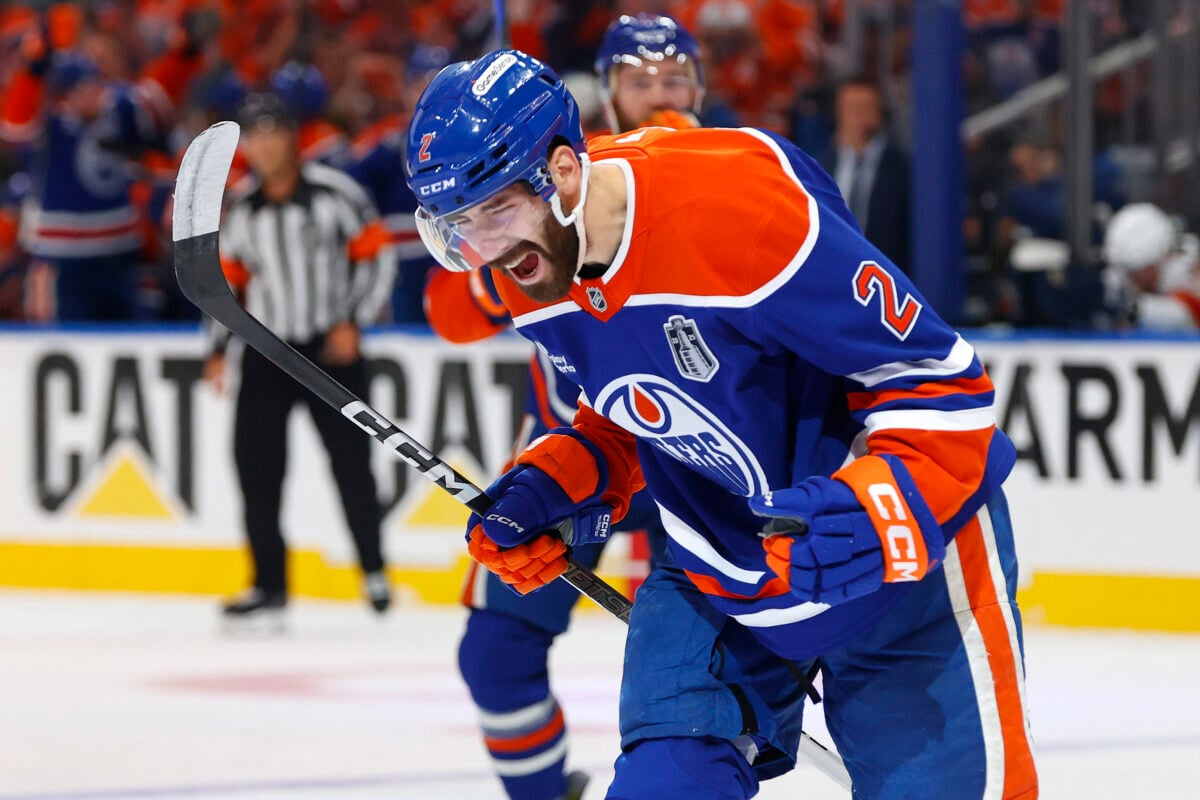
Along with heavy minutes, the numbers back up what Oilers fans already know: Bouchard isn’t just good—he’s a difference-maker. And he’s not slowing down. Edmonton locked him up this summer with a four-year, $42 million deal. He’s the anchor of the Oilers’ defence for the foreseeable future.
So… What’s the Plan for the Oilers Now?
Coffey is out of the day-to-day picture. In his place, Mark Stuart takes over the defence group. Stuart was already on staff last season and worked closely with Coffey, so there’s some built-in continuity. He’ll be joined by Paul McFarland (known for his power-play work) and Conor Allen (player development and skills).
It’s a different mix—maybe a little more traditional—and how that shift plays out is going to matter. Will Stuart and company keep that creative edge Coffey brought? Or will things tighten up?
Three Ways This Could Go for the Oilers’ Blue-Line
There are three ways the Oilers’ blue line could go. First, they take another step forward. Perhaps the new staff can build on what Coffey started. Stuart keeps the green light on, McFarland fine-tunes the power play, and Bouchard takes another step into stardom. If another defenseman like Emberson or Jake Walman surprises, this could be a top-five scoring defence.
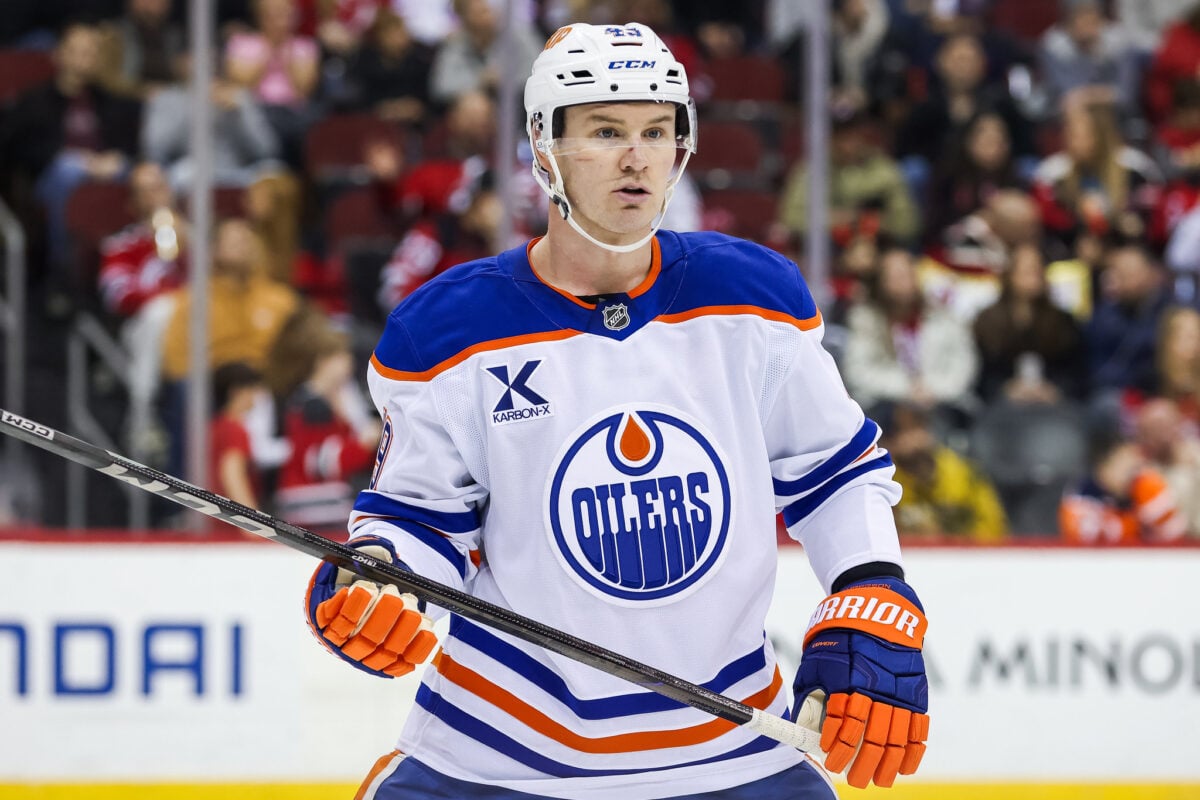
Second, things could remain steady with the Oilers’ defensive corps. Without dramatic changes, the tone stays loose but smart. Bouchard plays his game, the vets do their jobs, and the Oilers get another strong year from the back end. Not flashy, but good enough to win.
Finally, the Oilers’ blue line could take a step back. Here’s the concern: without Coffey’s constant push to “make plays,” the defence could default to safer, more passive hockey. That could clip production, especially from the bottom half of the lineup. Bouchard might still shine, but the overall impact could drop.
Why The Oilers’ Blue-Line Success All Comes Back to Bouchard
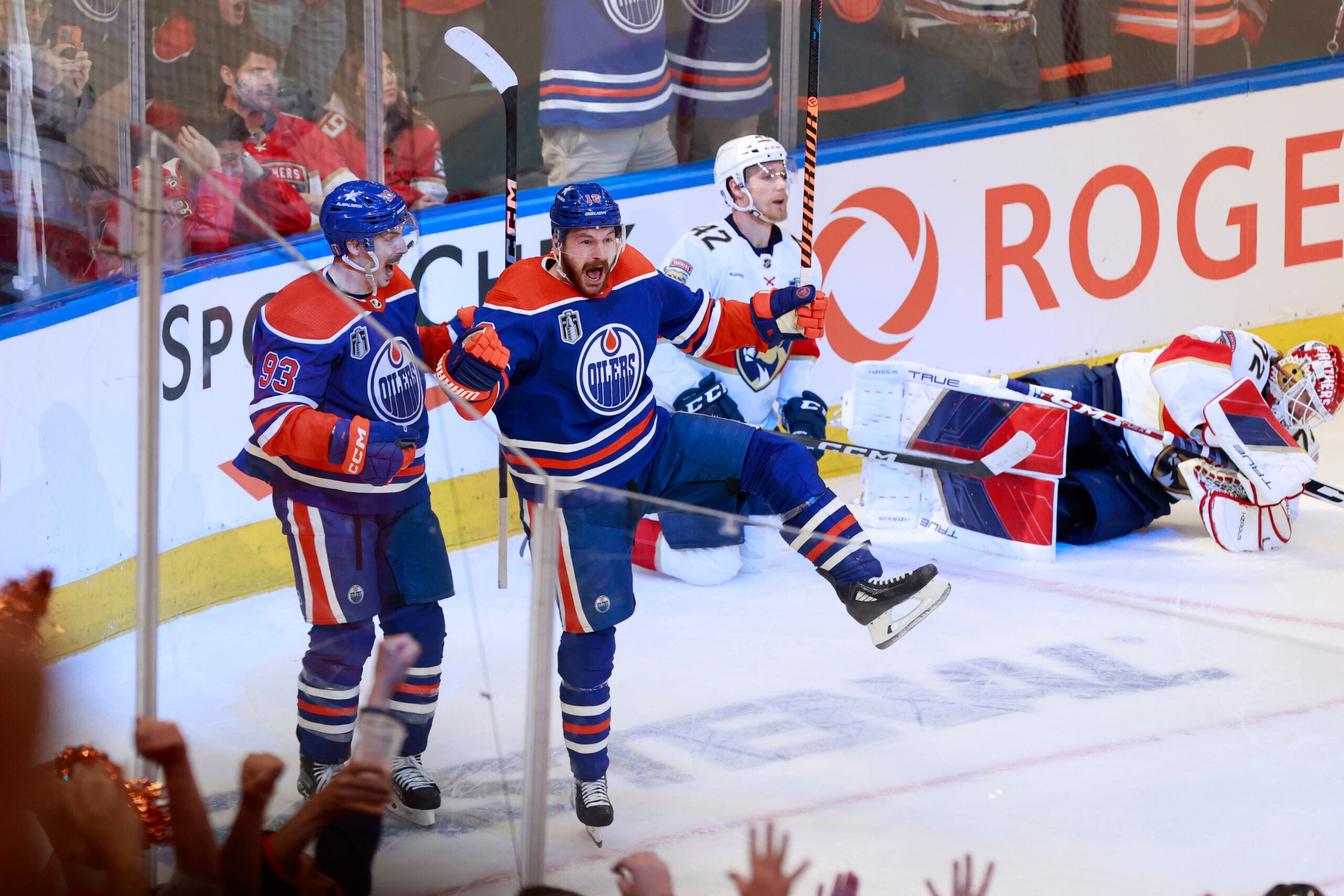
The Oilers know what they’ve got in No. 2. He’s reliable—played in every game last season, missing only two in the previous four years. He’s efficient. He moves the puck like few others; he can shoot, period. Finally, Bouchard is trusted and plays top minutes in every situation. He’s elite.
Bouchard is the Oilers’ best defenseman—maybe even their most important skater not named Connor McDavid or Leon Draisaitl. If he keeps progressing, the whole blue line should follow his lead.
The Final Question: Without Coffey, Is the Spark Still There?
Coffey helped unlock something in his group: the freedom to create, the confidence to trust instincts, the idea that defence doesn’t have to mean playing on your heels. Now, the Oilers have to prove that spark wasn’t a quick flash but the start of a lasting identity. If the new coaching staff respects what worked and keeps the room playing on its toes, there’s no reason the defence can’t keep producing at a high level. But if things go conservative—if risk gets replaced with hesitation—the offence from the back end could fade fast.
So no, this isn’t just about “missing Coffey.” It’s about whether this Oilers blueline breakthrough has staying power. And the answer to this crucial question is something Oilers fans will find out soon enough.
Free Newsletter
Get Edmonton Oilers coverage delivered to your inbox
In-depth analysis, breaking news, and insider takes - free.
Subscribe Free →