Over the final months of the Montreal Canadiens’ push to the playoffs in 2024-25, the captain, Nick Suzuki, elevated his game to a new tier, driving offence, locking things down defensively, and proving he could carry a team when it mattered most. That momentum hasn’t faded. 26 games into this season, Suzuki has picked up right where he left off, emerging not only as Montreal’s most important player but as the surprising frontrunner in the NHL’s Selke Trophy race.
This Season
Through 26 games, Suzuki is delivering exactly what the Canadiens needed. With eight goals, 23 assists and 31 points, the Canadiens’ captain not only leads his team in scoring, but he drives virtually every meaningful on-ice category. His plus-11 rating is the highest on the roster, his 23 assists lead the club by a mile, and his time on ice per game, over two minutes more than any other Montreal forward, speaks to the trust Martin St. Louis has in him, regardless of situation or score.
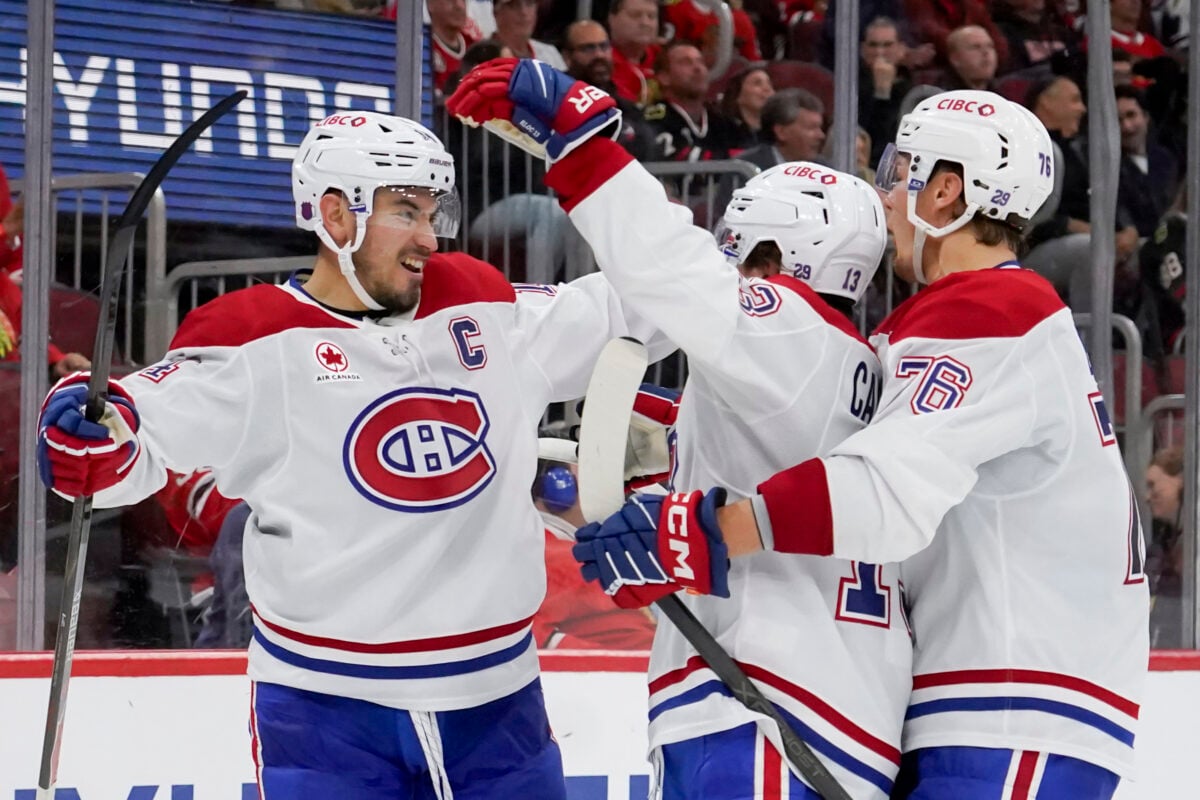
What stands out most this season is how effortlessly he has blended offensive creativity with responsible, detail-oriented defence. Suzuki isn’t just producing, he’s controlling games. When he’s on the ice, the Canadiens play with structure. Breakouts are cleaner, defensive coverage is tighter, and the pace of play is elevated. He dictates tempo in a way that few 26-year-old centres can.
In a season where the Habs have battled injuries, inconsistency, and a brutal stretch of games, Suzuki has been the stabilizer. When the team scores, he’s there. When the team defends a one-goal lead, he’s on the ice. When the team needs a lift, he’s usually driving the next shift. This is what a franchise player looks like, not just points, but presence.
A Legitimate Selke Candidate
Suzuki is not just in the Selke conversation; he’s at the front of it. ESPN currently has him ranked as the league’s leading candidate for the award, which goes annually to the NHL’s best defensive forward. With Aleksander Barkov missing most of the season, the race is wide open, and Suzuki has seized the moment.
This isn’t surprising to anyone who has watched him closely. His defensive details have always been advanced: stick positioning, backchecking angles, his ability to read plays a step early, and a calmness under pressure that allows him to escape trouble. But this season, he has elevated every part of his two-way game. He faces top lines every night and still posts strong possession numbers.
Last season, Suzuki finished 13th in Selke voting, a sign that league observers were beginning to notice his impact. It’s not just defence, voters also reward two-way centres who can produce, and Suzuki is pacing for the best offensive season of his career while still handling the toughest assignments. A Selke finalist spot, or even a win, no longer feels like a stretch. It feels like the next natural step in his progression.
The Development of a Franchise Cornerstone
Sometimes, a franchise-altering trade doesn’t look like one at first. When the Canadiens moved Max Pacioretty to the Vegas Golden Knights in 2018, most saw it as a necessary reset. This trade ended up being absolutely huge for the Canadiens. From the moment he arrived in Montreal, Suzuki carried himself like a player who understood both the weight and potential of the market. He didn’t just want to make the team; he wanted to be central to the rebuild. He wanted responsibility. He earned every inch of it.
Related: Canadiens Should Keep an Eye on the Struggling Canucks
Over the years, he added layers to his game: he became stronger on the puck, more efficient in transition, more reliable in his reads, and more assertive offensively. When the Canadiens named him captain at just 23, it was not a projection; it was recognition. He was already acting like the heartbeat of the team.
The Selke talk is not the end goal; if anything, it’s confirmation that the development path has led exactly where it needed to. A few years ago, Montreal fans hoped Suzuki could become a top-six centre. Now he’s becoming something even rarer, a true two-way force capable of anchoring a contender for a decade.
