An NHL team’s entry draft success is fundamentally about finding “surplus value”, drafting players who significantly outperform their draft slots. While top-10 picks are high-probability assets, general manager (GM) Kent Hughes has made exploiting market inefficiencies a featured pillar of the Montreal Canadiens’ rebuild plan. The true test of a front office lies in finding everyday contributors in the middle and late rounds.
By targeting undervalued draft pools, Montreal is deliberately exploiting market inefficiencies to acquire highly specific, cost-controlled complementary pieces tailored to insulate its core stars. It forces an organization to balance high-reward swings with finding players with a high floor, choosing the best player available in the overlooked pool of players. Achieving this requires total alignment between amateur scouts identifying raw talent and the player development staff nurturing it.
Canadiens Identify Hunting Grounds
The Canadiens have aggressively exploited the Russian developmental market, a strategy driven heavily by Co-Director of Amateur Scouting Nick Bobrov. While rival NHL front offices routinely shy away from Russian prospects due to rigid Kontinental Hockey League (KHL) contracts, scouting restrictions, and geopolitical anxieties, Bobrov’s deep European network gives Montreal a massive informational advantage.
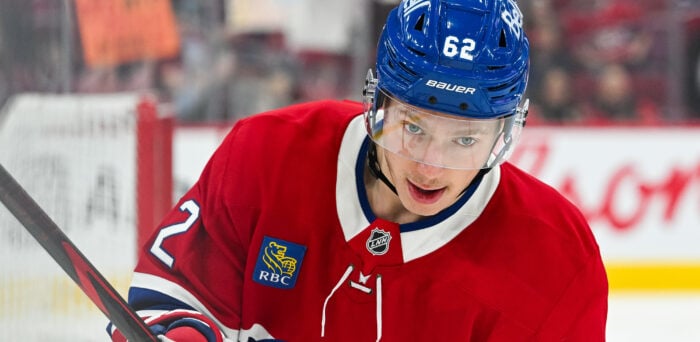
This structural risk tolerance paid immediate dividends with 2024 fifth-overall pick Ivan Demidov, whose elite skill translated into a spectacular All-Rookie campaign in Montreal. By evaluating players strictly on high-ceiling upside rather than the timeline of their North American arrival, the Canadiens are securing elite talent at a steep discount relative to their true value.
This approach has evolved into a core organizational identity, with Montreal targeting premium Russian talent for three consecutive summers. Following the Demidov home run, Bobrov and the front office traded up to secure first-round talent Alexander Zharovsky in 2025, and struck again by landing Gleb Pugachyov at 26th overall.
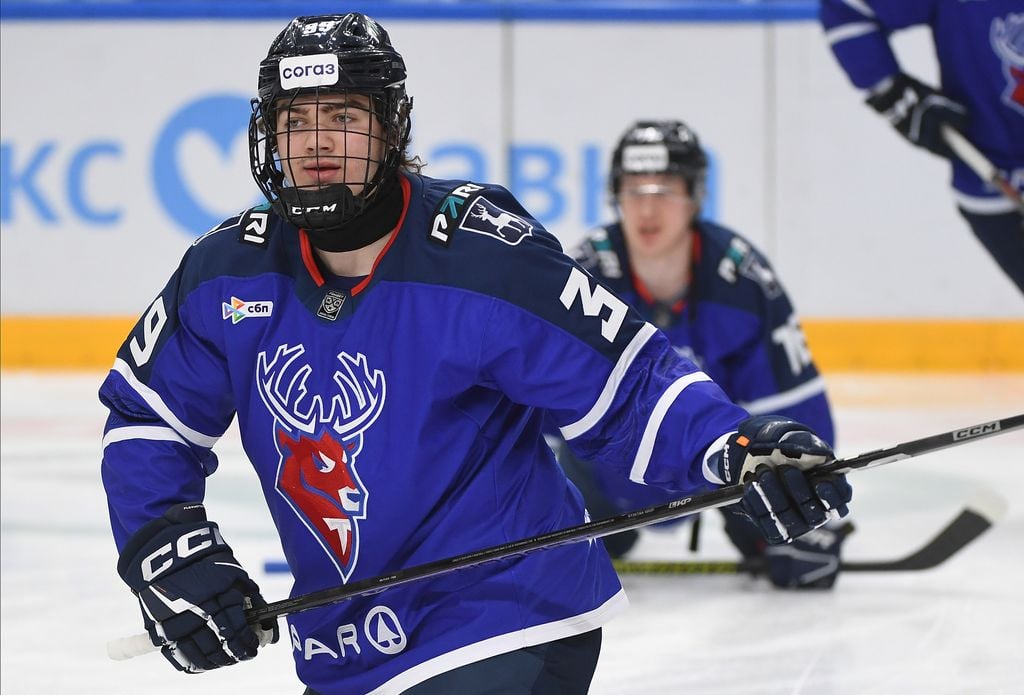
Bobrov locked onto Pugachyov after watching him live at the U18 Russian Challenge in St. Petersburg, recognizing a physical, high-skill “unicorn” capable of shifting a game’s momentum. By maintaining a sophisticated scouting presence where other teams have pulled back, the Canadiens are operating with a near-monopoly on the MHL (top Russian junior league) and KHL pipelines, ensuring the Bell Centre remains the premier destination for Russia’s most under-scouted elite talent.
The 2026 Draft Approach
Selected 26th overall by the Montreal Canadiens after a draft-day trade, Gleb Pugachyov is a massive, 6-foot-3, 225-pound power forward who projects as a versatile, two-way wrecking ball. Having already held his own against grown men in the KHL with Torpedo Nizhny Novgorod, he enters the pipeline with an advanced defensive conscience, a relentless motor, and the physical brand of hockey that makes him a human hit machine.
While his stylistic frame and straight-line speed draw immediate comparisons to current Canadiens’ forward Josh Anderson, Pugachyov distinguishes himself with a higher defensive floor, pro-ready penalty-killing instincts, and superior loose-puck recovery along the boards.
To see the front office breakdown and hear directly from management on their draft-day strategy, you can watch the Martin Lapointe and Nick Bobrov press conference. This full media availability provides excellent context on how the Canadiens navigated the board to secure Pugachyov and why they view him as a unique piece for the future. Bobrov explained the moment that he knew that Pugachyov was their guy after watching him live during the U18 Russian Challenge in St Petersburg. He said Pugachyov flattened someone in his first shift, played with speed and skill, and kept doing it consistently shift after shift.
If anyone decides to sit and watch game tape of the newest first-round pick, they’d see that offensively, the young winger rules the low-cycle game by using his massive frame to shield the puck, blending pure physical force with surprisingly soft hands and quick short-area passing. Rather than relying purely on dynamic individual rush skill, his offensive production will be driven by winning battles in the blue paint, generating net-front chaos, and creating space for his linemates.
Mechanically, his linear skating power makes him nearly impossible to steer off course once he builds momentum, which he weaponizes to hunt down defensemen on the forecheck and backcheck deep into his own zone.
“With his size and the fact he’s played against men in the KHL, he will be ready sooner than most”
If he reaches his full potential, Pugachyov can become a highly reliable, middle-six matching winger capable of chipping in as many as 15-20 goals and even providing duties on a penalty-killing unit. Because he already possesses good off-puck habits and plays a highly disciplined, combative style, his developmental floor is incredibly safe. Expect the Canadiens’ front office to let him mature for another season in Russia under Alexei Isakov’s tutelage before bringing his heavy, suffocating shutdown game to North America.
More Than One Market Inefficiency
But Bobrov’s hunting grounds aren’t limited to Russia; the Canadiens have quietly exploited another massive market inefficiency right in their own backyard by targeting overage players. In a league obsessed with the shiny allure of pristine 18-year-olds, prospects passed over in their first years of draft eligibility are often discarded entirely by rival front offices. Hughes and Bobrov see a glaring market void there, recognizing that physical maturation and developmental curves are rarely linear.
They directly addressed a critical organizational need, adding legitimate size and mobile puck-moving capability to the right side of the blue line, by using their third-round pick, 93rd overall, on 20-year-old Cooper Cleaves.
After inviting the 6-foot-3, 205-pound defenseman to their development camp last summer, Montreal monitored his impressive freshman progression at Dartmouth College, waiting patiently to swoop in and buy advanced, right-shot corporate stock at a heavy discount. A discount they exploited in 2025 with the selection of Bryce Pickford, who was 19 when drafted. He quickly validated their choice by exploding offensively to lead the Western Hockey League (WHL) defencemen in goals with 45 and earning the CHL Defenceman of the Year.
Ultimately, draft success also requires the strategic asset management of the picks themselves. Modern front offices understand how to weaponize their draft capital to maximize organizational value on draft weekend, whether by trading down to acquire more lottery tickets or packaging picks to acquire established young NHL talent.
A draft class is only truly successful when it sustainably feeds the NHL roster through homegrown development or calculated trades, separating elite franchises from the rest of the league. By blocking out the white noise and trusting Nick Bobrov’s deep-water fishing holes, Kent Hughes isn’t just accumulating prospects; he’s systematically building a modern, cost-controlled, and soon, a physically imposing contender tailored specifically for the rigours of playoff hockey.
Free Newsletter
Get Montreal Canadiens coverage delivered to your inbox
In-depth analysis, breaking news, and insider takes - free.
Subscribe Free →