


Part of our Hockey 101 Series, an introduction to the sport of hockey.
Perhaps one of the only penalties that isn’t contested every time it is called, hooking is fairly straightforward. The easiest way to spot a hooking penalty is to watch the offending player’s stick. In fact, it has gotten so easy to spot that players are better about avoiding it! Perhaps the idea of deterrence actually works in hockey! But before we get into specifics, here is the precise rule:
“Hooking is the act of using the stick in a manner that enables a player to restrain an opponent.”
—Rule 55.1 NHL Rulebook
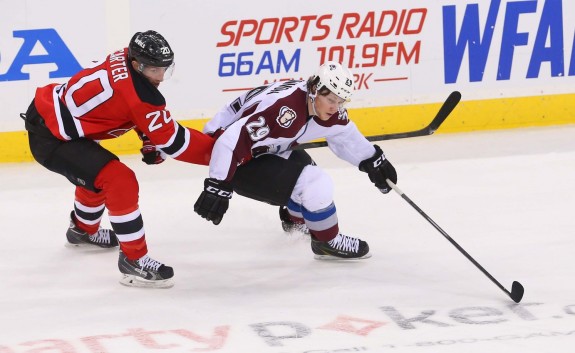
The Hooking Penalty
The hook is very similar to the holding penalty. Except the restraint is from the stick and not from the hands or body of the offending player. An easy way to spot a hooking penalty is to look at the sticks of the defenders. Usually, a stick is held down on the ice. When defending, this is no different. But when this penalty occurs, the stick is off the ice and parallel to the ground. If the stick is in hooked in the equipment or jersey of an opposing player and parallel to the ground, it is an easy penalty call.
