There’s always something happening with the Toronto Maple Leafs, even when nothing is officially happening — which is part of the fun and the chaos. Every rumour is constantly amplified, every quiet decision gets over-analyzed, and every possible future direction gets debated like it’s already been finalized.
And in the middle of today’s noise, three stories stand out. A coaching name that refuses to chase the spotlight. A superstar who may soon be asked to help guide the next generational talent. And a veteran defenceman whose absence tells you more about the team than his presence ever did. None of these are final answers, but they’re all useful clues.
David Carle’s Reluctance Might Be His Biggest Strength
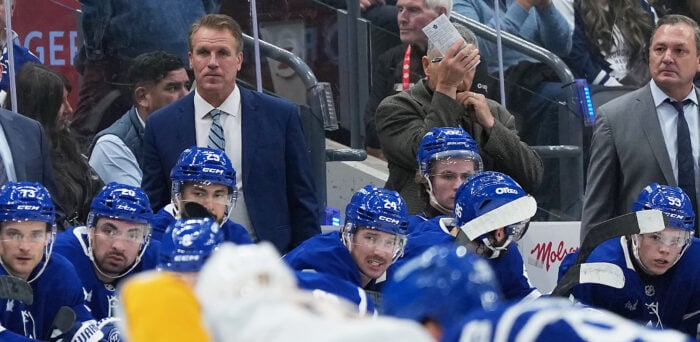
Here’s what makes University of Denver coach David Carle such an interesting possible fit for the Maple Leafs: he doesn’t seem to be chasing the job. In today’s NHL, that’s not as common as it sounds. Coaches often talk like they’d sprint through a wall for a chance at an Original Six market. Carle is different. He seems willing to wait for the right situation rather than the biggest one.

And oddly enough, that might be exactly why Toronto should want him. His approach suggests patience, perspective, and a focus on fit over ego. He already has stability, a strong program in Denver, and a life that isn’t defined by chasing the next rung on the ladder. That trait matters in a market like Toronto.
There’s also a trust factor here. Players tend to respond to coaches who don’t need the room to validate them. Carle projects calm authority rather than urgency or desperation. In Toronto, where pressure never really shuts off, that kind of steadiness is a survival trait.
Matthews as Mentor: McKenna’s Arrival Would Change the Room
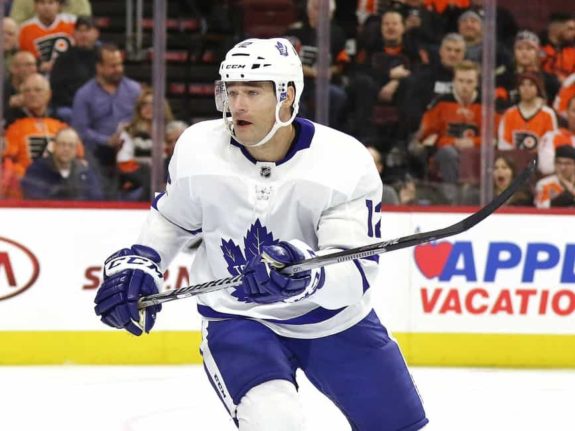
One of the most underrated parts of Auston Matthews’ early NHL experience was the presence of Patrick Marleau. Marleau wasn’t just a veteran; he was a stabilizer. Someone who showed a young star how to exist in a high-pressure environment without letting it consume him. That matters more than people often admit.
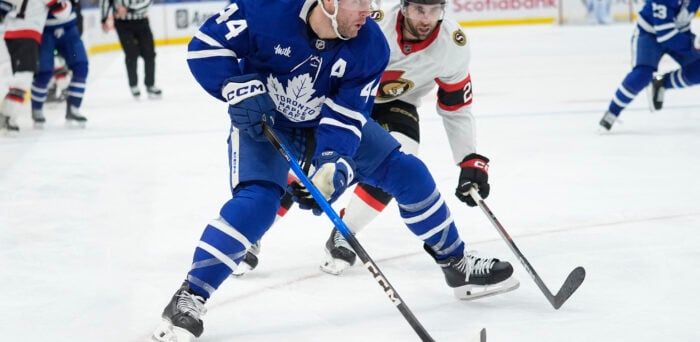
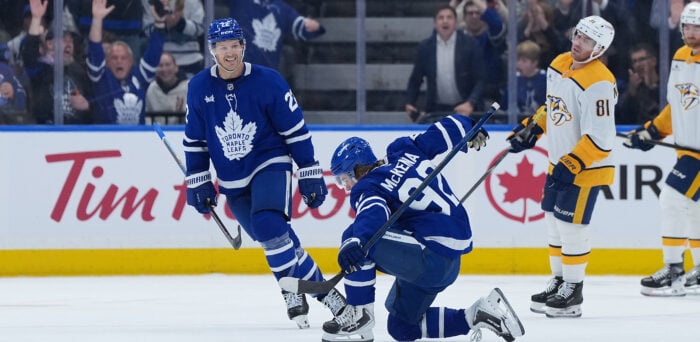
Now, that same dynamic could come full circle. If Gavin McKenna lands in Toronto, Matthews would naturally become one of his most important guides. As captain, that responsibility is already part of the job description, but it’s more personal than that. Matthews knows what it’s like to step into a franchise in transition and immediately be asked to carry expectations that don’t always match reality.
He’s also lived through the full emotional spectrum of the Toronto market — the highs, the scrutiny, the playoff heartbreaks, and the constant sense that everything is being judged in real time. Even if Matthews isn’t a loud, vocal leader, that lived experience carries weight. McKenna wouldn’t be entering a blank slate; he’d be stepping into a room with someone who understands exactly what the job costs.
And there’s a cultural piece too. Matthews has the confidence and presence that come with being one of the best goal scorers of his generation in a major hockey city. That kind of energy tends to resonate with highly skilled, high-confidence young players. If McKenna arrives with any swagger at all — and most elite prospects do — you can easily see him gravitating toward Matthews both on and off the ice.
One Key Addition the Maple Leafs Can’t Ignore: Chris Tanev
Before anyone gets too deep into roster panic or rebuild talk, there’s a pretty simple reality check: Chris Tanev barely played last season. When he wasn’t in the lineup, it was noticeable.
Tanev only managed 11 games in an injury-riddled year, but his absence had a disproportionate effect on how the team’s defence operated. Without him, Toronto’s blue line looked more exposed, more reactive, and far less structured. It wasn’t just about missing a player; it was about missing stability.

That’s the thing with defencemen like Tanev. He doesn’t need to show up on the scoresheet to change how a game feels. He kills plays early, absorbs pressure, blocks shots, and lets partners breathe. When he’s out of the lineup, everything gets a little louder and a little messier.
Of course, the concern is obvious. He’ll be 37 in December, and the injury history isn’t going away. That’s part of the deal now. But if he can return even close to what he was giving the team two seasons ago, the defensive conversation around the team changes quickly. Last season wasn’t a fair baseline; it was a season played without one of the team’s stabilizers.
What Comes Next for the Maple Leafs?
So, where does all this leave Toronto? The organization is still defining its next identity, whether that’s through coaching philosophy, roster construction, or long-term core direction. Fans’ patience will be tested again.
The coaching situation remains one of the biggest looming questions. One can only hope it would be a clear shift in tone from the previous era, but the fit has to match the pressure of the market, not just the vision of it. Regardless of the results, last season’s team played boring hockey.
On the ice, the biggest swing factors are simpler. Can Matthews return to anchor the franchise while helping the next wave of talent adjust? Can McKenna be eased into expectations instead of being buried under them? Finally, can a healthier defensive group, with Tanev included, bring back some of the structure that was missing?
Free Newsletter
Get Toronto Maple Leafs coverage delivered to your inbox
In-depth analysis, breaking news, and insider takes - free.
Subscribe Free →