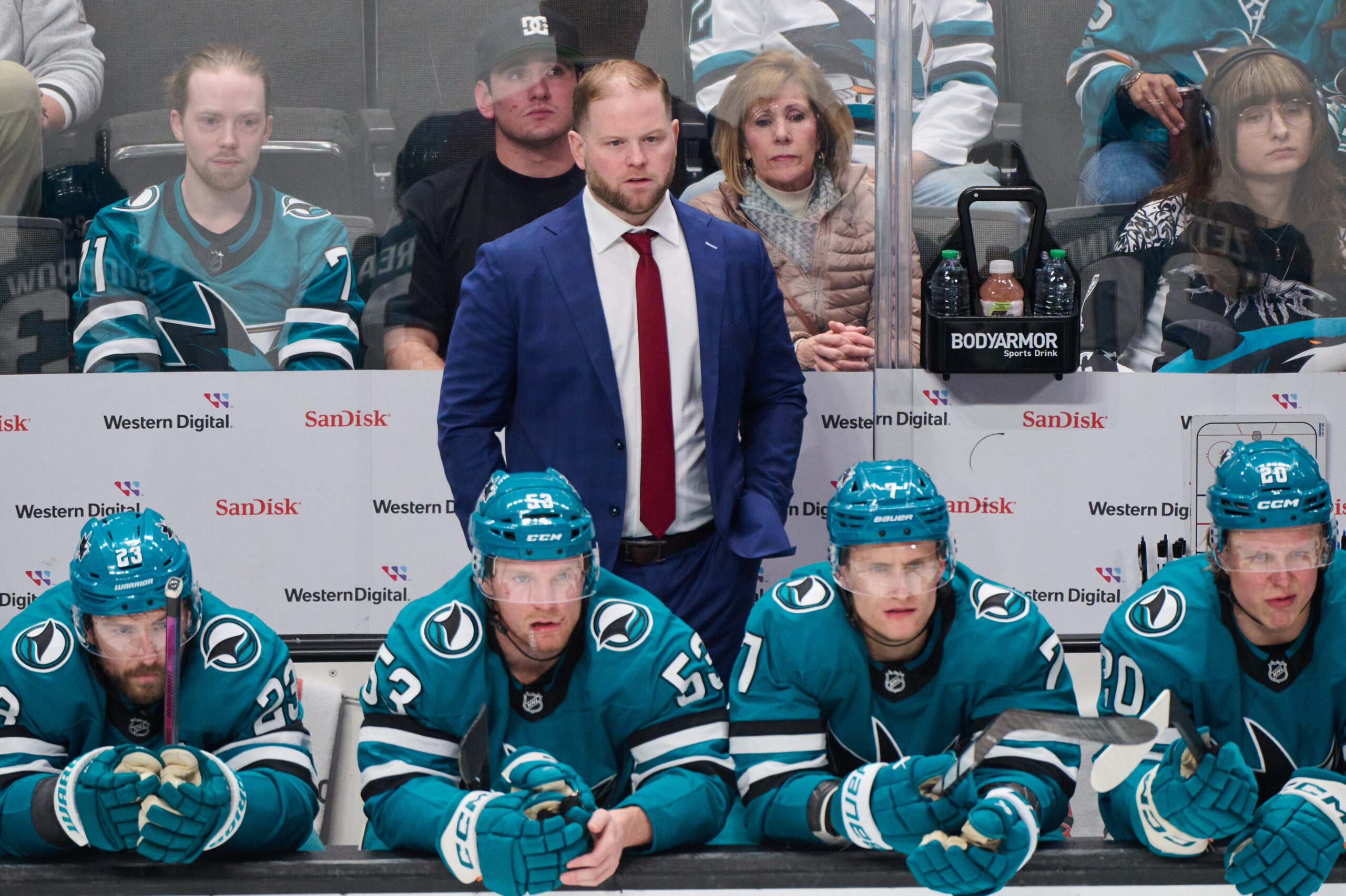
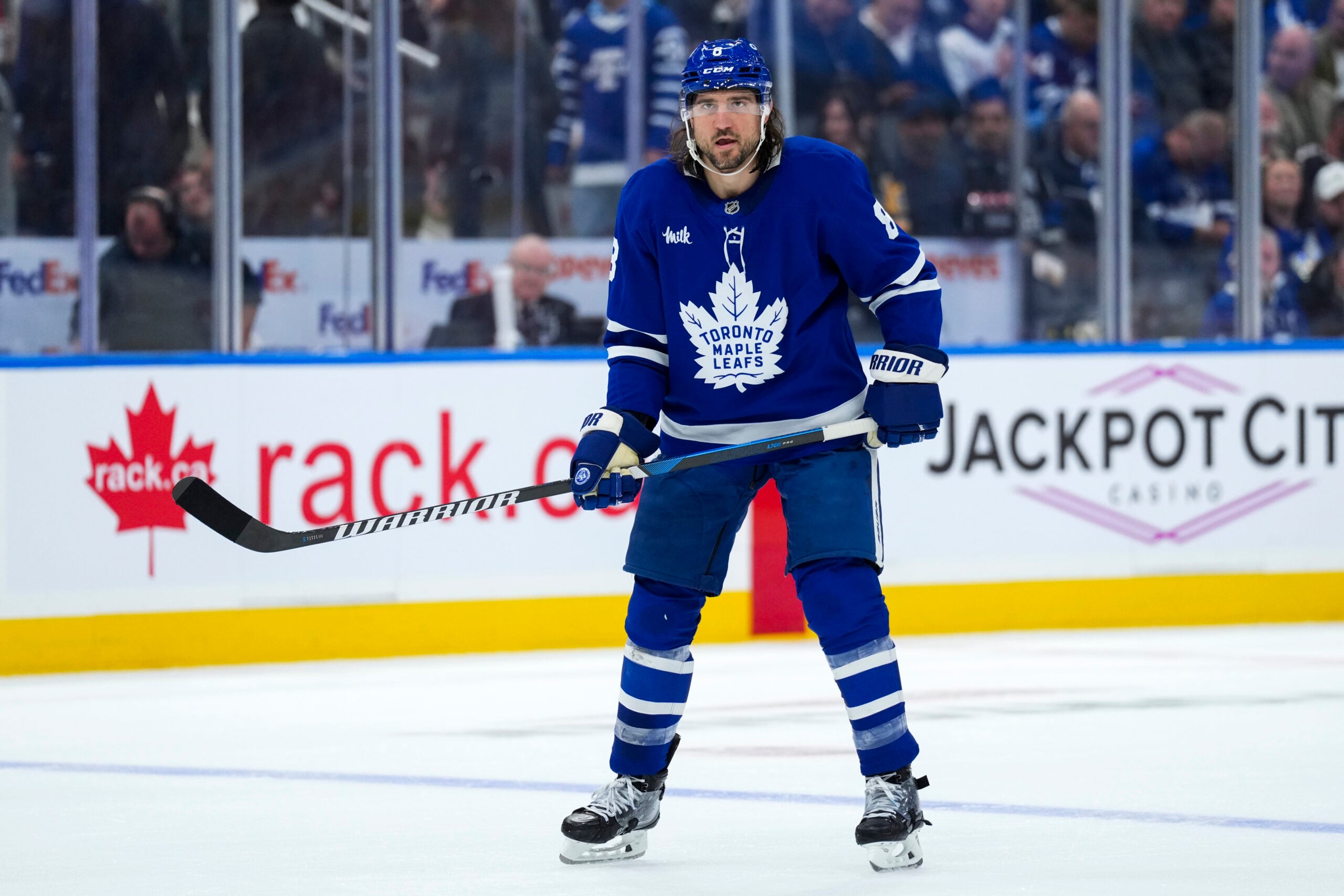
Mike Grier spent the offseason attacking the problem everyone could see. The San Jose Sharks allowed the third-most goals in the NHL last season, so the general manager rebuilt the blue line at considerable expense, trading for Darnell Nurse and his $9.25 million cap hit, signing Jacob Trouba, and adding Michael Kesselring as a reclamation project. The defense that sank last season’s playoff bid has been overhauled. The position behind it has not.
Goaltending is the quiet flaw in an otherwise aggressive summer, and it is the one that could undo everything else. For all the money San Jose committed to getting harder to play against, the team is still counting on Yaroslav Askarov to prove he is the franchise netminder it traded for, after a first full season as the starter that raised far more questions than it answered.
A Debut Season That Fell Flat
The expectations for Askarov were enormous, and understandably so. He arrived from Nashville widely regarded as the best goaltending prospect in hockey, a mobile, explosive 6-foot-3 talent who dominated the American Hockey League (AHL) and looked the part of a future star. His first extended NHL run did not match the billing.
Across a heavy 47-game workload in 2025-26, Askarov posted a .884 save percentage (SV%) and a 3.63 goals-against average (GAA), both well below league average. He surrendered at least three goals in long stretches of the season and was pulled early in multiple outings after the team collapsed in front of him.
His goals saved above expected ranked among the worst marks in the entire league. For a player meant to anchor San Jose’s crease for the next decade, it was a sobering introduction to life as a full-time starter. There is important context, of course. Askarov spent the season behind one of the youngest and most porous defensive groups in hockey, a unit that hemorrhaged high-danger chances on a nightly basis.
No goaltender looks good facing that volume of quality looks, and his raw numbers deserve to be read with that in mind. The Sharks nearly reached the playoffs despite his struggles, which speaks as much to Macklin Celebrini‘s brilliance as anything else.
The Bet Grier Is Making
Here is where San Jose’s offseason logic comes into focus. Rather than pursue an established starter to either replace or push Askarov, Grier is betting that the rebuilt defense will fix the goaltending by proxy. The theory is reasonable. Nurse, Trouba, and Kesselring should meaningfully reduce the chaos in front of the net, and a calmer defensive structure tends to make any goalie look better. If Askarov was a victim of his circumstances, improving those circumstances is the natural remedy.
The problem is that it remains a bet rather than a solution. San Jose’s only notable addition in net was Eric Comrie, a career backup signed to a modest deal, and Alex Nedeljkovic returns as the veteran insurance. Neither is the kind of proven number one who could carry the load if Askarov falters again. The Sharks have essentially doubled down on the 24-year-old, trusting that year two and a better team in front of him will unlock the goalie they envisioned.
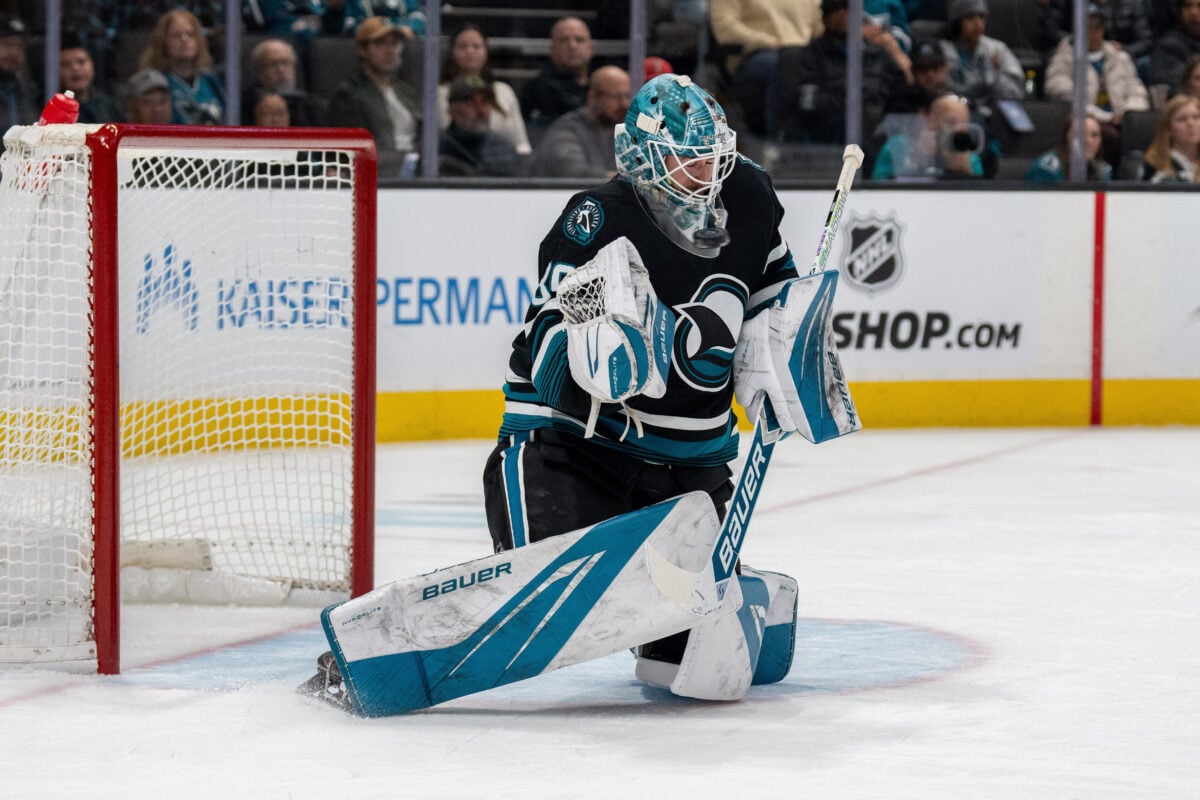
That trust is not unfounded. Askarov’s underlying tools are genuine, and goaltenders often take a season or two to settle into the NHL, particularly on rebuilding teams. His AHL track record, a .913 SV% across three seasons, suggests the talent is real. A rebound is entirely plausible, and if it comes, San Jose’s crease goes from liability to strength almost overnight.
Unforgiving Margin for Error Keeps Things Hard
But the margin is unforgiving. The Sharks missed the playoffs by four points last season, and in a deeper Pacific Division, those points will be harder to come by. Goaltending is the one position where a single bad month can bury a fringe contender, and San Jose has no established fallback if the young Russian struggles again.
Every other weakness on this roster was addressed with a veteran acquisition or the promise of internal growth. The crease was left to faith. For a team finally ready to end a seven-year playoff drought, that is a significant gamble. The offseason answered nearly every question hanging over the roster except the most important one a contender needs settled.
The Sharks already have the brilliance of Celebrini heading into his third season, along with a supporting cast that carries grit. Now, Grier has built a better blue line in front of his goalie and trusted the rest to sort itself out. Whether Askarov rewards that trust may be the difference between a breakthrough and another spring on the outside.
Free Newsletter
Get San Jose Sharks coverage delivered to your inbox
In-depth analysis, breaking news, and insider takes - free.
Subscribe Free →