In the modern NHL, the phrase “don’t panic” has become a sort of verbal anesthetic. It is administered by coaches and general managers when the patient—in this case, a roster built with playoff expectations—starts to show erratic vital signs.
For the Ottawa Senators, currently sitting second-to-last in the Eastern Conference after winning just one of their last six games, the message from the room is exactly that: stay calm. Strictly looking at the math, there is validity to the composure. Thanks to the muddy parity of the league, Ottawa sits five points out of a postseason spot. They are technically still in the hunt.
But for the educated observer, relying on the “we’re only five points out” argument is a dangerous comfort. This current slide isn’t just a run of bad bounces; it is a structural stress test that the roster is currently failing. We are witnessing a collision of significant roster depletion, an inability to convert possession into points, and the dangerous physical toll this places on the few reliable players left standing.
The Chabot Dependency
If there is one analytical takeaway from this 1-for-6 stretch, it is that the Senators’ ecosystem is incredibly fragile without Thomas Chabot.
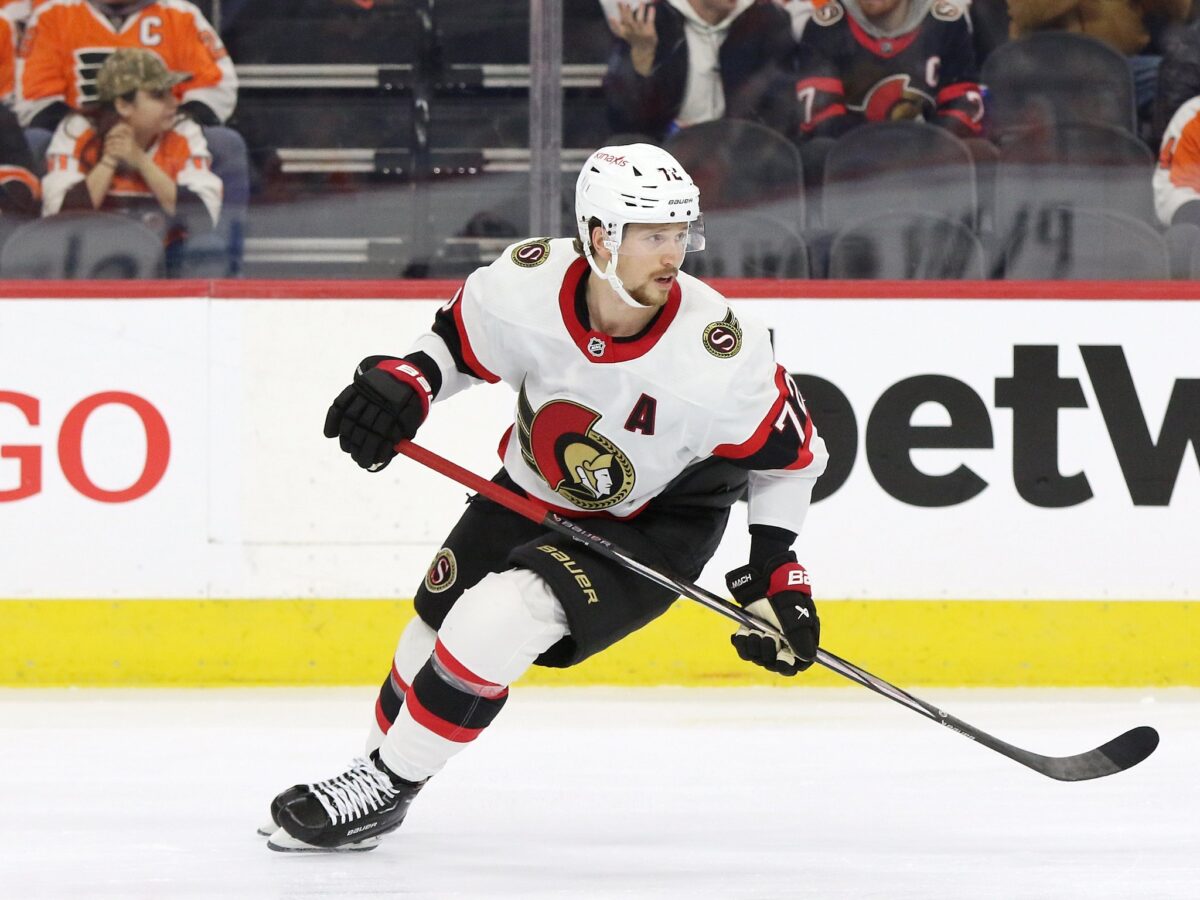
The data implies a direct causal link between Chabot’s presence and the team’s ability to win hockey games. With him in the lineup, the team has a reliable defensive anchor—a player who carries a plus-5 rating through 18 games, tilting the ice in Ottawa’s favor. Without him, the structure collapses. The Senators have lost seven of the 11 games played without their top defenseman.
With Chabot recovering from an upper-body injury and confirmed out for the upcoming road trip, the team loses its primary transition engine. But the depletion goes deeper than just the blue line. The forward group is missing its “Swiss Army Knife” in Shane Pinto.
Pinto’s absence is arguably just as damaging as Chabot’s; he takes the difficult matchups and defensive zone starts that shelter the top scoring lines. When you remove the guy who does the heavy lifting, everyone else’s load gets heavier, often to a breaking point.
Dominance is an Illusion Without Finish
Perhaps the most maddening aspect of this slump for the fanbase—and likely the coaching staff—is that the Senators don’t always look like the inferior team.

The recent 2-1 loss to the St. Louis Blues serves as the perfect microcosm of the team’s current purgatory. On paper, Ottawa dominated. They outshot the Blues by a 2-to-1 margin. They controlled possession. They spent significant time in the offensive zone. Yet, they lost.
Related – Dylan Cozens’ High-Octane Offense Is High-Risk for the Senators
This points to a “finishing” problem that is compounding the injury crisis. When a team struggles to score, every defensive mistake becomes fatal. The Senators are generating pressure, but they aren’t generating high-danger conversions. This dynamic creates a massive psychological hurdle: players feel they are doing everything right, yet the scoreboard tells them they are wrong. It’s a disconnect between process and results that can shatter a locker room’s confidence faster than a blowout loss can.
Redlining the Remaining Engines
The most concerning byproduct of these injuries isn’t just the losses today; it’s the potential losses tomorrow caused by burnout.
Head coach Travis Green has been forced to lean dangerously heavily on his remaining assets. In the absence of Chabot, Jake Sanderson is being asked to play minutes that are borderline unsustainable. Sanderson recently logged over 31 minutes in a single regulation game—a workload that pushes the limits of human physiology in a sport this fast. It was no surprise when he required a maintenance day shortly after. You cannot redline your best young engine every night without risking a breakdown.

The fragility extends to the veterans as well. Nick Jensen, a critical piece of the defensive puzzle who is recovering from major hip surgery, left practice twice recently due to discomfort. While the coach insists he is “fine,” seeing a player with that medical history leave the ice repeatedly is a red flag. If Jensen goes down or is playing compromised, the defensive depth chart goes from thin to nonexistent.
The Cavalry Isn’t Coming
In previous seasons, the answer to a slump might have been to look toward the farm system for a spark. Fans have understandably clamored for top prospect Carter Yakemchuk to get the call, hoping his dynamic upside could jolt the team awake.
Related – Devils Snap Losing Streak With 4-3 Victory Over Senators
However, management knows that the American Hockey League (AHL) numbers tell a cautionary story. Yakemchuk’s defensive metrics are currently alarming; he holds a minus-16 rating, which ranks as the fifth-worst in the entire league. To bring a developing prospect into a struggling NHL lineup to fix a defensive crisis would be malpractice. It asks a player struggling to defend at the lower level to suddenly defend against the best players in the world. There is no “plug-and-play” solution.
The Verdict
The Senators are trapped in a strange paradox. They are statistically one of the worst teams in the conference right now, yet the standings say they are alive. But playoff spots are not won by teams that rely on other teams losing; they are won by teams that can survive attrition.
Right now, Ottawa is failing the attrition test. They face the immediate pressure of trying to salvage a homestand before heading out on a road trip without key players. If they cannot find a way to manufacture wins without Chabot and Pinto—essentially, to win “ugly” despite their finishing woes—that five-point gap will widen into a chasm very quickly.
The “don’t panic” button works for now. But if the engine keeps overheating, nobody is going to be listening.
AI tools were used to support the creation or distribution of this content, however, it has been carefully edited and fact-checked by a member of The Hockey Writers editorial team. For more information on our use of AI, please visit our Editorial Standards page.
