Look at that – the Detroit Red Wings are only a week away from their season opener against the New York Rangers. The 2026-27 regular season is upon us.
If it feels like the season snuck up on you, it’s because it did. The new CBA rules reduced the amount of preseason games in order to accommodate the new 84-game schedule.
Given this, Todd McLellan didn’t waste any time mixing and matching players. Lines and pairings formed and stuck. But, with Dylan Larkin expected to return from injury and Simon Edvinsson set to rejoin the lineup once his contract situation is resolved, there are still a few moving pieces to sort out. Here’s how I see the roster taking shape.
Red Wings’ Projected Roster for 2026-27
Based on training camp combinations, preseason performances, and the expected return of Larkin and Edvinsson, this is how I see the Red Wings lining up for their season opener:
| LW | C | RW |
| Alex DeBrincat | Dylan Larkin | Lucas Raymond |
| Emmitt Finnie | Marco Kasper | Viktor Arvidsson |
| Andrew Copp | Nate Danielson | Michael Brandsegg-Nygard |
| Keegan Kolesar | J.T. Compher | Mason Appleton |
| Michael Rasmussen |
| LD | RD | G |
| Simon Edvinsson | Moritz Seider | John Gibson |
| Albert Johansson | Justin Faulk | Daniil Tarasov |
| Ben Chiarot | Axel Sandin-Pellikka | |
| William Wallinder | Jacob Bernard-Docker |
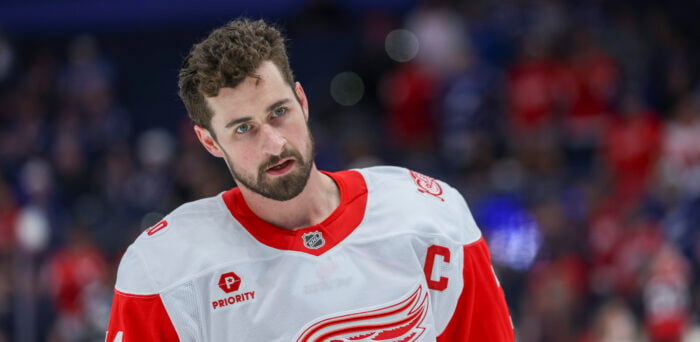
Until Dylan Larkin is wearing a different jersey, he’s part of this projection. As of this writing, the expectation is that he’ll be in Detroit’s lineup when the season begins.
With Larkin in place as the 1C, the forward lines have a nice structure:
- Line 1: A top-tier scoring line that will be leaned upon heavily.
- Line 2: An aggressive, versatile line that Todd McLellan compared to his highly effective Arvidsson-Philip Danault-Trevor Moore trio in Los Angeles.
- Line 3: A balanced line with enough talent to match up against bottom-six units in an offensive role.
- Line 4: Intended to be a matchup line that’s difficult to play against and minimizes chances against.
While there’s flow to the lineup, the biggest question is whether the Red Wings have enough offense.
Detroit scored 239 goals in 2025-26—22nd in the NHL—and 38 of those goals came from players who are no longer in Detroit. That means the Red Wings aren’t simply trying to improve an already-below-average offense, they have to replace the production that left while finding another level offensively. That’s a significant challenge for a team that didn’t make a major scoring addition over the offseason.
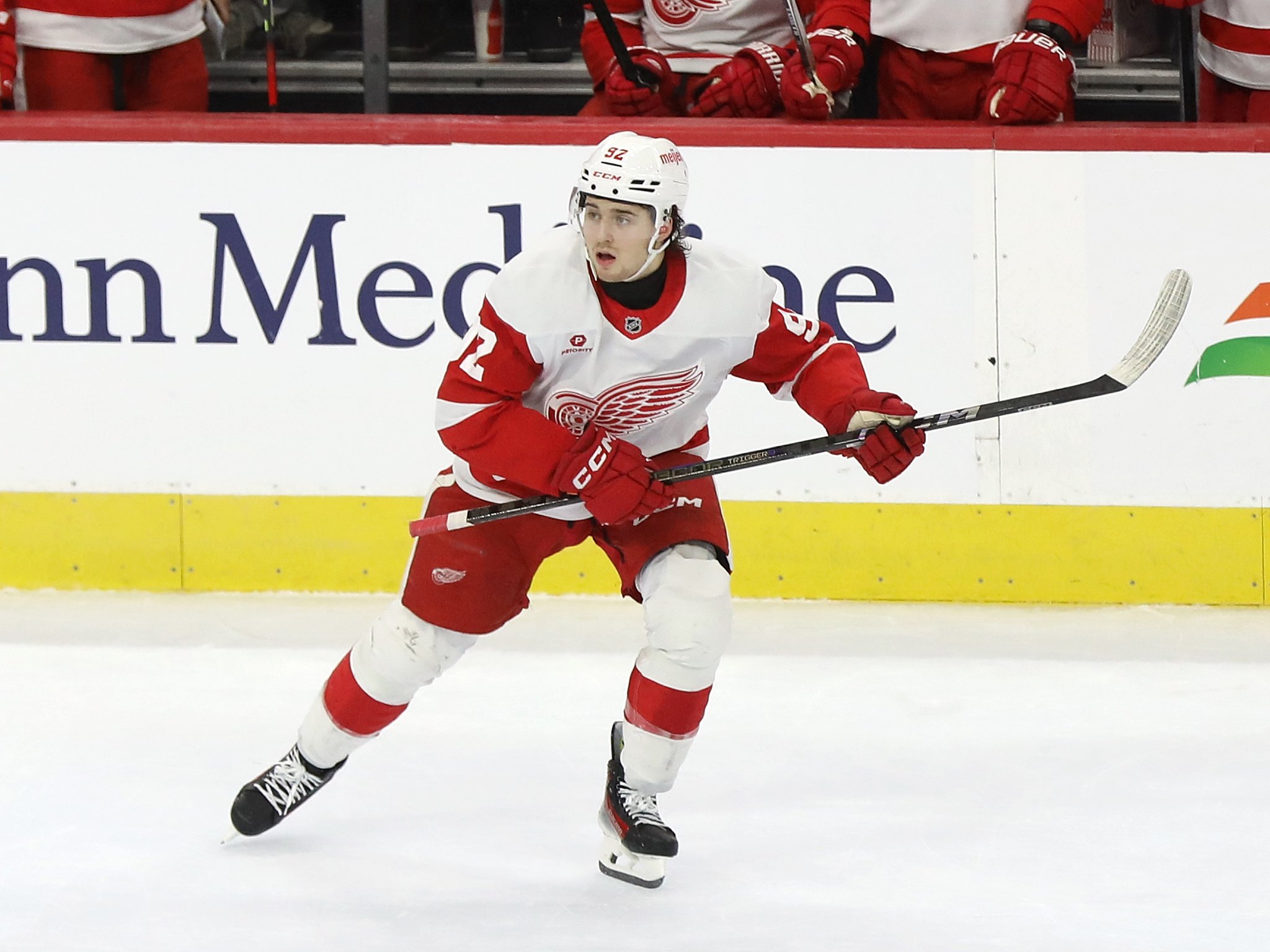
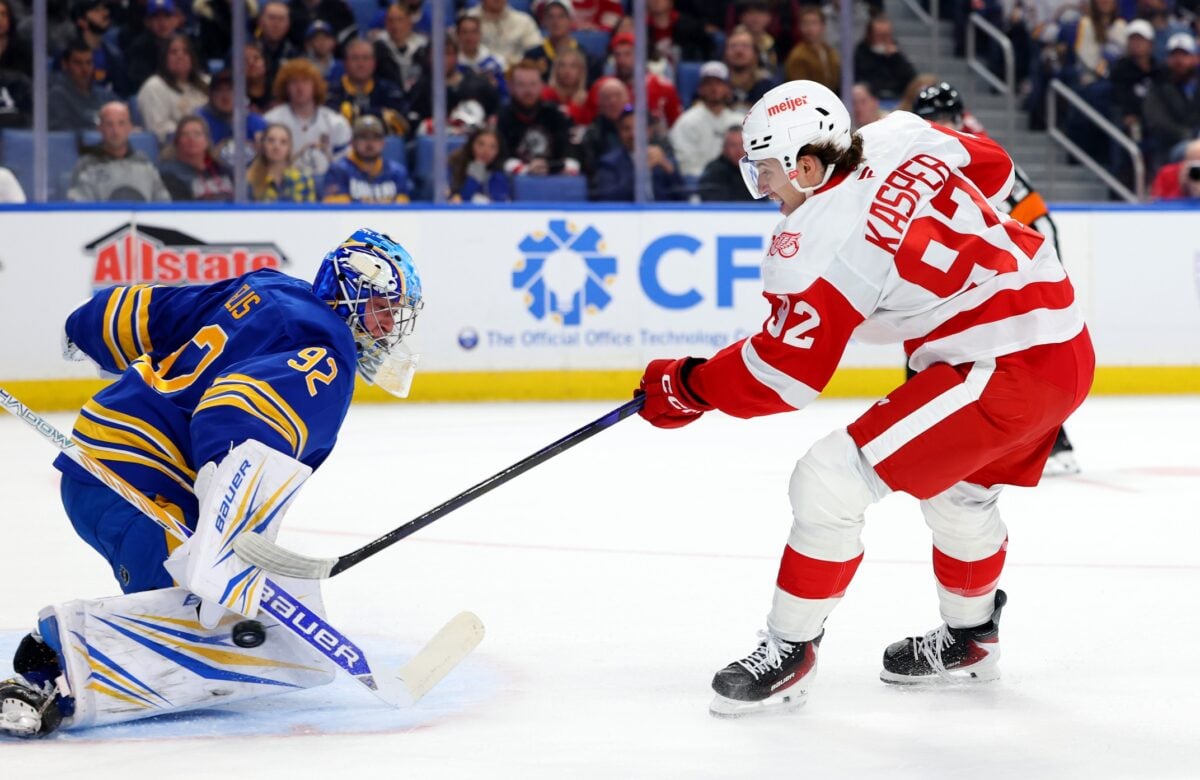
The hope is that internal growth will address a lack of scoring that wasn’t solved through offseason additions. Marco Kasper should rebound from last year’s sophomore slump. Nate Danielson and Michael Brandsegg-Nygard have impressed so far and could provide solutions to Detroit’s secondary scoring woes.
The concern isn’t limited to five-on-five scoring, either. The Red Wings also need to figure out how they’ll replace Patrick Kane’s role on the power play. A lot ran through the veteran winger on the right flank over the last three years.
We saw Lucas Raymond and Alex DeBrincat on PP1’s flanks early in the preseason. Can they maintain Detroit’s power-play effectiveness? Will the team try new looks with a more traditional net-front presence? Those questions will need to be answered quickly.
One final note about the forwards: It’s critical that the bottom two lines have clearly defined roles in 2026-27. They didn’t last year. Instead, Detroit’s third and fourth lines were a mix of energy players, shutdown forwards, and players whose offensive production wasn’t strong enough to put them in the top six. The result was an offensive black hole.
This year’s projected lineup provides a clearer division of responsibilities. The third line can be given an opportunity to create offense, while the fourth line can focus on matchups, physicality, and limiting chances. Whether those roles translate into consistent production will be one of the team’s biggest questions.
Defensively, the Red Wings should be in better shape in 2026-27. Moritz Seider and Simon Edvinsson return as Detroit’s bonafide top pair, capable of playing in all situations and handling heavy minutes against the league’s best players. They’ll be leaned upon again and should approach or exceed 25 minutes of ice time per game.
A full year of Justin Faulk will be beneficial as well, especially considering it’s a contract year for the veteran blueliner. He’s been paired with Albert Johansson for much of the preseason, and the two could form a smooth-skating, two-way pair that takes some of the workload off Seider and Edvinsson when needed.
Ben Chiarot playing third-pair minutes suits him well, whether he’s paired with Jacob Bernard-Docker, William Wallinder, or Axel Sandin-Pellikka.
The player missing from the roster above is Carter Mazur. Between him, Danielson, Sandin-Pellikka, Wallinder, Mason Appleton, and Michael Rasmussen, one player needed to be cut, and Mazur ended up being that guy. In my opinion, Rasmussen should be the one cut – I just see Mazur being waived as more likely to happen at this point.
Lastly, each of Theo Rochette, Anton Johansson, and Michal Postava have made a case to start the year in Detroit, but will likely be sent to Grand Rapids. Their performances made a positive impression, though.
Final Word
The Red Wings have a more clearly defined lineup heading into 2026-27, but their success will depend on how well the pieces fit together.
John Gibson will need to replicate his impressive 2025-26 campaign, while Daniil Tarasov will need to provide quality spot starts when called upon. The defense will have to capitalize on its improved depth and allow Seider and Edvinsson to anchor the group.
Most importantly, Detroit needs to score more at five-on-five. The top players have to produce, while the younger forwards need to provide enough secondary scoring to replace the goals that left in the offseason. The bottom six also needs to have a clear identity instead of becoming a collection of forwards without defined roles.
Accomplishing these goals is possible. Probable? That’s another question entirely.
The Red Wings have enough talent to make the playoff race interesting, but their ceiling will ultimately depend on whether their internal improvements can turn into consistent production when the games start to matter.
Data courtesy of NHL.com.
Free Newsletter
Get Detroit Red Wings coverage delivered to your inbox
In-depth analysis, breaking news, and insider takes - free.
Subscribe Free →